Ethiopia has one of the longest continuous histories of any nation, and reading it in order matters because its threads run so deep. Ancient trading kingdom, early Christian realm, empire that resisted colonization, twentieth-century monarchy and revolution: each layer sits on the one before, and the country's self-understanding is built from that stack of memory.
The books below start wide, dig into the ancient and imperial foundations, then follow the modern transformation. Read this way, the drama of Adwa and the fall of Haile Selassie land with their full weight.
Foundations and the deep past
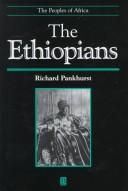
Begin with a clear survey. A history of Ethiopia by Harold G. Marcus is the standard concise overview, and Understanding Ethiopia adds geography and heritage to fill out the picture. For the ancient roots, The Kebra Nagast is the national epic linking the monarchy to Solomon and Sheba, and Aksum: An African Civilisation of Late Antiquity reconstructs the trading empire that minted its own coins. The Ethiopians by Richard Pankhurst then carries the story across the centuries.
Empire, resistance, and revolution
The modern nation takes shape here. Menelik of Ethiopia covers the emperor who unified and expanded the state, and The Battle of Adwa narrates the 1896 victory over Italy that made Ethiopia a symbol of African independence.
For the twentieth century, Haile Selassie I by Peter Schwab offers a political assessment, while The Emperor by Ryszard Kapuściński is an unforgettable, contested portrait of his court's final days. Mengistu: The Red Terror in Ethiopia is an insider account of the brutal Derg years. Bring it current with Ethiopia: A New History and the memoir Cutting the Thorns, a personal reckoning with the revolution. Follow the full path to read them in order.
Follow the full reading path →
Ready to learn something deeply?
Build a reading path — free