Poland's history is defined by an extraordinary fact: the country was erased from the map of Europe for over a century, then repeatedly invaded, partitioned, and occupied — and yet endured as a nation. That through-line of disappearance and survival gives Polish history a shape unlike any other, but it also means the episodes only make sense in sequence. The path below follows that sequence closely.
It opens with the great overviews, moves through the partitions and the wars, and ends with the Holocaust's reckoning and the peaceful revolution of Solidarity.
The sweep
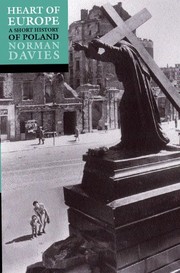
Start with God's playground, a history of Poland by Norman Davies, the definitive English-language history and the natural anchor for the whole subject. Heart of Europe: The Past in Poland's Present, also by Davies, is the shorter, brilliant companion that reads the history backward from the twentieth century, which is an ideal way to grasp why the past matters so intensely here.
Statehood and partition
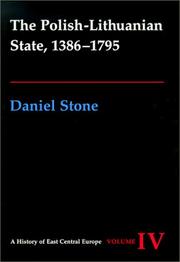
Next, the rise and disappearance of the old state. The Polish-Lithuanian State, 1386-1795 by Daniel Stone covers the vast commonwealth that was once one of Europe's largest powers. The Partitions of Poland 1772, 1793, 1795 by Jerzy Lukowski explains how that state was carved up and erased by its neighbors, and White Eagle Red Star by Norman Davies tells of the 1919-20 war that secured the newly reborn nation's survival against Soviet Russia.
War, memory, and freedom
The final arc is the brutal twentieth century and its aftermath. Forgotten Bastards of the Eastern Front by Serhii Plokhy recovers a hidden episode of the Second World War, and Neighbors by Jan Gross is the searing, controversial study of a wartime massacre that forced Poland to confront its own role in the Holocaust. The spring will be ours by Andrzej Paczkowski chronicles the communist decades, while Solidarity: The History of a Famous Trade Union and The Magic Lantern, both by Timothy Garton Ash, capture the peaceful revolution that ended communism across the region.
Read in this order and Poland's story of survival becomes coherent and moving. Follow the full path from the commonwealth to Solidarity.
Follow the full reading path →
Ready to learn something deeply?
Build a reading path — free