Almost everyone has an opinion about capitalism, but few can say where it came from or when it began. That is the trap of the subject: it feels timeless, as if buying and selling has always worked the way it does now. Reading its history in the right order breaks that illusion and shows a system that was built, contested, and repeatedly remade.
The sequence that works starts with the ideas, moves to the deep origins and the great disruptions of industry and empire, and ends with the twentieth-century arguments still shaping policy today. Each stage answers a question the previous one raised.
The ideas and the origins
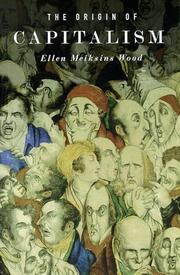
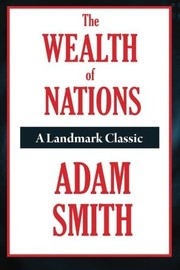
Begin with The worldly philosophers, Robert Heilbroner's warm tour of the great economic thinkers, which gives you the cast and the questions before any single argument. The origin of capitalism by Ellen Meiksins Wood then challenges the comfortable story that markets simply grew, arguing capitalism had a specific and contingent beginning. From there, read the source itself: The Wealth of Nations is Adam Smith's founding account of markets, labor, and the division of work, and it is more nuanced than its slogans suggest.
Markets, empire, and industry
Fernand Braudel's The Mediterranean and the Mediterranean World in the Age of Philip II, Vol. 1 shows commerce as a deep structure of geography and long time, not just clever merchants. The slave trade by Hugh Thomas confronts the human cost woven into early global capitalism, a chapter no honest history can skip. Then Eric Hobsbawm's The Age of Revolution traces how the industrial and political upheavals of 1789 to 1848 created the modern economic world.
The great critiques
No history of capitalism is complete without its critics, read as arguments to weigh rather than gospel. Karl Marx's Capital is the most influential of them, and E. P. Thompson's The making of the English working class recovers the lives of the people the factory system remade. Lenin's Imperialism - the Highest Stage of Capitalism links capitalism to empire, and Karl Polanyi's The Great Transformation argues the market was politically constructed and socially disruptive.
The modern shape
The final arc brings the story to the present. Late Victorian Holocausts by Mike Davis ties famine and free-market ideology in the age of empire. David Harvey's A Brief History of Neoliberalism explains the market turn of the late twentieth century, and Thomas Piketty's Capital in the twenty-first century, summarized here by Stephan Kaufmann, distills the debate over inequality that closes the path.
Read in this order and capitalism stops being a single thing to praise or condemn and becomes a history you can actually reason about. Follow the full path to walk it book by book.
Follow the full reading path →
Ready to learn something deeply?
Build a reading path — free