The Best Young Adult Fiction to Read
This curriculum guides readers through the best of young adult fiction, starting with universally beloved, fast-paced classics and building toward more complex, emotionally layered, and literarily ambitious works. Each stage deepens the reader's appreciation for YA's unique power — its unflinching honesty about identity, belonging, and growing up — while expanding their range across genres, voices, and styles.
The Essential Classics
BeginnerDiscover why YA fiction endures — these foundational novels establish the genre's core themes of identity, courage, and coming-of-age through irresistibly readable stories.

Written by a 16-year-old, this is the novel that essentially invented modern YA. Its raw voice and class-conflict story set the template for everything that followed — start here.
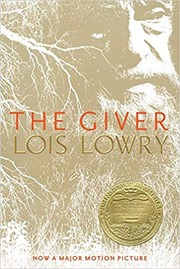
A short, perfectly constructed dystopian fable that introduces the genre's love of speculative 'what if' worlds as a lens for examining society and individual freedom.
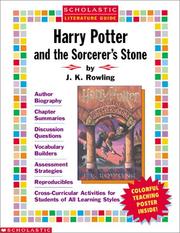
The most culturally defining YA series of a generation; reading it here shows how world-building and a young protagonist's sense of wonder can carry enormous emotional weight.
Voice & Identity
BeginnerExperience YA's most powerful gift — the authentic first-person voice — through stories that center on race, self-discovery, and finding where you belong.
▸ Study plan for this stage
Pace: 4–5 weeks, ~40–50 pages/day (approximately 2 weeks per book, allowing time for reflection and exercises between readings)
- First-person narrative as a tool for intimacy and authenticity — how Starr's and Melinda's voices create immediate emotional connection and trust with readers
- Code-switching and identity fragmentation — understanding how characters navigate multiple versions of themselves across different spaces (Starr at Williamson vs. Garden Heights; Melinda at school vs. home)
- Silence as a form of trauma and resistance — recognizing how both characters use silence differently: Melinda's literal mutism as survival, Starr's strategic silence as self-protection
- Systemic injustice and personal agency — how *The Hate U Give* grounds police brutality and racism in individual relationships, while *Speak* shows how institutional indifference enables assault
- Finding voice as an act of reclamation — the parallel journeys of both protagonists toward speaking truth despite fear, shame, and social pressure
- Belonging and community — how both novels explore the tension between fitting in and staying true to oneself, and the role of chosen family and allies
- How does Starr's code-switching between Garden Heights and Williamson reflect her internal conflict about identity, and how does this compare to Melinda's fragmentation in *Speak*?
- What role does silence play in each novel? How is Starr's strategic silence different from Melinda's inability to speak, and what does each character's journey toward voice reveal about trauma and agency?
- How do Thomas and Anderson use first-person narration to make readers complicit in or sympathetic to their protagonists' experiences? What details or moments made you feel closest to each character?
- In *The Hate U Give*, how does Khalil's death force Starr to choose between safety and truth? How does this relate to Melinda's decision to finally speak up in *Speak*?
- What does it mean to 'find your voice' in each novel? How are Starr's and Melinda's paths to speaking out similar, and where do they diverge?
- How do the communities around Starr and Melinda either support or silence them? What role do allies and chosen family play in each character's journey?
- Voice journal: After finishing each book, write 2–3 pages in the protagonist's voice about a moment when they felt most silenced and most empowered. Capture their speech patterns, concerns, and emotional tone.
- Code-switching map: Create a visual diagram (chart, mind map, or collage) showing the different 'versions' of Starr across her environments (family, school, activism, social media). Annotate with specific scenes that reveal each version.
- Dialogue analysis: Select 3–4 key conversations from each novel (e.g., Starr with her father, Melinda with her parents). Rewrite one conversation from another character's perspective and notice what shifts in tone, understanding, or tension.
- Silence inventory: Track every moment of silence in both novels — literal, emotional, strategic, forced. Create a chart noting *why* each character is silent and *what* silence costs them. Reflect on what silence means in your own life.
- Comparative character letter: Write a letter from Starr to Melinda (or vice versa) in which one character offers advice or solidarity to the other based on their shared experience of finding voice. Ground it in specific scenes from both books.
- Podcast/video reflection: Record a 5–7 minute personal reflection on a time you code-switched, stayed silent, or found your voice. Connect it to moments from the novels and explain what you learned about identity and belonging.
Next up: This stage establishes YA's power to center marginalized perspectives and internal emotional truth; the next stage will expand outward to explore how YA uses voice to interrogate larger systems, relationships, and moral complexity across different genres and narrative styles.

A modern landmark that proves YA can be urgently political and deeply personal at once; its fearless voice and timely subject matter define 21st-century YA.
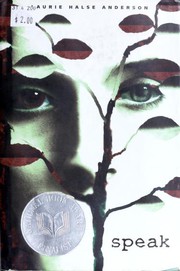
A quiet, devastating novel about trauma and silence — it demonstrates how YA can tackle the hardest subjects with grace, and prepares readers for the more emotionally complex books ahead.
Genre Mastery
IntermediateSee how YA authors use fantasy, dystopia, and romance as sophisticated vehicles for exploring power, sacrifice, and what it means to be human.
▸ Study plan for this stage
Pace: 4–5 weeks, ~80–100 pages/day (approximately 2 weeks per book with overlap for reflection)
- Dystopian worldbuilding as social critique: How Collins constructs Panem to interrogate power structures, surveillance, and inequality
- Dual narrative and perspective: How Tahir's alternating viewpoints (Laia/Elias) reveal systemic oppression from both sides of a conflict
- Romance as character development, not plot decoration: How Green uses Hazel and Augustus's relationship to explore mortality, meaning-making, and vulnerability
- The hero's sacrifice: How each protagonist (Katniss, Laia, Hazel) redefines heroism through personal cost rather than triumphalism
- Genre conventions subverted: How these authors complicate YA tropes (the chosen one, the love triangle, the happy ending) to deepen thematic resonance
- Humanity under extremity: How fantasy, dystopia, and contemporary settings each test what makes characters fundamentally human when stripped of comfort or certainty
- Narrative voice as ideological tool: How first-person (Katniss), third-person dual (Tahir), and first-person philosophical (Hazel) shape reader alignment and ethical complexity
- How does Collins use the Hunger Games as a spectacle to critique both authoritarian control and the public's complicity in violence? What specific details reveal this dual critique?
- Compare how Laia and Elias's contrasting perspectives in *An Ember in the Ashes* complicate your understanding of 'oppressor' and 'oppressed'—what does Tahir achieve by making readers sympathize with both?
- In *The Fault in Our Stars*, how does Green use Hazel and Augustus's romance to explore philosophical questions about meaning and mortality rather than as a conventional love story?
- What does each protagonist sacrifice, and how does that sacrifice redefine what 'heroism' means across these three books? How do their sacrifices differ in nature and consequence?
- How do the three different genres (dystopia, fantasy, contemporary) each uniquely explore what it means to be human? What can dystopia reveal that contemporary fiction cannot, and vice versa?
- Identify one major YA trope (e.g., love triangle, chosen one, rebellion victory) that each book either fulfills or deliberately subverts. What is the thematic effect of that choice?
- Create a comparative chart mapping how power operates in Panem, the Martial Empire, and Hazel's world—identify the mechanisms of control (or lack thereof) in each setting and what each reveals about human nature
- Write a 2–3 page character analysis comparing Katniss's and Laia's responses to systemic oppression: How do their different genres (dystopia vs. fantasy) shape their agency and choices?
- Rewrite a pivotal scene from *The Hunger Games* from a Capitol citizen's perspective (similar to how Tahir splits perspective), then reflect on how this shift changes your moral reading of the scene
- Analyze the role of romance in each book: Create a Venn diagram showing where romance functions as plot-driver vs. character revelation vs. philosophical exploration across all three texts
- Track one character's definition of 'humanity' across their arc (e.g., Katniss's shift from survival to symbol; Elias's crisis of conscience; Hazel's search for meaning). Cite 3–4 specific moments that reveal this evolution
- Write a comparative essay (1500–2000 words) on sacrifice across the three books: How does each author use sacrifice to explore power dynamics and what it costs to resist or endure?
Next up: This stage equips you to recognize how YA authors weaponize genre conventions to explore mature themes, preparing you to analyze how literary craft (voice, structure, symbolism) deepens thematic complexity in the next stage.
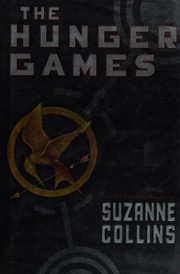
The gold standard of YA dystopia — its propulsive plot masks a serious meditation on media, power, and survival that rewards close reading.

A richly built fantasy world with morally complex characters; reading it after Collins shows how YA fantasy has grown in scope and ambition.

Green's witty, philosophical contemporary romance shows the other side of YA's range — intimate, funny, and heartbreaking, with a literary self-awareness that elevates the genre.
Expanding the Canon
IntermediateBroaden your YA map with diverse voices and perspectives — these books prove the genre belongs to everyone and has always had more to say than mainstream lists suggested.
▸ Study plan for this stage
Pace: 4–5 weeks, ~40–50 pages/day (approximately 2 weeks per book with time for reflection and exercises)
- Intersectionality in YA: how identity categories (sexuality, ethnicity, class, family structure) intersect and shape character experience
- Intimate vs. epic scope: how personal coming-of-age narratives (Aristotle and Dante) and expansive world-building (Children of Blood and Bone) both serve YA's core mission
- Latinx and West African diaspora perspectives as central, not marginal, to YA literature
- Queer love and self-discovery as worthy of the same narrative depth as heterosexual romance
- Magic systems and speculative worldbuilding as tools for exploring real-world oppression and resistance
- Narrative voice and perspective: how first-person intimacy and third-person epic scope create different reader relationships to marginalized characters
- The role of family, mentorship, and chosen community in identity formation across different cultural contexts
- How do Aristotle and Dante's identities as Mexican-American, working-class, and queer teenagers shape their emotional journey, and what does the novel suggest about the relationship between self-discovery and belonging?
- What is the significance of the epistolary/letter elements and the desert setting in Aristotle and Dante, and how do they create space for vulnerability and introspection?
- How does Tomi Adeyemi construct a West African-inspired fantasy world, and what real-world systems of oppression does the magic system reflect?
- Compare the role of mentorship in both novels: how do adult figures (or their absence) guide Aristotle, Dante, and Zélie toward their respective awakenings?
- How do both novels center marginalized perspectives as the default viewpoint rather than as 'diverse' side characters, and what effect does this have on your reading experience?
- What does each novel suggest about the cost of resistance—whether personal (Aristotle and Dante) or political (Children of Blood and Bone)—and what are the characters willing to sacrifice?
- Create a character identity map for Aristotle and Dante: list the intersecting identities (sexuality, ethnicity, class, family role) and trace how each one creates conflict or connection in the narrative. Repeat for Zélie in Children of Blood and Bone.
- Write a 2–3 page comparative reflection: How does the intimate, first-person voice of Aristotle and Dante differ from the third-person perspective in Children of Blood and Bone? What does each perspective allow the reader to understand about marginalized experience?
- Design a 'magic system analysis' for Children of Blood and Bone: map the rules of magic, who has access to it, and what real-world parallels you see (e.g., criminalization, erasure, reclamation). Write 1–2 pages.
- Conduct a 'representation audit' of a YA book you've read before this stage: identify how many characters are Latinx, Afro-Caribbean, queer, or from other marginalized groups, and whether they are protagonists or supporting characters. Compare your findings to Aristotle and Dante and Children of Blood and Bone.
- Write letters or journal entries from Aristotle's or Dante's perspective exploring a moment of self-realization from the novel. Focus on how their multiple identities collide or cohere in that moment.
- Create a visual timeline or map of Zélie's journey in Children of Blood and Bone, marking key moments of loss, resistance, and alliance-building. Annotate with quotes that reveal her emotional and political growth.
Next up: This stage establishes that YA's power lies in centering diverse, intersectional identities and that the genre spans intimate psychological realism to expansive speculative worlds—preparing you to recognize how subsequent stages will layer additional complexity, such as genre hybridity, narrative experimentation, and global YA voices.

A lyrical, slow-burn coming-of-age story about two Mexican-American boys — its quiet prose style is a deliberate contrast to action-driven YA and rewards patient reading.
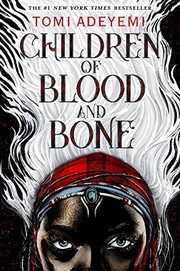
West African mythology powers this epic fantasy, showing how YA world-building can center non-Western cultures with the same grandeur as any classic fantasy.
Literary Heights
ExpertEncounter YA at its most artistically ambitious — these novels use unconventional structure, unreliable narration, and poetic language to push the boundaries of what the genre can do.
▸ Study plan for this stage
Pace: 6–7 weeks, ~40–50 pages/day (accounting for rereading passages and annotation)
- Unconventional narrative structure: how Death's narration in The Book Thief and the dual sibling perspectives in I'll Give You the Sun create meaning through form itself
- Unreliable and layered narration: recognizing how Zusak's Death-narrator has omniscience but emotional bias, and how Nelson's Jude and Noah's accounts contradict and complement each other
- Poetic language and metaphor as plot drivers: understanding how Zusak's 'word theft' and color imagery, and Nelson's synesthetic descriptions and visual metaphors, elevate emotional stakes beyond dialogue and action
- Thematic complexity through structural choice: how fragmented timelines, nested stories, and shifting perspectives allow these novels to explore trauma, identity, and art without didacticism
- The relationship between form and reader experience: how unconventional structure demands active interpretation and creates emotional resonance through disorientation and discovery
- Symbolism and visual language: decoding how books, colors, and artistic mediums function as both literal and metaphorical anchors in each narrative
- How does Death's role as narrator in The Book Thief differ from a traditional third-person omniscient narrator, and what emotional effect does this create?
- Explain how the structure of I'll Give You the Sun (alternating perspectives, time jumps, visual descriptions) mirrors the emotional and psychological states of Jude and Noah.
- What is 'word theft' in The Book Thief, and how does this concept function both literally and metaphorically throughout the novel?
- How do Zusak's color imagery and Nelson's synesthetic descriptions (mixing senses) serve as alternatives to straightforward emotional exposition?
- Compare how both novels use fragmentation and non-linear storytelling to represent trauma and healing—what does this form accomplish that a linear narrative could not?
- How do the artistic mediums in each novel (books in The Book Thief, painting and astronomy in I'll Give You the Sun) function as metaphors for the novels' own artistic ambitions?
- Annotate 3–4 passages from The Book Thief where Death's voice is most distinctive; note where Death editorializes, predicts, or intrudes emotionally. Write a paragraph on how this differs from how a human narrator would tell the same moment.
- Create a timeline of I'll Give You the Sun that maps both the chronological events and the narrative order; identify which scenes are revealed out of sequence and hypothesize why Nelson made these structural choices.
- Select one chapter from The Book Thief and rewrite a scene in a conventional third-person perspective; compare the emotional impact and discuss what Zusak's poetic approach adds.
- Collect 5–6 instances of color imagery in The Book Thief (e.g., red, blue, white) and track how each color recurs and shifts meaning; create a visual map or color chart showing these patterns.
- Analyze one full section of I'll Give You the Sun where Jude and Noah describe the same event differently; write out both versions side-by-side and explain what each perspective reveals about their emotional truth.
- Write a short scene (500–750 words) in your own voice that uses unconventional structure (fragmentation, shifting perspective, poetic language) to convey a moment of emotional intensity; reflect on how form shaped your ability to express feeling.
Next up: This stage equips you to recognize and appreciate how YA literature can achieve literary sophistication through formal innovation, preparing you to evaluate how subsequent stages either sustain this ambition, apply it to different genres or themes, or explore what happens when experimental form serves different narrative purposes.

Narrated by Death during World War II, this novel's audacious structure and lyrical prose show that YA can achieve the same literary complexity as the finest adult fiction.

A dual-timeline, dual-narrator story told in painterly, synesthetic prose — it represents the pinnacle of YA's stylistic ambition and is a perfect capstone to this curriculum.
Discussion
Keep reading
Paths that share books, cover the same subject, or open a related topic.