Haitian Vodou: the best books to read, in order
Vodou is a functioning religion with a theology, a priesthood and a liturgical calendar, and it has spent a century being described in English mainly by people writing about zombies. This path takes the religion on its own terms first — what the lwa are, what service means, how a household actually practises — then reads the classic ethnographies, then turns to where the caricature came from during the US occupation, then places Vodou in Haitian political history, where it has been both a revolutionary force and a target of state persecution. Two books here are contested; the notes say which and why.
What the religion actually is
BeginnerLearn the basic structure — the lwa, the nanchon, service, initiation, and the relationship with Catholicism — before reading anyone's fieldwork
▸ Study plan for this stage
Pace: 5-6 weeks. Chita Tann is 239pp and reads quickly; Metraux is 400pp of dense 1950s scholarship and is the slow one, best taken at 25-30pp a day; Desmangles is 240pp of academic prose. Read them in this order — you want the vocabulary before the survey, and the survey before the argument about how the
- The lwa: who they are, how they are grouped into nanchon, and what distinguishes Rada from Petwo
- Service as the central obligation — Vodou is something one serves rather than something one believes
- The ritual calendar, the feast days, and the household or temple as the unit of practice
- Initiation, the priesthood, and what a houngan, a manbo and a sosyete actually do
- Possession as a normal and expected feature of ritual, not an aberration
- The relationship with Catholicism: Desmangles's case that symbiosis describes it better than syncretism, and what turns on the distinction
- West African (particularly Fon, Yoruba and Kongo) sources and how they were reconfigured in colonial Saint-Domingue
- What is a lwa, and how does the relationship between a person and their lwa differ from the relationship a Christian has with a saint?
- What does it mean to say Vodou is served rather than believed, and how does that change what counts as an adherent?
- Why does Desmangles prefer symbiosis to syncretism, and what does the standard syncretism account get wrong?
- Where has Metraux's 1959 framing dated — what assumptions about religion and about Haitians does he carry?
- What does Chita Tann's position as an initiate let her convey that neither Metraux nor Desmangles can, and where does it make her account unsuitable as evidence?
- Build a reference sheet of the major lwa from Chita Tann — name, nanchon, associated Catholic figure, colours, offerings — and keep it beside you for the rest of the path. Every later book assumes this vocabulary.
- Take one lwa and compare Chita Tann's devotional description with Metraux's ethnographic one and Desmangles's historical one. Three registers on one subject is the fastest way to learn what each kind of book is for.
- Read Desmangles's chapter on the Catholic saints, then go back and find the same material in Metraux. Note what Desmangles adds and where he is arguing directly against the earlier framing.
- Write out Metraux's account of a specific ceremony and mark every sentence that assumes a European reader. The exercise is not to score points but to learn to read older ethnography with the frame visible.
Next up: With the pantheon and the vocabulary in place, the fieldwork accounts stop being anthropology about strangers and become recognisable descriptions of people doing things you can now name.

An introduction written by an initiated practitioner, and the clearest short account of the pantheon and the ritual calendar. Start here for vocabulary; it is devotional rather than scholarly, which is precisely why it is useful before the ethnographies.
Metraux's 1959 study is still the standard survey — the lwa, possession, the houngan's role, and the historical formation of the religion. Read it second: it is the book every later scholar argues with, and its framing has dated in ways worth noticing.

The best account of the specific question the other books circle: how West African religion and Haitian Catholicism actually combined, and why symbiosis describes it better than syncretism. Desmangles is Haitian-born and writes from inside the debate.
Inside a household
BeginnerSee Vodou as it is lived by particular people, through the three classic first-person and ethnographic accounts
▸ Study plan for this stage
Pace: 6-7 weeks. Mama Lola is 429pp, Divine Horsemen 350pp and Tell My Horse 301pp. Brown's book is academic but unusually readable and repays a steady 25pp a day; Deren is beautiful and difficult in a different way; Hurston is fast prose. All three are first-person to some degree, and all three authors e
- Engaged ethnography — the researcher inside the relationship rather than above it, and Brown's explicit handling of her own initiation
- A single household as a unit of analysis: what one priestess's life reveals that a survey cannot
- Vodou in diaspora — Brooklyn rather than Haiti, and what migration does to practice
- Deren's account as an artist's testimony, which is how scholars now read it rather than as ethnography
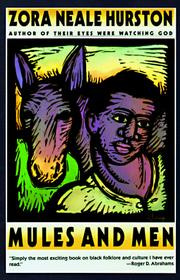
- Hurston's 1938 fieldwork in Haiti and Jamaica: the earliest sympathetic English account by a Black American writer, and uneven and occasionally credulous in places
- Life history and narrative as method, and the objection that it cannot generalise
- The politics of who gets to describe a religion and on whose authority
- How does Brown handle her own initiation in the text, and does disclosing it solve the problem it raises or only name it?
- What does following one family across ten years show about Vodou that Metraux's survey structure cannot?
- Deren is not doing ethnography. What is she doing, and what is her book good evidence of?
- Where is Hurston credulous, and where is she sharper than her contemporaries? Both are true and both are worth locating.
- All three authors moved from observing to participating. Is that a methodological failure, a methodological necessity, or something else?
- In Mama Lola, track one lwa through Alourdes's life across the book and note how the relationship changes with her circumstances. This is the concrete payoff of life-history method.
- Read Deren's descriptions of possession alongside Metraux's from the previous stage. Same phenomenon, two entirely different vocabularies; write down what each vocabulary makes visible and what it hides.
- Identify three passages in Tell My Horse where Hurston reports something without checking it, and three where she notices something no other observer of the period did. Hold both judgements at once.
- Compare how Brown, Deren and Hurston each introduce themselves into their own text — first person, first page. The self-positioning tells you how to read everything that follows.
Next up: Having seen how much care serious writers take with this material, the next stage shows what the alternative looked like, and what it cost.

Catalogued as Mama Lola: Voodoo in Brooklyn. Brown's ten-year study of one Haitian priestess in New York, and the most widely taught book in the field — partly because Brown eventually became her subject's initiate and says so. Read it as the model of engaged ethnography.
The avant-garde filmmaker's 1953 account of Haitian ritual, written after she went to make a film and was drawn into practice. Idiosyncratic and beautifully written; treat it as an artist's testimony rather than as ethnography, which is how scholars now read it.
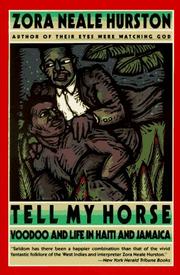
Hurston's 1938 Haiti and Jamaica fieldwork, by a trained anthropologist who was also a novelist. Uneven and occasionally credulous, and still the earliest sympathetic English account by a Black American writer — read it knowing both things.
Where the caricature came from
IntermediateTrace the invention of Hollywood voodoo to the US occupation of Haiti, and evaluate the most famous and most contested modern claim about zombies
▸ Study plan for this stage
Pace: 6-7 weeks. Seabrook is 336pp, The Serpent and the Rainbow 304pp, Passage of Darkness 355pp. Read Seabrook first and quickly — it is a 1929 sensationalist travelogue and you are reading it as an artefact, not for information. Then read the two Davis books back to back; that pairing is the whole point
- Seabrook as the origin of the English word zombie in popular use and the direct source of the Hollywood voodoo image — the primary source for the stereotype, not for Haiti
- The US occupation of Haiti (1915-1934) as the context that produced and rewarded this genre of writing
- Davis's ethnobotanical hypothesis: a tetrodotoxin-bearing preparation as the pharmacological basis of zombification
- The disputes: Davis's tetrodotoxin claim was challenged in the pharmacological literature, and the ethics of how his samples and fieldwork were obtained were criticised
- Bizango societies and the social-sanction reading of zombification, which is the part of Davis's argument that has fared better
- Popularisation as a process that changes a claim — the same research as narrative and as monograph
- How to read a contested finding without either accepting or dismissing it wholesale
- What specifically did Seabrook invent or exaggerate, and what in his book can be traced into later films?
- What is Davis's actual claim in Passage of Darkness, stated as precisely as he states it — and how does it differ from the claim The Serpent and the Rainbow leaves a reader with?
- On what grounds was the tetrodotoxin argument challenged, and what would settle it?
- What criticisms were made of Davis's fieldwork conduct, and do they bear on the evidence or only on the conduct?
- Why does the occupation matter to the history of the zombie image — what were American writers in Haiti for in 1929?
- Read the two Davis books back to back and write down every claim that appears in the popular book with more confidence than in the academic one. This list is the clearest lesson available in what popularisation does.
- Find the passages in Seabrook that describe zombies and trace their imagery into a later depiction you already know. The lineage is direct and short.
- Set Seabrook's Haiti against Hurston's from the previous stage — both foreign writers in the same decade, opposite results. Write a paragraph on what accounts for the difference.
- Locate the point in Passage of Darkness where Davis lays out the sample chain for his preparation, and read it as you would read a methods section. The dispute is largely about what is and is not established there.
Next up: Once you see that the outside caricature was manufactured, the obvious question is what the Haitian state itself did with Vodou — which is a longer and much less familiar story of prohibition.

The 1929 sensationalist travelogue that introduced the word zombie to American English and seeded every film that followed. Read it as the primary source for the stereotype, not as information about Haiti — it is the disease, not the diagnosis.
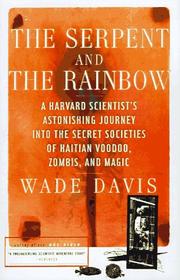
Davis's popular account of an ethnobotanical explanation for zombification. Widely read and seriously disputed — his tetrodotoxin claim was challenged in the pharmacological literature, and the ethics of the fieldwork were criticised. Read it, then read the next book.
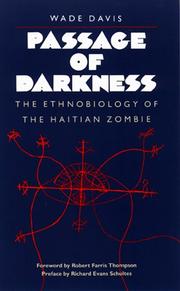
Davis's academic version of the same research, with the evidence and the ethnographic argument laid out properly rather than as narrative. Reading the two back to back is the clearest lesson available in what popularisation does to a contested finding.
Vodou, the state and the law
IntermediateUnderstand Vodou's role in the Haitian Revolution and its subsequent criminalisation, and place it inside Haitian political history
▸ Study plan for this stage
Pace: 8-9 weeks, the heaviest stage on the path. Ramsey is 345pp of legal and religious history, Dubois's Avengers of the New World 374pp, and his Haiti 448pp (catalogued here under the bare title Haiti; it is the same book). Read Ramsey first at 20pp a day, then the two Dubois volumes in that order — the
- The anti-superstition campaigns and the penal provisions against sortileges — the Haitian state repeatedly criminalising the practices of most of its own population
- Why the outside caricature and the domestic prohibition reinforced each other
- Vodou in the Haitian Revolution, and specifically what can and cannot be established about the Bois Caiman ceremony
- The revolution's actual course: slave insurrection, the war against France, Britain and Spain, and independence in 1804
- The indemnity, the isolation and the debt that shaped Haiti's economics from independence onward
- The 1915-1934 US occupation, the Duvalier period, and Vodou's recurring role as scapegoat in political crises
- The difference between Vodou as timeless folk culture and Vodou as a religion with a legal and political history — Ramsey's central correction
- What did the Haitian anti-superstition laws actually prohibit, when were they enforced, and who pushed for them?
- What is the documentary basis for the Bois Caiman ceremony, and how does Dubois handle the gap between evidence and national narrative?
- How did French colonial policy toward African religion in Saint-Domingue differ from the independent Haitian state's, and how was it the same?
- In which later political crises was Vodou blamed, and what happened to practitioners in each?
- Why does Ramsey say reading Vodou as unchanging folk culture is a mistake, and what does the legal history show instead?
- Build a timeline from Ramsey and Dubois of every legal restriction on Vodou practice from the colonial period to the twentieth century, with dates and what each prohibited. The pattern of repetition is the argument.
- Read Dubois on Bois Caiman, then find a confident claim about Vodou starting the revolution in another source and check it against what Dubois says is established. Do this once and you will read every subsequent claim differently.
- Track one theme — land, debt, or foreign intervention — across both Dubois volumes from 1791 to 2010. Haiti is structured so this is possible, and it is the fastest route to the through-line.
- Set Ramsey's account of an anti-superstition campaign against Brown's account of ordinary household practice in Mama Lola, and describe concretely what the law was reaching into.
Next up: Having read Vodou as theology, as fieldwork, as caricature and as legal history, what remains is the thing all four describe at a distance — the flags, the altars and the drumming that constitute the practice itself.

The history of the anti-superstition laws — how the Haitian state repeatedly outlawed the practices of most of its population, and what that did. The single most important corrective to reading Vodou as timeless folk culture.
The standard history of the Haitian Revolution, and the sober account of Vodou's role in it — including what can and cannot be established about the Bois Caiman ceremony. Read it before accepting any confident claim about Vodou starting the revolution.

Catalogued under the bare title Haiti; this is the same book. Dubois carries the story from independence to the 2010 earthquake, and shows Vodou being blamed and banned in every subsequent political crisis.
Ritual, art and sound
IntermediateEncounter Vodou through the material and musical forms it actually produces, rather than only through description of belief
▸ Study plan for this stage
Pace: 4-5 weeks. Sacred Arts of Haitian Vodou is a 445pp exhibition volume — mostly plates and short scholarly essays, so it is browsed and studied rather than read straight through, perhaps a fortnight of sessions. McAlister's Rara! is 277pp of ethnomusicology and reads as a normal academic book at 20pp
- Vodou flags, altars, bottles and assemblage art as a major aesthetic tradition rather than as ritual equipment
- Gede imagery and the aesthetics of death, sex and comedy that go with it
- Rara as Lenten street procession, and the overlap between religious obligation, neighbourhood organisation and popular music
- Music, drumming and rhythm as liturgy — different rhythms for different lwa, not background accompaniment
- Class politics and the public street: who marches, who watches, and what the songs are permitted to say
- The museum problem — what an exhibition volume does to objects made for ritual use
- Vodou as a public and mobile practice, which is how most Haitians actually encounter it
- What can a Vodou flag or altar tell you that a written description of the same ritual cannot?
- How does Cosentino's volume handle the fact that these objects were made to be used rather than displayed?
- What is Rara for, and how does McAlister connect it to the Vodou material of the earlier stages?
- How do Rara songs function politically, and what protections does the form give the singers?
- Having finished the path, what would you now say to someone who describes Vodou using the word voodoo in its Hollywood sense?
- Pick one Gede image from Cosentino's plates and write down everything in it you can now identify from the first stage's vocabulary. The gap between what you can name now and what you could name at the start is the measure of the path.
- Listen to a recording of Rara while reading McAlister's chapter on it, and follow her description of the instrumentation as you hear it. The vaksin lines in particular are hard to hear until described.
- Choose one lwa and assemble everything the path has said about them — Chita Tann's devotional account, Metraux's ethnography, Brown's household, Cosentino's objects, McAlister's songs. A single figure held across five books is the best possible summary of the field.
- Compare a Rara song's lyrics as McAlister glosses them against what Seabrook thought he was hearing in 1929. This closes the loop the third stage opened.
Next up: This is the end of the path: from here the reading is Kreyol-language sources, ethnomusicology and the current scholarly literature, all of which now assume exactly the background you have built.
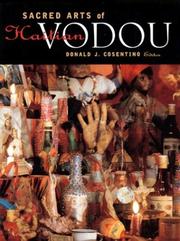
The UCLA Fowler Museum exhibition volume — flags, altars, bottles, Gede imagery — with essays by the leading scholars. The best evidence that Vodou is an aesthetic tradition as much as a theological one.
McAlister on the Lenten street processions where Vodou, class politics and popular music meet. The closing book because it shows the religion in public and in motion, which is how most Haitians actually encounter it.
Discussion
Keep reading
Paths that share books, cover the same subject, or open a related topic.