The Grocery Business: The Best Books on How Supermarkets Work, in Order
Groceries run on net margins of one or two percent, which is why almost everything about the business — slotting fees, private label, the cold chain, scheduling, the relationship with a supplier — is a fight over pennies at enormous volume. This path starts inside a real store, goes back to the antitrust fight that made the modern chain possible, follows the supply chain that lets a shop sell strawberries in February, then turns to the thing that actually decides the industry's shape: the buyer's power over everyone who sells to it. It closes with what all that pressure does to the product on the shelf.
Inside a real store
BeginnerGet the physical business first: how a store is laid out, what a category buyer does, where the money is and is not made, and what the jobs are actually like. Everything structural later is easier once you can picture the receiving dock and the sales floor.
▸ Study plan for this stage
Pace: About three weeks for 650 pages, both books trade nonfiction at 40 to 50 pages an evening. Lorr's The Secret Life of Groceries (336pp) first, ten days: he rode with a long-haul trucker, worked the Whole Foods floor, followed a hot-sauce founder trying to buy shelf space, and reported on forced labou
- Store layout as an economic instrument: perimeter perishables, centre-store packaged goods, and where the margin sits in each
- The category buyer's job, and the leverage that comes with deciding what gets stocked
- Slotting fees and the cost of shelf space to a new supplier
- Net margin of one or two percent, and what that does to every operating decision
- Shrink, waste and the perishability risk that makes fresh both the highest margin and the highest loss
- What the jobs actually are — receiving, stocking, cutting, checkout — and the scheduling practices around them
- Follow one product from Lorr's book from producer to shelf and name every party who takes a margin.
- What does a hot-sauce founder have to pay or promise to get shelf space, and who decides?
- How does Heinen's compete against a national chain, and what does that strategy cost it?
- Where in a supermarket is money actually made, and where is it lost?
- What does Lorr document about labour in the supply chain, and how did he establish it?
- Walk a supermarket with Lorr's and Ruhlman's vocabulary and map it: perimeter, centre store, end caps, checkout. Note what is at eye level in three categories.
- Pick one product and estimate its retail margin from what the two books tell you about typical markups by category. Write down every assumption.
- List every cost a new supplier faces to get into one chain, using Lorr's account, and total them.
- Write half a page on what Heinen's does that a national chain cannot, and what it cannot do that a national chain can.
Next up: The store you have just walked exists in this form because of a policy fight in the 1930s, which is where the next stage goes.
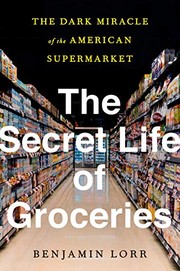
Lorr rode with a long-haul trucker, worked the Whole Foods floor, followed a hot-sauce founder trying to get shelf space, and reported on forced labour in Thai shrimp. The single best book on the industry and the only one that connects the buyer's office to the boat.

A food writer's history of his family's Cleveland chain, Heinen's, which doubles as a clear explanation of how a mid-size regional grocer competes on perishables and service. The complement to Lorr: one company, from the inside, sympathetically.
How the modern chain was made legal
BeginnerUnderstand that the supermarket format is a policy outcome as much as a retail invention. Chain buying power was nearly legislated out of existence in the 1930s, and the Robinson-Patman Act's near-abandonment is the reason today's structure is possible — a live issue again as antitrust interest in buyer power returns.
▸ Study plan for this stage
Pace: Seven weeks for 1,235 pages, and all three are history rather than current guidance — read them as evidence about how the structure came to be, not as descriptions of the industry today. Levinson's The Great A&P and the Struggle for Small Business in America (371pp) first, two and a half weeks: the
- Chain buying power as the thing the 1930s legislation was aimed at
- The Robinson-Patman Act, what it prohibited, and the consequences of its near-abandonment
- The antitrust question at the heart of the A&P case: whether low consumer prices can themselves be an offence
- Mass consumption as post-war policy, and the suburban landscape the supermarket format required
- Self-service as an export, and the state's role in promoting it abroad
- The format as a policy outcome rather than purely a retail invention
- Why the buyer-power argument has returned to antitrust and what has changed since
- What exactly did A&P do that its opponents wanted made illegal?
- State the consumer-welfare argument and the small-business argument as their advocates would.
- Where is Levinson's sympathy visible in his handling of evidence?
- What did the post-war suburban build-out supply that the supermarket format needed?
- What was the American government trying to prove by exporting the self-service store, and to whom?
- Which parts of this history bear directly on current antitrust interest in buyer power?
- Reconstruct the A&P case as a two-sided argument, giving each side its best evidence from Levinson's own text.
- List the infrastructure preconditions Cohen identifies for the suburban supermarket and check each against the store you mapped in stage one.
- For Supermarket USA, note every instance of state involvement and classify it: funding, diplomacy, publicity, or regulation.
- Write a page on what would change in today's grocery industry if Robinson-Patman were enforced as originally written.
Next up: Legal room to buy at scale is only useful if the goods can physically reach the shelf, which is what the logistics revolution of the next stage delivered.
The history of the company that invented the modern chain, the political campaign to destroy it, and the antitrust case that turned on whether low prices for consumers can be an offence. Levinson is an economist and sympathetic to A&P, which is a position — read it as an argument as well as a history.
A historian's account of how post-war America was rebuilt around mass consumption, including the suburban shopping landscape the supermarket needed to exist. Broader than groceries and the reason the format spread when and where it did.

The supermarket as Cold War export — American agribusiness and the state promoting the self-service store abroad as proof that capitalism fed people better. Academic, and the book that shows the format was never a purely commercial artefact.
The supply chain that makes it possible
IntermediateFollow the goods backwards from the shelf. Containerisation, refrigeration and trucking deregulation each did more to shape what a supermarket can sell than any merchandising decision, and each has a literature of its own. By the end you should be able to explain why a modern store carries thirty thousand items and a 1950s one carried three thousand.
▸ Study plan for this stage
Pace: Six to seven weeks for 1,120 pages, and none of the three is a food-industry book in the ordinary sense. Levinson's The Box (395pp) first, two and a half weeks — the definitive history of container shipping and the most important non-food book on this path, because it is the precondition for a globa
- Containerisation and the collapse in the cost of moving goods, and what it did to sourcing decisions
- The cold chain as an engineered system, and 'fresh' as a marketing category with a technical definition
- Trucking deregulation and non-union long-haul driving as the ground floor of cheap food
- Assortment growth: why a store carries tens of thousands of items where a mid-century one carried a few thousand
- Perishability as the source of both perimeter margin and perimeter loss
- Landed cost, and how each of these three changes altered it
- Why logistics decisions constrain merchandising decisions rather than the other way round
- What did the container change that lower freight rates alone would not have?
- For one of Freidberg's six foods, describe the cold chain end to end and name the point of greatest loss.
- How did trucking deregulation change the cost of moving food, and who bore that cost?
- Explain, with numbers where the books give them, why assortment expanded as it did.
- Which of these three changes was most consequential for what a supermarket can sell, and why?
- Draw the supply chain for one perishable and one shelf-stable product, marking where containerisation, refrigeration and trucking each enter.
- Take Freidberg's account of one food and write what 'fresh' means for it technically, then compare that with how it is labelled in a shop.
- Using The Box and Trucking Country together, list the components of landed cost and note which each book says fell and by roughly how much.
- Return to your store map from stage one and mark which sections could not exist without the cold chain.
Next up: Cheap logistics gives a national buyer scale, and scale over suppliers is what actually determines the shape of the industry.
The definitive history of container shipping, which is the precondition for a global grocery assortment and for the private-label sourcing in the next stage. Not a food book, and the most important non-food book on this path.
A geographer's history of the cold chain told through six foods — beef, eggs, fruit, vegetables, milk, fish — and of how 'fresh' became a marketing category with a technical definition. The best explanation of why the perimeter of the store is where the margin and the risk both live.

How deregulated long-haul trucking and non-union drivers underwrote cheap food and the rise of big-box grocery. Read after The Box: together they explain the logistics cost structure that Walmart then exploited better than anyone.
The buyer's power over everyone who sells to it
IntermediateReach the thing that actually determines the industry's shape. A grocery buyer with national scale can dictate a supplier's price, packaging, delivery schedule and, eventually, its cost structure. Assess the standard defence — that this pressure is passed to consumers as lower prices — against the documented costs to suppliers and workers, and note where each author's sympathies lie.
▸ Study plan for this stage
Pace: Eight weeks for 1,423 pages, the longest stage here, and the four books sit at different distances from the present. Fishman's The Wal-Mart effect (294pp) first, ten days: the clearest account of what happens to a supplier once Walmart is its largest customer, with named companies and the mechanics
- Buyer power: dictating a supplier's price, packaging, delivery schedule and eventually its cost structure
- The price rollback as an operational mechanism rather than a marketing slogan
- The standard defence — that pressure is passed to consumers as lower prices — and the evidence for and against it
- Supplier dependence and the point at which a customer becomes an owner in all but name
- Private label as a lever, and what it does to a branded supplier's negotiating position
- Sourcing shifts and the labour consequences documented in the reporting
- How an outside entrant with different capital costs applies the same playbook
- Take one named supplier from Fishman and trace what happened to its costs, its workforce and its product.
- What is the strongest version of the consumer-savings defence, and what evidence would settle it?
- How was the buying culture built, on Ortega's account, and what in it was deliberate policy?
- Where does Shell's general argument outrun the specific evidence in the other two books?
- What did Amazon bring to grocery that an incumbent chain did not have?
- Which claims in Ortega's account are now period evidence rather than current fact?
- Build a table of the named suppliers across Fishman and Ortega: what was demanded, what changed, and what the source is for each.
- Write the price-rollback mechanism as a sequence of steps a supplier experiences, using Fishman's detail.
- For Cheap, list the claims Shell makes that the two Walmart books evidence and the ones she asserts alone.
- Compare Amazon's and Walmart's leverage over a supplier point by point, using Stone and Fishman, and say which is harder to refuse.
- Mark every fact in this stage that is more than a decade old and note whether it is still likely to hold.
Next up: All of that pressure has to land somewhere, and the last stage looks at where it lands — in the product itself.
The clearest account of what happens to a supplier once Walmart becomes its biggest customer, with named companies and the specific mechanics of a price rollback. Fishman is even-handed about the consumer savings, which makes the supplier evidence harder to dismiss.
The Wall Street Journal reporter's history of Walmart from the inside out, including the labour practices and the sourcing shift to Asia. Older and openly critical, and still the most detailed reported account of how the company's buying culture was built.
The argument that a consumer economy organised around the lowest possible price has costs that show up somewhere else — in wages, durability and supplier viability. A thesis book rather than an investigation; useful as the general case that the two Walmart books make specifically.
Amazon's rise, including the logistics and pricing tactics it brought to groceries and the Whole Foods acquisition that made it a grocer. The right last book in this stage because it shows the same buyer-power playbook arriving from outside the industry.
What ends up on the shelf
BeginnerClose by connecting the economics to the product. Slotting fees, category management and thin margins are why the centre of the store looks the way it does, and there is a serious reported literature on how those products are engineered. Finish able to say what a realistic alternative model costs.
▸ Study plan for this stage
Pace: Four to five weeks for 767 pages. Moss's Salt Sugar Fat (463pp) is the substantial one — three weeks at 35 pages a session — investigative reporting built on internal company documents and interviews with the scientists who did the work, and it names companies and people, which is what makes it hold
- Category management and slotting fees as the reason the centre of the store looks as it does
- Product engineering for maximum appeal, and the internal research that guided it
- Reformulation economics: why lowering salt, sugar or fat is a commercial decision before it is a nutritional one
- The co-operative ownership model, its buying disadvantages, and what it does about them
- Scale as the source of both low prices and concentrated buyer power — the trade-off no model escapes
- Advocacy as a genre: reading an argued case for what it concedes
- What did the internal documents Moss obtained show that public statements did not?
- Why is reformulation commercially difficult even where a company wants to do it?
- What does a co-operative pay for goods relative to a national chain, and how does Steinman address the gap?
- Which of Steinman's concessions is the most damaging to his own case?
- Connect one product on a shelf to a decision described in each of the previous four stages.
- Pick three centre-store products and reconstruct, from Moss, the design decisions likely behind each formulation.
- Cost out a weekly shop at a co-operative and at a national chain using the figures Steinman supplies, and record what he does not supply.
- Write the full economic path of one item from the previous stages: legal regime, logistics, buyer negotiation, formulation, shelf position.
- Write 800 words answering what a realistic alternative grocery model costs, in money and in assortment, citing at least four books on this path.
Next up: You can now read a grocery-industry claim — about prices, suppliers, labour or product — and place it in the structure that produced it.
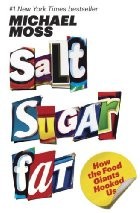
Investigative reporting on how processed-food companies engineer products for maximum appeal, based on internal documents and interviews with the scientists who did it. Names companies and people, which is what makes it hold up; his later Hooked extends the argument to addiction research.

The case for food co-operatives as an alternative ownership model, written by an advocate who says so on the first page. Included as the counter-proposal to the whole path — read it for what it concedes about scale and price as much as for what it claims.
Discussion
Keep reading
Paths that share books, cover the same subject, or open a related topic.