How Book Publishing Works: The Best Books on the Industry, in Order
This is the business of publishing, not a guide to getting published: how a handful of conglomerate-owned imprints acquire, pay for, print, sell and increasingly stream books, and what forty years of consolidation and one dominant retailer did to all of it. The path starts with the sociology of the trade as it actually operates, moves into the editorial work at its centre, then into the house histories and memoirs that show the culture changing, and ends with bookselling, Amazon and the digital fight.
How the Industry Actually Works
BeginnerBe able to describe the value chain — agent, imprint, advance, print run, sales rep, retailer, returns — and explain why conglomerate ownership changed which books get bought rather than how they get made.
▸ Study plan for this stage
Pace: 4 weeks. Merchants of Culture first and give it two weeks — it is a sociologist's field study, it is the structural foundation for everything after it, and the chapters on retail power and the logic of the bestseller are the ones to read slowly. Then Epstein's Book Business and Schiffrin's The Busin
- The value chain end to end: author, agent, imprint, advance, print run, sales rep, wholesaler, retailer, and returns
- The advance as the industry's central financial instrument, and how it functions as a risk transfer and a marketing signal at once
- Returns — books shipped on a sale-or-return basis — and the working-capital and overprinting consequences that follow from it
- Conglomerate ownership and the shift from house-level to corporate-level financial targets, and Thompson's argument that this changed which books get acquired rather than how they are edited
- The 'extreme publishing' cycle: bigger advances for fewer titles, and the bestseller as a manufactured event
- Backlist as the actual economics of a publishing house, against the frontlist as its public face
- Epstein on the trade paperback and the physical formats as commercial inventions
- Describe how a book gets from an agent's submission to a shop's shelf, naming every party paid along the way and what each is paid for.
- What does an advance actually buy the publisher, and why are advances not simply an early royalty payment?
- Thompson says conglomerate ownership changed acquisition. State the mechanism precisely — what does a corporate return target do to an editor's decision?
- Schiffrin argues consolidation narrowed what gets published. What evidence does he offer, and what would count against him? Consider the volume of titles published now.
- Returns are unique to this industry among consumer goods. Why does the practice persist, who benefits, and what would happen if it ended tomorrow?
- All three authors are writing before the audiobook boom, the self-publishing platforms and the current retail landscape. Which of their structural claims survive those changes intact?
- Build a profit-and-loss for one hypothetical hardcover: advance, print run, unit cost, list price, retailer discount, expected returns rate, royalty. Then find the print run at which it breaks even and say what that implies about the advance.
- Take Schiffrin's claim about narrowing and test it against published title counts and the ownership of the imprints on your own shelf. Write a paragraph saying whether the data supports the polemic.
- Trace the word 'midlist' across all three books and write down what each author means by it. The differences are the argument.
- Pick five books published in the last year by five different imprints, then chart which parent company owns each. Compare your chart with Thompson's description of the field and note what has changed since.
Next up: The structure understood, the next stage goes inside the one job everyone outside the industry thinks they already understand.
A sociologist's field study of Anglo-American trade publishing, and the clearest structural account in print of agents, advances, retail power and the logic of the bestseller. This is the foundation for everything else on the path.

A short, opinionated history-cum-memoir by the editor who invented the trade paperback and co-founded the New York Review of Books. Read second: it supplies from the inside the historical arc Thompson describes from outside.
Schiffrin's polemic on being pushed out of Pantheon by its corporate owners, and the sharpest statement of the case that consolidation narrowed what gets published. Deliberately partisan, and the argument the rest of the path has to answer.
The Editorial Job
BeginnerUnderstand what editors actually do — acquisition, developmental editing, in-house advocacy — and why the romantic image of the line-editing genius describes only a small and shrinking part of the role.
▸ Study plan for this stage
Pace: 3-4 weeks. Editors on Editing first, then What Editors Do, then Berg's biography of Maxwell Perkins — our catalogue displays this record with a truncated title, Max Perkins Editor of Geni, and the book is Max Perkins: Editor of Genius. Read the two anthologies close together and deliberately: Ginna'
- Acquisition as the core of the job: reading, judging, and building a case that survives an acquisitions meeting
- The P&L an editor must construct to buy a book, and the way that document constrains editorial taste
- Developmental editing, line editing and copyediting as three separate functions increasingly done by three different people, often freelance
- In-house advocacy — the editor as the book's representative to sales, marketing and publicity — and why this now consumes more of the role than the manuscript does
- The acquisitions meeting as the real decision point, and who sits in it
- The Perkins myth: what Perkins actually did for Fitzgerald, Hemingway and Wolfe, and what has changed in the conditions that allowed it
- What the shift from Gross's 1962 anthology to Ginna's 2017 one reveals about digital workflow and marketing pressure
- What does an editor do in a week? Build the answer from the contributors' own accounts rather than from the popular image.
- Compare a specific function — say, the editor's relationship with the sales department — as described in Editors on Editing and in What Editors Do. What changed, and why?
- Perkins cut Thomas Wolfe's manuscripts substantially. What did that require in time, authority and money, and which of those three is most obviously missing from the job now?
- Who actually decides what a house buys? Trace the decision from an editor's enthusiasm to a signed contract.
- Both anthologies are written by working editors describing their own profession. What would you expect such a collection to overstate?
- Take one essay from Gross and its nearest equivalent in Ginna and list the tasks each describes. Mark which tasks appear in both, which have disappeared, and which are new. That table is the stage's argument in one page.
- Write the acquisitions-meeting case for a book you would want to publish: comparable titles, sales expectations, the P&L, and the marketing hook. Then note how much of that document is editorial judgement and how much is forecasting.
- Find one specific editorial intervention Berg documents Perkins making, and then find a contributor in What Editors Do describing whether that kind of intervention still happens. Write the paragraph where they disagree.
- Take a published book you admire and try to identify, from the acknowledgements and any available interviews, who did the developmental work. Report honestly on how much you could establish.
Next up: With the job defined, the next stage watches the houses that did it change hands, through the people who were in the room.
The standard anthology in which working editors describe their own function, from acquisition through copyediting. The most direct answer available to what the job consists of.

The modern successor to Gross, covering digital workflow, marketing pressure and the acquisitions meeting. Read it second and note what has changed between the two collections — that gap is itself the industry's recent history.
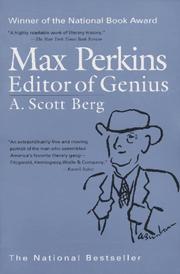
The biography of Scribner's editor of Fitzgerald, Hemingway and Wolfe, and the source of publishing's founding myth about itself. Read it knowing it describes a role that barely exists now. The Open Library record truncates the title, which is Max Perkins: Editor of Genius.
Houses and the People Who Ran Them
IntermediateTrace the transition from proprietor-owned houses to conglomerate imprints through the people who lived it, and learn to read a publishing memoir for what it is defending as well as what it reports.
▸ Study plan for this stage
Pace: 4 weeks. Hothouse first as the reported history — Kachka on Farrar, Straus and Giroux is the best case study available of a literary house surviving into the conglomerate era with its identity intact, and it is concrete where Thompson was structural. Then Korda's Another Life, forty gossipy years at
- The proprietor-owned house: personal taste, personal capital, and the economics that made it possible
- Roger Straus's business model and the specific things FSG did that a corporately owned imprint would not
- The arrival of blockbuster economics at Simon and Schuster and the celebrity book as a financial instrument
- A small independent's actual economics, which Athill sets out with a clarity none of the corporate memoirs match
- The transition from house to imprint: what an imprint retains when a conglomerate buys it, and what it loses
- The editor-author relationship as it was practised when houses were small
- Reading a publishing memoir for what it is defending, not only for what it reports
- What did FSG do differently, concretely, and how much of it depended on Roger Straus's ownership rather than his taste?
- Korda is candid about money and Athill is candid about failure. Compare what each admits and what each avoids.
- Athill's Deutsch and Korda's Simon and Schuster operated at completely different scales. Which of their practices are scale-dependent and which are not?
- Kachka is a reporter and the other two are participants. Where does his account contradict something a memoirist would have told you?
- By the end of this stage, what specifically has been lost in the shift from proprietor to conglomerate — and what has been gained? Name both.
- Take one author published by two of these houses and trace how each memoir describes acquiring and handling them. Where the accounts differ, say who has the motive.
- Reconstruct the economics of André Deutsch from Athill's figures — staff, list size, print runs, overheads — and then estimate what the same list would cost inside a conglomerate now.
- List every claim Korda makes about the arrival of blockbuster publishing and check each against Thompson's structural account from stage one. Mark which the sociology confirms.
- Write the paragraph FSG's corporate owner would write about the Kachka book. Then write Straus's reply. Both should be defensible from the text.
- Take one book each of the three memoirists says they were proud to publish and find out what it earned. Report whatever you can establish and be explicit about what you cannot.
Next up: Publishers have now had four books to explain themselves; the last stage moves to the end of the chain, where the actual power sits.

A reported history of Farrar, Straus and Giroux, the best case study available of a literary house surviving into the conglomerate era with its identity intact. Concrete where Thompson is structural.
Forty years at Simon and Schuster from the editor-in-chief's chair, covering the arrival of blockbuster economics and celebrity publishing. Gossipy, and unusually candid about money.

Athill's memoir of fifty years at André Deutsch is the finest piece of writing on this path and the British counterweight to Korda. It also shows a small independent house's economics with a clarity no business book manages.
Bookselling, Amazon and the Digital Shift
IntermediateUnderstand retail as the real power in the chain, and be able to argue about what e-books, self-publishing and a single dominant retailer actually did to publishing versus what everyone predicted they would do.
▸ Study plan for this stage
Pace: 5 weeks. Reluctant Capitalists first for the pre-Amazon history — Miller shows that the fight over retail consolidation long predates Amazon, which reframes everything that follows. Then The Late Age of Print, then The Everything Store, then Book Wars. Read Stone as reported business history of a co
- Retail as the real power in the chain: shelf space, co-op payments, discount terms, and who sets them
- The chain superstore era and the independent bookshops' fight against it — the same argument, one generation earlier
- Striphas's account of the book as a mass-produced commodity: Oprah, big-box retail, and the industrial logistics of a cultural object
- The agency pricing dispute, the Department of Justice case, and what it settled about who controls the price of an e-book
- What actually happened to e-books — the plateau after the initial surge — against what was universally predicted
- The audiobook boom and self-publishing as the two changes that mattered more than the ones everyone watched
- Amazon's leverage over publishers, and the difference between a retailer, a platform and a competitor
- Miller writes about the pre-Amazon fight over chain superstores. Name three arguments from that period that are repeated verbatim about Amazon now.
- Explain the agency pricing dispute: what publishers wanted, what Amazon wanted, what the court decided, and who ended up with the pricing power.
- E-books were expected to take over and did not. Give Thompson's explanation from Book Wars, and then give the alternative explanation, and say which the sales data supports.
- What does Amazon actually gain from books, given the category's economics? Use Stone to answer.
- Self-publishing removed the gatekeeper. Using Book Wars, describe what replaced the gatekeeping function rather than assuming nothing did.
- Return to Merchants of Culture from stage one. Which of Thompson's 2010 claims does his own 2021 sequel revise, and what did he get wrong?
- Chart the retail share of book sales by channel — independents, chains, mass merchants, online — across the four decades these books cover. Then mark which of Miller's fears about the chains were realised by a different actor.
- Take the agency pricing case and set out both parties' arguments as they were made, then the court's reasoning. Write down what each side actually won.
- Trace one number — e-book share of trade sales — through Striphas, Stone and Book Wars, noting the year and source for each. Write a paragraph on why forecasts made from the early figures went wrong.
- Write the paragraph a 2011 publishing executive would have written predicting 2021, using only what was knowable then. Then annotate every error with what they could not have foreseen and what they should have.
- Pick one recently published book and follow it through the entire chain built across this path: agent, advance, imprint, editor, print run, retail channel, discount, and format mix. Mark every step where you had to guess, and say why that information is not public.
Next up: This closes the path: you can now read any claim about publishing's decline or disruption and say which part of the chain it is actually about.
A sociological history of American bookselling from independents through the chain superstores, showing that the fight over retail consolidation long predates Amazon. Start the stage here for the pre-history.

An academic but readable account of the book as a mass-produced commodity in the twentieth century, including Oprah, big-box retail and early e-books. The bridge between Miller's world and Stone's.
The standard reported history of Amazon, and essential here because Amazon began as a bookseller and treated publishers as its first proving ground. Read it for the counterparty's motives.

Thompson's sequel to Merchants of Culture, on the digital revolution's actual outcome — e-book plateau, audio boom, self-publishing, Amazon's grip. The right closing book because it is the only one written late enough to say how the fight turned out.
Discussion
Keep reading
Paths that share books, cover the same subject, or open a related topic.