Best Books on Container Shipping and Global Trade, in Reading Order
Containerization is the rare infrastructure change whose consequences are easy to state and hard to overstate, so this path starts with the box itself and widens outward. First the invention and its economics, then the working reality of the ships, ports and crews that carry it — including the parts of the ocean where no law reaches. The final stage moves from the physical system to the argument about it, reading the case for open trade alongside its most serious critic, because what containers made possible is exactly what global trade politics has been fighting over ever since.
The box
BeginnerUnderstand how the shipping container was invented and fought over, and why cutting freight costs to near zero reorganized where the world makes things
▸ Study plan for this stage
Pace: Five to six weeks. The Box is 395 pages of economic history that reads like narrative — about three weeks at 20 pages a day. Outside the Box is 288 pages and takes two. Read them consecutively and deliberately in that order: the second book is the same author arguing that the process the first book
- Malcom McLean as a trucking operator rather than a shipping man, which is Levinson's first and most important observation: the innovation came from someone who saw the sea leg as one segment of a door-to-door journey, not as the business itself
- The 1956 Ideal-X voyage as the conventional starting date, and Levinson's insistence that the box itself was not the invention. Containers existed. The system — ships, cranes, chassis, terminals, standards and the elimination of manual handling — was the invention
- Break-bulk cargo handling as the thing displaced: cargo loaded piece by piece by gangs of longshoremen, with loading costs often exceeding a quarter of total shipping cost and ships spending more time in port than at sea
- The scale of the cost collapse, which is the whole argument: ocean freight fell to the point where it stopped being a meaningful factor in where a good is made. When transport is nearly free, factory location is determined by labour and policy instead
- The union fights, which Levinson treats seriously rather than as an obstacle to progress — the New York and West Coast longshoremen's agreements, the mechanisation funds, and the deliberate trading of jobs for money
- The standards war over container dimensions and corner fittings, and the general lesson it illustrates: a network technology is worthless until everyone agrees, and the agreement is fought over because the winner's existing equipment becomes the standard
- The port winners and losers — New York's decline and Newark's rise, London's docks emptying to Felixstowe — and Levinson's point that the geography of shipping was rewritten by which ports could accommodate cranes and backland
- Levinson's reversal in Outside the Box: value chains have stopped lengthening, the great globalisation wave peaked around 2008, and services and ideas rather than goods are the growth story. Note that this is a forecast as well as a history, and that its central claim is contested
- What did McLean's background in trucking let him see that shipping executives did not?
- Levinson insists the container was not the invention. What was, and what were its components?
- How much of total shipping cost was cargo handling before containerisation, and what did the cost fall to? What follows for factory location?
- How were the longshoremen's unions dealt with in New York and on the West Coast, and were the settlements fair?
- Why does a container standard have to be fought over rather than agreed? Which dimension conflicts mattered most?
- What is Levinson's argument in Outside the Box, and what would falsify it?
- Calculate the shipping cost per unit for a common consumer good — a pair of shoes, a television — as a share of retail price, using published container rates and a standard load count. The number is usually under a percent and it is the entire argument of this stage in one figure.
- Draw the door-to-door journey of a container from factory to store as McLean would have drawn it, marking every point where cargo used to be handled manually. Count the handlings eliminated.
- Write 200 words on the longshoremen's settlements from the union's point of view. Levinson gives you enough to do it fairly, and doing it fairly is necessary before stage three's politics.
- Take one port near you or one you know, find out when it containerised or failed to, and what happened to it. The pattern Levinson describes is almost always visible locally.
- After Outside the Box, write down two testable predictions from it and note the date. This subject moves fast enough that you can check them within a few years.
Next up: You have the economics of the box; the next stage puts you on the ships, in the ports and among the crews that the cost curve makes invisible.
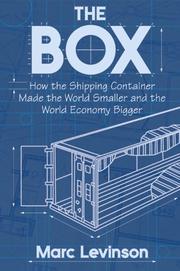
The definitive history of containerization — Malcom McLean, the longshoremen's unions, the port wars and the standards fights. Start here; it is the book everything else in this path either builds on or reacts to.

Levinson's follow-up, arguing that the great globalization wave has already peaked and that value chains are reorganizing rather than lengthening further. Read it straight after The Box: same author, opposite direction of travel, and a useful check on treating containerization as a one-way ratchet.
The working system
IntermediateSee the physical network as it actually operates — crews, ports, flags of convenience, the last mile — and the human costs the efficiency story leaves out
▸ Study plan for this stage
Pace: Ten to twelve weeks. Ninety Percent of Everything is 294 pages and takes about two weeks. Down to the Sea in Ships is 323 pages of more literary voyage writing and takes two to three. The Outlaw Ocean is 544 pages of investigative reporting and needs three to four weeks; it is the hardest book on th
- Flags of convenience and the open registry system: a ship registers in Panama, Liberia or the Marshall Islands, and the flag state's law governs at sea. This single arrangement is the mechanism behind most of what Urbina documents later
- Crew composition and conditions — multinational crews on short contracts, months at sea, denied shore leave under post-2001 port security rules, and the isolation that follows from ships turning round in hours rather than days
- Shipping's environmental footprint: heavy fuel oil, sulphur emissions, the pre-2020 regulatory position and what changed, plus the underrated issues of ballast water and underwater noise
- Clare's contribution is weather and time. Down to the Sea in Ships is about what the passage is like — the boredom, the watches, the storm — and it makes the labour concrete in a way an economics account cannot
- Urbina's jurisdictional void, which is the stage's hardest idea: on the high seas, enforcement depends on the flag state, and flag states that sell registrations cheaply have no capacity or incentive to enforce. The result is not a gap in the law but a gap in anyone to apply it
- What Urbina documents in that void: forced labour and debt bondage on fishing vessels, abandonment of crews in foreign ports without pay or repatriation, illegal and unreported fishing, and transhipment at sea that lets catch and crews change hands out of sight
- The distinction worth keeping: Urbina's worst cases are largely in fishing rather than container shipping, and the container trade is more regulated and better documented. The shared feature is the flag system, which is why both belong in the same stage
- Mims's land-side story: the ocean leg is now a minority of the total journey time and cost, and the constraint has shifted to ports, trucking, warehousing and the algorithmic systems that route everything. The last mile is where the money and the labour pressure now are
- What is a flag of convenience, and what does the flag state's jurisdiction actually determine on the high seas?
- Why can a crew be denied shore leave, and what does the speed of container turnaround have to do with it?
- In Urbina's reporting, what makes abandonment of a crew possible and what recourse do abandoned seafarers have?
- Which of Urbina's abuses occur mainly in fishing rather than container shipping, and what do the two sectors share?
- According to Mims, where in the door-to-door journey does the time and cost now concentrate, and how has that shifted since Levinson's period?
- What parallels do you see between warehouse automation in Arriving Today and the longshoremen's mechanisation agreements in The Box?
- Look up a real container ship on a public vessel tracker — flag, owner, operator, class society, current position — and see how many countries are involved in one hull. The chart of ownership is the flag system made concrete.
- Track one ship's voyage over a week and note its port calls and turnaround times. Then reread George on shore leave with those hours in front of you.
- Write 300 words on the argument for open registries as their defenders make it. There is a real efficiency case and understanding it is necessary before you can evaluate Urbina's evidence.
- Take one item you ordered recently and reconstruct its journey as far as you can from public information — origin, port, vessel, terminal, warehouse. Mims's book is a template for exactly this and doing it yourself is the point.
- List every point in that journey where a person handled the goods. Compare it against the pre-container handling count you made in stage one.
- After Urbina, write down which of his abuses could be addressed by a change in flag-state practice and which could not. The division is the beginning of a serious policy view.
Next up: Having seen the physical system and its costs, the last stage takes up the argument about whether the trade it enables has been good, and for whom.
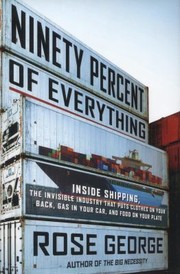
A reporter's voyage aboard a container ship, covering seafarer life, piracy, pollution and the invisibility of the whole industry. The best single account of what the trade actually looks like from inside it.

Two more voyages, written with more attention to the crews and the weather than to the economics. Read it after George for the texture; together they make the labour side of shipping concrete.
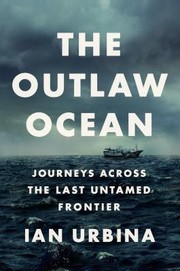
Investigative reporting on lawlessness at sea — forced labour, illegal fishing, abandonment, and the jurisdictional void that allows it. This is the hardest book on the path and the necessary counterweight to reading shipping purely as a logistics triumph.

Follows one product from a Vietnamese factory to a doorstep, through ships, ports, trucks, warehouses and algorithms. Read it last in this stage: it connects the ocean leg to the automated land-side system that now defines delivery.
The trade argument
IntermediateUnderstand why trade economists mostly favour openness, why the political backlash is not simply ignorance, and where the genuine empirical disagreements are
▸ Study plan for this stage
Pace: Twelve to fourteen weeks. The Silk Roads is a long world history and should be read over three to four weeks — read it first for the long perspective, and read it as narrative rather than as argument. The Great Convergence is 329 pages of analytical economics and needs three weeks with attention. Fr
- Frankopan's reorientation: writing world history from Central Asia and the trade routes outward rather than from Europe, which resets the assumption that global exchange is modern or Western. It is a corrective to the framing, not a substitute for the economics
- Baldwin's unbundling framework, which is the most useful analytical device in this stage. The first unbundling was cheap transport, separating production from consumption — that is Levinson's story. The second unbundling was cheap communication and coordination, separating stages of production from
- Why the second unbundling changed the character of globalisation: once you can coordinate a factory remotely, firms move technical and managerial knowledge across borders along with the work, so a handful of developing countries industrialised very fast while others did not
- The great convergence itself — the rapid rise in the developing world's share of manufacturing concentrated in a small number of countries — and Baldwin's argument that it is a different phenomenon from twentieth-century trade and needs different policy
- Irwin's core claims: gains from trade are real and large, the costs are concentrated while the benefits are diffuse, and protection is an expensive way to save a job compared with adjustment assistance
- Rodrik's disagreement, which is not a rejection of trade: he accepts the basic gains and argues that trade agreements after the 1990s went beyond removing border barriers into domestic regulation, investor protection and intellectual property, which is a political choice rather than an economic nece
- The policy trilemma Rodrik is known for: deep economic integration, national sovereignty and democratic politics — you can have two. This is the sharpest statement of what the argument is actually about
- The China shock literature, which is where the empirical disagreement is most live: research on US local labour markets found adjustment costs far larger and more persistent than the standard models assumed, and Irwin and Rodrik weight that finding very differently
- What does Frankopan's reorientation change about how you read the modern trade story? Give a specific example
- State Baldwin's first and second unbundling. Which of them is Levinson's book about, and what does the second one add?
- Take Irwin's answer to the argument that trade destroys jobs. What does he concede, and what does he dispute?
- State Rodrik's trilemma and give a real policy dispute that illustrates it
- What did the China shock research find, and why does it matter for the Irwin-Rodrik disagreement?
- Where do Irwin and Rodrik actually agree? The list is longer than the public debate suggests and being able to state it is the point of the stage
- Write the strongest case for open trade in 500 words using Irwin, then the strongest case for Rodrik's qualifications in 500 words, without contradicting any fact in either. If both read as convincing, you have done it correctly.
- Take one product and map its production stages across countries. Then classify each stage as first or second unbundling in Baldwin's terms. The framework becomes usable rather than abstract.
- Find the actual text of a modern trade agreement and identify which provisions are about border barriers and which are about domestic regulation. That division is Rodrik's entire argument and you can verify it directly.
- Read one paper from the China shock literature and write down what it measured, over what period, and what it did not measure. Then check how Irwin and Rodrik each characterise it.
- Return to the cost-per-unit figure you calculated in stage one and write a paragraph connecting it to Baldwin's framework: at what freight cost does the second unbundling become possible?
- Write a final page stating your own position on trade policy, distinguishing the claims you hold on evidence from the ones you hold on values. Keeping those separate is the discipline the whole path builds toward.
Next up: This is the end of the path — the box, the system that carries it, and the argument about what it made possible — and you can now read a supply chain story and place it immediately in its economics, its labour reality and its politics.

A world history written from the trade routes outward, which resets the assumption that global exchange is a modern or Western invention. Read it first here for the long perspective before the modern policy fight.

The analytical account of why globalization changed character when moving ideas got cheap as well as moving goods, and why that unbundled production. The most useful modern framework for thinking about supply chains rather than trade in finished products.

The clearest mainstream defence of open trade, answering the standard objections one at a time with evidence. Read it as the strongest statement of the economists' consensus position.

The most respected critic of hyperglobalization arguing that trade agreements went further than the economics justified and eroded domestic policy space. Deliberately last: Rodrik and Irwin are both serious economists who reach different conclusions, and the reader should finish holding both arguments rather than one.
Discussion
Keep reading
Paths that share books, cover the same subject, or open a related topic.