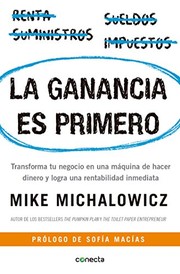
Best Books to Start a Dropshipping Business (in Order)
This curriculum takes a complete beginner from zero to running a profitable dropshipping store in four tightly sequenced stages. It starts by building an entrepreneurial and e-commerce mindset, then moves through the practical mechanics of product research and supplier sourcing, Shopify store setup, and finally paid advertising — each stage unlocking the vocabulary and confidence needed for the next.
Foundations: E-Commerce & Entrepreneurial Mindset
BeginnerUnderstand how online commerce and lean business models work, and develop the mindset needed to test ideas quickly without fear of failure.
▸ Study plan for this stage
Pace: 4–5 weeks, ~40–50 pages/day (approximately 2 weeks per book, accounting for note-taking and reflection)
- The Build-Measure-Learn feedback loop as the core engine of rapid iteration and validated learning
- Minimum Viable Product (MVP) definition and why shipping incomplete products early reduces waste and risk
- Vanity metrics vs. actionable metrics: how to measure progress that actually informs decisions
- The pivot: when and how to change strategy based on evidence rather than intuition
- The Sales Funnel framework and how to map customer journeys from awareness to purchase
- Value Ladder concept: structuring offers at different price points to maximize customer lifetime value
- The importance of a compelling hook, story, and call-to-action in marketing funnels
- Lean thinking applied to entrepreneurship: eliminating waste, testing assumptions, and failing fast
- What is the Build-Measure-Learn loop, and how does it reduce the risk of launching a business?
- Why is an MVP better than a fully-featured product at launch, and what makes an MVP 'minimum' enough?
- How do you distinguish between vanity metrics and actionable metrics, and why does this distinction matter for decision-making?
- What is a pivot, and what evidence should trigger a pivot decision in your business?
- How does the Sales Funnel framework help you understand your customer's journey, and what are the key stages?
- What is the Value Ladder, and how does it help you increase customer lifetime value?
- How do you craft a compelling hook and story in your marketing funnel to capture attention and drive action?
- How can you apply lean startup principles to test a dropshipping business idea with minimal upfront investment?
- Design an MVP for a hypothetical dropshipping product: define what features are essential and what can be cut to launch in 2 weeks instead of 3 months
- Create a Build-Measure-Learn cycle for a dropshipping niche: identify one assumption, design a test, and specify what metric you'd measure to validate or invalidate it
- Audit a real e-commerce funnel (from a competitor or case study): identify the hook, story, offer, and call-to-action, then critique its effectiveness
- Build a Value Ladder for a dropshipping product: design 3–4 offers at different price points (e.g., free lead magnet, $27 entry product, $97 core offer, $297+ premium tier)
- Identify 3 vanity metrics and 3 actionable metrics for a dropshipping business, then explain why the actionable ones matter more
- Write a 1-page pivot decision document: choose a hypothetical scenario (e.g., 'traffic is high but conversion is 0.5%'), decide whether to pivot or persevere, and justify your decision with evidence
Next up: This stage equips you with the lean mindset and funnel-building frameworks needed to test dropshipping ideas cheaply and measure what works, preparing you to move into the next stage where you'll learn the specific tactics for finding products, building stores, and scaling traffic.
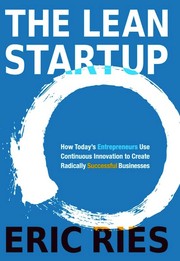
Teaches the build-measure-learn loop that is the backbone of testing dropshipping niches and products cheaply before scaling. Reading this first prevents costly over-investment in unvalidated ideas.
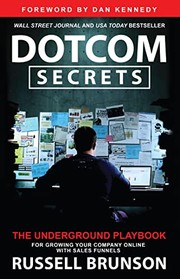
Introduces core online-business concepts — funnels, value ladders, and customer avatars — that directly apply to structuring a dropshipping store and its offers. Best read after Lean Startup so you can map the frameworks onto a validated idea.
Product Research & Supplier Sourcing
BeginnerKnow how to identify winning, in-demand products and vet reliable suppliers so you never list items you can't fulfill profitably.
▸ Study plan for this stage
Pace: 2–3 weeks, ~40–50 pages/day (approximately 400–500 pages total)
- How Amazon's relentless focus on customer obsession and data-driven decision-making informs product selection strategy
- The importance of supply chain efficiency and logistics in determining product viability and profit margins
- How to evaluate supplier reliability by studying Amazon's vendor management practices and quality control standards
- The role of market research and competitive analysis in identifying underserved customer needs and demand signals
- Scaling principles: understanding how successful products must balance demand, fulfillment capacity, and operational complexity
- The relationship between inventory management, cash flow, and supplier relationships in sustainable dropshipping
- How to recognize products with sustainable competitive advantages versus commodities destined for race-to-the-bottom pricing
- What does 'customer obsession' mean in the context of product selection, and how would you apply this principle to identify winning dropshipping products?
- How does Amazon's approach to supply chain management inform your understanding of what makes a supplier reliable and worth partnering with?
- What are the key metrics or signals you should monitor to determine if a product has genuine demand versus temporary hype?
- How do inventory management and cash flow constraints affect which products you should and shouldn't dropship?
- What lessons from Amazon's scaling journey apply to deciding when a product is too complex or risky to fulfill profitably?
- How would you distinguish between a product with sustainable competitive advantage and one that will inevitably face commoditization and margin compression?
- Create a product evaluation rubric based on Amazon's operational principles from the book: score 5 real products you're considering for dropshipping across criteria like demand signals, supplier reliability, fulfillment complexity, and margin sustainability.
- Research and document 3 suppliers for a single product category; for each, assess their reliability using the vendor management standards Amazon employs (quality control, communication, delivery consistency, scalability).
- Conduct a competitive analysis on 2–3 products you're interested in: identify what Amazon would call 'customer obsession' gaps in the current market offering, then determine if your sourcing can fill that gap profitably.
- Build a simple cash flow model for a potential dropshipping product: estimate inventory holding costs, supplier payment terms, and customer refund rates to determine if the margin supports sustainable operations.
- Interview or email 3 potential suppliers with detailed questions about their quality control, minimum order quantities, lead times, and scalability—document their responsiveness and professionalism as a reliability indicator.
- Analyze a product that failed in your niche or a competitor's failed product launch; identify which of Amazon's operational principles (supply chain, customer focus, data-driven decisions) were missing.
Next up: This stage establishes the foundational discipline of rigorous product and supplier vetting; the next stage will teach you how to validate demand and launch these vetted products profitably through marketing, pricing, and customer acquisition strategies.
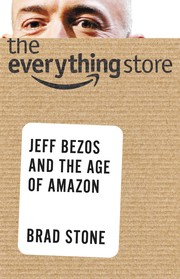
Studying Amazon's obsession with selection and supplier relationships gives crucial intuition for what makes a product category worth entering and what customers expect from online retail.
A practical, beginner-friendly walkthrough of finding products with real demand and sourcing suppliers — the core research workflow transfers directly to any dropshipping platform, including Shopify.
Building & Optimizing Your Shopify Store
IntermediateLaunch a conversion-optimized Shopify storefront — from theme setup and product pages to checkout flow and branding — that turns visitors into buyers.
▸ Study plan for this stage
Pace: 4–5 weeks, ~25–30 pages/day (approximately 10–12 hours/week)
- Product Launch Sequencing (PLF framework): how to structure pre-launch, launch, and post-launch phases to build momentum and social proof
- Conversion Psychology: understanding visitor behavior, reducing friction, and designing for trust to turn browsers into buyers
- Usability & Information Architecture: organizing product pages, navigation, and checkout flows so customers find what they need without confusion
- Messaging & Positioning: crafting clear, benefit-driven copy and visual hierarchy that communicates value and differentiates your store
- Checkout Optimization: streamlining the purchase path, minimizing form fields, and removing barriers to transaction completion
- Theme Selection & Customization: choosing and configuring a Shopify theme that aligns with brand identity and conversion goals
- What are the three phases of Jeff Walker's Product Launch Formula, and how do you apply them to a Shopify store launch?
- How does Steve Krug's principle of 'Don't Make Me Think' translate into specific design decisions for product pages and checkout flows?
- What are the key elements that reduce friction and build trust on a Shopify storefront, and why does each matter?
- How should you structure product information and navigation so visitors can quickly find and understand what you're selling?
- What role does social proof and messaging play in converting visitors, and how do you implement it in your store?
- What metrics and user feedback should you collect post-launch to identify optimization opportunities?
- Complete the Product Launch Formula planning worksheet: map out your pre-launch (email list building), launch (traffic surge), and post-launch (momentum) phases for your Shopify store
- Conduct a 'Don't Make Me Think' audit: visit 3–5 competitor Shopify stores and identify one friction point on each product page and checkout flow, then redesign your own pages to eliminate similar issues
- Design your product page template: write clear, benefit-driven product descriptions, organize specifications logically, and add trust signals (reviews, guarantees, certifications) based on Krug's usability principles
- Build a clickable prototype or wireframe of your checkout flow using your chosen Shopify theme, then test it with 2–3 friends to identify confusing steps
- Set up your Shopify store's core pages (home, product, collection, about, checkout) with messaging and visual hierarchy that reflects your brand and reduces cognitive load
- Create a pre-launch campaign outline: plan your email sequences, traffic sources, and social proof collection strategy using Walker's PLF framework, then launch a soft-opening to a small audience and gather feedback
Next up: This stage equips you with the foundational store architecture and conversion principles needed to drive traffic and sales; the next stage will focus on marketing channels and customer acquisition strategies to fill that optimized funnel with qualified visitors.

Walker's product-launch framework teaches how to build anticipation and structure an offer before going live — directly applicable to writing compelling product pages and store copy on Shopify.

The definitive guide to web usability; reading it here ensures your Shopify store's navigation, layout, and checkout are intuitive and friction-free before you spend money driving traffic to it.
Paid Advertising & Scaling
IntermediateRun profitable paid-ad campaigns on Facebook/Instagram and Google, read the data, and scale winning ads without blowing your budget.
▸ Study plan for this stage
Pace: 8–10 weeks, ~40–50 pages/day (mix of dense theory and practical guides). Allocate: Breakthrough Advertising (2–3 weeks), Facebook Advertising guide (3–4 weeks), Traction (2–3 weeks).
- The 'Breakthrough' framework: understanding customer pain points, desires, and the emotional triggers that drive purchase decisions (Schwartz)
- Ad copy psychology: how to write headlines and body copy that speak directly to your prospect's worldview and concerns (Schwartz & Marshall)
- Facebook/Instagram campaign structure: audiences, ad sets, placements, and the relationship between targeting and creative (Marshall)
- The testing pyramid: how to systematically test audiences, creatives, and offers to find winning combinations without wasting budget (Marshall)
- Data interpretation: reading CTR, CPC, ROAS, and conversion metrics to identify which ads are profitable and which to kill (Marshall)
- Scaling mechanics: increasing budget on winners, expanding audiences, and refreshing creatives to avoid ad fatigue (Marshall)
- Traction channels: understanding which distribution/advertising channels fit your business model and how to evaluate them systematically (Weinberg)
- Budget allocation strategy: how to balance exploration (testing new channels/audiences) with exploitation (scaling proven winners) (Weinberg & Marshall)
- What are the three core elements of Schwartz's 'Breakthrough' framework, and how do they apply to writing Facebook ad copy for your dropshipping product?
- Walk through a Facebook campaign structure: what are the key differences between audiences, ad sets, and ads, and why does this hierarchy matter for testing?
- You're running ads with a 2% CTR, $0.80 CPC, and 1.5% conversion rate. Calculate your CPA and ROAS (assuming $30 AOV). Is this profitable, and what would you test next?
- Describe the testing pyramid Marshall outlines: what should you test first, second, and third, and why does order matter?
- How does Weinberg's concept of 'traction channels' help you decide whether to double down on Facebook ads or test Google Shopping ads?
- What is ad fatigue, and what are three specific tactics from Marshall's guide to prevent or recover from it?
- Read Breakthrough Advertising and extract 5–10 'customer worldview' statements for your dropshipping niche (e.g., 'My customer believes they don't have time to shop in stores'). Use these to rewrite one existing ad headline.
- Audit an existing Facebook campaign (yours or a competitor's). Map out the audience, ad set, and ad structure. Identify which variables are being tested and which are held constant.
- Create a testing roadmap for your next campaign: define your control ad, then specify 3–5 variations you'll test (audience, creative, copy, offer). Predict which will win and why.
- Run a small-budget Facebook campaign ($5–10/day) for 5–7 days. Collect data on CTR, CPC, and conversion rate. Calculate ROAS and document what you'd change in round two.
- Build a simple spreadsheet to track 5–10 ad metrics (impressions, clicks, spend, conversions, ROAS) across 3–5 active campaigns. Practice reading the data weekly and identifying which ads to scale, pause, or refresh.
- Use Weinberg's traction channels framework to evaluate 3 advertising channels (e.g., Facebook, Google Shopping, TikTok) for your product. Score each on ease of entry, scalability, and fit. Write a 1-page recommendation on which to test next.
Next up: This stage equips you to run and optimize profitable ad campaigns, setting the foundation for the next stage—customer retention and lifetime value—where you'll learn to keep the customers you've acquired through paid ads and maximize their long-term profitability.

The canonical text on understanding customer awareness levels and writing ad copy that meets buyers where they are — essential reading before touching an ad account so every dollar is backed by strategy.
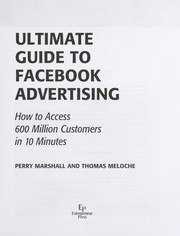
The most comprehensive practical guide to Facebook and Instagram ads: targeting, creative testing, budgeting, and scaling — the primary paid-traffic channel for most dropshipping stores.
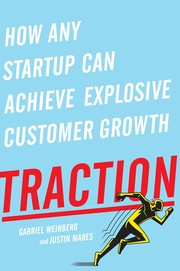
Closes the curriculum by mapping all 19 customer-acquisition channels so you can diversify beyond a single ad platform, reduce risk, and build a sustainable, multi-channel dropshipping business.
Discussion
Keep reading
Paths that share books, cover the same subject, or open a related topic.