Groceries run on net margins of one or two percent, which is why almost everything about the business — slotting fees, private label, the cold chain, scheduling, the relationship with a supplier — is a fight over pennies at enormous volume. The order that works is inside a store first, then the antitrust fight that made the modern chain legal, then the supply chain, then the buyer power that actually determines the industry's shape, and finally what all that pressure does to the product. Start with The Secret Life of Groceries.
The mistake people make is starting with the structural books. Category management and buyer leverage are much easier to follow once you can picture a receiving dock, a perishables department and a buyer's office, so the reporting comes first here on purpose.
Inside a real store
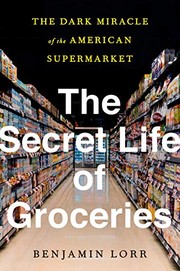
The Secret Life of Groceries is the single best book on the industry and the only one that connects the buyer's office to the boat: Benjamin Lorr rode with a long-haul trucker, worked the Whole Foods floor, followed a hot-sauce founder trying to get shelf space, and reported on forced labour in the Thai shrimp supply chain. Grocery is its complement — Michael Ruhlman on his family's Cleveland chain, Heinen's, written sympathetically from the inside and the clearest explanation of how a mid-size regional grocer competes on perishables and service.
How the modern chain was made legal
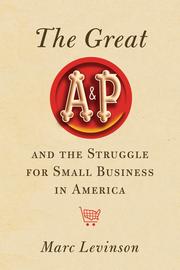
The supermarket format is a policy outcome as much as a retail invention. The Great A&P and the Struggle for Small Business in America covers the company that invented the modern chain, the political campaign to destroy it, and the antitrust case that turned on whether low prices for consumers can be an offence. Marc Levinson is an economist and sympathetic to A&P, so read it as an argument as well as a history; our record lists his name twice, which is a cataloguing artefact. The Robinson-Patman Act's near-abandonment is why today's structure is possible, and it is live again as antitrust interest in buyer power returns.
A Consumers' Republic is broader than groceries: Lizabeth Cohen on how post-war America was rebuilt around mass consumption, including the suburban landscape the supermarket needed to exist. Supermarket USA is the strangest of the three — the self-service store as Cold War export, promoted abroad by American agribusiness and the state as proof that capitalism fed people better. Academic in register.
The supply chain that makes it possible
The Box is the most important non-food book here: the definitive history of container shipping, which is the precondition for a global assortment and for the private-label sourcing that follows. Fresh is a geographer's history of the cold chain told through six foods — beef, eggs, fruit, vegetables, milk, fish — and of how freshness became a marketing category with a technical definition. It explains why the perimeter of the store is where both the margin and the risk live.
Trucking Country completes the logistics picture: how deregulated long-haul trucking and non-union drivers underwrote cheap food and the rise of big-box grocery. Read it after The Box; together they are the cost structure Walmart then exploited better than anyone. Our record for it also duplicates the author name.
The buyer's power over everyone who sells to it
The Wal-Mart effect is the clearest account of what happens to a supplier once Walmart becomes its biggest customer, with named companies and the specific mechanics of a price rollback. Charles Fishman is even-handed about the consumer savings, which is what makes the supplier evidence harder to wave away. In Sam we trust is older and openly critical — a Wall Street Journal reporter's history of the company, its labour practices and its sourcing shift to Asia — and still the most detailed reported account of how the buying culture was built.
A note on what is missing: Sam Walton's own memoir, Made in America, would belong here, but the only record our catalogue resolved for it is a Portuguese-language edition, so it was left off rather than sending readers to the wrong book.
Cheap is a thesis book rather than an investigation, arguing that a consumer economy organised around the lowest possible price pushes its costs into wages, durability and supplier viability. The Everything Store closes the stage with Amazon, whose logistics and pricing tactics arrived in groceries from outside the industry and whose Whole Foods acquisition made it a grocer. Our record for it repeats the author name three times.
What ends up on the shelf
Salt Sugar Fat is investigative reporting on how processed-food companies engineer products for maximum appeal, based on internal documents and interviews with the scientists who did the work; naming companies and people is why it has held up. Grocery Story is the counter-proposal — the case for food co-operatives, written by an advocate who declares himself on the first page. Read it for what it concedes about scale and price as much as for what it claims.
The full ordered list, with every record, is on the grocery business path.