Gentleman Bastard Reading Order and Guide
The honest situation first: Scott Lynch planned seven Gentleman Bastard books and three exist. The Republic of Thieves came out in 2013 and the fourth has not appeared, so anyone starting the series should start it knowing the story is unfinished and may stay that way. What does exist is three of the best-plotted heist novels in fantasy, read in publication order with no ambiguity. This path takes those three, then goes backward to the pulp lineage Lynch is openly writing out of, then sideways to four books that scratch the same itch while you wait.
The Three Published Books, in Order
BeginnerRead the existing series in sequence and understand its structure — a present-day con intercut with flashbacks to the training that made it possible.
▸ Study plan for this stage
Pace: 6 to 8 weeks for about 1,780 pages. The Lies of Locke Lamora over two to three weeks, Red Seas Under Red Skies over two to three, The Republic of Thieves over two to three. Read them in publication order with no ambiguity. Do not rush the flashback chapters — they are where the plotting is actually
- Read this before you start anything else. Scott Lynch planned seven Gentleman Bastard books. Three exist. The Republic of Thieves was published in 2013 and the fourth, long announced as The Thorn of Emberlain, has not appeared. That is more than a decade of waiting with no publication date, and anyo
- That is not a reason to avoid it. Each of the three books resolves its own con, so you get three complete heists rather than three fragments. But the larger arc set up in book one is unresolved, and one very large question raised at the end of book three is left hanging
- The Lies of Locke Lamora is structurally the best of the three: a present-day con in the city of Camorr, intercut with flashbacks to the childhood training that made the con possible. The two timelines converge exactly when they should
- Camorr is a Venice analogue built on the ruins of an unexplained precursor civilisation, whose indestructible Elderglass towers nobody can cut, move or understand. Lynch never explains it and the refusal is one of the better decisions in the book
- The tone is the selling point: dense, profane banter, elaborate confidence tricks, and a warm found-family crew. It is also, without warning, extremely brutal. Book one turns much darker than its first two hundred pages suggest and people you like die badly
- Locke is competent at exactly one thing and hopeless at everything else, which is why the crew matters. Jean Tannen is the series' emotional anchor and the friendship between them is the real subject under the heists
- Red Seas Under Red Skies moves to a casino city and then to sea, and is the most uneven of the three — the pirate section is enormously enjoyable and does not quite fit the book it is in
- The Republic of Thieves finally delivers Sabetha, referenced constantly for two books, and splits its time between a rigged election and a flashback to a theatre company. Readers divide on whether she was worth the wait
- The first book intercuts a con with a childhood. What does each timeline give the other, and where exactly do they meet?
- Camorr's Elderglass is never explained. What does the unexplained precursor do for the setting that an explanation would ruin?
- Book one changes tone drastically around the midpoint. When did you notice, and had Lynch prepared it?
- Locke's competence is narrow. What does the series get from a protagonist who cannot fight, cannot plan alone and cannot stop talking?
- Sabetha is built up across two books before appearing. Does the third book's version survive the anticipation?
- Three books in, what is the larger arc actually about, and how much of it is now unrecoverable if no fourth book appears?
- Decide before page one whether you are willing to read an unfinished series. It is the honest question and the answer is personal
- In book one, note the chapter where you stop treating it as a comedy
- Track the con in each book on paper: the mark, the cover, the crossing. Lynch plays fair and the pleasure doubles when you can see the machinery
- Keep a note of every reference to Sabetha across books one and two, then check them against her actual characterisation in book three
- After The Republic of Thieves, write down the open questions. That list is what a fourth book would have to answer
Next up: With the existing series behind you and no fourth book coming, the most useful move is backward — to the two pulp writers Lynch is openly writing out of.
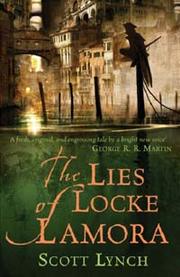
An orphan thief running a long con on the nobility of a Venice-like city built on alien glass. Start here; the interleaved flashback structure and the profanity-rich voice are established in the first fifty pages and never change.
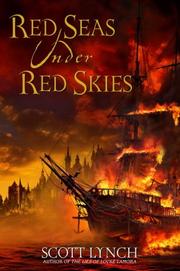
A casino heist that becomes a pirate novel about two-thirds of the way through. Structurally the messiest of the three and the most fun; read it second — the emotional damage from book one is the fuel.
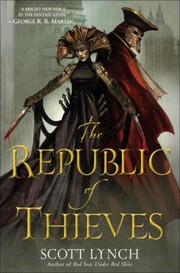
Locke against Sabetha in a rigged election, plus the flashback thread readers had been waiting two books for. The last published volume, so read it knowing it ends on a large unresolved reveal.
The Ancestors
IntermediateRead the two pulp writers Lynch is descended from, so you can see that the thieves-with-banter mode is much older than it looks.
▸ Study plan for this stage
Pace: 5 to 6 weeks for about 980 pages. Swords and Deviltry is short and episodic — a week, one story at a time. Tales of the Dying Earth is a 752-page omnibus of four books and should be spread over four to five weeks, one constituent book at a time, with breaks. Do not attempt either as a continuous nov
- Swords and Deviltry is the first volume in Fritz Leiber's Fafhrd and the Gray Mouser sequence by internal chronology, though the stories in it were written much later than others in the series. It contains the origin stories of both characters and Ill Met in Lankhmar, which won both the Hugo and the
- The two-thieves-with-banter mode is Leiber's invention, not Lynch's. Fafhrd the northern barbarian and the Mouser the small city thief are the direct ancestors of Locke and Jean, and Lankhmar is the direct ancestor of Camorr
- Leiber's stories are short, wry and much less plotted than Lynch's. Nobody runs a six-month confidence trick; they get into trouble and out of it. The pleasure is voice and setting rather than construction
- Ill Met in Lankhmar is also the origin of the abrupt tonal cruelty that Lynch reproduces. It starts as a caper and ends somewhere very cold, which will feel extremely familiar after book one of Gentleman Bastard
- Tales of the Dying Earth is an omnibus collecting four Jack Vance books. The relevant ones for this path are the Cugel books, in which a thoroughly selfish rogue schemes his way across a dying far-future Earth
- Vance's contribution is diction. The formal, ornate, ironic speech that everyone in Lynch uses when being clever comes from here, and once you have read Cugel you can hear it in every Gentleman Bastard dialogue scene
- Cugel is a genuine scoundrel with no redeeming loyalty, which is the one thing Lynch declined to borrow. Comparing him with Locke shows exactly where the modern series softens the pulp original
- What does Lynch take from Leiber — setting, pairing, tone — and what has he added that Leiber never attempted?
- Ill Met in Lankhmar ends brutally. Compare its final pages with the equivalent turn in The Lies of Locke Lamora
- Vance's characters speak in a very particular register. Find a passage of Lynch dialogue that is doing the same thing
- Cugel has no loyalties. What does Lynch's insistence on a loyal crew change about the moral shape of a heist story?
- These are episodic stories rather than plotted novels. What did the modern series gain by moving to long-form plotting, and what did it lose?
- Read Ill Met in Lankhmar first, before the earlier-written stories in the volume. It is the strongest and it sets the standard
- Read one Cugel chapter aloud. The comedy is almost entirely in the sentence rhythm
- Make a two-column list of what Lynch borrowed and what he invented. Aim for five entries a side
- Note where the omnibus moves from one constituent book to the next and take a break at each seam
Next up: Knowing the lineage, the modern shelf is easier to navigate — you now know which part of the appeal you are trying to replace while there is no fourth book.
The first Fafhrd and the Gray Mouser collection, and the direct ancestor of every two-rogues-in-a-corrupt-city story since. Read it after the trilogy and the debt is unmistakable.

Vance's linked stories of ornate liars conning each other in elaborate courtly language. Lynch's dialogue register — florid, formal, filthy — comes from here more than from anywhere else.
What to Read While You Wait
BeginnerFill the gap with four modern fantasies that deliver some part of what Gentleman Bastard does: the crew heist, the confident voice, or the long con.
▸ Study plan for this stage
Pace: 8 to 10 weeks for around 1,780 pages plus whatever you take from the Sanderson bundle. Six of Crows over two weeks, The Blade Itself over two to three, The Name of the Wind over three, and the Sanderson selection at your own pace. Take them in whatever order suits — these are alternatives, not a seq
- Six of Crows is the closest structural match to Lynch: a six-person crew, an impossible prison break, rotating viewpoints and a plan that keeps folding back on itself. Kaz Brekker is the most Locke-like protagonist in modern fantasy, minus the warmth
- It is marketed as young adult, which puts some readers off unnecessarily. The plotting is tighter than Lynch's and the crew dynamic is the whole point. It is a duology and it is finished
- The Blade Itself is Joe Abercrombie's debut and supplies the voice rather than the heist: cynical, very funny, and structurally a long setup for a trilogy. Be warned that this first book is almost entirely characters arriving — the payoff is in the two that follow, and those are finished
- A note on our catalogue entry for Sanderson: the record here is a multi-novel bundle collecting the opening books of several of his series rather than a single novel. The one you want from it is Mistborn: The Final Empire, which is literally a heist novel — a crew, a mark, a con against an immortal
- The Name of the Wind comes with a warning that must be stated plainly: it is even more unfinished than Gentleman Bastard. The second book appeared in 2011 and the third has not appeared at all. If waiting for Lynch frustrates you, this will frustrate you more
- What it does supply is the confident, self-mythologising first-person voice and a beautifully built world, which is a genuine part of the Lynch appeal even though it is not a heist book at all
- Sort these four by what you actually want. Crew heist points to Six of Crows and Mistborn; cynical voice points to Abercrombie; lush first-person storytelling points to Rothfuss, with the caveat above
- Six of Crows and The Lies of Locke Lamora both run a crew heist. Which plot plays fairer with the reader, and how do you know?
- Kaz Brekker and Locke Lamora are both damaged, brilliant and narrow. What does each series do with the damage?
- Abercrombie supplies cynicism without the caper. Does the voice work without a con to hang it on?
- Mistborn is a heist with a magic system that is fully explained. Lynch explains almost nothing. Which approach serves a con story better?
- Rothfuss is unfinished too. What is the reader's calculation when starting a series that may never end, and does the answer differ for these two?
- Which of these four came closest to what you actually wanted from a fourth Gentleman Bastard book?
- Pick based on what you missed most from Lynch rather than reading all four. This stage is a menu
- If you take the Sanderson bundle, start with Mistborn: The Final Empire and treat the rest of the collection as separate decisions
- Read the first fifty pages of Six of Crows and The Blade Itself on consecutive days. The comparison sorts your preference fast
- Before starting The Name of the Wind, confirm for yourself that you are willing to read a second unfinished series
- Write two sentences on what a heist novel needs. Having now read four or five, you can actually answer it
Next up: That covers the finished substitutes and the lineage behind them, which is the most you can do until a fourth Gentleman Bastard book exists.
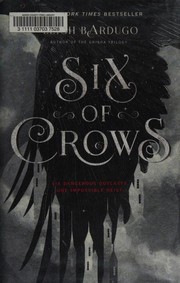
The closest thing to a finished Gentleman Bastard book: a six-person crew, an impossible prison break, alternating viewpoints and a duology that actually concludes. Read this first if the unfinished ending has left you sore.
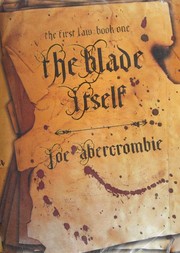
The other pillar of the same 2006-era shift in fantasy — cynical, funny, extremely violent, and with the best character voices in the genre. A completed trilogy, which matters here.

A heist crew planning to rob a god, with a rigorously engineered magic system standing in for Lynch's improvised cleverness. Published the same year as The Lies of Locke Lamora and the obvious comparison.
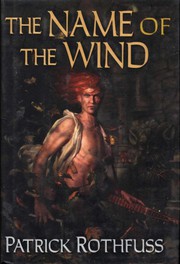
Included with the same warning attached: a gorgeously written frame-narrative fantasy whose series is also unfinished after book two. Read it if you loved Locke's voice and can tolerate the wait twice.
Discussion
Keep reading
Paths that share books, cover the same subject, or open a related topic.