Silo Reading Order: Publication or Chronological?
The Silo books were published out of chronological order — Wool comes first but is set last, and Shift is a prequel covering the two centuries before it. This path takes a firm position: read publication order, Wool then Shift then Dust. Wool's entire engine is not knowing why the silo exists, and Shift answers that question outright, so reading chronologically trades the best experience in the series for a tidier timeline. The later stage covers the rest of Howey's work for readers who want more.
Start Here: Wool
BeginnerRead the book the series is built on, without knowing anything about its origins.
▸ Study plan for this stage
Pace: 2–3 weeks for 544 pages, and it will probably be less — Wool reads very fast once past its first fifty pages. The one instruction that matters more than the schedule: read this before you read anything about Shift. Wool was published first but is set last, and Shift is a prequel covering the two cen
- Wool began as five self-published novellas and is now sold as one novel; the seams are still visible in its structure and the shifts of protagonist in the first two hundred pages are deliberate, not clumsy
- The silo is a hundred and forty-four levels deep and the geography is the plot — climbing it takes days, and Howey uses vertical distance the way other writers use travel
- Cleaning is the central ritual and the central mystery: the exiled are sent outside to wipe the sensors, and they always do, which nobody in the silo can explain
- IT holds the real power rather than the mayor's office, and the reason for that is the question the whole series is built on
- Juliette is a mechanic from the Down Deep, and her practical engineering competence is the tool the book uses to open a closed society
- The prohibition on discussing the outside is enforced by exile, which makes curiosity itself the capital crime — this is the actual subject of Wool
- Everything works because the characters know as little as you do; protect that condition and the book performs as designed
- Why does everyone who is sent to clean actually clean, and at what point in the novel do you learn the answer?
- How is power distributed in the silo between the mayor, the sheriff, IT and Mechanical, and who really governs?
- What does the vertical geography of the silo do that a horizontal setting could not?
- What does the novel suggest about why the rules exist, before it tells you anything definite?
- Where does Wool shift protagonist, and what does each shift cost and gain?
- At the end of Wool, what do you actually know about the world outside — and what have you merely assumed?
- Write down your theory about the silo's origin at the halfway point, before the book confirms or denies anything. Comparing it afterwards is the most enjoyable thing this reading order makes possible, and it is destroyed by reading Shift first.
- Keep a rough map of the silo's levels — the top, the mids, Mechanical, IT's floor. Howey is consistent about depth and the map makes the climbing sequences far more tense.
- Note every rule the silo enforces and what it appears to be protecting. The list is short and it becomes the checklist you carry into Shift.
- Read the first novella's ending in one sitting. It was written as a standalone short and it lands hardest undivided.
- Do not look up the series order, the character list or the adaptation until you have finished. This is a genuine exercise, and it is the one that most affects the outcome.
Next up: With the question fully formed and deliberately unanswered, the prequel becomes what Howey built it to be — a revelation rather than a premise — and the concluding volume can then bring both timelines together.
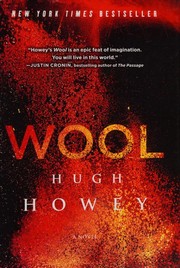
Originally five self-published novellas, now sold as one novel, and the correct first book by a wide margin. Everything works because the characters know as little as you do about why they live underground and why the outside is poison. Do not read a plot summary of Shift before finishing this.
The Prequel, Then the Ending
BeginnerGet the origin of the silos and then the resolution, in the order Howey wrote them.
▸ Study plan for this stage
Pace: 4–6 weeks for 576 and 464 pages. Shift is the denser of the two and moves between multiple timeframes, so give it three weeks; Dust is faster and more conventionally plotted. Read them consecutively and in this order — publication order, which is also the order Howey structured the payoffs for.
- Shift runs from 2049 forward and explains who built the silos and why, alternating between the world before the collapse and the shifts of those kept in cold storage to administer it
- As an answer, Shift is devastating; as an opening, it is merely a competent political thriller — that asymmetry is the whole case for publication order
- Donald's sections make the origin story a matter of ordinary political ambition and deniability rather than conspiracy, which is what gives it force
- The shift system itself — decades of sleep punctuated by six-month rotations — is Howey's mechanism for letting one man witness centuries, and it is also the book's cruelty
- Silo 1 and its relationship to the others reframes everything about the power structure you mapped in Wool
- Dust brings the Wool and Shift storylines together and only functions with both in place; it is the reason the publication order holds up structurally rather than just experientially
- Dust is a real ending — the series closes rather than trailing off, which is unusual for a self-published serial that grew this large
- Who authorised the silos, and what did they believe they were preventing?
- How does Donald's understanding of what he built change across his shifts, and at what point does he become responsible rather than complicit?
- What does the shift system do to the people running Silo 1, and is that effect intentional on the designers' part?
- How does Shift change the meaning of the cleanings you read about in Wool?
- What has to be resolved in Dust for the two timelines to close, and does Howey resolve all of it?
- Now that you know both, would you still recommend publication order to a new reader? Say why in your own terms.
- Before opening Shift, reread the list of silo rules you made during Wool. Watching each one acquire an origin is the experience the reading order exists to produce.
- Keep a two-column timeline for Shift: the pre-collapse years in one, the shift numbers in the other. The book moves between them without much signposting.
- After Shift, go back to two or three scenes in Wool and note what they now mean. This is the reread the series is designed to reward and it costs an hour.
- In Dust, track what each of the two storylines still owes the reader before they meet. It makes the convergence legible rather than merely eventful.
- Write a short verdict on whether Shift's revelation was worth waiting for. Readers split on this, and having your own answer is the honest end of the trilogy.
Next up: The trilogy is complete and genuinely closed, so what remains is not more silo but more Howey — the same premise of a confined community, a lethal environment and a buried truth, worked in different settings.
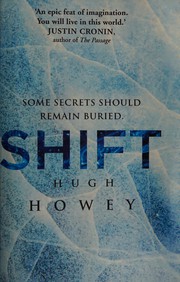
The prequel, running from 2049 to the events of Wool and explaining who built the silos and why. Chronologically first, deliberately read second: as an answer it is devastating, as an opening it is merely a political thriller. This is the position this path takes.
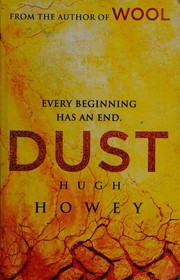
The conclusion, bringing the Wool and Shift storylines together. It only functions with both prior books in place, and it is the reason the publication order holds up — Howey structured the payoff for readers who came through Wool first.
The Rest of Howey
IntermediateSee what else Howey does with the same post-collapse, small-world premise.
▸ Study plan for this stage
Pace: 6–8 weeks for 336, 252, 224 and 352 pages, and none of it is compulsory. Sand and Beacon 23 are the two worth prioritising; Half Way Home is early and rough; Machine Learning is a collection to dip into rather than read straight through. Read in the order listed, which runs from most to least Silo-l
- Sand is set in a buried American Southwest where divers sand-swim down through the ruins of Colorado — the closest thing to Silo in feel without being connected to it
- Sand repeats the Silo formula deliberately: a claustrophobic community, a lethal environment, a buried truth, and a family rather than a lone protagonist
- Beacon 23 is a single traumatised keeper alone on a deep-space lighthouse, written episodically like the original Wool novellas and the best demonstration of Howey's real strength — one person in one confined place
- Half Way Home is an early novel about a colony ship's aborted landing and the half-grown colonists left to work out why; rougher than the Silo books and interesting mainly for how many Silo ideas are already present in it
- Machine Learning collects Howey's short fiction, including several stories set in the Silo world, which makes it the right final stop — more silo without extending a story that already ended
- Across all of these the constant is the same: a small group, a sealed environment, and information withheld by whoever built the walls
- What does Sand do with its buried-city premise that Wool does not, and where does it fall short of it?
- Why does the episodic structure suit Beacon 23, and what does it let Howey avoid?
- Which Silo ideas are already visible in Half Way Home, and what did Howey learn to do better between the two?
- Which of the Silo stories in Machine Learning adds something to the trilogy, and which are offcuts?
- Having read across his work, what is Howey consistently good at and what does he consistently avoid?
- Read Beacon 23 an episode at a time over a week rather than in one go. It was serialised and it works better at the rhythm it was written in.
- After Sand, list the structural elements it shares with Wool. Doing it explicitly is the fastest way to see an author's habits rather than just enjoy them again.
- Read only the Silo-set stories in Machine Learning first and treat the rest as optional. It is a mixed collection and completism is not required.
- Write one paragraph on why the confined-space premise suits Howey. It is the through-line of everything in this stage and naming it makes the whole path cohere.
Next up: This is the end of the path: the trilogy read in the order that preserves its central mystery, plus the rest of a body of work built on the same premise, so the natural next move is either a reread of Wool with Shift's answers in hand, or other post-collapse fiction where what happened is withheld from the people living in it.

A buried American Southwest where divers sand-swim through the ruins of Colorado. The closest in feel to Silo — a claustrophobic community, a lethal environment, a buried truth — without being connected to it.

A single traumatised keeper alone on a deep-space lighthouse. Short, episodic like the original Wool novellas, and the best demonstration of Howey's real strength: one person in one confined place.

An early novel about a colony ship's aborted landing and the half-grown colonists left to work out why. Rougher than the Silo books, and interesting mainly for how many Silo ideas are already present.

A collection of Howey's short fiction, including several stories set in the Silo world. The right final stop: it gives you more silo without pretending to extend a story that already ended.
Discussion
Keep reading
Paths that share books, cover the same subject, or open a related topic.