Jack Vance books in order: where to start with the Dying Earth
Jack Vance wrote for sixty years and is read for his prose before his plots — the ornate, ironic, faintly archaic voice that Gene Wolfe, Dan Simmons, George R. R. Martin and half the designers of Dungeons and Dragons took something from. He is also badly served by chronological reading: he published across a dozen loosely connected settings, and the entry point is a matter of picking the right short book rather than starting at the beginning. This path opens with the Dying Earth, moves to the standalone novels that show what he could do at full length, then takes the two series worth reading straight through. One edition note that decides the first stage: the original 1950 collection The Dying Earth does not resolve on its own in our catalogue and returns the omnibus instead, so this path uses the omnibus for that whole sequence rather than mixing it with the individual volumes, which would list the same stories twice.
The Dying Earth, and the two great novellas
BeginnerMeet the voice at its most concentrated in short forms, and decide within a hundred pages whether Vance is for you.
▸ Study plan for this stage
Pace: 5 to 6 weeks. Tales of the Dying Earth is a 752-page omnibus of four books, but it reads in episodes rather than chapters, so about four weeks at a story or two a sitting. The Dragon Masters and The Last Castle are both novellas — the Vance material runs to roughly a hundred pages and a hundred and
- Vance is read for the voice before the plot. The sentences are ornate, ironic and faintly archaic, characters are elaborately polite to people they intend to rob, and if that does not amuse you in the first fifty pages nothing later will.
- The omnibus contains four books written across forty years: the 1950 stories, The Eyes of the Overworld, Cugel's Saga and Rhialto the Marvellous. They are not a continuous narrative and the tone shifts between them.
- Start inside the omnibus with the Cugel material rather than at page one. Cugel is a thief of monumental self-regard who is punished constantly and learns nothing, and he is the funniest thing Vance wrote.
- The Dying Earth setting — a sun about to go out, magic that is really the fossil remains of a lost technology, a small number of memorisable spells — is where Dungeons and Dragons got its magic system, spell slots and all.
- The Dragon Masters is the cold version of the same voice: two human clans on a remote planet, each breeding the other side's captured soldiers into livestock. It won a Hugo and it is the best single sample of what Vance does.
- The Last Castle is shorter still and also a Hugo winner: a decadent human aristocracy discovers that its servant species has stopped serving. The two novellas are frequently printed together and are the two-hour case for the whole career.
- Vance's real subject is societies as machines with rules, seen from outside by someone who finds the rules absurd but takes them entirely seriously. That is already fully present in these short forms.
- What does Cugel believe about himself, and what does the prose do to let you see past it without ever saying so?
- In The Dragon Masters, how is the breeding arrangement described, and why is the flatness of the description more effective than outrage would be?
- Both novellas end with a social order collapsing. What does Vance seem to think caused it in each case?
- The four books in the omnibus were written decades apart. Where can you hear the writing change, and what changed?
- Having read the Cugel stories, what would you say the D-and-D magic system actually took from Vance, and what it left behind?
- Read the Cugel material first, then go back to the 1950 stories at the front of the omnibus. Note what the earlier stories are doing that the Cugel books are not — the answer is one of the two reasons people disagree about where to start.
- Copy out three exchanges of dialogue from the omnibus in which somebody is threatened with elaborate courtesy. Vance's comedy is almost entirely in the gap between register and content, and it is easiest to see written down.
- Read The Dragon Masters and The Last Castle back to back in one weekend, then write two sentences on what the two societies have in common. They are the same argument twice.
- Keep a short glossary as you go through the omnibus of words Vance uses that you cannot place — invented, obsolete or simply rare. The list is the style, and it will make the next stage read faster.
Next up: You now know whether the voice works on you, which is the only question the short forms exist to settle before you commit to a novel.
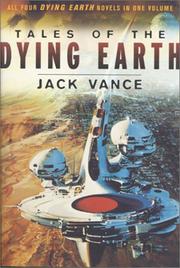
The omnibus of all four Dying Earth books — the 1950 stories, The Eyes of the Overworld, Cugel's Saga and Rhialto the Marvellous — and the correct way to buy this sequence. Start with the Cugel material rather than page one if you want the best of it: Cugel is a thief of surpassing self-regard and the funniest thing Vance wrote. The individual volumes resolve unreliably here, so take the omnibus and read within it.
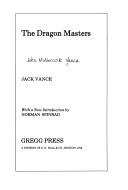
A hundred-page novella that won the Hugo and remains the single best sample of Vance: two feuding human clans on a remote planet, each breeding the other side's captured soldiers into livestock. Read it after the Cugel stories to see the same voice doing something cold rather than comic.
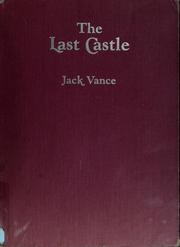
The companion novella, also a Hugo winner and even shorter: a decadent human aristocracy discovers that its servant species has stopped serving. Together with The Dragon Masters this is the two-hour case for Vance, and the pair are frequently printed together.
The standalone novels
IntermediateRead Vance at novel length outside a series, where the anthropological invention rather than the plot carries the book.
▸ Study plan for this stage
Pace: 4 weeks. These are short novels by modern standards — Emphyrio 233 pages, The Languages of Pao 220, Big Planet 218, about 670 in total — but Emphyrio is denser than its length suggests and deserves ten days on its own. A week each for the other two.
- Emphyrio is the novel most Vance readers name as his best: a boy on a rigidly guild-bound planet works out what the founding myth of his world was actually about. It is slower and sadder than the adventure books.
- The invention in Emphyrio is economic rather than technological — what the guilds forbid, what counts as duplication, how the whole system is arranged to keep one thing from happening. The plot is a consequence of the rules.
- The Languages of Pao takes a society and re-engineers it by imposing new languages on segments of the population to make them warlike, mercantile or technical. Vance published it in 1958, well before the popular argument about linguistic relativity.
- Read The Languages of Pao as a thought experiment rather than as linguistics. The strong claim it runs on is not one working linguists accept, and the novel is interesting for the social machinery it builds on top of it.
- Big Planet is an enormous low-gravity world with hundreds of incompatible human cultures, crossed on foot by a stranded expedition — a picaresque tour of invented societies, which is the form Vance most enjoyed.
- Our catalogue record for Big Planet carries its old Ace paperback series code in the display title. It is the 1957 novel and nothing else.
- All three books share one move: a protagonist who does not understand the society he is inside, so that the reader learns the rules at the same speed he does. Vance almost never explains a world in his own voice.
- What is the guild system in Emphyrio actually protecting, and at what point in the book did you work it out?
- The Languages of Pao proposes that changing a language changes what a population can do. Where does the novel treat that as certain, and where does it hedge?
- Big Planet is a sequence of societies. Which of them are genuinely different from each other, and which are the same idea with different costumes?
- Emphyrio ends on a discovery about a story. Why does Vance make the revelation textual rather than technological?
- These three were written within twelve years of each other. What do they share that the Dying Earth stories do not?
- Keep a one-page sheet on Emphyrio listing every rule of the guild system as you learn it, with the page you learned it on. By the end you will have reconstructed the argument the novel is making, in order.
- In The Languages of Pao, write down the intended effect of each engineered language and then, at the end of the book, what actually happened. The gap between the two columns is the plot.
- Read the Big Planet journey with a rough map or list of the societies in the order they are met, noting for each the one rule that makes it work. Then say which three could have been cut without losing anything.
- Take one paragraph of description from Emphyrio and one from the Cugel stories and set them side by side. The style is recognisably the same and the purpose is completely different; naming the difference is the point of this stage.
Next up: You have now read Vance where he is inventing societies for their own sake, which is exactly what the Demon Princes books do inside a rigid revenge structure.
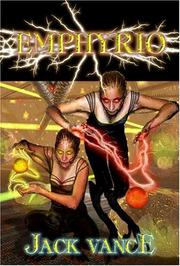
The one most Vance readers name as his best novel: a boy on a rigidly guild-bound planet uncovers what the founding myth of his world was actually about. Slower and sadder than the adventure novels, and the book that shows what he was capable of when he took his time.
A society is deliberately re-engineered by having new languages imposed on segments of its population, to make them warlike, mercantile or technical. Written in 1958, well ahead of the popular argument about linguistic relativity, and the purest example of Vance's real subject: societies as machines with rules.
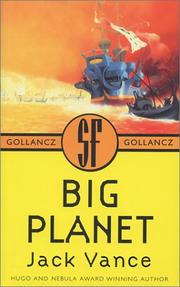
An enormous low-gravity world hosting hundreds of incompatible human cultures, crossed on foot by a stranded expedition — essentially a picaresque tour of invented societies, which is what Vance most enjoyed writing. The catalogue record carries its old paperback series code in the title; it is the 1957 novel.
The Demon Princes
IntermediateRead the revenge sequence straight through in order, and watch a rigid five-book structure become a vehicle for world-building.
▸ Study plan for this stage
Pace: 6 to 7 weeks. Five short novels totalling roughly 1,080 pages — 204, 160, 189, 271 and 252 — so about ten days each, and read them in a run rather than spread over a year. The books turn on accumulated obsession, and the last one only works if the first four are still fresh. There is a seventeen-yea
- The premise is announced immediately: Kirth Gersen's family and village were destroyed by five criminals, and he kills one per book. There is no suspense about the structure, so all the interest is in method and in the worlds he must enter.
- The Star King establishes the pattern and is the most conventional of the five. Treat it as the contract rather than the best of them.
- By The Killing Machine the hunt has become a pretext for an extended tour of a very strange planet, which is the series admitting what it is actually for.
- The Palace of Love is the strangest of the run, built around a poet-tyrant's constructed paradise, and the book where Vance's interest in aesthetics as a form of tyranny comes fully into the open.
- The Face was written a decade after the third, and the prose is noticeably sharper and drier. Our catalogue record appends a collected-works series note to the title; it is the fourth Demon Princes novel.
- The Book of Dreams closes the sequence on the question the structure has been avoiding: what a life organised entirely around revenge is supposed to become when the revenge runs out.
- The epigraphs and footnotes matter. Vance carries a good deal of his worldbuilding in quoted encyclopaedia entries and invented scholarship at the head of chapters, and skipping them is skipping the setting.
- Each Demon Prince is a different kind of monster. Name the five and say what social vice each is an extreme version of.
- Where in the run does the revenge plot stop being the reason to keep reading, and what replaces it?
- The Palace of Love makes a paradise out of an aesthetic programme. What is Vance's objection to it, and does the book state it or only stage it?
- What changes in the prose between The Palace of Love and The Face, and does the change improve the books?
- Gersen ends the sequence with his purpose gone. What does The Book of Dreams offer him instead, and is it convincing?
- Read the chapter epigraphs rather than skipping them, and keep a note of which invented source each purports to come from. Vance is building an entire scholarly apparatus for a universe in the margins of a revenge series.
- For each of the five books, write one line on how Gersen identifies his target. The identification problem, not the killing, is where the plotting actually happens.
- Track one recurring element — the Institute, the IPCC, or Gersen's money — across all five books and note where the details do and do not stay consistent across seventeen years of writing.
- After The Face, go back and read ten pages of The Star King. The prose difference is the clearest demonstration in the whole path of how much Vance changed between his forties and his sixties.
Next up: Having read a five-book sequence written to a fixed structure, you are ready for the trilogy in which late Vance abandons structure and simply expands.

Book one, and the setup for the whole series: Kirth Gersen's family and village were destroyed by five criminals, and he spends five novels killing them one per book. The structure is announced immediately, so the interest is entirely in how, and in whose worlds he has to enter to do it.

Book two, and the first to show that the formula is a licence rather than a limit — the hunt is mostly a pretext for an extended tour of a very strange planet. Read the five in order; they were published across seventeen years but they run as one story.

Book three, and the strangest of the five, built around a poet-tyrant's constructed paradise. This is where Vance's interest in aesthetics as a form of tyranny comes fully into the open.
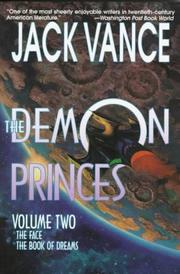
Book four, written a decade after the third, with a noticeably sharper and drier prose style. Catalogued with a collected-works series note appended to the title; it is the fourth Demon Princes novel.

Book five, and the close of the sequence, which turns on what a life organised entirely around revenge is supposed to become afterwards. It only lands if the previous four are fresh, so read the run in a few weeks rather than over years.
Lyonesse
IntermediateFinish with late Vance at his most expansive — the fantasy trilogy many readers consider his real masterpiece — and know where to go next.
▸ Study plan for this stage
Pace: 8 to 10 weeks. Suldrun's Garden and The Green Pearl have no page count on their catalogue records, but both are substantial novels of roughly five hundred pages, and Madouc runs to 416; call it 1,400 pages of dense fairy-tale plotting. Three weeks each for the first two and two to three for the last
- Lyonesse is set on an invented archipelago off pre-Arthurian Europe, and it is a different Vance again: fairy tale, dynastic politics and considerable cruelty in the same book, with the ironic voice mostly held in reserve.
- The magic here is genuinely fairy-tale magic — bargains, changelings, geasa, curses that must be worded exactly — rather than the pseudo-technological system of the Dying Earth.
- The Green Pearl widens the canvas a long way and is the weakest of the three read alone and the necessary one read in sequence. Skipping it makes Madouc incoherent.
- Madouc won the World Fantasy Award and is the warmest thing Vance ever wrote, which is not a word that applies to any other book on this path.
- The politics is real politics: succession, alliance, coastline and troop movement, tracked across three books with the seriousness Vance elsewhere gives to guild rules and criminal syndicates.
- The Ska, the fairies of Thripsey Shee and the various royal houses each operate by their own internal rules, and as usual Vance explains none of them directly.
- If you finish and want more late Vance, the Alastor and Cadwal novels — Trullion, Araminta Station and their sequels — are the other late sequences, and both resolve in our catalogue.
- Suldrun's Garden spends a long time on one imprisoned girl before the dynastic plot takes over. What does the trilogy gain by opening there rather than with the kings?
- Where does The Green Pearl expand the map, and which of those expansions pays off in Madouc?
- The fairies of Thripsey Shee operate by rules nobody states. What are they, as best you can reconstruct from the three books?
- Madouc is warmer than anything else Vance wrote. What in the writing produces that, given the plot is no gentler?
- How is the magic in Lyonesse different in kind from the magic in the Dying Earth omnibus, and what does each let Vance do?
- Keep a genealogy and a rough map from the first chapter of Suldrun's Garden onward. There are four kingdoms and several intermarried houses, and the trilogy assumes you are holding them.
- Every time a bargain or a curse is made, write down its exact wording. Vance resolves several plots on the precise terms of an agreement made hundreds of pages earlier.
- At the end of The Green Pearl, list what has changed since the first book and what is merely more of it. That list is the fairest test of the common complaint that the middle volume sprawls.
- Read the first chapter of Suldrun's Garden again after finishing Madouc and note how much of the trilogy's ending was already implied there.
- Set a page of Madouc beside a page of the Cugel stories. Both are Vance being funny; deciding why one is affectionate and the other merciless is the last thing this path has to teach.
Next up: You have now read Vance in every mode he worked in — short comic, cold novella, standalone social invention, series structure and late fantasy expansion — which is the whole shape of a sixty-year career.
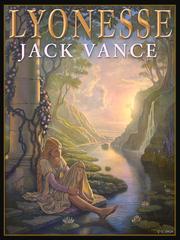
The first of three, set on an invented archipelago off pre-Arthurian Europe, and a different Vance again: fairy tale, dynastic politics and considerable cruelty in the same book. Note that this novel exists in our catalogue under two separate records, as Suldrun's Garden and under the series-prefixed title used here; buy one, not both.

The middle volume, which widens the canvas considerably and is the weakest of the three read alone and the necessary one read in sequence. Do not skip it.
The conclusion, which won the World Fantasy Award and is the warmest thing Vance ever wrote. If you finish it and want more, the Alastor and Cadwal novels — Trullion, Araminta Station and their sequels — are the other late sequences, and both resolve in our catalogue.