The Books of Babel Reading Order and Guide
The Books of Babel is Josiah Bancroft's richly layered steampunk-fantasy quartet, best experienced in publication order so that each novel's escalating mysteries, world-building revelations, and character arcs land with full impact. This curriculum begins with the series itself read in sequence, then adds a short stage of thematically resonant companion reads that deepen appreciation of the literary influences and genre craft Bancroft draws upon.
Enter the Tower — Books 1 & 2
BeginnerGet oriented in Bancroft's world, meet Thomas Senlin and the Tower of Babel, and build the reading rhythm needed for the series' dense, witty prose.
▸ Study plan for this stage
Pace: 8–10 weeks total: Weeks 1–4 for Senlin Ascends (~25–30 pages/day, ~5 days/week), Weeks 5–9 for Arm of the Sphinx (~25–30 pages/day, ~5 days/week), with Week 10 as a reflection and review week for both books.
- The Tower of Babel as a world-building device: each ringdom is a self-contained society with its own rules, aesthetics, and dangers — learn to read each new environment as its own micro-world
- Thomas Senlin's character arc: tracking his transformation from a naive, bookish headmaster into a resourceful, morally tested survivor across both novels
- Bancroft's prose style: dense literary wit, Victorian-flavored language, and dark comedy — slow down and savor sentences rather than skimming for plot
- The theme of obsession vs. love: Senlin's search for Marya raises the question of whether he is driven by genuine devotion or by the need to recover a version of himself
- Unreliable environments and unreliable information: the Tower constantly deceives its inhabitants and visitors; nothing — maps, guides, or people — should be taken at face value
- The Sphinx as a figure of power and moral ambiguity: introduced in Arm of the Sphinx, the Sphinx complicates simple notions of heroism and villainy and forces Senlin into ethical compromise
- Found family and crew dynamics: the formation of the Red Hand crew in Arm of the Sphinx introduces ensemble storytelling and the tension between individual mission and collective loyalty
- The Tower as metaphor: the vertical climb through increasingly strange ringdoms mirrors social class, ambition, corruption, and the cost of 'civilized' aspiration
- By the end of Senlin Ascends, how has Senlin's understanding of the Tower — and of himself — changed from the honeymoon optimism of the opening chapter? Use at least two specific scenes to support your answer.
- What does Marya represent to Senlin throughout both books — and does that representation stay consistent, or does it shift? What evidence in the text supports your reading?
- How does Bancroft use the distinct ringdoms (e.g., the Basement, the Baths, the Parlor in Book 1; the environments encountered aboard the Stone Cloud in Book 2) to make thematic points rather than just provide exotic scenery?
- In Arm of the Sphinx, Senlin must negotiate with the Sphinx and accept morally uncomfortable terms. What does this negotiation reveal about the limits of his idealism, and how does it set up his ongoing internal conflict?
- How does the crew of the Stone Cloud function as a found family, and what tensions within the group complicate that dynamic? Which relationships feel most fragile, and why?
- Bancroft's prose is frequently described as 'Dickensian' or 'literary.' Choose one passage from each book that you think best exemplifies his style, and explain what makes it distinctive — in diction, rhythm, imagery, or tone.
- Keep a 'Ringdom Log': each time Senlin enters a new environment in either book, write 3–5 sentences describing its defining rules, atmosphere, and what it seems to satirize or represent thematically. By the end of Book 2 you should have a small atlas of annotated locations.
- Character tracking journal: after every 50 pages, write a single paragraph on Senlin's current state — what he believes, what he wants, what he's willing to do. Compare entries across the full arc of both books to visualize his transformation.
- Prose imitation exercise: select one paragraph of Bancroft's narration that you find particularly striking. Rewrite it in plain, functional prose, then compare the two versions. Write a short reflection on what is lost and what is gained — this will sharpen your appreciation of his style.
- The Marya Question: halfway through Arm of the Sphinx, pause and write a one-page response to this prompt: 'Is Senlin's quest heroic, obsessive, or self-serving?' Revisit and annotate your response after finishing the book to see if your view changed.
- Map the moral compromises: create a simple list or timeline of every significant ethical line Senlin crosses or nearly crosses across both books. For each entry, note whether the narrative frames it as necessary, tragic, or ambiguous — and whether you agree with that framing.
- Discussion or journaling prompt after finishing both books: 'The Tower promises everything and delivers something else entirely.' Write 300–500 words connecting this idea to a real-world institution, system, or experience — this bridges the fantasy to the thematic core Bancroft is building toward in later volumes.
Next up: Having established Senlin's voice, the Tower's logic, and the crew's fragile bonds, readers are now primed to follow deeper into the Tower's upper ringdoms — where the stakes, moral complexity, and world-building ambition of the series escalate significantly in the books ahead.

The first novel and the essential entry point — introduces the Tower, its Ringdoms, and the everyman hero Thomas Senlin. Reading it first establishes every character, theme, and mystery the rest of the series builds upon.
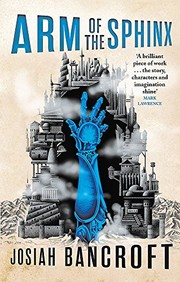
The second novel deepens the world and shifts Senlin's moral complexity; reading it immediately after the first keeps momentum and lets the reader see how Bancroft expands his cast and raises the stakes.
Ascend Higher — Books 3 & 4
IntermediateComplete the quartet, experience the full arc of the series, and appreciate how Bancroft resolves his layered mysteries and character journeys.
▸ Study plan for this stage
Pace: 8–10 weeks total (~25–35 pages/day): spend roughly 4–5 weeks on The Hod King and 4–5 weeks on The Fall of Babel, allowing slower reading during the densely plotted final act of The Fall of Babel. Reserve the last 3–4 days of each book for reflection and note review before moving on.
- The hod underclass as a sustained political allegory — tracing how Bancroft uses the hods' labor, oppression, and uprising in The Hod King to interrogate class hierarchy, exploitation, and the cost of systemic injustice
- Senlin's complete character arc — mapping his transformation from naive, bookish headmaster to morally complex, self-aware leader across both books, and identifying the precise moments of irreversible change
- The Sphinx's true agenda and the ethics of manipulation — understanding how The Hod King reframes the Sphinx's earlier 'help' as coercive, and how The Fall of Babel forces a reckoning with whether benevolent control can ever be justified
- Voleta, Iren, and Edith as independent agents — recognizing how each woman's storyline in The Hod King diverges and deepens, resisting the role of supporting character, and how their choices drive the quartet's resolution
- The Tower as a dying, entropic system — appreciating how The Fall of Babel literalizes the Tower's collapse as a metaphor for the inevitable failure of authoritarian, stratified societies
- Marat and the Hod King's ideology — analyzing Marat not as a simple villain but as a revolutionary whose methods and goals force the reader to weigh liberation against violence
- Resolution of layered mysteries — tracking how Bancroft pays off long-seeded questions (Senlin's search for Marya, the Sphinx's origins, the ringdoms' secrets) and evaluating which resolutions feel earned
- Bancroft's prose style at full maturity — noticing how his use of dark comedy, literary allusion, and poetic imagery intensifies in these final two books to match the escalating emotional stakes
- By the end of The Hod King, how has Senlin's original motivation — finding Marya — evolved into something larger, and what does that shift reveal about who he has become?
- What is Marat's core argument in The Hod King, and in what ways does Bancroft make that argument genuinely compelling before ultimately complicating or undermining it?
- How does The Fall of Babel use the physical destruction of the Tower to comment on the social and political structures the Tower has represented throughout the entire quartet?
- Which of the long-running mysteries (Marya's fate, the Sphinx's identity and purpose, the nature of the ringdoms' power) did you find most satisfyingly resolved, and which felt incomplete — and why?
- How do Edith's and Voleta's final choices in The Fall of Babel reflect the thematic argument Bancroft has been building about agency, sacrifice, and what it means to truly free someone?
- Looking across all four books, what is Bancroft's ultimate statement about the relationship between knowledge, power, and moral responsibility — and how do The Hod King and The Fall of Babel together deliver that statement?
- Character arc timeline: Create a two-column visual timeline for Senlin — one column tracking external plot events, the other tracking internal belief changes. Use specific scenes from The Hod King and The Fall of Babel to pinpoint where his worldview shifts, and write 2–3 sentences explaining what caused each shift.
- Villain empathy essay: Write a 400–600 word piece from Marat's point of view justifying his actions in The Hod King. Then write a 200-word rebuttal from Senlin's perspective. The goal is to articulate both sides with genuine conviction before forming your own verdict.
- Mystery resolution scorecard: List every major mystery introduced in Books 1–2 that you carried into Books 3–4. For each one, note how (or whether) it was resolved in The Hod King or The Fall of Babel, rate your satisfaction (1–5), and write one sentence on what made the resolution work or fall flat.
- Tower autopsy diagram: Draw or describe the Tower's social structure as it existed at the start of The Hod King (ringdoms, hods, Sphinx's network, etc.) and then again as it exists at the end of The Fall of Babel. Annotate what forces caused each change, distinguishing between human agency and systemic collapse.
- Thematic throughline essay: Write a 500–700 word essay arguing what the complete Books of Babel quartet — as experienced through The Hod King and The Fall of Babel — ultimately says about one of these themes: education and ignorance, class and liberation, or love as transformation. Use at least four specific scenes drawn from these two books as evidence.
- Prose close-reading: Select one passage of roughly one page from each book that you consider Bancroft's writing at its best. Annotate both passages line by line, identifying his use of metaphor, tone, humor, and imagery. Then write a short paragraph comparing his voice in the two passages — has it changed, and if so, how?
Next up: Completing the full quartet equips the reader with a holistic understanding of Bancroft's world-building, thematic ambitions, and narrative craft, making them ready to engage with deeper critical or comparative study — whether that means exploring Bancroft's influences (Dickens, Kafka, Calvino), reading scholarly discussions of the series, or moving on to other works of literary secondary-world fa

The third and longest novel fractures the narrative into multiple POVs, rewarding the familiarity built in books one and two; it must be read before the finale to understand the political and personal threads it ties together.

The concluding volume pays off every mystery seeded across the trilogy — reading it last is the only way to experience the intended emotional and narrative resolution.
The Literary Roots — Influences & Craft
IntermediateUnderstand the Victorian, picaresque, and fantastical literary traditions Bancroft consciously draws from, enriching a re-read or deepening appreciation of the series.
▸ Study plan for this stage
Pace: 10–12 weeks total: ~3 weeks for The Name of the Rose (~30 pages/day), ~2 weeks for Gulliver's Travels (~25 pages/day), and ~5 weeks for The Illustrated Gormenghast Trilogy (~30 pages/day), with 1–2 flex days per book for reflection and journaling.
- The 'labyrinthine library' as symbol: In The Name of the Rose, Eco uses the Abbey's library as a physical and intellectual maze — a direct ancestor of the Tower of Babel's architecture of forbidden knowledge and institutional gatekeeping.
- Semiotics and the unreliable text: Eco's layered manuscripts, false trails, and contested interpretations model how Bancroft treats language, translation, and the instability of meaning throughout the Books of Babel.
- Satirical travel as social critique: Swift's Gulliver's Travels establishes the picaresque tradition of using fantastical journeys through bizarre societies to lampoon real-world politics, class, and human vanity — a mode Bancroft directly inherits.
- The unreliable narrator and shifting perspective: Gulliver's gradual disillusionment and misanthropy show how a first-person traveler's lens can be systematically undermined, a technique central to Bancroft's own protagonists.
- Grotesque world-building as atmosphere: Peake's Gormenghast Trilogy demonstrates how exhaustive, almost suffocating architectural and character detail can make a secondary world feel ancient, decaying, and inevitable — a key tonal influence on the Books of Babel.
- Ritual, stagnation, and institutional decay: Gormenghast's castle is ruled by meaningless ceremony and entrenched hierarchy, prefiguring Bancroft's exploration of bureaucratic and academic power structures within the Tower.
- The picaresque hero: Across all three books, protagonists are outsiders navigating closed, rule-bound worlds — a structural template for Bancroft's own wandering, curious leads.
- Prose style as world-building tool: Each author uses a radically distinct voice (Eco's scholastic density, Swift's deadpan reportage, Peake's gothic lyricism) to show how sentence-level craft constructs an entire reality — inviting readers to analyze Bancroft's own stylistic choices.
- How does the Abbey library in The Name of the Rose function as both a physical setting and a philosophical argument about knowledge and power, and where do you see that argument echoed in the Books of Babel?
- In what ways does Swift use Gulliver's increasingly unreliable perspective to satirize specific institutions (government, science, academia), and how does that satirical method compare to Bancroft's treatment of similar institutions?
- Peake's Gormenghast is defined by ritual that has lost its original meaning. How does this theme of hollow ceremony relate to the power structures Bancroft constructs in the Books of Babel?
- All three works feature protagonists who are, in some sense, outsiders or investigators in a closed world. How does each author use that outsider status differently, and which model does Bancroft seem most indebted to?
- Compare the role of language and naming across The Name of the Rose and Gormenghast — how do Eco's semiotics and Peake's invented nomenclature each treat words as sources of power or instability?
- How does each book's visual or architectural imagination (the labyrinth, the flying island of Laputa, Gormenghast castle) function as a metaphor for the society it contains, and what does this suggest about Bancroft's own Tower?
- Annotated margin map: While reading The Name of the Rose, sketch the Abbey's library layout as Eco describes it, then annotate it with the ideological 'rules' that govern access. Afterward, do the same for a location in the Books of Babel and compare what each map reveals about institutional power.
- Satirical lens journal: After each of Gulliver's four voyages, write a one-paragraph 'dispatch' in Gulliver's deadpan voice describing a real modern institution (a university, a government body, a tech company) as if it were one of Swift's absurd societies. This trains the satirical eye Bancroft expects readers to bring.
- Peake prose imitation: Select a two-page architectural or character description from Gormenghast and write a 300-word imitation describing a building or character from the Books of Babel in Peake's gothic, maximalist style. Note where the styles clash or merge.
- Influence tracing chart: Create a three-column chart (Eco / Swift / Peake) with rows for: narrative structure, protagonist type, treatment of language, architectural imagination, and satirical intent. Fill in each cell, then add a fourth column for Bancroft and identify which cells he inherits, blends, or subverts.
- Close-reading comparison: Choose one passage from each of the three books that deals with a character encountering a rule they don't understand. Write a 500-word comparative analysis of how each author uses that moment of confusion to reveal something about power — then find a parallel moment in the Books of Babel.
- Reading group debate: Stage a structured discussion (or written dialogue with yourself) arguing which single book in this stage is the 'deepest' root of the Books of Babel, using textual evidence. Forcing a defense of one position sharpens awareness of all three influences simultaneously.
Next up: Mastering these literary roots gives readers the critical vocabulary — labyrinthine structure, satirical unreliability, gothic world-building — needed to engage with the next stage's focus on how Bancroft synthesizes and transforms these traditions into his own original voice and thematic concerns.

Like the Books of Babel, this novel uses a labyrinthine enclosed world packed with hidden knowledge and dark secrets; reading it illuminates Bancroft's love of architecture-as-mystery and erudite world-building.

Bancroft's Ringdoms are directly indebted to Swift's satirical pocket-societies; this classic shows the picaresque 'traveller encounters absurd civilisations' structure that underpins Senlin's journey.

Peake's vast, crumbling castle populated by grotesque characters is the closest literary ancestor to the Tower of Babel in tone and atmosphere; it rewards readers who want to trace Bancroft's Gothic-fantastical lineage.
Genre Companions — Steampunk & Secondary Worlds
ExpertPlace the Books of Babel within the broader steampunk and secondary-world fantasy tradition, and develop a critical lens for what makes Bancroft's work distinctive.
▸ Study plan for this stage
Pace: 6–8 weeks total: Weeks 1–3 for The Lies of Locke Lamora (~30–35 pages/day), Weeks 4–7 for Perdido Street Station (~25–30 pages/day, given its density), with Week 8 reserved for comparative reflection, re-reading key passages, and completing exercises.
- Secondary-world building without portal fantasy: how Lynch and Miéville construct fully realized worlds (Camorr and New Crobuzon) that demand the reader's trust rather than a real-world anchor, and how Bancroft does the same with the Tower of Babel
- The 'Crooked City' as archetype: both Camorr and New Crobuzon are corrupt, stratified urban labyrinths — examining how city-as-character functions and comparing it to Bancroft's Senlin Ascends tower-city structure
- Steampunk and Weird Fiction as distinct but overlapping modes: Miéville's New Weird (bio-mechanical horror, thaumaturgy-as-industry) versus Lynch's Renaissance-noir versus Bancroft's clockpunk-adventure, and where the Books of Babel sit on that spectrum
- The confidence trick as narrative engine: Lynch's Gentlemen Bastards use elaborate cons that mirror the author's own sleight-of-hand with the reader — identifying how misdirection, dramatic irony, and unreliable framing operate as structural devices transferable to Bancroft
- Class, labor, and systemic oppression embedded in world-building: Miéville's Marxist critique made flesh in the xenian underclass and the Weaver's indifference, and how economic violence is aestheticized or critiqued differently across all three authors
- The ensemble vs. the lone protagonist: Lynch's tight found-family unit (Locke, Jean, the Bastards) versus Miéville's sprawling cast versus Bancroft's Senlin as an everyman isolated in an alien world — what each choice costs and gains narratively
- Magic/technology as world-defining logic: Lynch's near-absent but mythologized Eldren magic versus Miéville's thaumaturgy-as-physics versus Bancroft's mechanical ingenuity — how the rules (or deliberate absence of rules) shape tone and reader immersion
- Distinctive authorial voice and prose register: Lynch's profane, witty, heist-thriller cadence; Miéville's dense, maximalist, almost geological prose; and how recognizing these extremes sharpens the reader's ear for Bancroft's own lyrical-whimsical register
- How does Camorr in The Lies of Locke Lamora function as more than a backdrop — what specific techniques does Lynch use to make the city feel lived-in, and which of those techniques does Bancroft employ (or conspicuously avoid) in the Tower?
- Miéville's New Crobuzon is built on systemic exploitation of non-human species and the working class; how does Perdido Street Station use its world-building to make an ideological argument, and does Bancroft's Books of Babel engage with similar themes or sidestep them?
- The Lies of Locke Lamora is structured around an elaborate long con nested inside a thriller plot — identify at least two moments where Lynch misdirects the reader in the same way Locke misdirects a mark. How does this narrative technique compare to Bancroft's use of dramatic irony and reader misdirection?
- Miéville's thaumaturgy and Lynch's Eldren artifacts both create a sense of a world with a deep, partially unknowable history. What is the effect of presenting magic/lost-technology as archaeological rather than instructional, and how does this compare to the mechanical wonders of the Books of Babel?
- Both Camorr and New Crobuzon are cities defined by extreme inequality and criminal or institutional violence. How do Lynch and Miéville differ in their moral framing of that violence, and where would you position Bancroft on that spectrum?
- After reading both books, how would you define 'secondary-world fantasy' as a genre expectation, and what specific choices in The Lies of Locke Lamora and Perdido Street Station mark them as distinctly NOT the same sub-genre despite sharing the label — and which sub-genre does each more properly belong to?
- Camorr / New Crobuzon / Tower of Babel city map exercise: Draw or diagram the social and physical geography of Camorr (from Lynch) and New Crobuzon (from Miéville) — marking districts, power centers, and underclasses. Then do the same for one ringdom of the Tower from the Books of Babel. Write a one-page comparison of what each map reveals about its author's thematic priorities.
- Prose register translation: Choose one action scene from The Lies of Locke Lamora and rewrite it in Miéville's maximalist, Weird Fiction style (add biological grotesquerie, ideological weight, dense compound nouns). Then rewrite the same scene in Bancroft's lyrical-whimsical register. Reflect on what is gained and lost in each translation.
- The Long Con breakdown: Outline the structure of the 'Gray King' plot in The Lies of Locke Lamora as if it were a stage magician's trick — setup, misdirection, reveal. Then identify an equivalent structural move in Perdido Street Station (e.g., the slake-moth arc's bait-and-switch of who the real monster is). Write a short essay on how both authors use genre expectations as the 'mark' being conned
- Ideological autopsy: Select one non-human or marginalized character from Perdido Street Station (e.g., Yagharek, Lin, or a Remade character) and one from The Lies of Locke Lamora (e.g., a member of the Camorri underclass or a Bondsmage). Write a 300-word character brief analyzing how each character's suffering is used — as critique, as atmosphere, as plot fuel, or some combination — and what that
- Sub-genre taxonomy chart: Create a two-axis chart (X-axis: 'grounded/gritty realism ↔ maximalist/weird'; Y-axis: 'plot-driven ↔ theme-driven') and plot The Lies of Locke Lamora, Perdido Street Station, and at least two Books of Babel novels on it. Write three sentences justifying each placement, then write a paragraph on where the Books of Babel cluster and what that says about Bancroft's genre id
- Comparative opening pages analysis: Re-read the first 10 pages of The Lies of Locke Lamora and the first 10 pages of Perdido Street Station back to back. Write a structured comparison (300–400 words) addressing: what each author prioritizes first (character, world, plot, voice), what questions each opening raises to hook the reader, and how each approach differs from Bancroft's own opening strateg
Next up: Having established a critical vocabulary for secondary-world construction, steampunk/Weird Fiction genre modes, and the spectrum of authorial voice, the reader is now equipped to return to the Books of Babel itself with a sharpened analytical lens — ready to interrogate Bancroft's specific choices as deliberate genre negotiations rather than simply absorbing them as story.
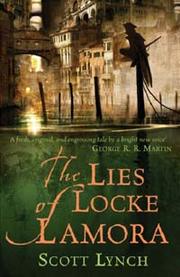
A masterclass in witty, morally complex adventure fantasy set in a richly detailed secondary world — reading it alongside Bancroft highlights shared strengths in voice, heist-like plotting, and ensemble casts.
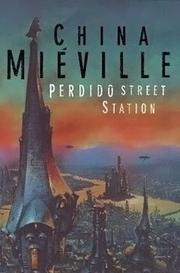
Miéville's New Crobuzon is the definitive steampunk-adjacent secondary world in modern fantasy; its density, strangeness, and political undercurrents provide a useful critical contrast to Bancroft's more humanist approach.
Discussion
Keep reading
Paths that share books, cover the same subject, or open a related topic.