Shannara Reading Order: Publication or Chronological?
Shannara now runs to more than thirty books spread across several millennia of invented history, and the chronological order is a genuinely bad way to read it — it opens with the Word and Void novels, which are contemporary-set urban fantasy that give away where the whole world came from. This path takes a position: read in publication order, start with the original trilogy, and treat everything after the Heritage quartet as optional. It also names the one book that is worth reading out of order and why.
The Original Trilogy
BeginnerRead the three books that made Shannara, and work out early whether the series is for you.
▸ Study plan for this stage
Pace: 7–9 weeks for 726, 608 and 504 pages. Say the thing about the first book plainly before you start: The Sword of Shannara is openly derivative of The Lord of the Rings. The resemblance is not subtle and it is not a matter of shared influences — a reluctant young hero of hidden lineage, an aged wander
- The Four Lands are post-apocalyptic rather than mythic: the elves, dwarves, gnomes and trolls of Shannara are descended from humanity after a nuclear war, and this is the series' one genuinely distinctive idea
- The Sword of Shannara's plot follows The Lord of the Rings closely; its value is the world it establishes and the enormous commercial success that made mass-market epic fantasy a category
- The Elfstones of Shannara is the book most readers name as the series' best — the Ellcrys and the Forbidding are Brooks's own invention, and Amberle and Wil carry a genuinely tragic plot
- The Wishsong of Shannara is darker than either predecessor and makes Brin Ohmsford's magic a real moral problem rather than an asset
- Each novel jumps a generation and follows a different Ohmsford, which is the structural pattern for the whole series and the reason it can run for thirty books
- Brooks's magic is consistently costly — the Elfstones, the wishsong and the Druid Sleep all take something from the user — and that is his most reliable authorial habit
- The original trilogy is a complete, satisfying unit, and stopping after Wishsong is a defensible way to read Shannara
- What does the Four Lands' post-nuclear origin change about how you read what looks like standard high fantasy?
- Which elements of The Sword of Shannara are lifted from Tolkien, and is there anything in it that is not?
- What makes the Ellcrys plot in Elfstones structurally different from a quest, and why does that make the book stronger?
- What does the wishsong cost Brin, and how does Brooks make magic a liability rather than a power fantasy?
- Having read all three, is the trilogy improving book by book, and what specifically improves?
- Would you tell a new reader to start with Sword or Elfstones? You are now in a position to answer properly.
- If you start with Sword, give it a hundred-page trial and read fast. If it defeats you, move to Elfstones rather than abandoning the series — that is the single most useful piece of advice in this path.
- Keep a one-line note on the Ohmsford generation each book follows. The whole series is a family tree and losing track of it is the main source of later confusion.
- Read the opening chapter of The Fellowship of the Ring and the opening chapter of The Sword of Shannara back to back if you know Tolkien. It is more instructive than any argument about whether Brooks was imitating.
- Note where the Four Lands' technological past surfaces — ruins, artefacts, references to the Great Wars. Brooks keeps it in the background, and tracking it is the most interesting way to read the trilogy.
- After Wishsong, decide whether you want the full series or a complete experience. Both are legitimate and this path is built to serve either.
Next up: With the original trilogy behind you, the expansions become readable in Brooks's own publication order — the prequel lands as backstory paid off, and the Heritage quartet is where he stops rewriting Tolkien and starts building his own continuity.
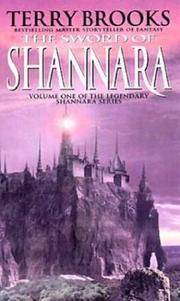
The 1977 debut, and openly derivative of The Lord of the Rings — the resemblance is not subtle. Read it for the world it establishes rather than the plot, and know that if you bounce off it, the next book is markedly better and requires very little from this one.
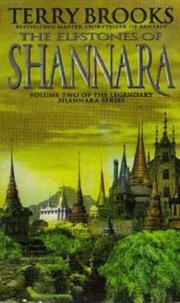
The book most Shannara readers name as the best in the series, and the one this path would let you start with if you cannot face Sword. The Ellcrys plot is Brooks's own rather than Tolkien's, and Amberle and Wil carry it.
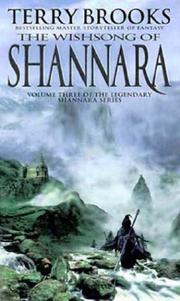
Darker than either predecessor, with Brin Ohmsford's magic turned into a real moral problem. It closes the original trilogy and is the last book you need before deciding how deep to go.
The Prequel and the Heritage Quartet
BeginnerRead the strongest of the expansions, in the order Brooks published them, and see the world's history filled in from both ends.
▸ Study plan for this stage
Pace: 12–15 weeks for five books totalling around 2,300 pages. The Heritage quartet in particular is one continuous story rather than four standalone novels, so the four should be read back to back with as little gap as you can manage. First King of Shannara is a self-contained 480 pages and can sit befor
- The First King of Shannara is a prequel to Sword published nineteen years later, telling how the Sword was forged and how Bremen fought the first Warlock Lord — chronologically first, but read here so it lands as backstory rather than as an opening
- The Scions of Shannara jumps three centuries: magic is outlawed, the Druids are gone, and the Federation governs by suppression — this is the strongest opening of any Shannara cycle
- The Heritage quartet splits three Ohmsford descendants — Par, Walker Boh and Wren — onto separate threads that only converge in the fourth book, which is why the four cannot be read out of order or in isolation
- Walker Boh's thread in The Druid of Shannara is where Brooks writes his most interesting character, and the restoration of Paranor is the series' best sustained piece of invention
- The Elf Queen of Shannara expands the geography further than any other book in the series, and it answers a question the original trilogy left open about where the elves went
- The Talismans of Shannara converges all three threads and ends the arc — this is the natural stopping point for a complete Shannara experience without committing to another twenty books
- By this cycle Brooks's continuity is entirely his own, and the Tolkien comparison stops being useful
- What does First King of Shannara explain about the Sword and about the Druids that Sword itself only asserts?
- Why is a world where magic is outlawed a better starting condition than a world where it is simply rare?
- How do the three Heritage threads differ in tone, and which does Brooks write best?
- What is the Shadowen problem actually about, once you strip out the plot mechanics?
- Does the Heritage quartet resolve enough to work as an ending? Test it against how the original trilogy ended.
- Reading the prequel after the trilogy rather than before it — what did that ordering give you?
- Read the four Heritage books consecutively without inserting another series between them. Readers who break the quartet up almost always lose the thread of whichever strand they were least attached to.
- Extend your Ohmsford family-tree notes through the Heritage generation. Three simultaneous descendants is where the series' genealogy first becomes genuinely hard to hold.
- After First King of Shannara, reread the first thirty pages of The Sword of Shannara. Allanon's manner and the Druid history read very differently with Bremen behind them.
- Mark the point in The Scions of Shannara where you stop noticing Tolkien. Naming that page is the fairest way to settle the derivativeness question for yourself.
- At the end of Talismans, write down whether you are stopping. This is the path's recommended exit and taking it deliberately is better than drifting into the next cycle.
Next up: If you want more after a complete ending, the last stage covers the two directions Shannara expands in — and explains why the chronological order that starts there is a trap rather than a shortcut.
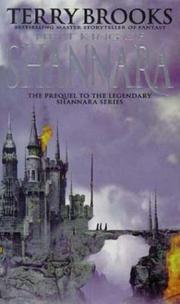
A prequel to Sword, published nineteen years later, telling how the Sword was forged and how Bremen fought the first Warlock Lord. Chronologically first, but read here — it lands as backstory paid off rather than as an opening.
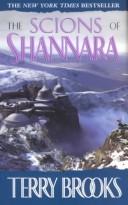
Three centuries after Wishsong, with magic outlawed and the Druids gone. This is where Brooks stops rewriting Tolkien and starts building his own continuity, and it is the strongest opening of any Shannara cycle.
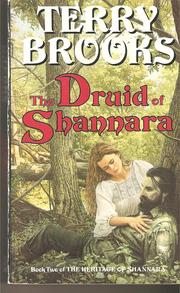
The second Heritage volume, following Walker Boh's thread. The quartet is one continuous story rather than four standalone quests, so these need to be read back to back.
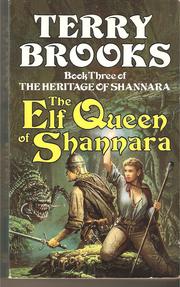
Wren's search for the vanished Elves, and the volume that most expands the geography of the world. Third of four.
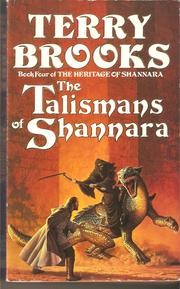
The convergence of all three Ohmsford threads and the end of the Heritage arc. This is the natural place to stop if you want a complete, satisfying Shannara experience without committing to another twenty books.
If You Want to Keep Going
IntermediateSample the two directions the series expands in, and decide which continuation is worth your time.
▸ Study plan for this stage
Pace: 5–7 weeks for 448 and 404 pages. Read Running with the Demon first and Armageddon's Children only if it worked for you. Both are optional and this stage is as much a decision point as a reading assignment. Do not read these before the original trilogy under any circumstances — that is the specific m
- Running with the Demon is the first Word and Void novel, set in small-town 1990s Illinois with no elves in it at all, and it is much better than that description suggests
- It is also the secret origin of the Four Lands, which is exactly why reading the series chronologically is a trap: it gives away where the whole world came from before you have any reason to care
- The Word and Void books are contemporary urban fantasy with a genuinely different texture — smaller, bleaker, closer to horror than to epic
- Armageddon's Children opens the Genesis of Shannara sequence, which bridges the Word and Void novels to the Four Lands across the collapse itself
- Genesis is the connective tissue for the full chronology, and reading it is effectively a decision to treat Shannara as one continuous 30-book history rather than as a fantasy series with a good ending
- The chronological order exists and is popular; this path's position is that it converts the series' best structural reveal into a premise stated on page one
- What does Running with the Demon reveal about the origins of the Four Lands, and how would knowing it in advance have changed your reading of the original trilogy?
- How does Brooks's prose and pacing change when he writes contemporary setting rather than secondary world?
- What does the Word and Void's magic system share with the Elfstones and the wishsong, and what does that continuity tell you about Brooks's real preoccupation?
- Does Armageddon's Children successfully bridge the two halves, or does it mostly assert the connection?
- Having seen both ends, would you now recommend the chronological order to anyone? If so, to whom specifically?
- Before starting, write down what you currently believe about how the Four Lands came to exist. Comparing that to what Running with the Demon shows you is the clearest demonstration of what publication order protected.
- Read Running with the Demon as a standalone contemporary fantasy for its first half and see whether it holds up without the Shannara connection. It does, and that is the strongest reason to read it.
- If you continue past Armageddon's Children, sketch the full chronology once — Word and Void, Genesis, Legends, the original trilogy, Heritage, and the later cycles. Doing it after the fact rather than before is the whole argument of this path in one exercise.
- Decide what you would tell a friend who asked where to start Shannara. If your answer is Elfstones, publication order thereafter, and stop at Talismans, you have read the series the way this path recommends.
Next up: This is the end of the path: you have the trilogy that started it, the cycle that outgrew its influences, a complete ending at Talismans, and a clear-eyed look at the chronology — so the next step is either the remaining Shannara cycles at your own risk, or a turn to the fantasy Brooks made commercially possible.

The first Word and Void novel, set in small-town 1990s Illinois with no elves in sight. It is the secret origin of the Shannara world and much better than that description suggests — but reading it before the trilogy spoils the central reveal, which is exactly why the chronological order is a trap.
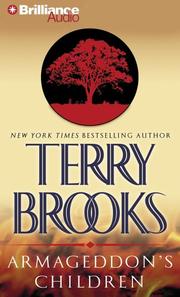
The first Genesis of Shannara book, bridging the Word and Void novels to the Four Lands. Read it only after Running with the Demon, and treat it as the test of whether you want the full chronology or were happy with the Heritage ending.
Discussion
Keep reading
Paths that share books, cover the same subject, or open a related topic.