Fritz Leiber books in order: where to start with Fafhrd and the Gray Mouser
Start with Swords and Deviltry. Leiber coined the phrase sword and sorcery, wrote Fafhrd and the Gray Mouser stories for nearly fifty years, and then late in life reordered the whole run into seven volumes that put the origin stories first — which means the reading order and the publication order are genuinely different, and the reading order is the one to use. This path takes those seven books in Leiber's own sequence, then the science fiction, then the horror, which is where a lot of readers think his best writing actually is. He is also the rare fantasy author whose short fiction matters more than his novels, and the volumes below are mostly collections rather than novels.
Fafhrd and the Gray Mouser, in Leiber's Order
IntermediateRead the first four Lankhmar volumes in the internal chronology Leiber himself imposed, and see the two characters go from a pair of stock rogues to the most human duo in the genre.
▸ Study plan for this stage
Pace: 4 weeks, about 860 pages across four volumes that are mostly collections rather than novels — Swords and Deviltry 224, Swords Against Death 251, Swords in the Mist 192, Swords Against Wizardry 192. Stories rather than chapters means these read well at one or two pieces a sitting rather than in long
- Leiber coined the phrase sword and sorcery, and these stories are the thing the phrase was coined to describe — which makes the volume order a piece of literary history as well as a reading decision.
- Publication order and reading order genuinely differ here. Leiber wrote the origin stories decades late and then reordered the whole run into seven volumes; Swords and Deviltry is first to read and nowhere near first to be written.
- Ill Met in Lankhmar, the Hugo and Nebula winner that closes the first volume, is the pivot: the two men meet, and both lose the women they love in the same night. Everything after it is written by those deaths.
- Swords Against Death is where the series as originally published actually begins, and where Leiber's prose voice arrives complete — ornate, ironic, and much funnier than its imitators.
- The two protagonists are a deliberate pair rather than a hero and a sidekick: Fafhrd the northern barbarian who reads, the Mouser the city thief who dabbles in magic, each with his own wizardly patron.
- Lankhmar itself is the third character, and Swords Against Death is where the city of legend gets built out of fog, thieves' guilds and named streets.
- Swords in the Mist swerves tonally, including a detour to our own Earth, and the willingness to break its own register is what separates Leiber from the genre he founded.
- Why does Leiber's own ordering put the origin stories first, given that he wrote them last? What does the sequence gain and what does it give away?
- After Ill Met in Lankhmar, how does the tone of the partnership change, and where in Swords Against Death can you see the change operating?
- Fafhrd and the Mouser are frequently described as the first fully characterised heroes in sword and sorcery. What specifically do they do that Conan does not?
- What do Ningauble of the Seven Eyes and Sheelba of the Eyeless Face contribute structurally, beyond handing out quests?
- Swords Against Wizardry contains Stardock and the Quarmall sequence — the closest the series comes to conventional adventure. Is that a strength or a loss?
- Look up the first-publication date of each story in Swords and Deviltry and Swords Against Death and write them in the margin of the contents page. Reading the volumes with those dates visible makes Leiber's reconstruction of his own series impossible to miss.
- Track one recurring motif across all four volumes — the fog, the rats, or the two wizards — and note in a line what it means each time it appears. It changes function as the series ages.
- Read Ill Met in Lankhmar and then the first story of Swords Against Death back to back, and mark every sentence in the second that depends on the first for its weight.
- Take a page of Leiber's prose from Swords Against Death and a page from any modern sword-and-sorcery novel, and list the differences in sentence length and vocabulary. The comparison explains why he is imitated and not matched.
Next up: With the first four volumes read in Leiber's order, you have the partnership fully formed and can meet it at novel length and then in old age.
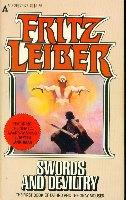
The right starting point, and not where the stories were written: it collects the late-written origin tales plus Ill Met in Lankhmar, the Hugo and Nebula winner in which the two men meet and immediately lose everything. Note that a separate collection also titled Ill Met in Lankhmar reprints this book together with the next one — read one or the other, not both.
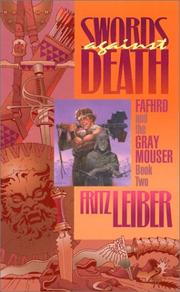
The second volume, and the real beginning of the series as originally published — ten stories of wandering, grief and mercenary work in the aftermath of the first book. This is where the Lankhmar of legend gets built, and where Leiber's prose voice arrives fully formed.
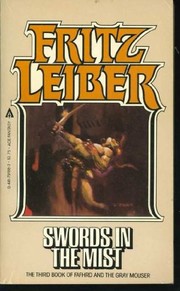
Third, and the volume that shows how strange the series is willing to get, including a detour to our own Earth. Read it in place: the tonal swerves here are what separate Leiber from his imitators.

Fourth, containing the mountain-climbing novella Stardock and the Quarmall sequence, and the closest the series comes to conventional adventure structure. It is also the setup for the novel that follows.
The Novel and the Late Lankhmar
IntermediateRead the one full-length Lankhmar novel and the two late volumes, and judge for yourself where the series should be left.
▸ Study plan for this stage
Pace: 3 weeks, about 740 pages. The Swords of Lankhmar is 224 pages and the only full-length novel in the sequence; Swords and Ice Magic 221 and The Knight and Knave of Swords 292 are collections again, the last containing the long novella The Mouser Goes Below. The Swords of Lankhmar is bawdy and openly
- The Swords of Lankhmar is the series' high point and the best single argument for it: an infestation of intelligent rats beneath the city, at full comic and erotic strength.
- A novel forces Leiber to sustain a plot rather than a situation, and watching how he adapts a story writer's technique to 224 continuous pages is the interest of the fifth volume.
- Swords and Ice Magic was written when Leiber was in his sixties and is audibly a book about that — slower heroes, an elegiac tone, and the Death of Nehwon taking a personal interest.
- The series formula visibly changes across these three: the ratio of adventure to reflection inverts, and the reversal is deliberate rather than a decline in craft alone.
- The Knight and Knave of Swords is the seventh and last volume, published in 1988, and is by most accounts the weakest. Knowing that in advance makes it readable as an ending rather than as a disappointment.
- Stopping after the sixth volume is a defensible reading decision, and the path says so rather than insisting on completeness.
- What does The Swords of Lankhmar do with the city that the story collections could not, simply by virtue of length?
- Where in Swords and Ice Magic does the writing register the age of its author most clearly — in the plots, the prose, or what the characters want?
- The Death of Nehwon becomes an active presence in the late books. How does that change the stakes of a series whose heroes were previously unkillable by convention?
- Is The Knight and Knave of Swords a failure of energy or a deliberate diminuendo? Argue it from the text rather than from reputation.
- If you stopped at volume six, what would you actually be missing?
- Chart the series formula across volumes one to seven on a single sheet: for each, note in one line the length of the typical story, the proportion of comedy, and whether the heroes win. The shape of the run becomes visible in about twenty minutes.
- Read the opening chapter of The Swords of Lankhmar beside a story from Swords Against Death and mark where the novel slows down to do work the short form did by ellipsis.
- Pick one scene in Swords and Ice Magic in which Fafhrd or the Mouser is physically slower or more tired than he would have been in volume two, and write down what Leiber gets from the difference.
- Read The Mouser Goes Below and note where it repeats a device from an earlier volume. Deciding whether each repetition is exhaustion or deliberate return is the honest way to judge the last book.
Next up: Leiber's fantasy is only half the career; the science fiction won him a Hugo before the Lankhmar stories were even collected.
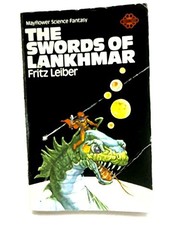
The only novel-length Fafhrd and Mouser book, and the fifth volume in sequence: an infestation of intelligent rats beneath the city, at full comic and erotic strength. The high point of the series and the best single argument for it.

The sixth volume, written when Leiber was in his sixties, and audibly a book about ageing — the heroes are slower, the tone is more elegiac, and the Death of Nehwon takes an interest in them. Uneven, and moving in a way the early volumes never attempt.

The seventh and last, published in 1988, with the long novella The Mouser Goes Below. The weakest volume by most accounts and the honest end of the sequence — worth reading for completeness, and reasonable to stop after the sixth.
The Science Fiction
IntermediateCover Leiber's other career, which won him a Hugo before Lankhmar was collected at all.
▸ Study plan for this stage
Pace: 3 weeks, about 870 pages, but very unevenly distributed — The Big Time is 128 pages and readable in one evening, The Wanderer 320, A Specter Is Haunting Texas 197, The Green Millennium 220. Give The Big Time its own sitting and read it in as close to one go as you can, because it is written to run i
- The Big Time won the 1958 Hugo and is formally the boldest thing here: a war across all of history, told entirely in one room, in real time, in the voice of a single narrator, as a stage play.
- The Change War premise — two factions editing the past — is deliberately never explained, and the novel's confinement is what makes the unexplained scale bearable.
- The Wanderer won the 1965 Hugo with the opposite strategy: a dozen scattered viewpoints watching one planetary event, a disaster novel written as a mosaic.
- Leiber's science fiction is theatrical in origin. He was an actor's son and worked as an actor, and the staging instincts in The Big Time are not a metaphor.
- A Specter Is Haunting Texas is broad satire — a space-born actor in an exoskeleton loose in a post-nuclear Texas that has annexed most of North America — and is the funniest of the novels.
- The Green Millennium is minor and included for a reason: its corrupt near-future Los Angeles and crime-fiction textures come back transformed in the horror.
- Across these four the constant is voice. Leiber will change genre, scale and structure entirely and remain instantly identifiable at sentence level.
- The Big Time never leaves the Place. What does the single set buy Leiber, and what does it cost him?
- How does Greta Forzane's narration control what you are allowed to know, and where does she withhold?
- The Wanderer distributes its story across many viewpoints. Which of them earn their space and which are there to cover ground?
- What is A Specter Is Haunting Texas satirising, and does the exoskeleton conceit do more than supply a visual?
- Read against the Lankhmar stories, what carries over into the science fiction — the humour, the structure, the interest in cities, or something else?
- Read The Big Time in one sitting and then write the cast list and set description you would hand a theatre director. Doing this makes obvious how completely the novel is built as a play.
- In The Wanderer, follow one viewpoint thread only, skipping every other, then go back and read the whole. Note what the mosaic structure adds that the single thread did not have.
- List every joke in A Specter Is Haunting Texas that depends on gravity or body shape, and check how many of them are also making a political point. The overlap is the book's method.
- Find one paragraph in The Green Millennium whose imagery reappears in Our Lady of Darkness later in this path, and keep the reference for the final stage.
Next up: The Los Angeles of The Green Millennium and the confined dread of The Big Time both point at the horror, which is where many readers think the best writing actually is.

The 1958 Hugo winner, and the best entry point outside Lankhmar: a time war told entirely in one room, in real time, as a stage play. Short, formally audacious, and unlike anything else in 1950s science fiction. Our catalogue also carries it bound with the collection The Mind Spider, so look for the standalone edition if you want just the novel.
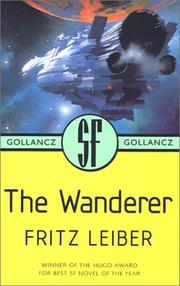
The 1965 Hugo winner: a planet appears beside the Moon and the novel follows a dozen scattered viewpoints through the consequences. A disaster novel written as a mosaic, and the most ambitious structure he attempted.
A space-born actor, skeletal in Earth gravity and wearing an exoskeleton, arrives in a post-nuclear Texas that has annexed most of North America. Broad satire, and the funniest of the novels — read it after The Wanderer as the release valve.
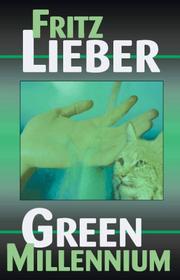
An early satirical novel about a green cat loose in a corrupt near-future Los Angeles. Minor, and included because it shows the crime-fiction and Hollywood textures that come back transformed in the horror stage.
The Horror
IntermediateRead the work that made Leiber the bridge between Lovecraft and modern urban horror — supernatural fiction relocated into offices, campuses and city apartments.
▸ Study plan for this stage
Pace: 2 to 3 weeks, about 530 pages and the shortest stage on the path — Conjure Wife 200, Our Lady of Darkness 189, Night's Black Agents 143. Read them slowly rather than quickly; these are the densest prose here. Our Lady of Darkness is about a widowed writer drinking heavily in the aftermath of his wif
- Leiber is the bridge between Lovecraft, whom he corresponded with as a young man, and modern urban horror. His innovation was relocation: the supernatural moved into offices, campuses and city apartments.
- Smoke Ghost, collected in Night's Black Agents, is the story that did it — a haunting made of soot and industrial grime that could not exist in a country house.
- Conjure Wife makes an entire faculty career ladder run on charms worked by the wives, which turns an academic satire and a horror novel into the same book. It has been filmed three times.
- Our Lady of Darkness proposes megapolisomancy: cities above a certain size generate their own malign entities as a by-product of their mass.
- The autobiographical content of Our Lady of Darkness is close to the surface — the widowerhood, the drinking, the San Francisco apartment — and reading it as invention only will miss most of the book.
- Night's Black Agents is a 1947 Arkham House collection, so it is chronologically the origin of everything the two novels do, which is why the path puts it last rather than first.
- Gather, Darkness! and You're All Alone are the other early books to try if this stage lands.
- What does Conjure Wife gain by making the magic exclusively the wives' work, and how does the novel treat Norman Saylor's disbelief?
- Smoke Ghost argues that a modern city must produce a modern kind of ghost. Does the story make the case, or only assert it?
- How does megapolisomancy in Our Lady of Darkness differ from a conventional haunting, and what does the difference let Leiber write about?
- Franz Westen is a writer, a widower and a drinker, as Leiber was. Where does the novel use that closeness deliberately, and where does it read as unprocessed?
- Reading Night's Black Agents last, which of its 1947 preoccupations turn out to be the seeds of the two later novels?
- Read Smoke Ghost and Our Lady of Darkness in the same week and list every physical detail each uses to make a city feel occupied. Thirty years separate them; the shared vocabulary is the point.
- In Conjure Wife, track the department politics only, ignoring the magic, and write a one-page summary. Then check how much of the plot you have already reconstructed — the answer is most of it, which is the joke.
- Mark the chapter in Our Lady of Darkness where the novel stops being about a manuscript and starts being about the room the narrator is sitting in. Locating that hinge is the best way to see how the dread is engineered.
- Compare the closing paragraph of Night's Black Agents' title selection with the closing paragraph of Our Lady of Darkness. Forty years apart, and the cadence is the same; identify what specifically is unchanged.
Next up: This is the last stage: with the horror read you have the whole of Leiber, and the case that the sword-and-sorcery he named is not even his best work.
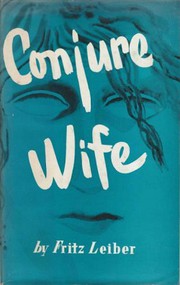
A sociology professor discovers his wife practises magic, and so does every other faculty wife — the whole campus career ladder running on charms. Filmed three times, endlessly imitated, and the founding text of domestic supernatural horror.
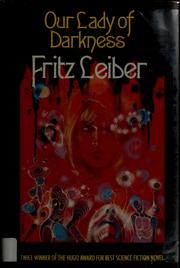
His last major work and, by common agreement, his best: a widowed writer in San Francisco, drinking too much, discovers a theory that cities generate their own malign entities. Autobiographical in ways that are hard to miss, and the natural culmination of this path.

The 1947 Arkham House collection, including Smoke Ghost — the story that dragged the ghost story out of the country house and into industrial cities. Read it last as the origin point of everything the two novels above are doing. Gather, Darkness! and You're All Alone are the other early books to try if this stage lands.