Start with Dissolution, and read the seven Shardlake novels strictly in publication order. That sounds like the default advice, but in this series it carries more weight than usual. Most historical crime series are collections of standalone cases in a fixed setting; Shardlake is a single arc about a man's faith and politics being worn away across twelve years of Tudor history, and reading out of order spends that arc for nothing.
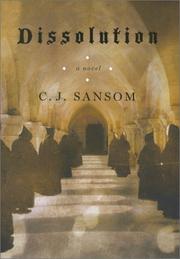
Dissolution opens in 1537 at a Sussex monastery being surrendered to the Crown, which puts the dissolution of the monasteries — the largest transfer of property in English history — at the centre of a murder plot. Matthew Shardlake arrives as a committed reformer who believes in what Thomas Cromwell is doing. Almost everything he loses over the following six books, he still has here. That is the entire reason to start at the beginning rather than with one of the better-regarded later novels.
Expect a slower first fifty pages while the Tudor legal vocabulary settles — serjeants, commissioners, the Court of Augmentations, and who reports to whom. Sansom trained as a solicitor and the procedure is precise; plots are frequently solved by property law, wardship and chancery rather than by deduction, which is part of the pleasure once you are tuned to it.
The Cromwell years
Dissolution and Dark fire, at 395 and 528 pages, are the two shortest books in the series and the briskest. Dark fire is set in the London heat of 1540 and turns on an alchemical weapon against the backdrop of Cromwell's fall. Do not skip it: it introduces Jack Barak, who becomes the second lead for the remaining five novels, and the friction between a scholarly lawyer and a street-smart fixer carries much of the series' dialogue.
One note on the history. Cromwell is a real figure here, and Sansom's portrait of him is markedly less sympathetic than the version popularised elsewhere in recent fiction. That is a deliberate position rather than an oversight, and it is worth reading as one interpretation among several rather than as the record.
The middle books
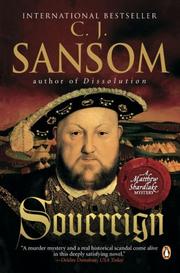
Sovereign, Revelation and Heartstone are the longest stretch, at 563, 655 and 542 pages, and the pace slows. Revelation in particular is dark enough that many readers want a break afterwards, and taking one between books is fine. Read them in this order without exception — Heartstone resolves threads planted three books earlier and will not land otherwise.
The last two
Lamentation and Tombland, at 650 and 880 pages. Tombland is by a distance the longest book in the series and a genuine commitment; at 40 pages a day it is six weeks on its own. Read Lamentation first, since Tombland opens in the reign that Lamentation's ending makes possible.
This is where the series ends. C. J. Sansom died in 2024, so Tombland is the last Shardlake novel and there will be no more. Unlike an abandoned series, this one does arrive somewhere — Tombland is a full, deliberate book rather than a fragment — but readers should know going in that the sequence closes here.
Sansom beyond Shardlake
Winter in Madrid and Dominion are self-contained and need no Tudor knowledge, at 540 and 592 pages. Either order works, though Winter in Madrid first gives you the chronological sequence of Sansom's own preoccupations: it is set during the Spanish Civil War and its aftermath, and Dominion is an alternate history in which Britain came to terms with Germany in 1940. Both are recognisably by the writer of Shardlake — the same interest in what ordinary institutional people do under an authoritarian turn.
A practical habit for the whole series: keep a one-line chronology as you read, the year of each book and who holds power. The novels track the Tudor state from 1537 to 1549 and the political situation changes permanently between them.
More series and author reading orders are on Discover.
Follow the full ordered path here: Shardlake Reading Order and Guide.