Best Books on the Eastern Front in the Second World War, in Reading Order
Four out of five German soldiers who died in the Second World War died fighting the Soviet Union, and for decades the English-language literature on that war was written almost entirely from captured German records and the memoirs of defeated generals. The opening of Soviet archives after 1991 overturned much of it. This path follows that correction: a short overview first, then the modern operational histories, then the great set-piece battles, then the war as it was lived by soldiers and civilians, and finally the specialist shelf for readers who want the campaign-by-campaign detail.
The Shape of the War
BeginnerFix the sequence — Barbarossa, Moscow, Stalingrad, Kursk, Bagration, Berlin — and understand why the Soviet Union survived 1941.
▸ Study plan for this stage
Pace: 2 weeks for Overy's 416 pages at ~30 pages/day. This is the orientation stage and should be read quickly — the point is to fix the sequence and the geography before the detail arrives, not to master anything. Read with an atlas or a map of the 1941 Soviet frontier open.
- The operational sequence: Barbarossa (June 1941), the Moscow counter-offensive (December 1941), Stalingrad (1942–43), Kursk (July 1943), Bagration (summer 1944), Berlin (April 1945)
- The three German army groups of Barbarossa — North toward Leningrad, Centre toward Moscow, South toward Kiev and the Caucasus — and the strategic argument over diverting Centre's armour south in August 1941
- The industrial evacuation east of the Urals, which Overy treats as decisive and which the purely military accounts tend to underweight
- Why the Soviet Union survived 1941 despite catastrophic encirclements: space, weather, mobilisation depth, and the German assumption of a short campaign
- Lend-Lease and its actual contribution — trucks, food and radios more than tanks — as a question Overy addresses directly
- Stalin's role in both the disaster and the recovery, including the 1937–38 purge of the officer corps and his refusal to credit the invasion warnings
- The home front: labour, women in industry, the terror apparatus running alongside the war effort
- Name the six turning points in order with their dates, and say in one sentence what each changed.
- What does Overy identify as the principal reasons the Soviet Union was not defeated in 1941? Rank them by the weight he gives them.
- What did Lend-Lease actually supply in quantity, and what does Overy conclude about how much it mattered and when?
- How does Overy treat the relationship between Stalin's terror and the Soviet war effort — as a cost, a mechanism, or both?
- Why does an account that includes the industrial evacuation give a different answer to 'why did the USSR win' than one that covers only battles?
- Draw the Eastern Front on a blank map at five dates — June 1941, December 1941, November 1942, August 1943, January 1945 — from memory, then check each against Overy's maps.
- Build a one-page timeline of the war in the east with the six turning points, the three army groups' objectives, and the political events (the purges, Lend-Lease agreements, the Tehran conference) on a parallel line.
- Write 200 words answering 'why did the Soviet Union survive 1941' using only Overy. Keep it — you will rewrite it after Bellamy and again after Glantz, and the changes are the measure of this path.
- List every casualty or production figure Overy quotes and note his source for each. The archival arguments in the next stage are largely arguments about exactly these numbers.
Next up: With the sequence fixed and the questions framed, the next stage replaces this outline with the archival scholarship that settled most of them.
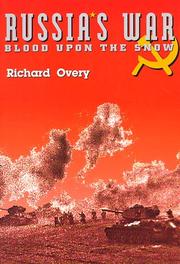
A readable single volume covering the whole Soviet war effort, including the industrial evacuation and the home front, not just the fighting. Start here: it is short enough to give you the map in a week.
The Modern Operational Histories
IntermediateReplace the German-generals version of the war with accounts built on Soviet archives, and grasp the scale of Soviet operational art.
▸ Study plan for this stage
Pace: 4–5 months for roughly 1,930 pages, and do not rush it. Bellamy's 831 pages at ~25 pages/day, then Glantz at ~15 pages/day because the unit designations demand it, then Fritz. Glantz in particular is unreadable without a map to hand; budget the time to trace the operations rather than to read past t
- The archival revolution itself: for forty years the English-language history was built on captured German records and defeated generals' memoirs, and the post-1991 Soviet documents overturned much of it
- Bellamy's integration of the military, political and economic war into one argument, and his framing of the conflict as absolute in a Clausewitzian sense
- Soviet operational art: deep battle, echeloned attack, the exploitation of a breakthrough by second-echelon forces — the doctrinal body Glantz shows the Red Army developing and then executing
- Maskirovka, the Soviet deception system, and its role in the great 1943–44 offensives
- The forgotten battles Glantz recovered — the failed offensives the Soviet record suppressed and the German record never saw — and why their absence made the Red Army look cruder than it was
- Fritz's argument in Ostkrieg that the war in the east was a war of racial annihilation from the outset, inseparable from the Holocaust rather than parallel to it
- The German economic and manpower position: why Fritz argues the war was effectively unwinnable for Germany after 1941, and how that reframes the operational decisions
- The clean-Wehrmacht myth and how all three books dismantle it, each from a different direction
- Explain deep battle in your own words, and identify one operation in Glantz where the Red Army executed it fully and one where it failed.
- What are Glantz's 'forgotten battles' and why were they missing from the earlier literature? What does their recovery do to the standard picture of Soviet incompetence?
- Where do Bellamy and Glantz actually disagree, as opposed to differing in emphasis?
- Fritz insists the military campaign and the extermination programme cannot be separated. Give two pieces of evidence he uses, and state what a reader of Glantz alone would miss.
- The Halder-and-Manstein version of the war attributed defeat to Hitler's interference. Which specific claims of that version do these three books refute, and with what?
- Reading Bellamy and Fritz together, was German defeat in the east determined by 1942? Give the case each way.
- Trace Operation Bagration on a map from Glantz's account: the deception plan, the breakthrough sectors, the axes of advance and the destruction of Army Group Centre. Then write 250 words on why it, and not Stalingrad, is the operation that best demonstrates Soviet operational art.
- Take one operation covered by all three books and write a three-column comparison of how each narrates it — what each includes, omits and emphasises. Kursk or the Dnieper crossings work well.
- Rewrite your stage-one 'why did the USSR survive 1941' answer to 400 words using Bellamy and Glantz, and mark every sentence that changed.
- Build a glossary of the Soviet formations and terms Glantz uses without explaining — front, shock army, tank corps, rifle division, STAVKA — with a one-line definition and rough strength for each. Keep it beside you while reading.
- Find the passage in Ostkrieg where Fritz links a specific military order to the killing programme, and write out the chain of reasoning. This is the point of the book.
- Take three casualty figures from Bellamy and three from Glantz for the same events, and account for the differences by looking at what each is counting.
Next up: Having mastered the operational machinery, the next stage descends into three battles to see what those map arrows meant for the people underneath them.
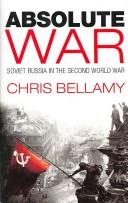
The best one-volume modern history of the Soviet war, integrating military, political and economic strands. Read it before Glantz: it gives you the argument, where Glantz gives you the machinery.
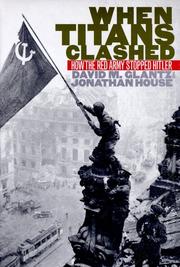
Glantz and House's condensed operational history, and the book that did most to establish the Red Army as a competent modern force rather than a horde. Dry by design and dense with unit designations — read it slowly, and treat it as the corrective to everything written before 1991.
The same war from the German side, and explicit that Hitler's war in the east was a war of racial annihilation inseparable from the Holocaust. Necessary because the previous two are told largely from the Soviet direction.
Inside the Great Battles
IntermediateDescend from the operational level into three battles at close range, and see what the arrows on the maps meant on the ground.
▸ Study plan for this stage
Pace: 3 months for roughly 1,560 pages at ~20 pages/day. All three are narrative history written for general readers and go faster than the previous stage, but they are emotionally heavy — Reid's siege chapters and the final section of The Fall of Berlin especially. Read Beevor's Stalingrad first; the oth
- Beevor's method: cutting between the two high commands and individual soldiers' letters and diaries, using Soviet archival material that was inaccessible before 1991
- The Stalingrad encirclement — Operation Uranus, the attack on the Romanian and Hungarian flanks, the failure of the airlift and of Manstein's relief attempt
- Order No. 227, the blocking detachments and the penal battalions: Soviet coercion as an instrument of the defence, documented rather than alleged
- The Leningrad siege as a mass civilian death event, and Reid's insistence on Soviet as well as German responsibility — the failure to evacuate, the corruption of the ration system, the NKVD's continued operations
- Starvation as Reid documents it from diaries: the physiology, the social breakdown, the cannibalism cases in the NKVD files
- The Berlin operation: the competition between Zhukov and Konev, the Seelow Heights, and the final street fighting
- The mass rapes committed by Soviet troops in 1945, which Beevor documented from Soviet sources and which caused a diplomatic protest on publication
- What the close-range view adds and what it distorts — a battle narrated through individual testimony reads differently from the same battle in Glantz's tables
- Describe Operation Uranus: where the Soviet attack fell, why those sectors, and why the German command did not react in time.
- What did Order No. 227 actually require, and what does Beevor's evidence show about how often the blocking detachments were used?
- Reid apportions responsibility for the Leningrad deaths in both directions. What is her specific charge against the Soviet authorities, and how well is it evidenced?
- Compare Beevor's Stalingrad with Glantz's treatment of the same battle. What does each show that the other cannot?
- Why did the Berlin operation take the form it did, and what part did the Zhukov–Konev rivalry play in the casualty figures?
- Beevor's account of the 1945 rapes rests largely on Soviet documents. Why does that matter to how the claim was received?
- Draw the Stalingrad encirclement yourself: the city, the flanks held by Axis allies, the two pincers of Uranus and the closing point at Kalach. Then annotate it with the dates.
- Take one week of Leningrad diary entries as quoted by Reid and write 300 words on what they show that a casualty total does not.
- Find the passage in The Fall of Berlin where Beevor states his evidence for the rape figures, and write out the sourcing chain. Then decide, in writing, whether you find the estimate sound.
- Pick one battle and write two accounts of the same twenty-four hours, one from the operational level and one from a soldier's, using only material in these books. The exercise is in noticing what each register loses.
- Keep a list of the individual people the three books follow across their narratives, and note which survive. Beevor and Reid both use this structure deliberately.
- Compare the German and Soviet casualty figures the three books give for each battle against those in Glantz, and write a paragraph on where the discrepancies come from.
Next up: The battle books follow individuals in service of a campaign narrative; the next stage inverts that and makes the people the subject.

The book that brought Soviet archival material to a mass readership, cutting between both high commands and individual soldiers. Read it first in this stage — it is the model the other two follow.
The nine-hundred-day siege, drawing on diaries and NKVD records, and unsparing about Soviet as well as German responsibility for the deaths. The civilian counterpart to Stalingrad's soldiers.
The last campaign and the end of the war in Europe, including the mass rapes committed by Soviet troops — the section that caused a diplomatic row on publication. Closes the battle sequence where the war closed.
The War as It Was Lived
IntermediateUnderstand who the Red Army actually was — conscripts, women, penal battalions — and what four years of this did to the people in it.
▸ Study plan for this stage
Pace: 2 months for roughly 1,190 pages. Merridale first at ~25 pages/day, then Grossman's notebooks, which can be read in short sittings, and finally Alexievich, which should be read slowly and in small doses — it is a book of hundreds of testimonies and reading it fast flattens them.
- Who the Red Army actually was: peasant conscripts, national minorities, women in combat roles, penal battalions, and the enormous turnover produced by the casualty rate
- Merridale's honesty about coexisting realities — genuine patriotic belief alongside terror, drink, plunder and coercion — and her refusal to resolve them into a single story
- The soldier's material world: rations, vodka, lice, letters home, the censorship that shaped what could be written
- Grossman as a primary source: a journalist at Stalingrad, Kursk and Berlin, and the author of the first published account of an extermination camp, 'The Hell of Treblinka'
- What Grossman recorded but could not publish, and what the Soviet censorship of his Jewish subject matter reveals about the official war
- Alexievich's method — hundreds of oral interviews assembled into a polyphonic text — and the questions it raises about editing and construction
- The specific experience of Soviet women who fought: snipers, pilots, tank crew, sappers, medics, and the post-war expectation that they would not speak of it
- The gap between the war as remembered by the state and the war as remembered by the people who fought it, which is the common subject of all three books
- What does Merridale's evidence show about why Soviet soldiers fought — and why does she resist choosing between belief and coercion?
- How does the picture of the Red Army change when it is reconstructed from letters and interviews rather than from operational records?
- What is the significance of Grossman's Treblinka piece, both as evidence and in the history of writing about the Holocaust?
- What did Soviet censorship remove from Grossman's reporting, and what does that pattern of removal tell you about official Soviet memory of the war?
- Alexievich's book is edited testimony, not transcript. Does that strengthen or weaken it as historical evidence, and what would you want to know to decide?
- Why were the women Alexievich interviewed expected to stay silent, and what does their silence tell you about the post-war settlement?
- Take one Grossman notebook entry and one passage from Glantz covering the same operation, and write 250 words on what each can and cannot show.
- Read Grossman's 'The Hell of Treblinka' in full in a single sitting and write a page on it afterwards. It is the most important short text on this path.
- Choose five testimonies from The Unwomanly Face of War and write one sentence each on what the speaker seems to want the interviewer to understand. Notice how often it is not the fighting.
- Using Merridale, write a one-page composite portrait of a single Red Army rifleman from conscription to demobilisation, using only details she documents. Note every point at which you had to guess — the gaps are her subject too.
- Go back to the individuals Beevor and Reid followed in the previous stage and compare how they are characterised with how Merridale's and Alexievich's subjects speak of themselves.
- Write 300 words on what the operational histories in stage two would have to leave out in order to remain operational histories.
Next up: Having seen the war from every level, the final stage returns to the monumental narrative written before any of this evidence was available, to see how much of it survived.

The ordinary Soviet soldier, reconstructed from letters, interviews and archives, and honest about drink, terror, plunder and belief together. Read it first here: it turns the units in Glantz into people.

Grossman's wartime notebooks as a Red Star correspondent, edited by Beevor and Vinogradova, covering Stalingrad, Kursk and the discovery of Treblinka. The single best primary source on this front.
Hundreds of interviews with Soviet women who fought — snipers, pilots, nurses, sappers — and were then expected to forget it. Read it last in this stage; it is the part of the war the operational histories cannot reach.
The Specialist Shelf
IntermediateWork through the classic two-volume narrative that preceded the archival revolution, and see how much of it has held up.
▸ Study plan for this stage
Pace: 5–6 months for roughly 1,470 dense pages, and treat this as a genuine undertaking rather than a coda. Erickson writes long, source-laden narrative with hundreds of named formations and no concessions to the newcomer — ~10–15 pages/day is realistic. Prerequisite: everything above, and Glantz in parti
- Erickson's achievement: a work of this granularity assembled in the 1970s from published Soviet material, memoirs and German records, without archive access
- The Road to Stalingrad's coverage — the pre-war Red Army, the purge of the officer corps, the 1941 catastrophe, Moscow, and the road to the Volga
- The Road to Berlin's coverage — Stalingrad's aftermath, Kursk, the Dnieper, Bagration, the Vistula–Oder operation and Berlin
- The political dimension Erickson keeps in view throughout: STAVKA, the State Defence Committee, the relationship between Stalin and his marshals
- The Eastern European dimension — Warsaw 1944, the Balkans, the political settlement being made as the army advanced — which Erickson treats at length
- Where Glantz has since revised Erickson: force strengths, the scale of the unreported failed offensives, and the interpretation of specific operations
- How to read a pre-archival classic: as evidence of what could be reconstructed from the available record, and as a demonstration of what the record could not yield
- The limits of the English-language literature, which this path reaches at the end of these two volumes
- Which of Erickson's judgements has held up under archival scrutiny and which has Glantz overturned? Name at least two of each.
- How does Erickson explain the 1941 collapse, and how does his explanation differ from Bellamy's and Glantz's?
- What does Erickson add on the political side — STAVKA, the marshals, Stalin's decision-making — that the operational histories in stage two compress?
- How does Erickson handle the Warsaw Uprising and the Soviet halt on the Vistula, and what evidence was available to him?
- What does reading a pre-1991 classic after the archival literature teach you about how military history is actually written?
- Pick one operation Erickson covers at length and set his account beside Glantz's page for page. Write out every factual disagreement you find and, for each, identify which source each author was relying on.
- Keep a formation index as you read: every front, army and corps Erickson names in a given campaign, with its commander. Erickson assumes you are tracking these and does not remind you.
- Write a 500-word assessment of The Road to Stalingrad as a work of scholarship, judged by what was available in 1975 rather than by what is known now.
- Take Erickson's treatment of the Warsaw Uprising and compare it to Bellamy's, then write a paragraph on how the argument changed once Soviet documents were opened.
- Produce a final one-page reading list of what you would read next, given that this path exhausts the general English-language literature — Glantz's campaign monographs, translated Soviet documents, and the German operational studies are the three directions.
Next up: This is the end of the path: beyond Erickson the English-language shelf gives way to specialist monographs and translated primary documents.
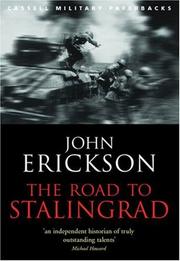
The first volume of Erickson's Stalin's War with Germany, covering 1941-42, and a monumental piece of research done without archive access. Difficult and rewarding; read it knowing that Glantz revised parts of it.
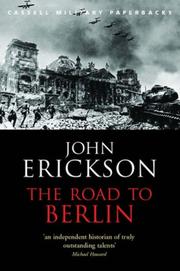
The second volume, carrying the story from Stalingrad to the fall of Berlin at the same granularity. The natural end of the path: after this there is little more detail available in English.
Discussion
Keep reading
Paths that share books, cover the same subject, or open a related topic.