The Eastern Front is the largest land conflict in history and, for most of the postwar period, it was told almost entirely from one side. Western accounts drew on German generals' memoirs — the Soviet archives were closed, and the memoirists had strong reasons to present defeat as the fault of a single dictator's meddling rather than of the army they had commanded. When the archives opened after 1991, a great deal of that narrative did not survive contact with the operational records.
That is why order matters here more than in most military subjects. Start with a modern one-volume account written after the archival turn, take the operational history next, and only then read the older classics — which remain valuable, but which you want to be able to read critically.
A single volume to orient yourself
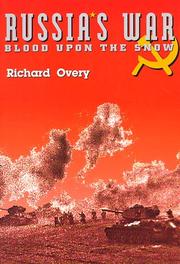
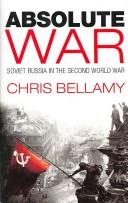
Russia's war by Richard Overy is the most efficient starting point: the whole conflict in one manageable book, attentive to the Soviet home front, the terror, and the industrial mobilisation that decided as much as any battle did. Absolute war by Chris Bellamy is the longer alternative, denser and stronger on the war's political and social dimensions.
Read one of these, not both — they cover the same ground at different lengths. Overy if you want momentum, Bellamy if you want depth on the Soviet system itself.
The operational history, and the revision it represents
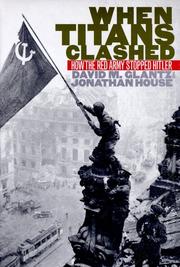
When Titans Clashed by David Glantz and Jonathan House is the central book on this path. Glantz spent a career working through Soviet operational records and demonstrating that the standard Western account had large holes in it, including entire failed offensives that had simply gone unrecorded in the West. The prose is functional and the detail is relentless; read it for the argument and the correction rather than for pleasure.
Ostkrieg by Stephen Fritz then supplies the German side written from the same modern evidentiary standard, and it does not separate the military campaign from the war of extermination that accompanied it. That connection is the reason it belongs here rather than the general histories that treat the two as parallel stories.
The great set-piece battles
Stalingrad by Antony Beevor is the book that brought this front to a mass readership, and it is superb narrative history. Specialists have criticised Beevor's operational analysis and his reliance on particular memoir sources; the criticism is real and does not make the book less worth reading, so long as you have read Glantz first. The Fall of Berlin, 1945 applies the same method to the end of the war, including the mass rapes committed by Soviet troops, which the book documents at length.
Leningrad by Anna Reid covers the siege and the famine, and is unsparing about both German intent and Soviet administrative failure. These are all difficult books, and this one is the hardest.
The war as the people in it experienced it
Ivan's war by Catherine Merridale reconstructs the Red Army soldier's experience from letters, interviews and archival files, and it is the necessary corrective to a path that is otherwise about armies rather than men. A Writer at War collects Vasily Grossman's frontline notebooks and dispatches — contemporaneous reporting by a novelist who was present at Stalingrad, at Kursk, and at Treblinka.
The Unwomanly Face of War by Svetlana Alexievich assembles the testimony of Soviet women who fought, which official history erased almost completely. It is worth knowing that Alexievich composes and edits her interviews into a literary form, and that some historians treat the result as literature built from testimony rather than as a documentary record. That does not diminish it; it does mean reading it as a different kind of source from Glantz.
The older classics, last
John Erickson's two volumes, The road to Stalingrad and The road to Berlin, were pioneering — written when Western access to Soviet material was minimal, and still cited. They are dense, dated in places, and best read once you know enough to see what Erickson could and could not get at.
Casualty figures across all of these books vary widely and remain genuinely disputed. Where two authors give different numbers, that is usually the state of the evidence rather than an error. Follow the full path in order.
Follow the full ordered path here: The Eastern Front in World War II: The Best Books to Read, in Order.