Antony Beevor Reading Order: Where to Start
Antony Beevor writes single-campaign narrative history built from soldiers' letters, diaries and Soviet archive files, and the books are almost entirely standalone — so the question is not chronology but which one to open first. The answer is Stalingrad, the book that invented his method and remains its best demonstration. From there the path fans out: the rest of the Eastern Front, then the Western Front campaigns, then the wars on either side of the Second World War that he also covered.
Start Here
IntermediateRead the book that made his name, and learn what he does that other campaign historians do not.
▸ Study plan for this stage
Pace: Three to four weeks for Stalingrad, 536 pages. A plain warning before you begin: this is a book about a five-month battle that killed close to two million people, and it is explicit about starvation, cannibalism among trapped troops, mass execution of prisoners and the deliberate destruction of a ci
- The method that made his name: cutting between the high command's decisions and a single soldier's letter home, so that a map arrow and a frozen private are on facing pages
- Soviet archives opened in the 1990s, which is what made this book possible — Beevor could use NKVD reports, censored soldiers' mail and interrogation records that no earlier account had
- The German Sixth Army's encirclement as an operational problem and a human one simultaneously, with the airlift's arithmetic doing much of the narrative work
- Both sides at once. Beevor refuses to write the battle from one army's perspective, which is more unusual than it sounds and is the source of the book's moral weight
- Terror as an instrument on the Soviet side too — blocking detachments, penal battalions and executions of one's own troops, documented rather than implied
- Civilians as participants rather than backdrop: the city's population is present throughout, which most operational histories omit entirely
- Narrative history built from primary sources, not from other historians. The bibliography is archives and diaries, and the prose is deliberately plain
- Why does the Sixth Army end up encircled, and at what point could it still have broken out?
- How does Beevor use soldiers' letters — what do they tell him that operational records cannot?
- What did the Soviet archives make possible here that a 1970s history of the battle could not have attempted?
- How does Beevor handle Soviet repression of its own soldiers, and does it change the shape of the story you thought you knew?
- What happens to Stalingrad's civilians, and why is that so often missing from other accounts?
- Keep the maps open. Beevor's books assume you will refer to them constantly and reading him without doing so makes the operational chapters much harder than they need to be.
- Mark three passages where a personal document is placed directly against a command decision. That juxtaposition is the technique the rest of this path is built on.
- After finishing, write down what you think the battle turned on. Beevor gives you enough to have a view and having one makes the rest of the path an argument rather than a sequence.
- Note how much of the book happens before the fighting reaches the city. It is more than most readers expect and it is the reason the geography makes sense later.
Next up: You now have the method and one campaign in real detail, which is exactly what the next stage needs — the same armies three years later, and then the survey that only becomes useful once you have specifics to hang it on.

The siege told from inside both armies using Russian archives opened in the 1990s. Start here without hesitation: it is the book that established the technique of cutting between the high command and a single frozen private.
The Eastern Front and the Whole War
IntermediateFollow the Red Army from the Volga to Berlin, then step back for the single-volume overview.
▸ Study plan for this stage
Pace: Ten to twelve weeks for The Fall of Berlin, 1945 (528 pages) and The Second World War (960) — nearly 1,500 pages and the longest stage in the path. Warn yourself properly about the first: The Fall of Berlin, 1945 contains a sustained, documented account of mass rape by Soviet troops in Germany, and
- The Fall of Berlin as the effective sequel to Stalingrad — the same two armies, three years on, with the direction of the war reversed
- Revenge as a historical force, documented rather than asserted, and the reason the book was received as an accusation in Russia
- The scale of sexual violence in eastern Germany in 1945, and the archival and testimonial basis on which Beevor establishes it
- The race to Berlin between Zhukov and Konev, and Stalin's deliberate use of the rivalry as an accelerant
- The Second World War as a genuinely global survey — China and the Pacific given real weight, which many European-centred one-volume histories do not do
- The limits of a single volume: 960 pages across six years and every theatre means compression, and this is the book where Beevor is furthest from his archival strength
- Why the survey comes third rather than first. A one-volume history is a scaffold, and it only holds anything if you already have two campaigns in detail to hang on it
- What did the race between Zhukov and Konev cost in casualties, and why did Stalin want it?
- How does Beevor establish the scale of the mass rapes, and why was the book received as an attack rather than as history?
- How does the Berlin book change the moral position you took on the Red Army after Stalingrad?
- Where does The Second World War give more space than you expected, and where less? The allocation is itself an argument.
- Is the single-volume survey doing something the campaign books cannot, or is it a different kind of book altogether?
- Read The Fall of Berlin, 1945 immediately after Stalingrad while the Sixth Army is still fresh. The reversal is the whole point and it fades with time.
- Take The Second World War theatre by theatre rather than cover to cover if it starts to blur. It is structured to survive that.
- After the survey, mark the three campaigns you now want in detail. Two of them are almost certainly in the next stage.
- Look up the Russian government's reaction to The Fall of Berlin, 1945 when it was published. The reception is part of what the book is.
Next up: With the Eastern Front finished and the whole war mapped, the next stage takes the three Northwest Europe campaigns in the order they happened — which is where Beevor's method meets a set of events most readers think they already know.
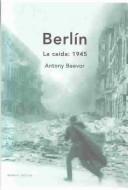
The direct sequel in effect — the same armies, three years on, at the end of the road. Notorious for its treatment of mass rape by Soviet troops, which is the part of the book that caused a diplomatic row.

His one-volume global history, written after decades of campaign books. Read it third: it is far more useful once you already have two campaigns in detail to hang the survey on.
The Western Front
IntermediateTake the three Northwest Europe campaigns in the order they happened, from the beachhead to the last Allied disasters.
▸ Study plan for this stage
Pace: Ten to twelve weeks for D-Day (639 pages), The battle of Arnhem (480) and Ardennes 1944 (624) — about 1,740 pages, and best taken in campaign order with a short break between each. These are less relentless than the Eastern Front books but not gentler in content: D-Day is detailed about the bocage f
- The bocage as the real Normandy campaign — the landings take a fraction of D-Day and the grinding hedgerow fighting afterward takes most of it, which is the half most accounts skip
- French civilian casualties from Allied bombing and shelling, given proper weight, which was the most contested element of the book in France
- Market Garden as an avoidable catastrophe: Beevor's Arnhem is an argument about command vanity, ignored intelligence and an operation that should not have been launched
- The Dutch cost, given equal weight to the military one — the reprisals and the Hunger Winter that followed the failed operation
- Ardennes 1944 and the last German offensive: surprise achieved against an Allied command that had stopped expecting anything, and the intelligence failure behind it
- Atrocity in the west as well as the east — the massacre of prisoners at Malmedy and the reprisals that followed, handled with the same evenness as the Eastern Front material
- Beevor's consistent argument across all three: that the price of a general's reputation is paid in other people's lives, and the documents let him show it
- Why is the bocage fighting so much harder than the landings, and what did Allied planning get wrong about it?
- How does Beevor handle French civilian deaths from Allied bombing, and how should a reader weigh them?
- What is Beevor's verdict on Market Garden, and what evidence does he build it from?
- What did the Dutch pay for Arnhem, and why is that so rarely part of the story as usually told?
- How was surprise achieved in the Ardennes, and whose failure was it?
- Read the three in campaign order — D-Day, Arnhem, the Ardennes — rather than by publication or by interest. The argument accumulates.
- For each book, note the single command decision Beevor is most critical of. Three books, three commanders, and a clear pattern in what he thinks generals get wrong.
- Put Ardennes 1944 next to The Fall of Berlin, 1945 in your head: they are the same winter, on two fronts, and reading them as one season is genuinely clarifying.
- If you have seen the popular film or television treatments of any of these operations, note three things Beevor's account contradicts. There will be more than three.
Next up: With the Second World War covered from both ends, the final stage shows the method applied outside it — to the war that rehearsed it, the small campaign that shows the structure most clearly, and the aftermath the campaign books never reach.
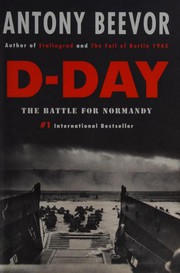
The Normandy landings and the grinding bocage fighting that followed, which is the half most accounts skip. Read it before the other two — it sets up the whole campaign.
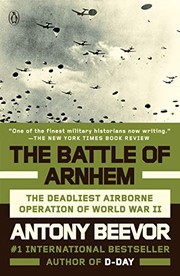
Operation Market Garden as an avoidable catastrophe, with the Dutch civilian cost given equal weight. Follows directly from D-Day in both chronology and argument.
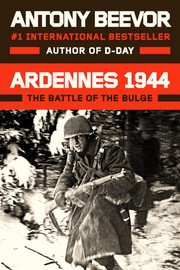
The Battle of the Bulge, and the last German offensive in the west. Closes the Western Front sequence and pairs well with Berlin for the war's final winter.
The Wars Either Side
IntermediateRead the earlier and later books, which show his method applied outside the Second World War.
▸ Study plan for this stage
Pace: Ten to twelve weeks for four books, roughly 2,000 pages. The Spanish Civil War (526 pages) is the densest and the most politically demanding — it has more factions than any other book here and needs a slow, note-taking read. Our catalogue's copy of the Crete book is filed under a garbled bookseller'
- Spain as the rehearsal: the ideological alignments, the foreign intervention and the tactics of 1936-39 that reappear in 1939-45, which is why this book underpins the whole path
- Factional complexity handled honestly — Beevor refuses to simplify the Republican side into a single actor, and the internal repression is given the same treatment as Franco's
- The Crete book as the clearest view of his structure. A small campaign, a short book, and the elements — invasion, defeat, occupation, resistance — visible without the scale obscuring them
- Resistance and reprisal as a system, with the Cretan half being material almost nobody else wrote
- Paris After the Liberation as the answer to the question every campaign book leaves open: what happens after the fighting stops, in this case the purges, the politics and the poverty of 1944-49 France
- Written with Artemis Cooper, and noticeably different in texture — more social and cultural, less operational
- Russia and the origins of the Red Army: 1917-21, the civil war, and the institutional violence that produced the army he described at Stalingrad, which makes his most recent book a prequel to his first great one
- What does the Spanish Civil War rehearse, specifically, and which of the rehearsals mattered most in 1939?
- How does Beevor treat Republican internal repression, and how does that affect the book's reception on the left?
- What does the small scale of the Crete campaign let you see about his structure that Stalingrad's scale hides?
- What was actually settled in France between 1944 and 1949, and what was postponed?
- How does Russia change your reading of Stalingrad — what do you now know about where that army came from?
- Keep a factions sheet for The Spanish Civil War. Republicans, anarchists, communists, POUM, Nationalists, Carlists, Falangists — nobody holds them all without notes, and the book assumes you will.
- Read the Crete book in one or two sittings and use it as a diagram of Beevor's structure. It is the best short demonstration of what he does.
- Read Russia and then reread the first chapter of Stalingrad. The circle closes and it is the most satisfying single exercise in this path.
- After Paris After the Liberation, write two sentences on why the aftermath is so rarely written about compared with the campaigns. The answer says something about the genre as a whole.
Next up: This is the end of the path — one method, nine books, and the whole span from Spain in 1936 to Berlin in 1945 and out the other side — and the natural next move is not another Beevor but a memoir or diary from one of the campaigns, read now with all the operational context in place.

The rehearsal war, and a substantially rewritten expansion of his own first book. Essential background for the ideological reading of 1939-45 that runs through everything else.

An early book and a small campaign, which makes it the clearest place to see his structure without the scale. The resistance half is the part nobody else wrote.

Written with Artemis Cooper, on the political and social wreckage of 1944-49 France. The best answer to the question of what happens after the campaign books end.
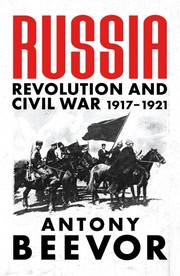
His late turn to 1917-21, and the origins of the army he described at Stalingrad. Read it last: it works as a prequel to the book you started with.
Discussion
Keep reading
Paths that share books, cover the same subject, or open a related topic.