World religions: a curious reader's tour
This curriculum moves from accessible overviews of all major religions, through their foundational primary texts and histories, to sophisticated comparative and critical analysis. Each stage builds the vocabulary, empathy, and conceptual tools needed for the next, so that by the end the reader can engage world religions with both scholarly rigor and genuine respect.
Foundations: The Big Picture
BeginnerGain a clear, respectful, and accurate first map of the world's major religions — their names, origins, key beliefs, and place in human history — before diving into any single tradition.
▸ Study plan for this stage
Pace: 6–8 weeks total: Weeks 1–4 for "The World's Religions" (~25–30 pages/day, reading each tradition's chapter slowly and reflectively); Weeks 5–8 for "God Is Not One" (~20–25 pages/day, pausing after each chapter to compare with Smith's treatment of the same tradition).
- The 'perennial philosophy' lens: Huston Smith's argument that all major religions share a common experiential core, and why this view is both influential and contested
- The eight major traditions as distinct systems: Hinduism, Buddhism, Confucianism, Taoism, Islam, Judaism, Christianity, and Primal/Indigenous religions as surveyed by Smith
- Stephen Prothero's 'differences matter' counter-thesis: why flattening religions into one universal truth distorts rather than clarifies them
- The four-part diagnostic framework Prothero applies to each religion: the human Problem, the Solution, the Technique for reaching it, and the exemplary Saint/Practitioner
- Origins and historical context: approximate dates, founding figures or formative events, and geographic heartlands of each major tradition
- Sacred texts and oral traditions as primary sources of authority within each religion
- The distinction between orthopraxis (correct practice) and orthodoxy (correct belief) and how different religions weight them
- Respectful vs. reductive comparison: how to hold similarities and differences simultaneously without ranking traditions on a single scale
- According to Huston Smith, what qualities does a religion need to have endured and spread across centuries, and which traditions does he cover in 'The World's Religions'?
- How does Stephen Prothero's central argument in 'God Is Not One' directly challenge the assumption Smith's sympathetic, unity-oriented framing can encourage — and what evidence does Prothero use?
- Using Prothero's four-part framework (Problem / Solution / Technique / Saint), how would you describe Islam and Buddhism in parallel terms, and what does the comparison reveal?
- What does Smith mean by the 'levels of selfhood' or the 'forgotten language' of transcendence, and how does this shape his empathetic approach to each tradition?
- Which two traditions did you find most surprisingly different from each other after reading both books, and what specific doctrinal or practical detail drove that realization?
- How do both authors handle Indigenous and Primal religions, and what does each author's choice of framing reveal about his broader thesis?
- Tradition snapshot cards: After finishing each chapter in Smith and the corresponding chapter in Prothero, write a single index card per religion listing: founding figure/era, core problem diagnosed, key text(s), one distinctive practice, and one common misconception corrected by your reading.
- Side-by-side comparison table: Build a living table (spreadsheet or notebook) with religions as rows and Prothero's four categories (Problem / Solution / Technique / Saint) as columns; fill it in progressively and review the whole table after finishing both books.
- Respectful summary challenge: Choose any one tradition you knew least about before starting. Write a 200-word summary of it as a believer might describe it — no outsider critique — drawing only on Smith and Prothero.
- Thesis tension essay: Write a one-page response to this prompt: 'Smith and Prothero seem to disagree about whether religions are fundamentally similar or different. After reading both, who do you find more persuasive, and why?' Use at least two specific examples from each book.
- Timeline and map exercise: Draw or print a blank world map and a simple timeline (3000 BCE–1500 CE). Plot each tradition's approximate origin date and geographic heartland using details from both books. Annotate with one key historical event per tradition.
- Discussion or journal reflection: After completing both books, revisit your very first assumptions about one religion you thought you understood. Write a journal entry or discuss with a partner: What did you get wrong? What nuance did Smith add? What did Prothero correct or complicate further?
Next up: Having built a respectful, accurate map of all major traditions and sharpened the skill of comparing them without flattening them, the reader is now ready to slow down and inhabit a single tradition in depth — moving from panoramic survey to close, immersive study of one religion's texts, history, and lived practice.
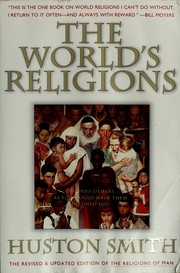
The classic starting point: warm, beautifully written, and covers Hinduism, Buddhism, Confucianism, Taoism, Islam, Judaism, Christianity, and primal religions in a single volume. It establishes the respectful, insider-sympathetic tone the whole curriculum builds on.
Read immediately after Smith as a friendly corrective — Prothero argues the religions are genuinely different, not all saying the same thing. This tension between Smith and Prothero sharpens the comparative eye the learner will need going forward.
Voices from the Inside: Primary Texts
BeginnerEncounter the actual sacred writings of several major traditions in accessible translations, developing a feel for how each religion speaks in its own voice.
▸ Study plan for this stage
Pace: 8–10 weeks total; ~20–25 pages/day. Week 1–3: The Bhagavad-gita (Miller translation) — read one or two chapters per sitting, pausing to re-read key dialogues. Week 4–6: The Dhammapada (Easwaran translation) — read one chapter/section per day alongside Easwaran's introductory commentary before each c
- Dharma and duty in the Bhagavad-gita: Arjuna's moral crisis on the battlefield as a lens for understanding how Hinduism frames ethical obligation, self, and action (karma yoga, jnana yoga, bhakti yoga).
- The nature of the Atman and Brahman: Krishna's teaching that the true self is eternal and distinct from the body, and its relationship to the universal absolute.
- The Four Noble Truths and the Eightfold Path as the structural backbone of the Dhammapada's ethical vision — suffering, its origin, its cessation, and the path.
- The mind as the central concern of Buddhist practice: Easwaran's Dhammapada opens with 'Mind is the forerunner of all actions' — tracking how each verse returns to mental cultivation and intention.
- Sufi concepts of divine love and longing in Rumi: the reed flute as a symbol of the soul's separation from its divine source, and poetry as a vehicle for mystical experience.
- The role of the teacher (guru/sheikh/master) across all three texts: Krishna to Arjuna, the Buddha's voice in the Dhammapada, and Rumi's relationship to Shams-i-Tabrizi.
- Sacred language and literary form: how a Sanskrit philosophical dialogue, Pali aphoristic verse, and Persian mystical poetry each create a distinct 'voice' for their tradition.
- Comparative thread — the inner life across traditions: all three texts prioritize transformation of the self (through duty, mindfulness, or love) over external ritual alone.
- After reading Miller's Bhagavad-gita, can you explain in your own words why Arjuna refuses to fight, and how Krishna's teachings resolve his crisis? Which yoga (path) resonates most with you, and why?
- What does the Dhammapada, as translated by Easwaran, teach about the relationship between the mind and suffering? How does Easwaran's commentary help or change your reading of the verses?
- How does Rumi use the image of the reed flute in The Essential Rumi to express the soul's longing for the divine? Can you identify at least two other recurring symbols or metaphors across the poems?
- All three books address the question of the 'self' — how do the Hindu, Buddhist, and Sufi perspectives differ from or resemble each other on this topic?
- Each of these texts is a translation. How does knowing that Miller, Easwaran, or Coleman Barks (Rumi's translator) made interpretive choices affect how you read and trust the text?
- Which of the three sacred voices — the Gita's philosophical dialogue, the Dhammapada's aphoristic verses, or Rumi's ecstatic poetry — felt most accessible to you as a beginner, and what does that reveal about how different traditions communicate the sacred?
- Dialogue journaling: After each chapter of the Bhagavad-gita, write 3–5 sentences from Arjuna's point of view and 3–5 from Krishna's. This forces active engagement with the text's call-and-response structure.
- Verse memorization: Choose one verse from the Dhammapada that strikes you most powerfully. Write it out by hand daily for one week, and at the end write a paragraph on why it stayed with you.
- Poem annotation: Select three poems from The Essential Rumi and annotate them line by line — mark every image, ask what it might symbolize, and note any emotional reaction. Compare your annotations with a reading partner if possible.
- Concept mapping: Draw a simple diagram with 'the self' at the center. Add branches for how each of the three books defines, challenges, or transforms the self. Use direct quotes from the texts as evidence.
- Side-by-side comparison: Find one theme that appears in all three books (e.g., impermanence, love, the nature of the mind). Write a one-page reflection comparing how each text treats that theme, using at least one direct quotation from each book.
- Reading aloud: Read at least one passage from each book aloud — a dialogue from the Gita, a verse from the Dhammapada, and a full poem from Rumi. Notice how the sound and rhythm differ, and jot down what the oral quality adds to the meaning.
Next up: By having heard each tradition speak in its own literary voice — philosophical dialogue, ethical verse, and mystical poetry — the reader is now primed to step back and study these religions through the analytical frameworks of scholars, making the transition from felt encounter to structured understanding feel grounded rather than abstract.
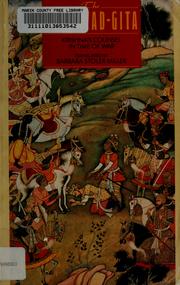
Miller's translation is scholarly yet readable, making this cornerstone of Hindu thought approachable for beginners. Starting here grounds the learner in the oldest living religious tradition before moving westward.

Easwaran's translation with commentary makes the Buddha's core ethical and philosophical teachings immediately usable. Its brevity and clarity make it the perfect Buddhist primary text for this stage.

Coleman Barks's rendering of Rumi introduces the mystical, Sufi dimension of Islam through poetry — a mode of religious expression that pure theology misses. It pairs beautifully with the more doctrinal Islam coverage in later stages.
Going Deeper: Histories and Core Ideas
IntermediateUnderstand how each major religion developed historically, what its central theological and philosophical claims are, and how those ideas have shaped — and been shaped by — human civilization.
▸ Study plan for this stage
Pace: 10–13 weeks total, reading ~25–35 pages per day. Suggested pacing: "A History of God" (Armstrong) — 4 weeks (~460 pages); "Buddha" (Armstrong) — 2–3 weeks (~220 pages); "The Hindus" (Doniger) — 4–5 weeks (~680 pages). Allow 1–2 buffer days per book for reflection and note consolidation.
- The evolution of monotheism across Judaism, Christianity, and Islam — how the concept of 'God' was never static but continuously reinterpreted in response to historical crises, philosophy, and mysticism (Armstrong, A History of God)
- Apophatic vs. cataphatic theology — the tension between describing God positively (what God is) and negatively (what God is not), and how mystics like Meister Eckhart, Ibn Arabi, and Maimonides navigated this (Armstrong, A History of God)
- The Axial Age as a civilizational turning point — the near-simultaneous emergence of reflective, ethical, and philosophical religion across Greece, Israel, India, and China (~800–200 BCE), and why Armstrong treats it as foundational (Armstrong, A History of God & Buddha)
- The Buddha's life as a religious archetype — how the biographical narrative of Siddhartha Gautama is itself a teaching device, and how later traditions (Theravāda, Mahāyāna) elaborated and transformed it (Armstrong, Buddha)
- Core Buddhist philosophical claims — anattā (no-self), anicca (impermanence), dukkha (suffering/unsatisfactoriness), and the Eightfold Path as a practical program, not merely a belief system (Armstrong, Buddha)
- Hinduism as a non-unified, historically layered tradition — Doniger's argument that 'Hinduism' is a family of often-contradictory texts, practices, and communities rather than a single creed (Doniger, The Hindus)
- The role of marginalized voices — women, lower castes, and animals — in shaping Hindu narratives and counter-narratives across the Vedas, Epics, Purāṇas, and Bhakti movements (Doniger, The Hindus)
- Religion and power: how each tradition examined in these three books has been co-opted, contested, and reformed by political authority, colonialism, and social hierarchy
- According to Armstrong in 'A History of God,' what were the major historical forces — political, philosophical, and cultural — that caused the Israelite conception of God to shift from henotheism to strict monotheism? How did Christianity and Islam each inherit and transform that legacy?
- How does Armstrong use the Axial Age framework in both 'A History of God' and 'Buddha' to explain why the religious innovations of the first millennium BCE felt so radical? What limitations or criticisms might apply to this framework?
- In Armstrong's 'Buddha,' how does the biographical narrative of the Buddha function as a religious teaching in itself? How did Mahāyāna Buddhism reinterpret the Buddha's nature compared with early Theravāda accounts?
- What does Doniger mean when she argues in 'The Hindus' that the tradition contains a persistent 'alternative' or subaltern strand? Provide at least two specific textual or historical examples she uses to support this claim.
- Across all three books, how have mystical and philosophical movements (Sufism, Buddhist Madhyamaka, Advaita Vedānta) each challenged the 'official' or orthodox version of their respective traditions? What do these challenges have in common?
- How do Armstrong and Doniger differently approach the question of religious authenticity and change over time? What does each author's methodology (Armstrong's empathetic history, Doniger's philological/comparative approach) reveal — and potentially obscure?
- Concept-mapping the God-idea: After finishing 'A History of God,' draw a timeline-map tracing the single concept of 'God' through at least 8 historical moments Armstrong covers (e.g., Mosaic covenant, Exile, Nicaea, Islamic revelation, Sufi mysticism). Annotate each node with the historical pressure that drove the reinterpretation.
- Comparative close reading: Select one short passage from 'A History of God' on mysticism (e.g., the chapter on Christian or Islamic mystics) and one from 'Buddha' on nirvāṇa or anattā. Write a 400–600 word comparison: What is each tradition trying to 'dissolve,' and what methods do they prescribe?
- Biographical deconstruction: Using Armstrong's 'Buddha,' identify three episodes in the Buddha's life story that function as symbolic or didactic narratives rather than straightforward biography. Write a paragraph on each explaining what doctrinal point the episode encodes.
- Counter-narrative hunting in Doniger: As you read 'The Hindus,' keep a running log of every example Doniger gives of a marginalized group (women, low-caste figures, animals) subverting or reinterpreting a dominant narrative. At the end, write a one-page synthesis: What pattern do these counter-narratives share?
- Socratic discussion or journal dialogue: After each book, write out a mock dialogue (1–2 pages) between Armstrong and Doniger on the question: 'Is religious change best understood as corruption, evolution, or creative reinterpretation?' Use specific evidence from both authors.
- Civilization-impact essay: Choose one religion covered in the three books and write a 700–900 word essay arguing how one of its core theological ideas (e.g., Buddhist anattā, Islamic tawhīd, Hindu dharma) concretely shaped a non-religious domain — law, art, political thought, or science — in a specific historical civilization.
Next up: Mastering the historical development and core theological claims of these traditions equips the reader to move from descriptive understanding to critical and comparative analysis — examining how religions interact, conflict, and mutually transform one another at the level of philosophy, politics, and lived practice.

Armstrong traces the idea of God across Judaism, Christianity, and Islam over four thousand years with rigorous scholarship and compassion. This is the essential historical backbone for the three Abrahamic faiths.
Armstrong's biography of the Buddha contextualizes his life within Indian religious history and explains how his insights gave rise to one of the world's most diverse religious families. Reading it after her God book reveals her comparative method at its best.

Doniger's sweeping, provocative history of Hinduism fills the gap left by shorter overviews, showing how the tradition is not monolithic but a vast, evolving conversation. It challenges the learner to hold complexity and contradiction comfortably.
Lived Practice and Inner Experience
IntermediateMove beyond doctrine and history to understand how ordinary believers actually live their faith — ritual, mysticism, ethics, community, and the interior life of religious practice.
▸ Study plan for this stage
Pace: 6–7 weeks, ~25–30 pages/day — James's prose is dense and richly anecdotal, so allow extra time to sit with the case studies and personal testimonies he quotes at length; aim to finish one "lecture" (chapter) per sitting, then pause to reflect before moving on
- The distinction between institutional religion and personal religion — James's central argument that the raw, first-person experience of the divine is the living core of all religion, while doctrine and ritual are secondary derivatives
- The 'fruits for life' criterion — James's pragmatic test that the value of a religious experience must be judged by its real-world effects on the experiencer's character and conduct, not by its theological origins
- The Sick Soul vs. the Healthy-Minded — James's two fundamental psychological orientations toward existence, and how each produces a radically different religious need and spiritual trajectory
- The Twice-Born self and the process of conversion — the idea that a divided, suffering self can undergo a dramatic or gradual unification around a new 'habitual centre of personal energy'
- Mysticism and its four marks — ineffability, noetic quality, transiency, and passivity — as James's framework for identifying and comparing mystical states across traditions
- The Subliminal Self and the 'More' — James's hypothesis that religious experience involves a real contact with something beyond ordinary consciousness, approached through the threshold of the subconscious mind
- Saintliness as lived religion — the cluster of practical virtues (asceticism, strength of soul, purity, charity) that James treats as the social and ethical fruit of genuine religious transformation
- Pragmatic pluralism in religion — James's refusal to privilege any single tradition, treating the world's testimonies as a vast empirical database from which general truths about the religious life can be cautiously extracted
- According to James, why is personal religious experience more fundamental than theology or ecclesiastical institution — and what are the risks or limits of privileging it so strongly?
- How does James's 'Sick Soul' differ from the 'Healthy-Minded' believer in their experience of evil, suffering, and the need for salvation? Which type does James himself seem to find more spiritually serious, and why?
- What are the four marks of mystical experience James identifies, and how does he use them to argue both that mysticism is a genuine form of knowledge and that it cannot compel belief in those who have not had it?
- How does James define conversion, and what psychological mechanism (the 'subliminal self') does he invoke to explain both sudden and gradual conversions? What does this explanation preserve and what does it leave open?
- What is the 'pragmatic test' James applies to religious experience, and how does the chapter on Saintliness put that test into practice? Where does James find saintliness admirable, and where does he find it excessive or even harmful?
- By the end of the book, what tentative metaphysical conclusions does James draw about the reality of the 'More' that religious experience seems to contact — and how does he keep those conclusions consistent with his empiricism and pluralism?
- **Typology journal:** After reading the Healthy-Minded and Sick Soul lectures, write a one-page self-assessment — which orientation do you naturally lean toward, and can you identify a person in your own life (or a public figure) who exemplifies the other type? Use James's own vocabulary.
- **Case-study comparison:** James quotes dozens of first-person testimonies. Select three — one from a Christian mystic, one from a conversion narrative, and one James labels as 'healthy-minded' — and write a short comparative analysis applying his four marks of mysticism and his 'fruits for life' criterion to each.
- **Cross-tradition scouting:** Choose one living religion you are less familiar with (e.g., Sufism, Zen, Quakerism, or Hasidic Judaism) and find one short primary-source testimony of religious experience (a memoir excerpt, interview, or recorded talk). Apply James's analytical framework to it — does it fit his categories? Where does it strain them?
- **Conversion timeline:** Map out the structure of one conversion narrative James discusses in detail (e.g., Tolstoy, John Bunyan, or the anonymous 'Oxford graduate'). Draw a simple timeline showing the divided-self phase, the crisis point, and the unification outcome, labeling the psychological shifts James describes.
- **Pragmatic stress-test debate:** Write a two-paragraph devil's advocate response to James's pragmatic criterion. Argue that 'good fruits' are an insufficient test for the truth of religious experience, then write James's likely rebuttal in another two paragraphs, drawing directly from his text.
- **Reflective reading log:** Keep a running log throughout the book with two columns — 'What James claims' and 'What this makes me notice about a religion I've already studied.' At the end of the stage, review the log and write a half-page synthesis: how has James changed the way you would describe the inner life of a tradition you encountered in earlier stages of this curriculum?
Next up: By internalizing James's framework — that religion is most alive in the felt, practiced, interior experience of real people — the reader is now equipped to move into the next stage with sharper eyes for how specific traditions structure, cultivate, and interpret that inner life through their own distinctive rituals, communities, and ethical systems.
James's landmark study of personal religious experience across traditions is the essential psychological complement to Eliade's structural approach. Together they explain both the outer forms and inner reality of religion.
Critical and Comparative Mastery
ExpertEngage world religions as a scholar would — comparing across traditions, interrogating assumptions, understanding religion's relationship to power, gender, and modernity, and forming a nuanced personal synthesis.
▸ Study plan for this stage
Pace: 10–13 weeks total: ~3 weeks on "The Meaning and End of Religion" (~25–30 pages/day, with slower reading for dense theoretical chapters) and ~7–10 weeks on "Patterns in Comparative Religion" (~20–25 pages/day, given its encyclopedic depth and the need for reflective pauses between chapters on hieroph
- Smith's critique of 'religion' as a reified, Western-constructed category — and his proposed replacement with 'faith' (personal, interior) and 'cumulative tradition' (historical, external)
- The historical and ideological genealogy of the word 'religion' and how its misapplication distorts cross-cultural understanding
- Eliade's concept of the 'sacred' vs. the 'profane' as the foundational axis of religious experience
- Hierophany: the manifestation of the sacred in ordinary objects, spaces, times, and persons — and its morphological patterns across traditions
- Eliade's method of comparative phenomenology: identifying structural patterns (archetypes) across disparate religious traditions regardless of historical connection
- The symbolism of the axis mundi, sacred space, sacred time, and cosmogonic myth as universal organizing structures in Eliade's framework
- The tension between Smith's historically and linguistically grounded critique and Eliade's transhistorical, phenomenological universalism
- Religion, power, and scholarly positionality: how both authors' cultural and institutional contexts shape their theoretical frameworks
- According to Smith, why is the concept of 'religion' as a discrete, bounded system intellectually problematic, and what does he propose instead — and how does this challenge the way you have previously thought about traditions like Hinduism or Buddhism?
- How does Eliade define the sacred, and what does he mean by a hierophany? Can you generate three examples from different traditions that illustrate the same hierophanic pattern?
- Where do Smith and Eliade fundamentally agree, and where do they most sharply diverge — particularly regarding the role of history, the insider's experience, and the validity of cross-cultural comparison?
- What are the main methodological criticisms that can be leveled at Eliade's comparative phenomenology (e.g., charges of essentialism, ahistoricism, or Eurocentrism), and how might Smith's framework either reinforce or counter those criticisms?
- How do concepts of sacred time and sacred space in Eliade's analysis manifest differently across at least two specific traditions covered in 'Patterns in Comparative Religion'?
- In what ways do both Smith and Eliade reflect the assumptions of their own historical moment (mid-20th century Western academia), and how should a contemporary scholar read them critically?
- Concept-mapping exercise: After finishing Smith, draw a diagram distinguishing 'faith,' 'cumulative tradition,' and 'religion' as Smith defines them. Then apply all three categories to one tradition you know well (e.g., Christianity or Islam) and one you know less well, noting where the categories feel illuminating and where they strain.
- Hierophany journal: While reading Eliade, keep a running log of at least 15 hierophanies he discusses. For each, note: the tradition, the object/space/time involved, and the structural pattern it exemplifies. At the end, group them by pattern and write a one-paragraph reflection on what the groupings reveal — and what they might obscure.
- Adversarial dialogue: Write a 600–900 word imagined debate between Smith and Eliade on the question: 'Is it possible to compare religions without distorting them?' Give each thinker the strongest version of their argument, then write a short referee's verdict in your own voice.
- Power and positionality audit: Choose one chapter from Eliade's 'Patterns in Comparative Religion' and reread it through the lens of Smith's critique. Annotate: Where does Eliade's language reify 'religion'? Where does he privilege certain traditions? Where does his framework illuminate something Smith's would miss? Write a one-page critical response.
- Synthesis essay: Write a 1,000–1,500 word essay answering: 'What is religion?' — but you must explicitly engage both Smith's and Eliade's frameworks, acknowledge the limitations of each, and arrive at your own carefully qualified position. This essay should function as a personal scholarly statement.
- Tradition deep-dive comparison: Select one religious tradition not native to your own background. Using Smith's categories (faith / cumulative tradition) and at least two of Eliade's structural patterns (e.g., sacred space, cosmogonic myth), write a 500-word comparative analysis of how that tradition would look through each scholar's lens — and what a practitioner of that tradition might say about
Next up: By dismantling naive assumptions about what "religion" is (Smith) and building a rigorous vocabulary for cross-traditional structural comparison (Eliade), the reader is now equipped to engage any subsequent stage — whether focused on specific traditions, contemporary religious movements, or religion's intersection with politics and society — with the critical, comparative, and self-aware scholarly

Smith's landmark argument — that 'religion' as a category is itself a modern Western construction — fundamentally reframes everything the learner has read so far and is the gateway to genuine academic religious studies.
Eliade's magnum opus applies his phenomenological method systematically across sky gods, earth goddesses, water, stones, and time in every major tradition. It rewards the reader who now has the full context to appreciate its depth.
Discussion
Keep reading
Paths that share books, cover the same subject, or open a related topic.