Best Books on the Battle of Stalingrad, in Reading Order
Stalingrad is the rare battle where the popular narrative, the Soviet documentary record and the operational history genuinely disagree, so this path reads them in that order rather than pretending they merge. You begin with the standard narrative accounts, move to the testimony of the men who fought and the reporters who were there, then to the operational histories that reconstruct the encirclement corps by corps, and finish with the wider Eastern Front and the two novels the battle produced. The later stages are only readable once the chronology from the first is secure.
The battle, start to finish
BeginnerFollow the campaign from the summer 1942 advance through the street fighting, Operation Uranus and the surrender of the Sixth Army.
▸ Study plan for this stage
Pace: Five to six weeks for about 990 pages. Beevor's Stalingrad (536 pages) takes three weeks and should be read with a map open beside you at all times — the street fighting is unintelligible without knowing where the Volga, the Mamayev Kurgan and the factory district are relative to each other. Craig's
- Case Blue, the German summer offensive of 1942, and the fateful splitting of Army Group South toward the Caucasus oilfields and toward Stalingrad simultaneously
- The city fight itself: Chuikov's Sixty-Second Army holding a strip of riverbank, the deliberate tactic of hugging the German lines so closely that air and artillery support became unusable, and the reduction of manoeuvre warfare to building-by-building assault
- Operation Uranus on 19 November 1942 — the double envelopment striking the Romanian armies on both flanks rather than the German centre, which is the operational insight of the whole campaign
- The Kessel and the decision not to break out, plus Manstein's Winter Storm relief attempt and why it failed short of the pocket
- The airlift as arithmetic: the Sixth Army needed several hundred tons a day, the Luftwaffe promised what it could not deliver, and the shortfall determined the outcome before any relief attempt
- The surrender at the end of January and beginning of February 1943, roughly ninety thousand prisoners taken, and the tiny fraction who returned from Soviet captivity years later
- Beevor's sources as the reason the book mattered — German and Soviet archival material used together, which is what made the later revisionist arguments possible
- Craig's method and its cost: interviews conducted decades later produce vivid narrative and unreliable detail, and his sniper set-pieces in particular should be held loosely until the next stage
- What was Case Blue trying to achieve, and what did splitting the advance cost?
- Why did Chuikov order his troops to stay within grenade-throwing distance of the Germans, and what did that neutralise?
- Why did Uranus strike the Romanian sectors rather than the German ones, and what did Soviet planners know that made that choice obvious?
- Could the Sixth Army have broken out, and what were the arguments on each side at the time?
- Where do Beevor and Craig differ on the same events, and how much of the difference is explained by archives versus interviews?
- Draw the city from memory after finishing Beevor: the Volga, the crossings, Mamayev Kurgan, the Tractor Factory, Barrikady and Krasny Oktyabr. Everything in the next three stages is located on that map.
- Build a timeline from June 1942 to February 1943 with the operational phases marked. Keep it; you will annotate it heavily in the operational stage.
- Do the airlift arithmetic yourself: tonnage required per day, aircraft capacity, sortie rates, and losses. The impossibility is arithmetical and doing the sum is more convincing than being told.
- Note every element of the Zaitsev sniper duel as Craig presents it. Set the list aside — the next stage is where you check it.
Next up: Two narrative accounts have given you the shape of the battle and a set of famous episodes, some of which are true; the next stage replaces the imagery with what the participants actually said.

The book that put Stalingrad back into Western popular memory, and still the best single narrative for a first reading. Beevor's archival work on German and Soviet sources is what makes the later revisionism possible.

An older account built almost entirely from interviews with survivors on both sides, so it reads as memory rather than archive. Read it second, and treat its sniper set-pieces with the scepticism the next stage will justify.
The men who were there
BeginnerReplace the popular imagery with what Soviet soldiers actually said at the time, and understand why their testimony was suppressed for fifty years.
▸ Study plan for this stage
Pace: Six to seven weeks for about 1,330 pages. A Writer at War (400 pages) is notebooks with editorial connective tissue and reads quickly, about two weeks, though the Stalingrad sections deserve rereading. Hellbeck's Stalingrad (500 pages) is half argument and half primary transcripts; two to three week
- Grossman's position as a Red Army newspaper correspondent who spent extended periods at the front, which makes his notebooks the closest thing to standing in the ruins
- The distinction between what Grossman wrote in his notebooks and what he was able to publish, which is visible in this edition and is the whole subject of the fourth stage
- The Mints Commission interviews Hellbeck recovered: hundreds of conversations with Soviet soldiers conducted during and immediately after the battle, then buried in the archives for fifty years
- Hellbeck's central argument — that ideological conviction was a genuine motivating force rather than a retrospective cover story — which directly contradicts Beevor's picture of men driven mainly by terror
- How to read testimony taken by a state commission: the interviews were conducted in a specific institutional setting for a specific purpose, which Hellbeck acknowledges and which readers must weigh themselves
- Order Number 227 and the machinery of coercion — blocking detachments, penal battalions, summary execution — which Merridale documents and which Hellbeck does not deny but declines to treat as the whole explanation
- Merridale's wider frame: the Red Army soldier's war from 1941 to 1945, including the recruitment, the letters, the censorship and the postwar silence, which is the context needed to judge how representative Stalingrad's testimony is
- The sniper duel checked: there is no German documentary trace of Zaitsev's supposed opponent, and the episode is best understood as wartime propaganda that entered the historical record through repetition
- What does Grossman notice that a historian working from documents would not?
- What exactly did the Mints Commission collect, and why was it suppressed?
- State Hellbeck's argument about ideology in its strongest form. What evidence does he have, and what are its limits?
- How do Hellbeck and Merridale differ on the balance between conviction and coercion, and can both be right?
- After Merridale, how typical was Stalingrad of a Red Army soldier's war?
- Retrieve your list of details from the sniper duel and check each against what the sources in this stage support. This is the clearest available lesson in how a story becomes history.
- Read three of Hellbeck's transcripts closely and, for each, write one line on what the speaker had reason to say in that setting and one line on what rings true regardless. This is the basic operation of reading testimony.
- Take one episode Grossman describes in his notebooks and find the corresponding passage in Beevor. Write 200 words on what each format gives you.
- Write a page arguing Beevor's terror-driven reading and a page arguing Hellbeck's conviction-driven one, using only evidence from this path. Then state which you find more persuasive and why.
Next up: Testimony tells you what it was like and narrative tells you what happened; the next stage is where you find out whether the standard account of the operations is accurate, and it turns out that much of it was written from one side's records.

Grossman's wartime notebooks from the front, including Stalingrad itself — the closest thing to standing in the ruins. The bridge between narrative history and testimony.

Hundreds of interviews conducted with Soviet soldiers during the battle and then buried in the archives. Hellbeck's argument that ideological conviction mattered directly contradicts Beevor's picture of men driven by terror.

The Red Army soldier's war as a whole, which supplies the context Hellbeck's single battle cannot. Read it to judge how representative the Stalingrad interviews are.
The operational history
IntermediateReconstruct the campaign at the level of armies and corps — the German summer offensive, the failure to take the city, and the Soviet double envelopment.
▸ Study plan for this stage
Pace: Four to six months, and this is the hardest reading in the path. Erickson's The Road to Stalingrad (594 pages) is dense with unit designations and takes two months; it is slow going and there is no way around that. The two Glantz and House volumes are long and forensic — To the Gates of Stalingrad c
- The German-source problem: for decades the Western account of the Eastern Front was reconstructed from German records and the memoirs of German generals, which produced a systematic distortion in favour of one side's perspective and one side's excuses
- What Glantz corrects with Soviet archival material — the scale and frequency of Soviet counterattacks during the summer and autumn, which German accounts recorded as minor and which in fact bled the Sixth Army continuously
- Erickson's achievement as the first serious Western operational study of the Soviet side, still the reference point even where later archival work has revised him
- The flanks as the operational key — the Sixth Army's shoulders were held by Romanian, Hungarian and Italian armies with weaker equipment, and Soviet planning identified this precisely
- Deception and concentration in the Uranus build-up: maskirovka on a scale the Germans failed to detect, and what that failure says about German intelligence
- The double envelopment as Soviet operational art rather than as improvisation, connecting to the deep operations theory developed in the 1930s and largely destroyed with its authors in the purges
- Operation Little Saturn and the wider winter offensive, which is the context in which Manstein's relief attempt has to be judged and which the popular accounts usually omit
- The reduction of the pocket in Endgame, day by day, and the difference between the Sixth Army's operational destruction and the point at which it ceased to be a fighting force
- What is the German-source problem, and give one concrete example from Glantz of a claim it produced.
- How many Soviet counterattacks were mounted during the approach to the city, and what was their cumulative effect on German strength?
- Why were the flanks held by allied armies, and did the German command understand the risk?
- How was the Uranus concentration concealed, and why did German intelligence fail to see it?
- Where does Glantz revise Erickson, and where does Erickson still stand?
- What was Little Saturn, and how did it constrain Manstein's relief operation?
- Annotate your stage-one timeline with the operational detail from Glantz. The places where the narrative version compressed weeks of fighting into a sentence are where the correction lives.
- Draw the Uranus envelopment on a map: the two thrusts, the Romanian sectors struck, and the link-up point. Then draw Manstein's relief axis and measure the gap he failed to close.
- Take one week of the campaign and reconstruct it at corps level from Glantz. It is tedious and it is the only way to feel the difference between operational and narrative history.
- Write 500 words on why the Western picture of the Eastern Front was distorted for so long, and what it took to correct it. This is a lesson about historiography that generalises well beyond this battle.
Next up: Three stages inside one city can make it look uniquely decisive; the last stage widens to the whole Soviet-German war and then narrows again to the two novels that treat Stalingrad as a moral rather than a military question.
The foundational Western operational study of the Soviet side, dense with unit detail and still the reference point. Slow going, and worth it.
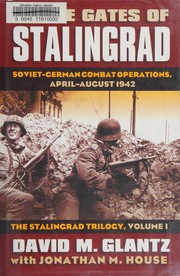
Glantz rebuilds the summer 1942 approach from Soviet archival records, and shows how much of the standard story was written from German sources alone.

The encirclement and destruction of the Sixth Army in the same forensic detail. Read directly after the previous volume; together they are the definitive operational account.
The wider war, and the novels it produced
BeginnerPlace Stalingrad within the Soviet-German war as a whole, and read the literature that treats the battle as a moral rather than a military problem.
▸ Study plan for this stage
Pace: Six to eight months for about 2,560 pages, the largest stage in the path. Absolute War (831 pages) takes two to three months and should be read first as calibration. Grossman's Stalingrad (848 pages) and Life and Fate (880 pages) are one continuous work in two volumes and together need four months —
- Bellamy's scale correction: the Soviet-German war as the largest land conflict in history, against which Stalingrad is one battle among several candidates for the turning point
- The rival turning points — Moscow in December 1941, Stalingrad, Kursk in 1943 — and the honest answer that the choice depends on what you think was being turned
- The war's totality: mobilisation, industrial relocation beyond the Urals, occupation policy, partisan warfare and civilian death on a scale the battle narratives cannot convey
- Grossman's Stalingrad, published in the Soviet Union in heavily censored form under a different title, and the restored text that shows what was cut and why
- Life and Fate's fate as an object: the manuscript was seized by the KGB, Grossman was told it could not appear for centuries, and it survived only because copies were hidden and eventually microfilmed out
- The book's central and dangerous claim — that Nazi and Soviet totalitarianism share a structure — put into the mouth of a Gestapo officer speaking to an Old Bolshevik, which is why it could never have been published in 1960
- The letter from Viktor Shtrum's mother, written from a ghetto before her death, as the passage most often cited as the finest thing in Russian prose of the century
- Grossman as one of the first to report the Holocaust in the east, at Treblinka, which is what allows Life and Fate to set the camps and the Gulag against each other in one moral argument
- On Bellamy's account, was Stalingrad the turning point of the war? What is the case for Moscow, and what is the case for Kursk?
- What did the Soviet Union do industrially in 1941 and 1942 that made 1943 possible?
- Comparing the censored and restored texts of Stalingrad, what kinds of material were cut? Is there a pattern?
- In Life and Fate, what is the argument the Gestapo officer makes to Mostovskoy, and why is it the most dangerous passage in the book?
- How does Grossman handle the Holocaust and the Gulag in one work without equating the suffering? Does he succeed?
- Having read the notebooks, the histories and the novels, what does fiction give you here that the archives do not?
- Put Stalingrad on a timeline of the whole Eastern Front from Bellamy, with casualty figures for each major operation. The proportion the battle occupies will surprise you after three stages inside it.
- Take one scene from Grossman's Stalingrad and find the corresponding event in Beevor or Glantz. Write 300 words on what the novel adds and what it takes liberties with.
- Read the mother's letter in Life and Fate, then read Grossman's Treblinka reporting in A Writer at War. Write a page on the relationship between the two. This is the emotional centre of the entire path.
- Write a final two-page assessment answering the question this path has been circling: what actually happened at Stalingrad, and why do the accounts disagree. Cite at least one book from each stage and say plainly where the evidence does not settle the matter.
Next up: This is the end of the path — the narrative, the testimony, the operational record and the literature — and the natural next step is the remaining Glantz volume covering the city fighting itself, or Erickson's second volume carrying the Soviet advance from Stalingrad to Berlin.
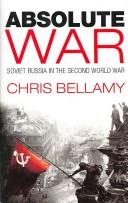
The whole Eastern Front in one volume, which is what tells you whether Stalingrad was the turning point or one of several. Necessary calibration after three stages inside a single city.
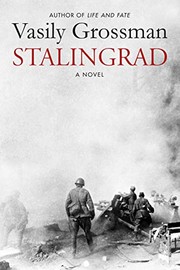
Grossman's own novel of the battle, published in the Soviet Union in censored form and fully restored only recently. Read it after his notebooks to see what he could and could not print.
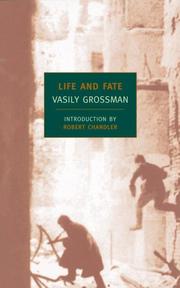
The sequel, seized by the KGB and smuggled out on microfilm, which sets Stalingrad against the Holocaust and the Gulag in a single moral argument. The end point of everything above.
Discussion
Keep reading
Paths that share books, cover the same subject, or open a related topic.