The Siege of Leningrad: books to read, in order
For 872 days the German Army Group North sealed a city of nearly three million people and waited for it to starve, and roughly a million of them did. This path begins with the modern one-volume histories, moves inside the blockade through diaries written while it was happening, then handles the military campaign that caused and eventually broke the encirclement, and closes on the hardest part: how the Soviet state managed the food, the bodies and afterwards the story.
The Siege in One Narrative
BeginnerGet the whole 872 days in order — the encirclement, the Road of Life across Lake Ladoga, the catastrophic first winter and the eventual relief — before going near the specialist literature
▸ Study plan for this stage
Pace: 6 weeks for about 1,590 pages. Reid's Leningrad (492pp) in two weeks, Salisbury's The 900 Days (635pp) in two and a half, Anderson's Symphony for the City of the Dead (464pp) in a week — it is written for younger readers and moves quickly. All three describe mass death by starvation: roughly a milli
- The chronology: Army Group North closes the land corridor at Shlisselburg on 8 September 1941, the catastrophic first winter of 1941 to 1942, the ice road across Lake Ladoga, the partial breach of the blockade in January 1943 by Operation Iskra, and the full lifting on 27 January 1944 — 872 days.
- The German plan was to starve the city rather than take it. That is a decision with documentary support, and it is the fact that determines what kind of event this was.
- Reid uses post-Soviet archives and is direct about Soviet responsibility — the failure to evacuate in time, the food stocks lost at the Badayev warehouses, the privileged rations of the Party apparatus, and the NKVD's conduct throughout the siege.
- Salisbury wrote in 1969 as a New York Times correspondent who had been in wartime Russia, without archives and against Soviet obstruction. It is superb narrative and it is limited by exactly what it could not see, which is why Reid comes first.
- The Road of Life across Ladoga — trucks on ice in winter, barges in summer — carried both the supplies in and the evacuees out, and the numbers on both are contested.
- Anderson's book tells the siege through Shostakovich and the Seventh Symphony and is the most humane entry point on the path. It also sets up the final stage, because it is itself an example of the siege being told as a story about music.
- Zhdanov, Leningrad's Party boss, is a recurring figure and the accounts of him differ sharply. Note what each of these three books does with him.
- Date the encirclement, the worst months, the partial breach and the full lifting, and say roughly how many civilians died.
- What is the evidence that the Germans intended to starve rather than storm the city?
- Which Soviet decisions does Reid hold responsible for the scale of the deaths, and what does she rest each charge on?
- What could Salisbury not know in 1969, and where does his narrative show the gap?
- How does telling the siege through Shostakovich change what an account emphasises?
- Build a one-page chronology of the 872 days with the ration changes marked on it. The ration figures are the clearest single measure of the siege's course and you will want them for the diaries.
- Trace one claim across two authors who disagree: Reid on Soviet responsibility for the food situation against Salisbury's more sympathetic account of the city administration. Find the passage in each and write down what evidence each has available.
- Check a figure against its source: take a death toll or an evacuation number from any of the three and follow it to the citation. The ranges are wide, and knowing why is part of knowing the subject.
- Anderson is writing for teenagers. Identify three things he simplifies and decide, for each, whether the simplification distorts. This is a useful habit and not a criticism of the book.
Next up: You have the siege from outside and afterwards; now read it from inside and at the time.
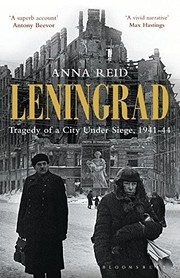
The best modern single volume, written with post-Soviet archives that were closed to earlier historians. Reid is direct about Soviet responsibility for the food stocks and the NKVD's conduct, which is why she is the right first book rather than the classic.
The 1969 account that made the siege known in the West, by a New York Times correspondent who had been in wartime Russia. Read second: it is superb narrative and it was written without the archives, so you want Reid's factual frame already in place.

Written for younger readers and none the worse for it, this tells the siege through Shostakovich and the Seventh Symphony. It is the most humane entry point in the path and it sets up the memory-and-myth stage at the end.
Inside the Blockade
IntermediateRead the siege from within it — rationing, the winter of 1941-42, cannibalism, the collapse and partial recovery of civic life — through documents written at the time rather than recollected later
▸ Study plan for this stage
Pace: 6 weeks for about 1,275 pages, and it is the slowest reading on the path for reasons that have nothing to do with difficulty. Ginzburg's Blockade Diary (114pp) is short and should be read twice. Mukhina's diary (368pp) in ten days. Bidlack and Lomagin's The Leningrad Blockade, 1941-1944 (550pp) is a
- Ginzburg was a literary scholar and her Blockade Diary is a reconstruction of siege consciousness — what starvation does to attention, to language, to the sense of other people. It is the most penetrating thing written about the experience and it was published only decades later.
- Ginzburg writes in the third person about a figure she calls Enn, which is a deliberate distancing device and not a concealment. Reading why she chose it is half the value of the book.
- Lena Mukhina was sixteen and kept a day-by-day diary through the worst winter. It was found in a St Petersburg archive and published in 2011. Ginzburg supplies the analysis; Mukhina supplies the unedited experience the analysis is about.
- Bidlack and Lomagin's documents — ration decrees, NKVD surveillance reports, Party correspondence — are the administrative machinery behind the numbers the diarists were living under, including what the authorities knew about morale and about crime.
- The NKVD reports are a particular kind of evidence: the state recording what its citizens were saying, in order to police it. They are unusually candid for that reason and unusually distorted for the same one.
- Simmons's collection of women's diaries, letters and memoirs covers the domestic and caring labour that kept households alive — queuing, water, fuel, the care of the dying — which the military and political accounts do not reach.
- A diary written at the time and a memoir written later are different sources with different failure modes. This stage exists to teach that distinction, and every book in it is one or the other.
- What does Ginzburg say starvation does to thought? Give her account rather than a summary of it.
- Why does Ginzburg write in the third person, and what would the book lose in the first?
- What do the NKVD reports in Bidlack and Lomagin show about what the authorities knew, and about what they were worried by?
- Trace the ration decrees against Mukhina's entries for the same weeks. Where do they line up and where does the household's actual food differ from the official allocation?
- What kind of labour does Simmons's collection document that the standard accounts leave out, and who was doing it?
- Take the ration chronology you built in stage one and read Mukhina's entries for the corresponding dates. Reading a policy change and a household's account of the same week together is the point of this stage.
- Trace one claim across two sources: Reid's account of who died first and in what order, against what the diaries and Simmons's collection actually show about households. Note where the aggregate and the individual accounts diverge.
- Check a document against its use: find a passage where Reid or Salisbury quotes a siege diary, then locate the fuller version in one of these books. Write down what the quotation was doing and what the context adds.
- Read one NKVD morale report in Bidlack and Lomagin and write 200 words on how you would use it as evidence — what it can establish, and what its purpose distorts.
- Write down three things you now know about the first winter that no military history would have told you, and identify which book each came from.
Next up: The experience is established; the operations that caused it and eventually ended it are the next thing to understand properly.
A literary scholar's reconstruction of siege consciousness, written from her own notes and published only decades later. The single most penetrating thing written about what starvation does to thought, and the reason to start this stage here.

A sixteen-year-old's day-by-day diary through the worst winter, discovered in a St Petersburg archive and published in 2011. Ginzburg gives you the analysis; Mukhina gives you the unedited experience the analysis is about.

A documentary history built from Soviet and Party archives — ration decrees, NKVD reports, Party correspondence. Read after the diaries so you can see the administrative machinery behind the numbers the diarists were living under.

A collection of women's diaries, letters and memoirs with scholarly framing, covering the domestic and caring labour that kept households alive. It fills the largest gap left by the standard military and political accounts.
The Military Campaign
IntermediateUnderstand the operations that created the encirclement, the repeated failed relief offensives, and why Hitler chose starvation over assault
▸ Study plan for this stage
Pace: 6 weeks for about 1,590 pages, and Glantz is the reason. The Battle for Leningrad (660pp) is dense, map-heavy operational history and needs three weeks with the maps actually open. Forczyk's Leningrad 1941-44 (96pp) is a short illustrated campaign study and should be read first as an orientation, in
- Army Group North's advance through the Baltic states in summer 1941, the failure to take the city outright, and Hitler's decision to invest and starve rather than assault are the sequence that creates the siege.
- Glantz's contribution is the Soviet side from General Staff records: the repeated relief offensives — the Sinyavino operations, the Lyuban operation in which the Second Shock Army was destroyed, and finally Iskra in January 1943 — most of which failed at enormous cost and most of which are absent fr
- The scale of the failed offensives is the least-known part of the subject. Hundreds of thousands of Soviet casualties were incurred trying to break the blockade, and they are why the city's survival was not simply endurance.
- Forczyk supplies the maps and orders of battle Glantz assumes you can already read. Use it as a companion, not a substitute.
- The Finnish front to the north is the other half of the encirclement, and Finland's decision not to advance beyond the old border affects the whole question of whether the city could have been taken.
- Bellamy places Leningrad inside a war of annihilation on the Eastern Front, which is what stops the siege being read as an isolated horror. It is the widest lens on the path.
- Operational history and experiential history answer different questions about the same 872 days, and holding both is the point of putting this stage after the diaries rather than before them.
- Why did Army Group North stop short of assaulting the city, and whose decision was it?
- Name three Soviet relief operations before Iskra and say why each failed.
- What did Finland do and not do, and what difference did it make to the encirclement?
- What does Glantz establish from Soviet General Staff records that Western accounts had missed?
- Where does Bellamy's framing of the Eastern Front as a war of annihilation change how the starvation decision should be read?
- Take Forczyk's map of the encirclement and mark the Ladoga route, the Shlisselburg corridor and the line of the January 1943 breach. Then read Glantz on Iskra with the map in front of you.
- Trace one claim across two authors: Glantz's account of the cost of the relief offensives against the way the same period is narrated in Reid or Salisbury from stage one. Write out how much of the military effort is missing from the civilian-focused accounts, and what its absence implies about the standard story.
- Check a figure against its source: take one Soviet casualty figure from Glantz and find where the General Staff data comes from. Then compare with any figure Salisbury gives for the same operation.
- Read Bellamy's chapter on German occupation policy in the east and then reread the passage in Reid about the decision to starve Leningrad. Write 200 words on whether the siege was exceptional or characteristic.
Next up: The last stage is about what was done with all of this afterwards — the legend the Soviet state built on it and what that legend had to leave out.
The operational history from the leading Western specialist on the Red Army, drawing on Soviet General Staff records. Dense, map-heavy and definitive — probe the bare title, because the fuller form resolves to the Russian-language edition.

A short illustrated campaign study with the maps and orders of battle Glantz assumes you can already read. Useful as a companion rather than a substitute, and quick enough to read alongside.
The Eastern Front as a whole, so Leningrad stops being an isolated horror and becomes one theatre in a war of annihilation. Placed last in this stage because it is the widest lens.
Memory, Music and Myth
IntermediateExamine how the siege was turned into a founding legend of Soviet endurance, what that story suppressed, and how the Seventh Symphony became its emblem
▸ Study plan for this stage
Pace: 5 weeks for about 1,780 pages. Moynahan's Leningrad: Siege and Symphony (496pp) in two weeks. Wilson's Shostakovich: A Life Remembered (616pp) is an oral history and can be read in sections over two weeks. Alexievich's The Unwomanly Face of War (365pp) in ten days. Dunmore's The Siege (304pp) in a w
- Moynahan braids the blockade with the composition and the August 1942 Leningrad performance of Shostakovich's Seventh Symphony, and with the Terror that preceded both. The point is that the siege's history and its mythmaking are hardest to separate exactly here.
- The August 1942 performance — an orchestra assembled from starving and recalled musicians, broadcast by loudspeaker toward the German lines — is a real event that was also an operation of state propaganda from the outset. Both descriptions are true.
- What the Seventh Symphony means is contested and always has been: an anti-fascist statement, an anti-Stalinist one, or a work begun before the invasion and retrofitted. Wilson's oral history lets the contradictions stand rather than resolving them.
- Wilson assembles testimony from people who knew Shostakovich, which raises the same source problem as stage two — recollection shaped by the era in which it was given, and in this case by the long dispute over the Volkov memoir.
- The official Soviet narrative made Leningrad a founding legend of endurance, and to function it had to suppress the failures of evacuation, the privileged rations, the crime, the cannibalism prosecutions and the post-war purge of the city's leadership.
- Alexievich's oral history of Soviet women at war was censored on first publication, and what was cut is precisely what the heroic narrative could not accommodate. It is the clearest demonstration on the path of a myth being enforced editorially.
- Dunmore's novel is a deliberate coda: after archives, documents and oral history, fiction is what carries daily texture forward. It is closely researched and restrained, and it is not a source.
- The city's own memory politics continued long after the war, through the Leningrad Affair of 1949 to 1950 and the closure of the original siege museum.
- What happened at the August 1942 performance, and in what sense was it simultaneously a musical event and a military operation?
- What are the competing accounts of the Seventh Symphony's meaning, and what evidence does each rest on?
- What did the official siege narrative require people not to say? Name four things.
- What was cut from Alexievich's book by the censor, and what does the pattern of cuts reveal about the acceptable story?
- How should an oral history assembled decades later be weighed against a diary written at the time? Answer using specific examples from Wilson and from stage two.
- After the whole path: what is the single most important thing about the siege that the legend of endurance obscures?
- Listen to the Seventh Symphony, or at least the first movement, before reading Moynahan on it. Then read the account and listen again. Write down whether the reading changed what you heard, and be honest about it.
- Trace one claim across two sources that disagree: take one assertion about what Shostakovich intended by the Seventh and find two conflicting testimonies in Wilson. Set them out, note who is speaking and when, and say what would settle it.
- Check a claim against the record: find the Volkov memoir controversy, read one argument on each side, and then decide how much weight to give any single quoted remark by Shostakovich in the books you have read.
- Return to your stage-one chronology and mark on it every point that the official Soviet narrative would have wanted altered or omitted. That annotated page is the argument of this stage in one object.
- Read Dunmore's novel last, as intended, and write 300 words on what it makes vivid that Ginzburg and Mukhina did not — and whether that is a gain in understanding or only in feeling.
- Write 600 words for someone starting this path tomorrow: what the siege was, what is established, what is argued, and which two books you would give them first. Name at least five books from the path.
Next up: The path ends on the gap between what happened and what was allowed to be said about it, which is where the subject still is.

Braids the blockade with the composition and 1942 performance of Shostakovich's Seventh, and with the terror that preceded both. It is where the siege's history and its mythmaking are hardest to separate, which is the point.
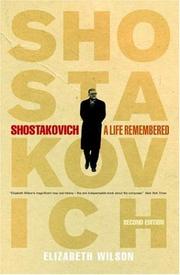
An oral history assembled from those who knew him. Read it after Moynahan as the corrective: on what the Seventh meant, the testimony is contradictory, and Wilson lets the contradictions stand rather than resolving them.

Alexievich's oral history of Soviet women at war, assembled from hundreds of interviews and censored on first publication. It shows precisely what the official heroic narrative had to leave out to function.
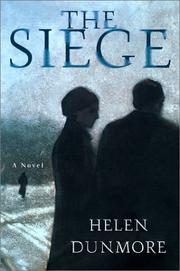
A novel of one family through the first winter, researched closely and admired for its restraint. A deliberate coda: after the archives and the oral history, fiction is what carries the daily texture forward.
Discussion
Keep reading
Paths that share books, cover the same subject, or open a related topic.