The Culture Reading Order: Where to Start
The Culture series by Iain M. Banks is a loosely connected space-opera universe — each novel stands alone, but reading them in a thoughtful order lets you absorb the universe's logic, tone, and moral complexity before Banks pushes them to their limits. This curriculum starts with the two most accessible and tonally representative entry points, then moves through the series' darker and more structurally ambitious works, finishing with the novels that reward a reader who already feels at home in the Culture.
The Best Entry Points
IntermediateGet a vivid, enjoyable first taste of the Culture — its Minds, its post-scarcity society, and Banks's wit — without being thrown in at the deep end.
▸ Study plan for this stage
Pace: 6–8 weeks total: Weeks 1–3 for The Player of Games (~25–30 pages/day, ~293 pages), then Weeks 4–8 for Consider Phlebas (~30–35 pages/day, ~471 pages). Allow extra days between books to reflect and journal before moving on.
- The Culture as a post-scarcity utopia: how the absence of want, work, and death-anxiety shapes every citizen's psychology and behavior, as seen in Gurgeh's restless ennui in The Player of Games
- Minds as the true power behind the Culture: understanding that the ship and orbital Minds are not tools but sovereign, hyper-intelligent beings who subtly (and not so subtly) steer events — exemplified by Jernau Gurgeh's handler Mawhrin-Skel and the drone Flere-Imsaho
- Special Circumstances and the ethics of intervention: the Culture's covert branch that manipulates other civilizations 'for their own good,' raising questions about benevolent imperialism that run through both novels
- Games as mirrors of civilization: in The Player of Games, the game Azad is literally the Azadian Empire — its rules encode its values, hierarchies, and cruelties, making Gurgeh's mastery of it an act of cultural critique
- The outsider perspective as a narrative device: Consider Phlebas deliberately places the reader inside Horza, an enemy of the Culture, forcing a defamiliarized, skeptical view of the utopia just celebrated in The Player of Games
- War, loss, and the cost of history: Consider Phlebas (written first but read second here) reframes the Idiran-Culture War as a vast, grinding tragedy; the dry appendices and casualty figures underscore that utopia was not free
- Banks's tonal range — wit, irony, and darkness: noticing how Banks shifts from the dry comic bureaucracy of Culture drones and Special Circumstances memos to visceral horror (the Eaters' island, the Card, the final game) within the same narrative voice
- Identity, complicity, and self-deception: both protagonists (Gurgeh coerced into playing, Horza fighting for a side he can barely justify) are compromised figures, and Banks uses them to interrogate how individuals rationalize their choices
- By the end of The Player of Games, what has the game of Azad revealed about the Azadian Empire's values — and what does Gurgeh's victory imply about the Culture's own relationship to power and manipulation?
- How does Special Circumstances use Gurgeh, and to what extent is he a willing participant? What does his complicity say about freedom and coercion within a utopia?
- Consider Phlebas is narrated from the perspective of a Culture antagonist. How does Horza's hatred of the Culture challenge or complicate the rosy picture painted in The Player of Games — and does Banks ever fully vindicate either side?
- What role do non-human intelligences (the drone Flere-Imsaho, the damaged Mind on the planet Schar's World) play in both novels, and how do they unsettle human-centric assumptions about agency and importance?
- The appendices and endnotes of Consider Phlebas present the Idiran-Culture War in cold statistical and historical terms. Why might Banks have made this structural choice, and what emotional effect does it create after the personal story of Horza?
- Both novels end with a form of pyrrhic or bittersweet resolution. Compare the two endings: what does each suggest about the price of the Culture's existence and the cost borne by individuals caught in its wake?
- **The Azad Design Exercise:** Invent a simplified board or card game (even just its rules on paper) that reflects the values of a real or fictional society of your choosing — much as Azad reflects the Azadian Empire. Write a one-paragraph explanation of how each rule encodes a social value. This forces active engagement with the novel's central metaphor.
- **Dual Perspective Journal:** After finishing each novel, write a 300–500 word journal entry from the point of view of a Culture citizen reacting to Horza's choices, then a second entry from Horza reacting to Gurgeh's story. Holding both perspectives simultaneously is the core interpretive challenge Banks sets up.
- **Mind Memo:** Banks's Minds communicate with dry, bureaucratic wit. Write a short (one-page) internal Special Circumstances memo — in Banks's style — summarizing Gurgeh's mission from the Culture's institutional point of view, complete with euphemisms and footnotes.
- **Casualty List Close-Reading:** Re-read the appendices of Consider Phlebas carefully and annotate them: mark every moment where the impersonal historical voice jars against something you witnessed personally in the narrative. Write three sentences on what this gap between scale and intimacy means for how Banks wants you to feel about utopia.
- **Character Motivation Map:** For both Gurgeh and Horza, draw a simple diagram tracking how their stated motivations at the start of each book differ from their actual behavior by the end. Identify the moment in each novel where the gap between stated and real motivation is widest.
- **Comparative Review:** Write a 400-word 'back-to-back' review of both novels as if recommending the reading order to a friend — argue specifically why reading The Player of Games before Consider Phlebas changes the experience of each book, using at least two concrete scenes as evidence.
Next up: These two novels establish the Culture's utopian promise and its moral ambiguities at a human scale, preparing the reader to tackle more structurally experimental and philosophically dense Culture works — such as Use of Weapons or Excession — where Banks pushes narrative form and the question of what Minds truly want to their limits.
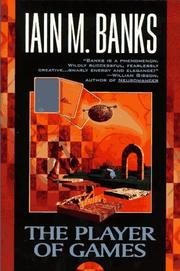
Universally recommended as the single best starting point: a tight, self-contained story that explains the Culture's values through contrast with an alien empire, with no prior knowledge needed. Its compact length and clear stakes make the Culture's philosophy immediately legible.

The first published Culture novel, read second so you already have a foothold. It deliberately shows the Culture from a hostile outsider's perspective, deepening your understanding of what makes it unusual — and unsettling.
The Culture's Moral Engine
IntermediateUnderstand Special Circumstances — the Culture's covert interventionist arm — and begin grappling with the series' central ethical tension: can a utopia justify dirty hands?
▸ Study plan for this stage
Pace: 5–6 weeks total: ~3 weeks for "Use of Weapons" (~30–35 pages/day, accounting for its non-linear dual-narrative structure — read slowly and keep a chapter-tracking log), then ~1–2 weeks for "The State of the Art" (~20–25 pages/day, it is a novella/short collection and rewards re-reading key passages)
- Special Circumstances as the Culture's 'dirty hands' instrument — an elite covert agency that manipulates, deceives, and kills in service of ostensibly good outcomes
- The dual-narrative structure of Use of Weapons: the forward-moving Sma/Cheradenine storyline vs. the reverse-numbered chapters revealing Zakalwe's past — and how form itself encodes moral concealment
- Zakalwe as the archetypal SC asset: a non-Culture human weaponised by the Culture, whose personal history of atrocity forces the question of whether the Culture is complicit in evil it merely outsources
- The chair as symbol: how Use of Weapons uses a single recurring object to carry the weight of the novel's moral horror and the cost of repressed trauma
- Utilitarian justification vs. deontological limits: the Culture's interventionism in Use of Weapons implicitly argues ends justify means — The State of the Art then stress-tests this by placing Earth (1970s) under the Culture's gaze and asking why it does NOT intervene
- The State of the Art's central dilemma: Diziet Sma's passionate case for Contact intervention on Earth vs. the majority's decision to leave humanity alone — dramatising the limits and arrogance of paternalistic utopianism
- Drone Skaffen-Amtiskaw and the Minds as moral agents: how non-human intelligences in both books complicate simple readings of Culture ethics
- The Culture's self-image vs. its practice: the gap between the utopian society depicted and the covert violence it sanctions, and what that gap reveals about any political project that claims moral superiority
- By the end of Use of Weapons, who is Zakalwe really, and how does the novel's reversed chapter structure make the reader morally complicit in the same concealment that defines his character?
- How does the Culture's use of Zakalwe — a man with a monstrous past — reflect on the Culture's own ethical standing? Can an institution be good if it knowingly deploys evil?
- In The State of the Art, what are the strongest arguments Sma makes for intervening on Earth, and what are the counterarguments that win out? Which position does the narrative seem to endorse, and how can you tell?
- Both books feature characters who stand outside the Culture proper (Zakalwe, Sma's Earth contacts, Linter). What does their outsider perspective reveal about the Culture that insider characters cannot?
- How does Banks use narrative structure and point-of-view in these two books as ethical devices — not just stylistic ones — to shape the reader's moral judgement?
- What is the 'dirty hands' problem in political philosophy, and how do Use of Weapons and The State of the Art each dramatise a different version of it?
- Chapter-tracking log for Use of Weapons: create a two-column table — one column for the forward (roman-numeral) chapters, one for the reverse-numbered chapters. After finishing, annotate each reverse chapter with the moral revelation it contains and map how late disclosure changes your retrospective judgement of earlier scenes.
- The chair audit: every time the chair motif appears in Use of Weapons, note the page, the context, and what emotion or memory it seems to be suppressing. Write a one-paragraph interpretation of the symbol's final meaning once the novel's secret is revealed.
- Debate preparation from The State of the Art: write a structured 300-word argument FOR Culture intervention on 1970s Earth (as Sma would make it), then a 300-word argument AGAINST (as the majority position holds). Conclude with a 150-word personal verdict and the principle that drives it.
- Outsider character comparison: choose one scene each from Use of Weapons and The State of the Art where a non-Culture or Culture-adjacent character observes or judges the Culture. Write a short comparative note (200–300 words) on what each scene exposes about the Culture's blind spots.
- Dirty hands philosophical mapping: look up a brief summary of Michael Walzer's 'dirty hands' argument (or Bernard Williams on moral residue). Write 200 words connecting one specific plot decision in Use of Weapons and one in The State of the Art to the philosophical concept — use direct textual evidence.
- End-of-stage reflective journal entry: in 400–500 words, answer the question Banks seems to be posing across both books — 'Does a utopia's good intentions redeem its covert violence?' — using at least three specific scenes or moments from the two texts as evidence.
Next up: Mastering the moral ambiguity of Special Circumstances and the Culture's interventionist logic here equips the reader to engage with later novels where these tensions escalate to civilisational scale — where the stakes of the Culture's 'dirty hands' are no longer individual lives but the fates of entire species and galactic power structures.
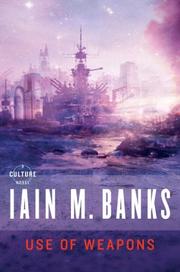
Widely regarded as the series' masterpiece, its dual-timeline structure rewards readers who already know the Culture's baseline. Its devastating moral core reframes everything you've read so far.
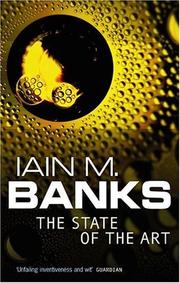
A short-story collection including the novella of the same name, in which a Culture ship visits 1970s Earth. Reading it here provides a breather and a surprisingly direct statement of the Culture's self-image and doubts.
Expanding the Universe
IntermediateSee the Culture from new angles — through its diplomats, its drones, and civilisations on the cusp of joining or resisting it — broadening the universe beyond Special Circumstances.
▸ Study plan for this stage
Pace: 6–8 weeks total: ~3 weeks on Excession (~25–30 pages/day, including time to re-read the Minds' "Interesting Times Gang" ship communications) and ~3 weeks on Inversions (~20 pages/day, with deliberate slow reading to decode the dual-narrative structure and hidden Culture presence).
- The Outside Context Problem (OCP): Excession introduces the idea of a threat or entity so alien that a civilisation has no framework to process it — a concept central to understanding the Culture's limits and anxieties.
- Mind autonomy and political intrigue: The Interesting Times Gang in Excession reveals that Culture Minds operate with independent agendas, form factions, and can deceive one another — complicating the earlier image of benevolent AI oversight.
- Ship naming and personality as characterisation: In Excession, vessel names (e.g. 'Shoot Them Later', 'No More Mr Nice Guy') are not cosmetic — they signal a Mind's disposition, history, and moral stance, functioning as a shorthand character sheet.
- The Affront as civilisational contrast: Excession's Affront species embodies deliberate cruelty institutionalised as culture, serving as a dark mirror to the Culture's post-scarcity ethics and forcing the reader to examine where tolerance ends.
- Covert influence without Special Circumstances: Inversions strips away the overt SC apparatus and shows Culture influence operating through a single embedded agent (Vosill/Linter-adjacent figures) at the level of a medieval-analogue court — stealth idealism in action.
- Unreliable and layered narration: Inversions is told by in-world narrators who do not understand what they are witnessing; the reader must reconstruct the 'true' story from gaps, ironies, and anachronisms — a major shift in Banks's technique.
- Civilisations on the cusp — consent and paternalism: Both books interrogate whether the Culture has the right to nudge, protect, or withhold itself from less advanced societies, raising the question of whether benevolence can be a form of imperialism.
- Drones as full moral agents: Excession's drone characters (especially Churt Lyne and Fivetide-adjacent interactions) extend the earlier portrait of drones beyond comic relief into beings with grief, loyalty, and ethical conflict of their own.
- In Excession, what makes the Excession itself an 'Outside Context Problem', and how does the Culture's response expose the limits of even a post-scarcity superintelligence?
- How does the Interesting Times Gang subplot in Excession reframe your understanding of Culture Minds — are they trustworthy stewards, or self-interested political actors?
- What narrative clues in Inversions signal that one or both of the central figures (Vosill, DeWar) are Culture agents, and why does Banks choose never to confirm this explicitly within the text?
- How does the Affront's institutionalised cruelty in Excession challenge the Culture's — and the reader's — instinct toward pluralistic tolerance?
- Comparing the two books: what are the trade-offs between overt Culture presence (Excession) and covert Culture presence (Inversions) as storytelling strategies and as in-universe ethical choices?
- By the end of Inversions, what is your verdict on Vosill's intervention — is she a force for genuine good, a paternalistic meddler, or something more ambiguous, and what evidence supports your reading?
- **Ship Name Decoder:** As you read Excession, keep a running log of every named Culture ship. For each, write one sentence on what the name implies about the Mind's personality or values, then check whether the ship's actions in the novel confirm or subvert that implication.
- **Reconstruct the Hidden Plot in Inversions:** After finishing the novel, write a one-page 'true account' of events as a Culture historian would record them — identifying who the agents are, what their mission was, and whether it succeeded. Use only textual evidence.
- **OCP Thought Experiment:** Define the Outside Context Problem in your own words, then apply the concept to a real-world historical event (e.g., European contact with the Americas, the advent of the internet). Write a short paragraph connecting your example back to the Excession's narrative function.
- **Ethical Debate — The Affront Question:** Write a 300-word position statement either defending or critiquing the Culture's decision on how to handle the Affront by the novel's end. Then write a 150-word steel-man of the opposing view.
- **Narrative Voice Comparison:** Choose one scene from Excession told from a Mind's point of view and one scene from Inversions told by its in-world narrator. Write a comparative paragraph on how the choice of narrator shapes what the reader is allowed to know and feel.
- **Concept Map — Civilisational Spectrum:** Draw or diagram a spectrum from 'fully Culture-integrated' to 'actively resisting the Culture.' Place the Affront, the medieval kingdoms of Inversions, and the Culture Minds of the Interesting Times Gang on this spectrum, with brief justifications for each placement.
Next up: Mastering the Culture's covert reach and the moral ambiguity of its influence in these two books equips the reader to engage with the more personal and psychologically intense explorations of identity, trauma, and complicity that await in the later, darker Culture novels.

The novel most focused on the Minds themselves, told largely through their ship-to-ship communications. Best appreciated once you're comfortable with the Culture's texture; it rewards familiarity with the series' tone.
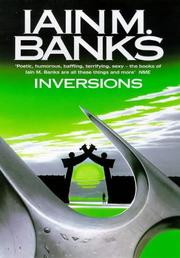
A Culture novel in disguise — told as a medieval fantasy with no explicit sci-fi framing. Reading it here, after you know the universe well, lets you decode its hidden layer and appreciate Banks's structural playfulness.
The Darker Corners
ExpertEngage with the series at its most philosophically demanding and morally ambiguous, where Banks interrogates the Culture's limits and the nature of consciousness and complicity.
▸ Study plan for this stage
Pace: 6–8 weeks total: ~3 weeks on "Look to Windward" (~25–30 pages/day) and ~3–4 weeks on "Surface Detail" (~30–35 pages/day), with a 2–3 day reflective pause between the two books for journaling and comparative note-taking.
- Grief, memory, and the ethics of resurrection — Look to Windward centers on Quilan's mission as an act of mourning weaponized; examine how the Culture's immortality and mind-state backups complicate authentic grief and loss.
- Complicity and moral contamination — both novels ask whether good intentions or systemic beneficence can coexist with catastrophic historical guilt (the Idiran War's twin suns in Look to Windward; the Hell-construction debate in Surface Detail).
- The Culture's self-image vs. its shadow — the Minds in both books operate with vast foresight yet allow suffering to unfold; interrogate whether this constitutes wisdom, arrogance, or a form of structural violence.
- Virtual realities as moral spaces — Surface Detail's Hells force the question of whether simulated suffering is 'real' suffering, and what obligations arise toward conscious beings in constructed environments.
- The nature and rights of consciousness — from Quilan's traumatized, manipulated mind to the digitally tortured souls in the Hells, both books probe what makes a conscious experience morally considerable.
- Revenge, justice, and the limits of pacifism — Quilan's arc in Look to Windward and the anti-Hell insurgency in Surface Detail both test whether violence can ever be justified against a civilization that considers itself post-scarcity and post-conflict.
- The role of Special Circumstances and institutional deception — both novels reveal the Culture acting covertly and manipulatively; analyze how Banks frames institutional secrecy within an ostensibly utopian society.
- Eschatology and civilizational endings — Look to Windward's light-of-dead-stars motif and Surface Detail's afterlife architectures together construct a meditation on what civilizations owe their dead and their future.
- In Look to Windward, how does the novel's central irony — that the Culture's intervention caused the very war it sought to prevent — function as a critique of liberal interventionism, and how does Quilan's grief both humanize and implicate him?
- Surface Detail presents multiple factions with coherent moral arguments for and against the continued existence of the Hells. Which argument does Banks seem to endorse, if any, and how does the novel's resolution complicate a clean answer?
- Both novels feature Minds that possess near-omniscient foresight yet permit terrible outcomes. What does this pattern suggest about Banks's view of power, responsibility, and the moral cost of a 'long game' strategy?
- How does Surface Detail use the layering of real, virtual, and war-game realities to destabilize the reader's sense of what counts as genuine consequence or genuine death?
- Look to Windward ends with an act of individual sacrifice that fails to achieve its intended destruction. What does this outcome say about the futility or necessity of revenge as a response to historical atrocity?
- Taken together, how do these two novels reframe the Culture not as a utopian endpoint but as a civilization with its own unresolved moral debts — and what does that imply for the reader's earlier, more celebratory view of the Culture?
- Dual-timeline mapping (Look to Windward): Create a visual timeline tracking both the Idiran War's causal chain and Quilan's present-day mission in parallel. Annotate each node with the moral agent responsible for each decision, then write a one-page argument assigning degrees of culpability to the Culture, the Idirans, and Quilan himself.
- Hell's advocate debate (Surface Detail): Write two 300-word position papers — one arguing for the immediate abolition of the Hells on consciousness-rights grounds, one arguing for their preservation as a deterrent — using only evidence from the novel. Then write a 150-word verdict explaining which case Banks's narrative structure ultimately supports.
- Mind's-eye memo: Choose one Culture Mind from either book (e.g., the Masaq' Hub Orbital Mind or the Falling Outside The Normal Moral Constraints) and write a 400-word internal memo in that Mind's voice, justifying its most morally questionable decision in the novel. This forces close engagement with the logic of vast, non-human intelligence.
- Consciousness threshold analysis (Surface Detail): Catalog every category of conscious being that appears in Surface Detail (biological, digital, virtual, war-game avatar, etc.). For each, note how other characters treat their suffering and whether the narrative validates or undercuts that treatment. Conclude with your own argued definition of 'morally considerable consciousness' as Banks seems to
- Motif tracking — light and the dead: The title Look to Windward and its central image of starlight from dead suns is one of Banks's most sustained metaphors. Re-read the opening and closing chapters and collect every instance of light, vision, and temporal delay. Write a 500-word close reading of how this motif reframes the novel's entire moral argument about history and consequence.
- Comparative thesis essay: After finishing both books, write a 600–800 word comparative essay answering: 'Do Look to Windward and Surface Detail ultimately defend or indict the Culture?' Use at least three specific scenes — drawn from both novels — as your primary evidence.
Next up: By confronting the Culture's complicity, its treatment of consciousness, and the moral weight of its history, the reader is now equipped to engage with even more destabilizing questions about identity, agency, and what it means to act ethically from inside — or against — a system of overwhelming power.
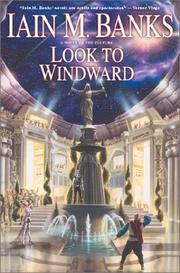
A meditation on grief, guilt, and the long consequences of Culture interventions — it hits hardest once you've absorbed the optimism of the earlier novels and can feel the weight of its elegy.
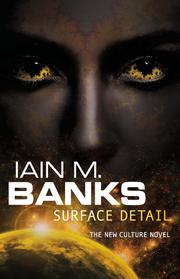
Takes on virtual Hells, the ethics of simulated suffering, and civilisational warfare — one of the series' most ambitious and disturbing books, best saved for when you're fully immersed in the universe's rules.
Discussion
Keep reading
Paths that share books, cover the same subject, or open a related topic.