The Neapolitan Novels Reading Order and Guide
This curriculum guides a beginner through Elena Ferrante's Neapolitan Quartet in sequence, surrounding each phase with just enough context — Naples, postwar Italy, feminist thought, and Ferrante's literary world — to make the novels resonate deeply. The path moves from orientation and the first novel, through the full quartet, to richer critical and thematic afterlife reading.
Orientation: Naples, Italy, and the World You're Entering
BeginnerBuild a vivid mental map of postwar Naples, Italian social history, and the class/gender tensions that saturate the quartet before reading a single page of Ferrante.
▸ Study plan for this stage
Pace: 4–5 weeks total: Week 1–2 — Naples '44 (~20–25 pages/day; it's a diary, so read entry by entry rather than by page count to preserve the episodic rhythm). Week 3–5 — Christ Stopped at Eboli (~15–20 pages/day; the prose is denser and more meditative, so slower immersion is rewarded).
- Postwar Naples as a city of survival: Naples '44 documents the 1943–44 occupation period, showing how ordinary Neapolitans — especially women and the poor — developed elaborate informal economies, black markets, and social codes to endure war, famine, and foreign occupation. This is the direct ances
- The camorra and the logic of omertà: Lewis repeatedly encounters the Camorra's shadow governance — protection rackets, complicity with Allied forces, and the unspoken rules that override official law. Understanding this parallel power structure is essential for reading the neighborhood dynamics in t
- Southern Italy as 'the other Italy' — the Mezzogiorno question: Carlo Levi's exile in Lucania (Basilicata) exposes the vast cultural, economic, and political chasm between northern/central Italy and the rural South. The peasants he lives among do not consider themselves part of the Italian state at
- Fatalism, magic, and folk religion vs. the modern state: In Christ Stopped at Eboli, Levi documents a worldview saturated with pagan ritual, the evil eye, and a deep distrust of institutions. This pre-modern or anti-modern consciousness — coexisting with Catholicism — is a living undercurrent in Fer
- Class as a physical and spatial reality: Both books map class onto geography — the bombed-out bassi (ground-floor hovels) and wealthy hilltop neighborhoods in Lewis; the feudal landowner/peasant divide in Levi. Class is not abstract ideology but a matter of where you sleep, what you eat, and who can
- Gender, the female body, and social control: Lewis's diary is unflinching about the sexual exploitation of Neapolitan women by occupying forces and local men alike — prostitution as survival strategy, honor culture, and the near-total absence of female autonomy. Levi's Lucanian women are similarly c
- The state as distant, corrupt, or actively hostile: Both authors — Lewis as a bemused British intelligence officer, Levi as a political exile punished by the Fascist state — show Italian institutions (police, government, church hierarchy) as forces that extract from or ignore the poor rather than se
- Resilience, beauty, and dark humor as survival tools: Lewis is repeatedly astonished by Neapolitan wit, aesthetic pleasure (music, food, dress), and emotional expressiveness even amid catastrophe. This cultural vitality — not just suffering — is equally present in Ferrante and prevents the novels fr
- After reading Naples '44, can you describe three specific survival strategies — economic, social, or psychological — that ordinary Neapolitans used during the Allied occupation, and explain why those same strategies might still be operating a generation later when Ferrante's characters are children?
- Carlo Levi titles his book with the phrase 'Christ stopped at Eboli.' What does this phrase mean to the peasants who say it, and what does it reveal about how southern Italians understood their relationship to the Italian nation-state, to Christianity, and to modernity?
- Both Lewis and Levi are outsiders writing about southern Italian communities — Lewis a British officer, Levi a northern Italian intellectual. How does each author's outsider position shape what he notices, what he misses, and how trustworthy his account feels? What are the limits of each perspective?
- How do both books portray the relationship between women's bodies and social order? Identify at least two specific scenes or passages from each book and explain what they suggest about female agency, honor culture, and the cost of transgression.
- What picture of the Italian state — its legitimacy, its reach, its relationship to the poor — emerges from reading these two books together? How might a child growing up in postwar Naples have been taught (explicitly or implicitly) to feel about institutions like the police, the church, and the school?
- Naples '44 covers a single year in a city; Christ Stopped at Eboli covers roughly two years in a remote village. What does the contrast in setting (urban/rural, occupied/isolated) teach you about the diversity of southern Italian experience, and why might Ferrante have set her story specifically in Naples rather than the countryside?
- Annotated map exercise: Draw or print a simple map of southern Italy. As you read, mark every location mentioned in both books and annotate it with one key social fact (e.g., 'Eboli — the boundary of the modern world according to Lucanian peasants'; 'Naples port — black market hub, 1943'). By the end of Stage 1 you will have a physical mental map to consult while reading Ferrante.
- Parallel-passage journal: Keep a two-column notebook. Left column: quotes or paraphrased scenes from Naples '44. Right column: the thematic echo you find in Christ Stopped at Eboli. Aim for at least 10 pairs. Themes to hunt for: hunger, female shame, distrust of authority, folk magic, class humiliation. This trains the comparative reading skill the quartet demands.
- Character-type sketching: After finishing Naples '44, write a one-paragraph 'type portrait' of three recurring figures Lewis meets — e.g., the black-market fixer, the exploited young woman, the corrupt official. After finishing Levi, do the same for three Lucanian figures. Then ask yourself: which of these types do I expect to meet in Ferrante's rione?
- Close-reading of a single scene: Choose one scene from Naples '44 in which Lewis witnesses something that shocks or confuses him (his reaction of bewilderment is the signal). Write 300 words analyzing what Neapolitan logic or value system the scene reveals that Lewis, as an outsider, is slow to grasp. This builds the habit of reading 'against' a narrator — essential for Ferrante.
- Research micro-task — the Mezzogiorno question: Spend 60–90 minutes reading a single short secondary source (a Wikipedia article on the 'Southern Question' in Italy, or the introduction to any edition of Christ Stopped at Eboli) and write five bullet points connecting what you learn to specific passages in Levi. This contextualizes Levi's observations without requiring additional books.
- Pre-reading prediction letter: Before opening the first Ferrante novel, write a one-page informal letter to yourself predicting: What will the neighborhood look like? What will the mothers be afraid of? What will the girls be punished for? What will 'getting out' mean and cost? Seal it (literally or digitally) and re-read it after finishing the quartet to measure how well Stage 1 prepared your ima
Next up: Having absorbed the historical texture of postwar southern Italy through Lewis's street-level reportage and Levi's anthropological intimacy, the reader is now equipped to encounter Ferrante's Naples not as an exotic backdrop but as a fully legible world — recognizing its class geography, gender codes, and institutional distrust as living forces rather than literary devices.
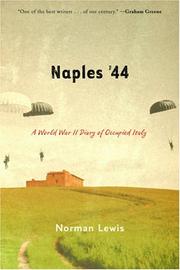
A firsthand, beautifully written account of Naples during and just after WWII — the exact city and era where My Brilliant Friend opens. It makes the rubble, poverty, and Camorra presence in the novels feel viscerally real.
A classic of Italian literature about the crushing poverty and forgotten south of Italy. It establishes the cultural and political divide between northern ambition and southern stagnation that haunts Lenù and Lila's entire lives.
The Quartet, Part One: Childhood and Adolescence
BeginnerRead the first two novels of the quartet and experience the girls' friendship, the neighborhood, and the first eruptions of ambition and violence.
▸ Study plan for this stage
Pace: 6–8 weeks total: Week 1–2 — Read Chiara Lagani's "My Brilliant Friend" (the graphic/theatrical adaptation) slowly, ~15–20 pages/day, pausing to note visual storytelling choices; Weeks 3–8 — Read Elena Ferrante's "My Brilliant Friend" (the first novel within the quartet volume), ~25–30 pages/day, re-
- The Rione as a living character: the Naples neighborhood (the rione) functions not merely as backdrop but as a claustrophobic social world with its own rules, hierarchies, and violence that shapes every character's destiny.
- The friendship dialectic — brilliance and rivalry: Lila and Lenù's bond is defined by mutual fascination, competition, and a push-pull dynamic where each girl's growth is measured against the other's, establishing the quartet's central emotional engine.
- Ferrante's 'frantumaglia' and female interiority: Ferrante uses close first-person narration (Lenù's retrospective voice) to expose the interior life of girls in a world that discourages female ambition, making the unsaid as important as the said.
- Class, education, and escape: schooling is portrayed as the primary — and precarious — ladder out of poverty; the decision of whether to continue studying carries enormous weight for both girls and their families.
- Male violence and the normalization of brutality: from Don Achille to the Solara brothers, the novel establishes early that violence (physical, economic, sexual) is woven into daily neighborhood life and will haunt the entire quartet.
- The body as site of transformation: adolescence in Ferrante is visceral — Lila's 'dissolving margins' and Lenù's awareness of her own changing body signal that physical experience is inseparable from intellectual and social becoming.
- Adaptation and interpretation: reading Lagani's version alongside Ferrante's prose reveals how the same story can be re-mediated — what dialogue, image, or scene an adapter chooses to foreground tells us what is considered essential.
- Memory and unreliable narration: Lenù narrates from old age, meaning every childhood scene is filtered through decades of retrospection, loss, and possible self-justification — the reader must hold the child and the older narrator simultaneously.
- How does the rione's social hierarchy — the Caraccis, the Solaras, the Cerullos — establish the power dynamics that Lila and Lenù must navigate, and which specific scenes in Ferrante's 'My Brilliant Friend' best illustrate those dynamics?
- In what ways does Lenù's narration reveal her own insecurities and admiration for Lila, and how does this dual perspective complicate the reader's ability to assess Lila objectively?
- How does Chiara Lagani's adaptation of 'My Brilliant Friend' translate Ferrante's interior monologue and dense prose into a different medium — what is gained and what is necessarily lost?
- What does the girls' shared love of reading and writing — from copying out Little Women to Lila's secret novel — suggest about the role of storytelling as both escape and self-construction in the quartet?
- How does Ferrante frame the choice to leave school versus continue studying as a gendered and class-based conflict, and which characters embody each side of that tension?
- By the end of 'My Brilliant Friend,' in what ways has the neighborhood already begun to 'win' over both girls, and what signs suggest that their futures may diverge sharply?
- Side-by-side scene mapping: Choose three scenes that appear in both Lagani's adaptation and Ferrante's novel (e.g., the dolls thrown into the cellar, the first day of middle school, the encounter with the Solaras). Write a one-paragraph comparison for each: what details does each version emphasize, and what does that choice reveal about the adapter's interpretation?
- Character relationship web: Draw a hand-drawn diagram of every named character in the rione from Ferrante's 'My Brilliant Friend.' Draw lines indicating relationships (family, rivalry, desire, fear) and annotate each line with a specific scene or quote. Revisit and update it as you read.
- Narrator audit: Select five passages where adult Lenù's retrospective voice intrudes on the childhood narrative. Write a brief note for each: What does older Lenù seem to want the reader to think about younger Lenù? Where might she be self-serving or unreliable?
- Neighborhood geography journal: As you read, sketch a rough map of the rione based on textual clues — the courtyard, the stradone, the tunnel, the ponds, the Solaras' bar. Annotate locations with the events that happen there. This spatial awareness will pay dividends across all four novels.
- Ambition and obstacle log: Keep a running two-column list as you read Ferrante's novel — in one column, record every moment a character (especially Lila or Lenù) expresses or acts on ambition; in the other, record every social, economic, or gendered force that pushes back. Review the list at the end and write a short reflection on the pattern.
- Adaptation pitch: After finishing both books, write a one-page pitch for your own adaptation of a single chapter from Ferrante's 'My Brilliant Friend' in a medium of your choice (film, graphic novel, stage play). Specify which narrative elements you would keep, cut, or transform, and justify each decision.
Next up: Completing these first two books — and sitting with the unresolved tensions of Lila's marriage, Lenù's departure, and the rione's grip on both girls — creates the emotional stakes and character knowledge needed to follow the sharply diverging adult trajectories that drive the second and third novels of the quartet.

The starting point — Ferrante introduces Elena and Lila in childhood and early adolescence. Read first to establish the friendship, the rione, and the novel's hypnotic voice before anything else.

Follows directly from the first novel through Lila's marriage and Lenù's escape into education. The stakes of the friendship and the divergence of their paths become heartbreaking here.
Critical Depth: Feminism, Italy, and the Ferrante Phenomenon
ExpertContextualize the quartet within Italian feminist thought and global literary culture, and engage with the critical conversation Ferrante has ignited.
▸ Study plan for this stage
Pace: 6–8 weeks total: Weeks 1–3 cover "The Second Sex" (Nature of the Second Sex / de Beauvoir) at ~25–30 pages/day, pausing after each major section to journal; Weeks 4–6 cover "La Frantumaglia" at ~20 pages/day, reading thematically rather than straight through; Weeks 7–8 are reserved for synthesis, re
- The concept of 'the Other' as de Beauvoir defines it — woman as defined against, and in relation to, man — and how this maps onto Lila and Elena's self-construction in the quartet
- De Beauvoir's critique of immanence vs. transcendence: the social forces that trap women in biological and domestic roles versus the existentialist drive toward self-authorship
- Frantumaglia as Ferrante's central metaphor: the sensation of dissolution, fragmentation of the self, and the terror of losing one's margins — and its relationship to de Beauvoir's 'immanence'
- Ferrante's theory of the 'brilliant friend': the psychological and political dynamics of female mentorship, rivalry, and mutual formation
- The question of female authorship and anonymity: Ferrante's deliberate erasure of the biographical author as a feminist and literary-political act, explored throughout La Frantumaglia
- Italian feminist thought (smarginatura, the practice of 'entrustment'/affidamento) as a specific cultural context distinct from Anglophone feminism, and how Ferrante both draws on and departs from it
- The 'Ferrante Phenomenon' as a global publishing and cultural event: what the worldwide reception of the Neapolitan Novels reveals about readers' hunger for unmediated female interiority
- The tension between fiction and autobiography: how Ferrante uses La Frantumaglia to theorize the relationship between lived experience and invented narrative without collapsing the two
- How does de Beauvoir's framework of woman as 'the Other' illuminate the dynamic between Elena and Lila — and where does that framework fall short or require updating?
- Ferrante describes frantumaglia as both a personal affliction and a creative resource. How does this concept complicate de Beauvoir's binary of immanence (entrapment) versus transcendence (freedom)?
- In La Frantumaglia, Ferrante argues that the author must 'disappear' for the work to live fully. What are the feminist stakes of this argument, and how does it relate to de Beauvoir's ideas about female self-erasure?
- What does the global scale of the 'Ferrante Phenomenon' suggest about the universality — or cultural specificity — of the experiences depicted in the Neapolitan Novels?
- How does Ferrante's account of her own writing process in La Frantumaglia reframe or enrich a re-reading of the quartet's narrative choices (e.g., Elena's unreliable narration, Lila's disappearance)?
- Where do de Beauvoir's existentialist feminism and the Italian feminist tradition of affidamento (female entrustment) converge and diverge, and which framework does Ferrante seem closer to?
- Comparative annotation: As you read La Frantumaglia, keep a running two-column document — one column for Ferrante's statements about women, writing, and the self; the other for the corresponding de Beauvoir passage it echoes, challenges, or extends. Aim for at least 15 paired entries.
- Write a 600–800 word critical essay arguing either that Lila embodies de Beauvoir's 'immanence' or that she transcends it, using specific evidence from La Frantumaglia (where Ferrante discusses Lila's character) to support your reading.
- Trace the word 'margins' (or 'smarginatura'/'dissolving margins') across La Frantumaglia. Map every instance, note the context, and write a one-page analysis of how Ferrante builds this concept across the book — then connect it explicitly to de Beauvoir's concept of the body as 'situation.'
- Engage with the critical conversation: find two published reviews or academic articles on the 'Ferrante Phenomenon' (e.g., from the London Review of Books, PMLA, or similar). Write a 400-word response identifying one claim each reviewer makes that La Frantumaglia either supports or contradicts.
- Anonymity exercise: Write a one-page reflection from the perspective of a fictional author who has chosen total anonymity. Then re-read Ferrante's letters in La Frantumaglia on the same subject and write a second paragraph analyzing where your intuitions aligned with or diverged from hers.
- Synthesis discussion (solo or with a reading group): Pose the question — 'Is Elena Greco a de Beauvoirian heroine?' — and spend 30 minutes debating it using only evidence from La Frantumaglia and your prior knowledge of the quartet. Write up a 200-word conclusion.
Next up: By grounding the quartet in de Beauvoir's feminist philosophy and Ferrante's own theoretical self-accounting in La Frantumaglia, the reader is now equipped with the critical vocabulary and authorial perspective needed to undertake a close, independent scholarly analysis of the Neapolitan Novels themselves in any subsequent stage.
The foundational text of modern feminist thought that Lenù herself reads in the novels. Engaging with it directly illuminates the intellectual scaffolding beneath Ferrante's entire project.

Ferrante's own collected letters, interviews, and essays — the closest thing to a memoir from an anonymous author. It reframes everything you've read by letting Ferrante explain, in her own words, what she was doing and why.
Discussion
Keep reading
Paths that share books, cover the same subject, or open a related topic.