Iain M. Banks Reading Order: Where to Start
Iain M. Banks wrote two distinct but thematically linked bodies of work: the sprawling, anarchist-utopian Culture science fiction series and a set of darkly inventive mainstream literary novels published under "Iain Banks." This curriculum begins with the most accessible and celebrated Culture novels to build fluency in his ideas and style, deepens into the more challenging and experimental Culture entries, and then crosses over into his mainstream fiction — which rewards readers who already understand his moral preoccupations and narrative daring.
The Culture: First Contact
IntermediateUnderstand the core premises of the Culture — its post-scarcity society, its godlike AIs (Minds), and its covert interventionist arm Special Circumstances — through the two most celebrated entry points.
▸ Study plan for this stage
Pace: 6–8 weeks total: spend weeks 1–3 on The Player of Games (~25–30 pages/day, it is the shorter and more focused of the two), then weeks 4–8 on Consider Phlebas (~30–35 pages/day, accounting for its greater length and denser world-building). Reserve the final 2–3 days of each book for reflection and no
- Post-scarcity society: The Culture as a civilization that has abolished want, labour, and death — and what that does to individual motivation and meaning (explored through Gurgeh's restlessness in The Player of Games)
- The Minds: godlike AIs that run Culture ships and orbitals, whose relationship with humans is cooperative but asymmetric — examine the drone Mawhrin-Skel and the ship Limiting Factor as character studies in AI agency
- Special Circumstances (SC): the Culture's covert interventionist arm, which uses individuals as instruments of soft power — Gurgeh's recruitment is the clearest dramatisation of how SC operates and what moral compromises it demands
- The game as civilisational metaphor: in The Player of Games, Azad is not merely a game but the entire value system of the Azadian Empire encoded in play — Banks uses it to contrast imperial hierarchy with Culture egalitarianism
- The outsider perspective as world-building device: Consider Phlebas deliberately places the reader inside Horza, a Culture-hater, forcing a defamiliarised, critical view of the Culture rather than an admiring one
- War, scale, and indifference: the Idiran-Culture War in Consider Phlebas is fought over principles neither side will abandon, yet individual lives are ground up almost incidentally — Banks interrogates whether a 'just' civilisation can wage total war
- Identity, loyalty, and self-determination: Horza's Changer biology and his ideological rejection of the Culture raise questions about what it means to choose a side, while Gurgeh's manipulation by SC questions whether Culture citizens are truly free
- The Culture's moral ambiguity: both books resist simple heroism — Gurgeh 'wins' but is implicated in empire; Horza fights for a side that loses and that never valued him — Banks refuses to let the Culture be straightforwardly utopian
- How does The Player of Games use the game of Azad to dramatise the difference between the Culture's values and those of an imperial, hierarchical society — and what does Gurgeh's victory cost him morally?
- What is Special Circumstances, and what does Gurgeh's recruitment and manipulation by SC reveal about the limits of the Culture's stated commitment to individual freedom?
- Consider Phlebas is narrated from the perspective of a Culture-hater. What specific criticisms does Horza level at the Culture, and how does Banks use the novel's outcome to complicate or validate those criticisms?
- How do the Minds in both books function as characters rather than mere plot devices — what do their decisions and personalities reveal about the Culture's actual power structure?
- Both novels end with a form of pyrrhic or hollow victory. Compare the endings: what is Banks saying about agency, sacrifice, and the cost of civilisational conflict?
- After reading both books, how would you describe the Culture to someone who had read neither — and what is the single most important thing Banks wants the reader to feel uncertain about?
- Civilisation comparison chart: after finishing The Player of Games, draw up a two-column table mapping Azadian society against the Culture across at least six dimensions (hierarchy, gender, labour, death, competition, governance). Use specific scenes from the novel as evidence for each cell.
- Horza's brief: write a 300–400 word internal monologue from Horza's point of view (set during any scene in Consider Phlebas) articulating exactly why he fights against the Culture. Then write a 200-word rebuttal from the perspective of a Culture Mind. Compare the two — whose argument holds up better after finishing the book?
- SC ethics debate: treat Gurgeh's recruitment by Special Circumstances as a case study in political ethics. Write a one-page argument FOR SC's actions and a one-page argument AGAINST, drawing only on evidence from The Player of Games. Conclude with your own verdict.
- Appendix close-read: Consider Phlebas ends with a statistical appendix on the Idiran-Culture War. Read it carefully and note how the dry, bureaucratic tone contrasts with the human-scale suffering in the novel. Write a paragraph on what Banks achieves by ending this way — what does it say about how civilisations remember their wars?
- Mind as character: identify every named Mind or drone in both books and for each one note: (a) what decision or action defines them, (b) whether they act in the Culture's stated interests or their own, and (c) what their behaviour implies about AI autonomy in the Culture. Look for patterns across both books.
- Reading journal — the 'unreliable utopia' thread: keep a running log as you read both books, noting every moment where the Culture falls short of its own ideals. At the end of stage, review your log and write a thesis sentence summarising Banks's overall stance on utopia in these two novels.
Next up: Mastering the Culture's foundational premises — its post-scarcity logic, the moral complexity of Special Circumstances, and Banks's habit of critiquing utopia from the inside — equips the reader to engage with the more philosophically and structurally ambitious Culture novels ahead, where these tensions are pushed to their breaking points.
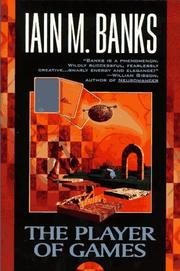
The most perfectly structured and accessible Culture novel: a compact, brilliantly plotted story that introduces the Culture's values by contrasting them with a brutal empire. Read this first to get your bearings.

The first published Culture novel, told from the perspective of a Culture enemy — a deliberate inversion that forces you to question the utopia you just admired. Reading it second, after Player of Games, makes its moral ambiguity hit harder.
The Culture: Special Circumstances & Moral Complexity
IntermediateEngage with the Culture's darker, more ethically ambiguous operations — covert manipulation, the cost of intervention, and what it means to act for 'the greater good.'
▸ Study plan for this stage
Pace: 6–8 weeks total: ~3 weeks for "Use of Weapons" (read ~20–25 pages/day, honouring the dual-timeline structure by never skipping chapters — read both the forward-numbered and reverse-numbered chapters in the order Banks presents them); ~1.5–2 weeks for "The State of the Art" (short stories and novella
- Special Circumstances as the Culture's 'dirty hands' agency — how a post-scarcity utopia justifies covert, often brutal intervention in other civilisations
- The unreliable narrator and structural deception: Banks's reverse-numbered chapters in Use of Weapons withhold identity and motive to implicate the reader in the same moral blindness as the Culture
- Complicity and instrumentalisation: Zakalwe is simultaneously a tool of SC and a subject of moral concern — exploring what it means to use a person as a means to an end
- Trauma, identity, and the past as inescapable: the chair motif in Use of Weapons as a symbol of guilt, atrocity, and the self one cannot outrun
- The cost of intervention: SC's operations 'work', but at what human price? Banks forces the reader to audit the utilitarian calculus
- The Culture's self-awareness and self-critique: in The State of the Art, Diziet Sma's mission to 1970s Earth dramatises the Culture's choice NOT to intervene — and the anguish that restraint produces
- Moral relativism vs. universal ethics: does the Culture's superiority grant it the right — or duty — to reshape other societies?
- The role of the Minds and drones as ethical actors: how non-human intelligence complicates questions of responsibility and agency in SC operations
- In Use of Weapons, who is Cheradenine Zakalwe really, and how does the structural revelation of his true identity reframe every SC mission he undertook — and the Culture's willingness to employ him?
- What does the chair represent across Use of Weapons, and why does Banks make it the novel's central symbol rather than a weapon or a battlefield?
- In The State of the Art, why does the Culture ultimately decide not to Contact Earth, and what does this decision reveal about the limits and hypocrisies of the 'greater good' argument?
- How does Diziet Sma's perspective differ between Use of Weapons and The State of the Art, and what does her discomfort in both texts tell us about the psychological toll of working for Special Circumstances?
- Banks structures Use of Weapons so that the reader is deceived alongside the Culture itself. What does this narrative choice argue about institutional moral blindness and the dangers of compartmentalised knowledge?
- Across both books, is the Culture portrayed as genuinely ethical, self-servingly ideological, or something more ambiguous? Use specific scenes to support your answer.
- Dual-timeline mapping: Create a physical or digital timeline chart with two tracks — the forward (roman numeral) chapters and the reverse (arabic numeral) chapters of Use of Weapons. After finishing the novel, annotate each chapter with what you knew vs. what you later learned, to make the reader's complicity in the deception visible.
- Motif journal: Keep a dedicated notebook for the chair motif. Each time it appears in Use of Weapons, log the page, the context, and your evolving interpretation. Write a 300-word synthesis essay after finishing the novel arguing what the chair ultimately 'means'.
- SC mission dossier: For each covert operation Zakalwe undertakes in Use of Weapons, write a one-paragraph 'mission report' from SC's perspective justifying the operation, then a one-paragraph rebuttal from an ethical critic. Compare the two voices — where do they agree?
- Earth Contact debate (The State of the Art): Stage a written debate with yourself (or a reading partner). Argue first FOR the Culture Contacting and uplifting 1970s Earth, then AGAINST. Use only evidence from the novella. Conclude with your own verdict and the reasoning behind it.
- Character voice comparison: Select one scene featuring Diziet Sma from Use of Weapons and one from The State of the Art. Write a 400-word comparative analysis of her voice, values, and emotional state across the two texts — what has SC done to her?
- Reread the final chapter of Use of Weapons immediately after finishing the book, then write a one-page reflection on how your emotional and moral response to Zakalwe changed between your first and second reading of that chapter.
Next up: Mastering the moral ambiguity of Special Circumstances and the Culture's interventionist logic here equips the reader to engage with the full-scale political and civilisational consequences of those choices — the natural next step toward Banks's later Culture novels, where the stakes of Contact, war, and the limits of utopian power are tested at an even grander, more explicit level.
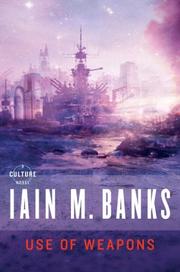
A structural masterpiece with a dual timeline running forwards and backwards simultaneously. Its devastating portrait of a Culture agent is best appreciated after you trust the universe enough to feel the betrayal.
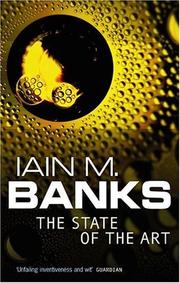
A short-story collection including the novella of the same name, in which a Culture ship visits 1970s Earth and debates whether to intervene. A perfect, compact companion piece that deepens the ethical debates of the preceding novels.
The Culture: Expanded Universe
ExpertExplore the full scope and variety of the Culture series — from intimate personal horror to vast civilisational conflict — and encounter Banks at his most ambitious and experimental.
▸ Study plan for this stage
Pace: 8–10 weeks total: ~2.5–3 weeks per book at roughly 25–35 pages/day. Suggested breakdown — Excession: weeks 1–3 (complex, demands slow reading for the ship-mind epistolary sections); Look to Windward: weeks 4–6 (more elegiac pacing, allow time for reflection); Surface Detail: weeks 7–10 (longest and
- The Outside Context Problem (OCP): Excession introduces this as the defining existential threat — an encounter so alien it falls entirely outside a civilisation's framework for understanding, forcing the reader to question the Culture's assumed invincibility.
- Ship Minds as political actors: Excession shifts narrative gravity away from humans entirely, showing Minds conspiring, deceiving, and forming factions (the Interesting Times Gang) — reframing the Culture's benevolent image with genuine moral ambiguity.
- Grief, guilt, and civilisational trauma: Look to Windward is structured around the long aftermath of the Idiran War (from Use of Weapons/Consider Phlebas), exploring how even a post-scarcity utopia cannot fully metabolise loss, guilt, or the consequences of its own interventions.
- The Culture's complicity and the limits of non-intervention: All three books interrogate whether the Culture's hands-off or hands-on choices are ever truly ethical — from the Affront's tolerated cruelty in Excession, to the Culture's role in the Twin Novae Battle in Look to Windward, to the virtual
- Virtual reality as moral and political space: Surface Detail introduces the concept of digitally simulated afterlives — Heavens and Hells — as a literal battleground, asking whether suffering in a virtual environment is 'real' suffering and who has the right to abolish it.
- The War in Heaven — proxy conflict and meta-war: Surface Detail's central conceit of a war fought inside virtual Hells (while a parallel 'real' war is officially forbidden) is Banks's most explicit allegory for ideological conflict conducted at one remove from its consequences.
- Structural and narrative experimentation: Across the three books, Banks deploys radically different architectures — the ship-mind email/memo format in Excession, the slow-burn dual-timeline elegy in Look to Windward, and the multi-strand intercutting of real and virtual worlds in Surface Detail — ea
- Scale and intimacy as counterpoint: Banks consistently juxtaposes civilisational or cosmic stakes (the Excession entity, the Twin Novae, the Hell Wars) with intensely personal stories (Genar-Hofoen's loneliness, Ziller's exile and grief, Lededje Y'breq's bodily trauma and revenge), showing that the
- In Excession, the Minds of the Interesting Times Gang act deceptively and manipulatively — does their behaviour undermine the Culture's self-image as a benevolent civilisation, and how does Banks use the epistolary ship-mind format to implicate the reader in their scheming?
- Look to Windward is saturated with the guilt of the Idiran War and the Twin Novae Battle — how does Mahrai Ziller's artistic exile and the Chelgrian plot function as a meditation on whether civilisations (not just individuals) can or should seek forgiveness?
- How does the Outside Context Problem in Excession serve as both a plot device and a philosophical concept — what does the Culture's failure to respond adequately reveal about the blind spots of even the most advanced civilisation?
- Surface Detail argues its case through embodied horror (Lededje's tattooed enslavement, the visceral Hell simulations) as much as through philosophical debate — does Banks suggest that abstract ethical arguments about virtual suffering are ever sufficient, or does the body always demand priority?
- All three books feature characters who are, in different ways, instruments or victims of larger powers (the Affront, the Culture, the Hell-running civilisations) — compare how Genar-Hofoen (Excession), Quilan (Look to Windward), and Lededje (Surface Detail) each navigate or resist their instrumentalisation.
- By the end of Surface Detail, the Culture has intervened decisively to end the virtual Hells — is this consistent with or a departure from the Culture's behaviour in Excession and Look to Windward, and what does the trajectory across these three books suggest about how Banks's view of the Culture evolved?
- Epistolary close-reading (Excession): Select three consecutive ship-mind communications from the Interesting Times Gang chapters. Annotate them for tone, subtext, and what each Mind withholds from the others. Write a one-page analysis of how Banks uses the memo/message format to create dramatic irony — the reader often knows more than any single Mind does.
- Grief cartography (Look to Windward): Draw a timeline mapping the Twin Novae Battle, the Idiran War, and the events of the novel's present. Then write 300–400 words on how Banks structures the novel so that the reader experiences the past as a weight pressing on the present — identify at least two specific scenes where this temporal layering is most acute.
- Philosophical position paper (Surface Detail): The novel stages a debate: should virtual Hells be abolished unilaterally, or must the decision be reached through consensus among civilisations? Write a 500-word position paper arguing one side, drawing only on evidence from Surface Detail. Then write a 200-word rebuttal using the opposing evidence.
- Character comparison essay: Write a 600–800 word comparative essay on one theme — complicity, grief, or bodily autonomy — as it manifests in one character from each of the three books (e.g., Genar-Hofoen, Ziller/Quilan, Lededje). Focus on how Banks uses each character's specific cultural and physical context to make the theme concrete rather than abstract.
- Ship Mind personality audit: Across all three books, identify at least five named Minds/ships and for each write a brief 'personality profile' — their apparent values, their actions, and any gap between the two. Conclude with a paragraph on what the diversity of Mind personalities suggests about the Culture's internal plurality and its limits.
- Structural diagram and reflection: For each of the three books, sketch a simple diagram of the narrative structure (timeline, point-of-view shifts, real vs. virtual layers in Surface Detail). In a short reflective paragraph per book, argue how the chosen structure either reinforces or creates tension with the book's central theme.
Next up: Having now encountered the Culture at its most morally complex, structurally ambitious, and philosophically provocative, the reader is equipped to step outside the series entirely and engage with Banks's non-Culture science fiction and his literary fiction — works that share the same ethical preoccupations and formal daring but strip away the utopian scaffolding, forcing those questions to be answ

The novel where the Minds themselves are the protagonists, communicating in vast, witty ship-to-ship messages. Rewards readers already fluent in Culture lore; its scope and playfulness feel earned at this stage.
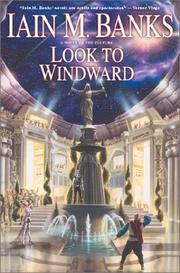
A melancholy, elegiac novel about grief, guilt, and the long aftermath of Culture interventions — thematically the richest of the series and best read after you have a full emotional investment in the Culture's history.
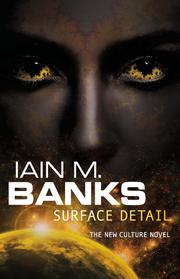
A later, sprawling entry that introduces virtual hells and a war fought entirely in simulated reality — Banks at his most provocative on religion and suffering. A satisfying capstone to deep Culture reading.
Mainstream Fiction: The Other Banks
ExpertDiscover Iain Banks the literary novelist — gothic, darkly comic, and morally unflinching — and see how his mainstream and SF preoccupations mirror and illuminate each other.
▸ Study plan for this stage
Pace: 6–7 weeks total: Week 1–2 — The Wasp Factory (~30 pages/day, ~180 pages); Week 3–4 — The Crow Road (~35 pages/day, ~500 pages); Week 5–6 — Complicity (~30 pages/day, ~310 pages); Week 7 — review, comparative reflection, and exercises.
- Unreliable narration and the weaponisation of reader sympathy — Frank in The Wasp Factory and Cameron in Complicity both implicate the reader in perspectives that are later radically destabilised
- Gothic grotesque as social critique — Banks uses visceral, disturbing imagery (the wasp factory rituals, the murder set-pieces in Complicity) not for shock alone but to expose the violence latent in ordinary institutions: family, nation, media
- The Scottish literary identity — all three novels are deeply rooted in Scottish landscape, class, and culture; Banks interrogates what it means to be Scottish, male, and modern in the late 20th century
- Memory, storytelling, and the construction of self — The Crow Road is structurally built around Prentice's attempt to reconstruct the past through fragments; truth is assembled rather than given
- Dark comedy and tonal duality — Banks sustains a characteristic blend of warmth, wit, and moral horror, refusing to let the reader settle into either pure entertainment or pure dread
- Moral complicity and culpability — Complicity makes its central theme explicit in its title, but the same question — how responsible are we for the violence around us? — haunts Frank's island and the McHoan family secrets
- Family as site of trauma and revelation — each novel uses the family unit as the primary arena in which identity is formed, distorted, and ultimately confronted
- Mirroring between mainstream and SF preoccupations — the themes of constructed identity, systemic violence, and utopian/dystopian possibility that define the Culture novels are present in embryo or in parallel across all three books
- In The Wasp Factory, how does Banks manipulate the reader's complicity with Frank's worldview, and what is the moral and narrative effect of the novel's final revelation about Frank's identity and history?
- The Crow Road opens with one of the most celebrated first lines in Scottish fiction. How does the novel's non-linear structure — moving between Prentice's present and the reconstructed past — reflect its central themes of memory, death, and the stories families tell themselves?
- In Complicity, Banks uses a second-person 'you' for the killer's chapters alongside a third-person narration for Cameron. What does this dual-perspective technique achieve thematically, and how does it force the reader into the position of the title?
- How does Banks deploy the Scottish landscape — the island in The Wasp Factory, the Highlands and Glasgow in The Crow Road, Edinburgh in Complicity — as more than setting, making it an active element of character and theme?
- Across all three novels, how does Banks treat the figure of the damaged or morally compromised male protagonist, and what critique of masculinity, if any, emerges from the trilogy as a whole?
- Where do you see the clearest thematic bridges between these three mainstream novels and Banks's Culture SF — particularly around questions of constructed identity, systemic violence, and the ethics of intervention?
- Close-reading journal: After finishing each novel, write a 400–600 word entry on a single passage of no more than one page that you consider the novel's moral or thematic fulcrum. Explain why Banks places it where he does and how it reorients everything around it.
- Narrative structure diagram: For The Crow Road, map the novel's timeline on paper — mark every flashback, every shift in perspective, and every moment a piece of the mystery clicks into place. Then write a paragraph arguing why Banks chose this structure over a linear one.
- Second-person experiment: Rewrite a short scene from The Wasp Factory or The Crow Road in the second-person 'you' voice Banks uses in Complicity's killer chapters. Reflect in a paragraph on what changes emotionally and ethically when the reader is addressed directly.
- Comparative theme essay (600–900 words): Choose one theme — complicity, memory, or constructed identity — and trace it across all three novels with at least two textual examples from each book. Conclude with a paragraph connecting that theme to a Culture novel you have already read.
- Character defence exercise: Write a 300-word 'defence' of one of the novels' most morally troubling characters (Frank, Rory McHoan, or the killer in Complicity) using only evidence from the text. Then write a 300-word rebuttal. The goal is to stress-test how Banks controls reader sympathy.
- Scottish context research sprint: Spend one focused session (60–90 minutes) reading about the Scottish literary renaissance of the 1980s–90s (Kelman, Welsh, Gray, Banks). Write a one-page note on how Banks's mainstream fiction fits into — or diverges from — that broader movement, then bring that lens back to one specific scene in The Crow Road or Complicity.
Next up: Mastering Banks's mainstream voice — his moral seriousness, structural daring, and unflinching examination of identity and violence — gives the reader the critical vocabulary to return to the Culture novels with fresh eyes, recognising that the SF grandeur is always underwritten by the same dark, humane, and politically charged sensibility first laid bare in these three books.
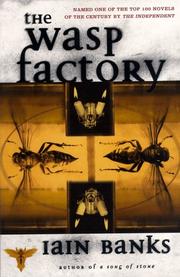
His debut and most iconic mainstream novel: a short, shocking, brilliantly constructed psychological thriller. Start here — it is the purest distillation of his dark imagination and his interest in constructed identity.
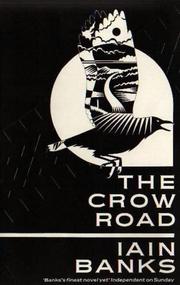
A warmer, more expansive family saga and mystery set in Scotland, widely considered his most humane mainstream novel. A necessary counterweight to The Wasp Factory's bleakness.
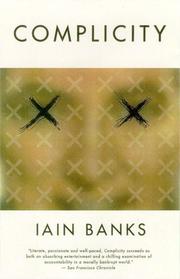
A razor-sharp political thriller about journalism, complicity, and moral responsibility in Thatcher's Britain — his mainstream themes at their most directly political, resonating strongly with the Culture's ethical debates.
Discussion
Keep reading
Paths that share books, cover the same subject, or open a related topic.