Sharpe Reading Order: Publication or Chronological?
This curriculum guides a beginner through Bernard Cornwell's Sharpe series by first establishing the world and characters through the most celebrated entry points, then following the full publication order to experience the series as fans originally did, and finally exploring the campaign chronology to appreciate Sharpe's life as a complete narrative arc. Each stage builds familiarity with Cornwell's prose, the Napoleonic world, and Sharpe himself before tackling the deeper chronological sweep.
The Perfect Entry Point
BeginnerGet hooked on Sharpe's voice, Cornwell's fast-paced style, and the Napoleonic military world without needing any prior knowledge of the series.
▸ Study plan for this stage
Pace: 6–8 weeks total (~20–25 pages/day, reading casually but consistently): Week 1–2 for Sharpe's Rifles, Week 3–4 for Sharpe's Eagle, Week 5–6 for Sharpe's Gold, with Week 7–8 as flex time for re-reading favourite passages, journaling, and completing exercises.
- Richard Sharpe as an outsider-hero: understanding how his promotion from the ranks in Sharpe's Rifles makes him both exceptional and perpetually resented by the officer class, driving his character arc across all three books.
- Cornwell's 'in media res' action style: recognising how each novel opens at speed, drops the reader into physical and tactical danger immediately, and uses action scenes to reveal character rather than pause it.
- The Napoleonic military world — basics: learning the fundamental units (company, battalion, regiment), weapons (Baker rifle vs. Brown Bess musket), and battlefield tactics (line vs. column, volley fire) as depicted across all three novels.
- The Chosen Men as a found family: tracking the ensemble of Harper, Hagman, Harris, and others in Sharpe's Rifles and how Cornwell uses this tight group to humanise the brutality of Peninsular War soldiering.
- Patrick Harper's role as foil and anchor: appreciating how Harper's relationship with Sharpe — born of conflict in Sharpe's Rifles and cemented in Sharpe's Eagle — provides emotional grounding and Irish-British political subtext.
- The Peninsular War as setting and antagonist: mapping the geography and stakes of the Iberian campaign as Cornwell presents them — from the Spanish guerrilla context in Sharpe's Rifles and Sharpe's Gold to the allied command tensions in Sharpe's Eagle.
- Cornwell's use of historical framing: noticing how each novel is anchored to a real event or objective (the retreat to Corunna, the Battle of Talavera, the guerrilla gold supply lines) and how fictional characters interact with real history.
- Moral ambiguity and class conflict: identifying how Sharpe's Gold and Sharpe's Eagle in particular force Sharpe into ethical grey zones — following orders vs. doing what is right — that define Cornwell's view of war.
- By the end of Sharpe's Rifles, why does Sharpe take command of the Chosen Men, and what does his leadership style in that novel reveal about his strengths and insecurities as an officer?
- In Sharpe's Eagle, what is the symbolic and military significance of capturing a French Imperial Eagle, and how does Cornwell use that objective to structure the entire novel's tension?
- How does Cornwell differentiate the Baker rifle from the standard musket across these three books, and why does that difference matter tactically and socially for Sharpe's identity?
- Trace Patrick Harper's attitude toward Sharpe from their first confrontation in Sharpe's Rifles to their partnership in Sharpe's Eagle — what changes, and what causes the shift?
- In Sharpe's Gold, who are the guerrilleros and why is securing their cooperation so dangerous and morally complicated for Sharpe and his men?
- How does Cornwell make the reader feel the chaos and lethality of Napoleonic battle without losing narrative clarity — pick one battle scene from any of the three books and explain the techniques he uses.
- Map it out: After finishing each book, sketch a rough hand-drawn map of the key locations mentioned (e.g., the retreat route in Sharpe's Rifles, the Tagus river area in Sharpe's Eagle, the Spanish highlands in Sharpe's Gold). Label where each major action scene takes place to build a physical sense of the campaign.
- Character relationship web: Draw a relationship diagram for Sharpe's Rifles listing every named Chosen Man and their one defining trait or moment. Update the diagram after each subsequent book to track who grows, who dies, and who changes.
- Vocabulary log — military & period terms: Keep a running glossary of unfamiliar military terms as you read (e.g., 'voltigeur', 'skirmisher', 'picket', 'forage'). After all three books, write a one-paragraph 'battlefield briefing' using at least ten of your logged terms.
- Scene re-read & craft analysis: Choose one action scene from Sharpe's Eagle (the Talavera battle sequence is ideal) and re-read it slowly, annotating in the margins or on sticky notes: Where does Cornwell use short sentences to accelerate pace? Where does he slow down and why? Write a half-page reflection on what you notice.
- Sharpe's moral ledger: For each book, list two decisions Sharpe makes that are ethically questionable and two that show clear moral courage. At the end of Sharpe's Gold, write a short paragraph arguing whether Sharpe is, on balance, a good man or simply an effective soldier.
- Reader's prediction journal: Before starting each new chapter (try this for at least one full section of Sharpe's Gold), write one sentence predicting what you think will happen next. After finishing the book, flip back through your predictions — note where Cornwell surprised you and how he set up or subverted your expectations.
Next up: Completing these three novels gives the reader Sharpe's origin, his core relationships, and a feel for Cornwell's rhythm, making them ready to follow Sharpe into more complex campaigns, larger casts, and deeper historical events in the next stage of the series.
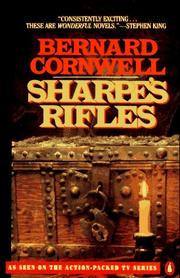
The first book written about Sharpe's Peninsular War adventures and the natural starting point for new readers — it introduces Richard Sharpe as an officer, establishes his relationship with the Chosen Men, and sets the tone for the entire series.
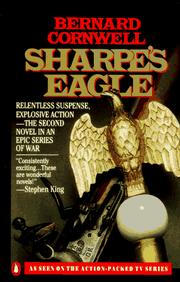
The second published Peninsular novel and the one that defined the series' formula: a clear mission, a memorable villain, and a climactic battle. Reading it second cements the characters and raises the stakes.

The third published entry deepens the Peninsular campaign and introduces the guerrilla warfare dimension of the war in Spain, broadening the reader's sense of the world Sharpe inhabits.
Publication Order — The Peninsular Core
BeginnerFollow the series in the order Cornwell wrote it, experiencing the Peninsular War novels that made Sharpe famous and understanding why publication order rewards readers with escalating character depth.
▸ Study plan for this stage
Pace: 6–8 weeks total; roughly 2–3 weeks per novel at ~20–25 pages per day. Sharpe's Company (~280 pp): weeks 1–2. Sharpe's Sword (~300 pp): weeks 3–4. Sharpe's Enemy (~320 pp): weeks 5–7. Reserve week 8 for review, reflection, and exercises.
- Publication order vs. chronological order: Cornwell wrote these three novels early in the series, so they reflect his growing confidence with Sharpe's voice — reading them in this order lets you watch the character deepen in real time.
- The Siege as narrative engine: Sharpe's Company centres on the brutal siege of Badajoz, introducing the reader to Cornwell's unflinching depiction of Napoleonic set-piece warfare and the chaos of a storm assault.
- Sharpe's rivalry and identity: The struggle with Obadiah Hakeswill in Sharpe's Company is one of the series' defining antagonist arcs — Hakeswill embodies institutional cruelty and the class injustice Sharpe has always fought against.
- Intelligence, espionage, and the duel of minds: Sharpe's Sword shifts the action to the spy world surrounding the French agent Leroux, showing that Cornwell's Peninsular War is as much about information as firepower.
- Sharpe's vulnerability and mortality: The near-fatal wounding in Sharpe's Sword forces both Sharpe and the reader to confront that heroism has a physical cost — a tonal shift that adds psychological weight.
- The civilian theatre of war: Sharpe's Enemy moves the conflict away from formal battle lines into a hostage crisis in the mountains, broadening the moral canvas to include deserters, bandits, and non-combatants caught between armies.
- Female characters as moral anchors: Across all three novels — Teresa, La Marquesa, Josefina, and others — women serve not merely as love interests but as tests of Sharpe's loyalty, judgment, and humanity.
- Escalating emotional stakes through publication order: Each successive novel raises the personal cost for Sharpe (rank, love, friendship, near-death), rewarding readers who follow Cornwell's own compositional arc rather than the in-universe timeline.
- In Sharpe's Company, how does Cornwell use the siege of Badajoz to expose the tension between military discipline and the savagery that discipline is meant to contain — and what does Hakeswill represent within that tension?
- How does Sharpe's relationship with the men of the South Essex regiment evolve across the three novels, and what does Harper's loyalty specifically reveal about Sharpe's leadership style?
- In Sharpe's Sword, why is the French spy Leroux a more psychologically complex antagonist than Hakeswill, and how does Cornwell use the espionage plot to comment on the nature of loyalty?
- What narrative and thematic purpose does Sharpe's near-fatal wounding serve in Sharpe's Sword — how does it change the reader's relationship with the protagonist going into Sharpe's Enemy?
- In Sharpe's Enemy, how does Cornwell use the hostage crisis and the mixed band of deserters to complicate the clean 'British good, French bad' moral framework of a straightforward war novel?
- Taken together, how do these three novels demonstrate Cornwell's maturing craft — in prose style, pacing, and character interiority — compared with what a reader might expect from a simple adventure series?
- Battle-map sketching: For each major engagement (the Badajoz storm in Sharpe's Company, the Salamanca-area skirmishes in Sharpe's Sword, the mountain standoff in Sharpe's Enemy), draw a rough sketch map using the text's geographical clues. Compare your maps to historical maps of the Peninsular War to see how closely Cornwell tracks real terrain.
- Antagonist comparison journal: Keep a running journal entry for Hakeswill (Sharpe's Company) and Leroux (Sharpe's Sword). After finishing each book, write 200–300 words on what each villain fears, wants, and represents thematically — then write a short paragraph comparing the two.
- Narrative voice close-reading: Select one action scene and one quiet/reflective scene from each of the three novels. Annotate them for sentence length, point-of-view distance, and sensory detail. Write a one-page note on how Cornwell's prose style shifts (or stays consistent) across the three books.
- Character relationship timeline: Create a simple timeline or relationship diagram tracking Sharpe's key personal relationships (Harper, Teresa, La Marquesa, Hakeswill) across all three novels. Note where each relationship advances, strains, or breaks — and what that moment costs Sharpe.
- Historical context pairing: Read a short non-fiction account of the real siege of Badajoz (freely available in Wellington's dispatches or online encyclopaedias). Write a one-page comparison: what did Cornwell include, what did he omit, and why might those choices serve the novel's emotional goals?
- Publication-vs-chronology reflection essay: After finishing all three novels, write a 400–500 word personal essay arguing whether a new reader should start with these Peninsular Core novels (publication order) or with the chronologically earlier Sharpe's Rifle. Use specific scenes from the three books to support your argument.
Next up: Completing these three Peninsular Core novels gives the reader a firm emotional and thematic baseline — Sharpe's class struggle, his battlefield competence, and his personal losses — which makes the earlier origin stories (or later campaign novels) land with far greater resonance, because every new detail recontextualises a character the reader already knows intimately.

Introduces Sergeant Hakeswill, one of fiction's great villains, and the brutal siege of Badajoz — a pivotal moment that raises the emotional and moral stakes of the series.
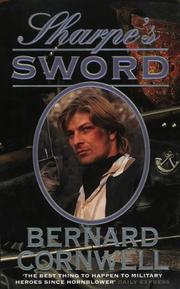
Often cited as one of the finest entries, this novel puts Sharpe in mortal danger and explores his vulnerability, making it essential reading before tackling the later, more complex books.
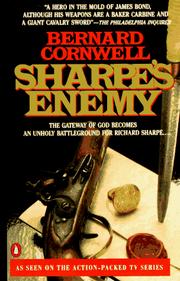
A fan favourite that brings back Hakeswill for a climactic confrontation and resolves several long-running threads — the payoff only works if you've read the earlier books first.
Publication Order — Waterloo and Beyond
IntermediateComplete the publication-order journey through Sharpe's greatest battles, culminating in Waterloo, so you understand the full arc Cornwell intended readers to experience.
▸ Study plan for this stage
Pace: 4–5 weeks total: Week 1–1.5 — Sharpe's Honour (~30 pages/day); Week 2–2.5 — Sharpe's Regiment (~30 pages/day); Week 3–4 — Sharpe's Waterloo (~35 pages/day, allowing extra time for the climactic battle sequences and reflection).
- Publication-order intentionality: Cornwell structured these three novels to escalate Sharpe's personal and military stakes toward a definitive climax at Waterloo, and reading them in this order reveals that deliberate dramatic architecture.
- Honour, reputation, and identity in Sharpe's Honour: the novel strips Sharpe of his rank and good name, forcing him to operate as a spy and fugitive in Spain, which tests whether his identity is defined by his uniform or his character.
- Institutional corruption vs. individual integrity in Sharpe's Regiment: the home-front setting exposes the rot within the British Army's recruitment and regimental system, contrasting sharply with the battlefield heroism Sharpe embodies.
- The Hundred Days campaign and Napoleonic endgame in Sharpe's Waterloo: Cornwell uses the battle as both historical capstone and personal culmination, showing Sharpe as a witness-participant to the defining engagement of the era.
- Prince of Orange as a study in incompetent command: Sharpe's Waterloo uses the historically documented failures of the Prince to dramatise how poor leadership costs lives, giving Sharpe a personal antagonist who represents systemic failure.
- Moral ambiguity and the cost of victory: across all three novels Cornwell refuses easy triumphalism — victories in Spain, London, and Belgium each carry heavy human and ethical prices.
- Cornwell's use of historical scaffolding: each novel is anchored to documented events (the Vitoria aftermath, the 1813 recruiting crisis, the Waterloo order of battle), and tracing where fiction meets fact deepens appreciation of the craft.
- Character arc completion: these three books collectively bring Sharpe from a disgraced officer to a survivor of history's most famous battle, closing the publication-order journey Cornwell began with Sharpe's Rifle.
- In Sharpe's Honour, how does Cornwell use Sharpe's false death and fugitive status to interrogate what honour actually means for a man of Sharpe's class and background, and how is that theme resolved by the novel's end?
- Sharpe's Regiment shifts the action away from the Peninsula entirely — what does Cornwell achieve narratively and thematically by placing Sharpe inside the British military bureaucracy at home, and how does this setting change the nature of the antagonism Sharpe faces?
- How does Cornwell balance Sharpe's fictional personal story with the documented historical record in Sharpe's Waterloo, and at what moments does the tension between those two layers feel most acute?
- Across all three novels, how does Cornwell portray the relationship between individual courage and institutional failure — and which specific scenes best crystallise that tension?
- The Prince of Orange is one of Cornwell's most pointed historical villains in Sharpe's Waterloo. How does Cornwell use him to comment on class, command, and the arbitrary nature of military authority?
- Having now read these three novels in publication order, how would you describe the overall emotional and thematic arc Cornwell constructed — and does Sharpe's Waterloo feel like a satisfying conclusion to that journey?
- Honour audit: After finishing Sharpe's Honour, list every character who invokes the concept of 'honour' and write one sentence on what each means by it. Compare those definitions — whose version does the novel ultimately endorse, and why?
- Home-front map: While reading Sharpe's Regiment, sketch a simple organisational chart of the corrupt regimental system Sharpe uncovers. Annotate each node with the character responsible and their motivation. This makes the institutional critique concrete and memorable.
- Battle-order cross-reference: During Sharpe's Waterloo, keep a running log of the units and commanders Cornwell names. After finishing, check two or three against a historical source (e.g., a Waterloo order-of-battle reference or Cornwell's own historical note). Note where he is faithful and where he takes licence — and speculate why.
- Villain comparison essay (500 words): Write a short comparative piece on the antagonists across all three books. How does each villain reflect the specific world of his novel — Spanish intrigue, London corruption, Belgian battlefield politics? What does the progression of antagonists tell you about Cornwell's thematic concerns?
- Reader-response journal: At the end of each novel, write a single paragraph answering: 'What did Sharpe lose in this book, and what did he gain?' Comparing the three paragraphs side-by-side at the end of the stage will make the cumulative arc visible.
- Publication vs. chronology reflection: Now that you have completed this publication-order stage, write a one-page reflection on at least two moments where reading in publication order created a different emotional effect than chronological order would have. This primes you to engage critically with any future re-reading in in-universe chronological sequence.
Next up: Completing the publication-order journey through Waterloo gives you a firm grasp of Cornwell's intended dramatic arc and thematic priorities, which is the essential foundation for exploring the chronological-order reading path — where the prequels and gap-fillers recontextualise everything you have just experienced.

A spy-thriller turn for the series that tests Sharpe's reputation and identity — it shows Cornwell expanding the formula and is best appreciated after the earlier Peninsular novels.
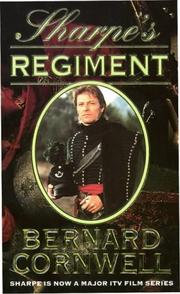
Takes Sharpe away from the front lines to England, offering a change of pace and satirical look at the British military establishment that rewards readers already familiar with the battlefield world.
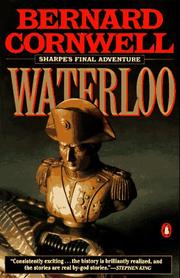
The grand finale of the original publication run — Cornwell's account of Waterloo is considered one of the best fictional treatments of the battle, and it lands with full emotional weight only after the preceding novels.
Campaign Chronology — Sharpe's Origins
IntermediateRe-read or explore the series in internal chronological order, starting with Sharpe's earliest adventures in India, to appreciate his complete biography and the richer meaning earlier events give to the Peninsular novels.
▸ Study plan for this stage
Pace: 6–8 weeks total; roughly 2–2.5 weeks per novel. Aim for 20–25 pages per sitting, 4–5 sittings per week. Each novel is ~300–340 pages, so a comfortable pace allows time for note-taking and reflection between books without losing narrative momentum.
- Sharpe's social origins and the class system: understanding how his birth as a foundling and his rank as a common soldier shape every decision, relationship, and ambition across all three novels
- The Indian subcontinent as a crucible: how the heat, chaos, and moral complexity of late 18th-century India (the siege of Seringapatam in Tiger, the aftermath of Assaye in Triumph, and the siege of Gawilghur in Fortress) forge Sharpe's tactical instincts and personal code
- The mechanics of promotion from the ranks: tracing the precise moments — Sharpe saving Wellesley's life in Tiger, his field commission in Triumph — that lift him from private to officer, and what that transformation costs him socially and psychologically
- Tipu Sultan as antagonist and mirror: in Sharpe's Tiger, Tipu is not a simple villain but a ruler defending his kingdom; reading him as a foil reveals Cornwell's moral ambiguity about empire and conquest
- The role of loyalty, betrayal, and self-interest: each novel features characters (Hakeswill in Tiger and Triumph, Dodd in Fortress) whose treachery throws Sharpe's own rough honour into sharp relief
- Wellesley/Wellington as patron and obstacle: the future Duke appears in all three books; tracking his relationship with Sharpe establishes the patron-client dynamic that will echo throughout the Peninsular novels
- Siege warfare and Cornwell's battle craft: all three novels climax in or around a siege (Seringapatam, the aftermath of Assaye, Gawilghur); noting how Cornwell structures action sequences, uses terrain, and grounds tactics in historical record is essential for appreciating later Peninsular set-piece
- The psychological cost of violence: Sharpe is repeatedly forced to kill, deceive, and survive in morally compromised situations; tracking his emotional numbness and occasional guilt across the trilogy reveals a character study beneath the adventure narrative
- By the end of Sharpe's Tiger, what specific act of courage and what stroke of luck combine to save Sharpe from execution and set his promotion in motion — and how does Cornwell use this to comment on the arbitrariness of military advancement?
- How does Sergeant Obadiah Hakeswill function across Sharpe's Tiger and Sharpe's Triumph — what does his near-supernatural resilience and institutional protection say about the British Army's tolerance of cruelty within its own ranks?
- In Sharpe's Triumph, Cornwell depicts the aftermath of the Battle of Assaye, which Wellington himself called his finest victory. How does the novel use Sharpe's ground-level perspective to complicate or humanise the official heroic narrative of that battle?
- Colonel Dodd in Sharpe's Fortress is a British officer who has defected to the Marathas. What does his character reveal about the fragility of the loyalty and identity that Sharpe is simultaneously trying to construct for himself?
- Across all three novels, how does Sharpe's relationship with Indian soldiers, civilians, and culture differ from that of the officers around him — and what does this difference foreshadow about his later outsider status among the British officer class in the Peninsular War?
- Having read the India trilogy in internal chronological order, identify two or three specific moments or character traits established here that you expect will resurface or be referenced in the Peninsular novels — and explain why Cornwell plants them so early.
- Biographical timeline: Create a single running document — a 'Sharpe dossier' — and update it after each novel. Record rank, key wounds or traumas, significant relationships formed or broken, and moral lines crossed. By the end of Sharpe's Fortress you should have a vivid one-page biography that you can carry into later reading.
- Antagonist comparison chart: Draw a three-column table, one column per novel, and map each primary antagonist (Tipu Sultan, the treacherous Hakeswill/the Mahratta commanders, Colonel Dodd). For each, note their motivation, their method of threatening Sharpe, and whether Cornwell grants them any sympathy. Write a short paragraph on what this pattern reveals about Cornwell's moral worldview.
- Historical cross-reference exercise: After finishing Sharpe's Tiger, read a short external account (encyclopedia article or reputable website) of the actual Siege of Seringapatam (1799). List three things Cornwell changed or invented and consider why — this trains the skill of reading historical fiction critically rather than as history.
- Wellesley tracking log: Each time Arthur Wellesley (the future Duke of Wellington) appears in any of the three novels, note the page, what he says or does, and how Sharpe perceives him. After Sharpe's Fortress, write a 200-word character sketch of Wellesley as seen exclusively through Sharpe's eyes — this will be invaluable when Wellesley reappears commanding the Peninsular army.
- Battle-map sketching: For the climactic siege or battle in each novel (Seringapatam, Assaye's aftermath at Argaum, Gawilghur), sketch a rough map from Cornwell's descriptions — walls, gates, rivers, troop positions. This active reading technique sharpens attention to tactical detail and makes later Peninsular battle sequences far easier to visualise.
- Voice and class journal: Select one passage per novel in which Sharpe's internal voice or dialogue reveals his working-class origins clashing with military or social expectations. Copy the passage out by hand, then write three sentences on how the specific word choices Cornwell uses signal class tension. Collect all three entries; they form a mini-essay on Cornwell's characterisation method.
Next up: Completing the India trilogy gives the reader Sharpe's fully formed backstory — his rank, his scars, his grudges, and his patron — so that when the curriculum moves into the Peninsular novels, every reference to his past carries earned biographical weight rather than mere backstory exposition.

Written late in the series but set first chronologically — the siege of Seringapatam in 1799 reveals Sharpe's origins as a private soldier in India and is the logical start of the campaign chronology.
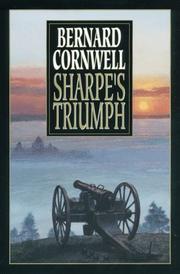
Follows Tiger chronologically, covering the Battle of Assaye in 1803, and deepens the India arc — reading it here shows how Sharpe's character was forged long before the Peninsula.
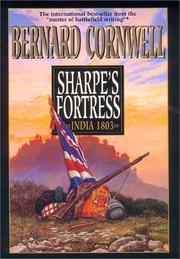
Completes the India trilogy chronologically, closing out Sharpe's early career and making the transition to the Peninsular War feel like a natural, earned progression.
The Bigger Picture — Context and Craft
ExpertUnderstand the real history behind the novels and Cornwell's craft as a historical novelist, allowing you to appreciate both what is invented and what is meticulously researched.
▸ Study plan for this stage
Pace: 2–3 weeks, ~20–25 pages/day — Waterloo is a non-fiction work (~320 pages) but is dense with historical detail, maps, and primary-source quotations; a measured pace allows cross-referencing with the Sharpe novels read in earlier stages
- The actual chronology and geography of the Waterloo campaign (June 15–18, 1815), including the battles of Quatre Bras and Ligny that precede the final engagement — context that Cornwell embeds fictionally throughout the Sharpe series
- How Cornwell uses primary sources — eyewitness letters, diaries, and dispatches from figures such as Wellington, Napoleon, and common soldiers — to reconstruct events, and how he signals the boundary between documented fact and authorial invention
- The mechanics of Napoleonic warfare: line vs. column tactics, the role of skirmishers (the world Sharpe inhabits), artillery deployment, and cavalry charges — understanding these makes every Sharpe battle scene legible as deliberate craft rather than action spectacle
- Wellington's command style and personality as Cornwell presents them, and how the fictional Sharpe's relationship with Wellington reflects real tensions between the aristocratic officer class and promoted rankers
- The fog of war as a historiographical problem: Cornwell demonstrates how contradictory the surviving accounts are, which illuminates why a novelist must make interpretive choices and why Sharpe's perspective is always partial and ground-level
- Cornwell's authorial voice in non-fiction vs. fiction — comparing his narrative prose in Waterloo with his storytelling in the Sharpe novels reveals his techniques for pacing, suspense, and characterisation transplanted from one mode to the other
- The myth-making around Waterloo (national narratives, the 'nearest run thing' legend, the lionisation of Wellington) and how Cornwell both draws on and interrogates those myths across the Sharpe series
- The human cost of industrial-scale Napoleonic battle — casualty figures, medical realities, and the experience of the common soldier — which underpins the moral seriousness beneath the adventure-novel surface of the Sharpe books
- According to Cornwell's account in Waterloo, what were the critical command decisions — on both the Allied and French sides — that determined the outcome of June 18, 1815, and how do those decisions echo in the way he constructs fictional turning-points in the Sharpe novels?
- How does Cornwell handle contradictory eyewitness accounts in Waterloo, and what does his method reveal about the interpretive license he grants himself as a historical novelist?
- What role do skirmishers and light infantry play in the Battle of Waterloo as described in the book, and why is Sharpe's identity as a rifleman/light infantryman so strategically significant within the real history Cornwell depicts?
- How does Cornwell's portrait of Wellington in Waterloo compare with the Duke's appearances in the Sharpe novels — where does the non-fiction portrait confirm the fiction, and where does the fiction take liberties?
- What does Waterloo reveal about the experience of the ordinary soldier (rations, fear, chaos, wounds) that contextualises the physical and psychological texture Cornwell gives Sharpe throughout the series?
- How does reading Waterloo change or deepen your understanding of Cornwell's craft — specifically his choices about point of view, the limits of what a single character can witness, and the way he manufactures narrative tension from historically determined outcomes?
- Annotation exercise: As you read Waterloo, flag every passage where Cornwell explicitly cites a primary source. Then revisit a battle chapter from any earlier Sharpe novel and identify which details are likely drawn from those same sources versus invented for dramatic effect — write a one-page comparison.
- Map work: Using the maps provided in Waterloo, trace the positions of the Allied, French, and Prussian forces at each major phase of June 18. Then sketch where a character like Sharpe (a rifle officer attached to Wellington's staff) could plausibly have stood and what he could and could not have seen — this directly tests Cornwell's point-of-view choices.
- Primary source dialogue: Find one eyewitness account quoted in Waterloo (e.g., a soldier's letter or a staff officer's dispatch) and write a short scene (500–700 words) in Cornwell's Sharpe style that fictionalises the same moment — then reflect on what you had to invent and why.
- Myth vs. history essay: Cornwell addresses the mythology surrounding Waterloo throughout the book. Write a 400–600 word essay identifying one persistent myth he challenges and arguing whether the Sharpe novels reinforce or subvert that same myth.
- Craft comparison: Select one chapter from Waterloo and one battle sequence from a Sharpe novel covering the same campaign period. Analyse sentence length, paragraph rhythm, use of named individuals, and handling of time — produce a brief (one page) stylistic comparison that articulates what changes and what stays the same between Cornwell's non-fiction and fiction voices.
- Reading journal synthesis: At the end of Waterloo, write a 'director's commentary' entry of 300–500 words as if you were Cornwell, explaining three specific choices you made in the Sharpe series that Waterloo's research either validates or complicates.
Next up: Mastering the real history and Cornwell's research methodology in Waterloo equips the reader to engage critically with the full Sharpe series as a unified body of work — evaluating not just individual novels but the entire arc of Cornwell's achievement as a historical novelist who balances fidelity to the past with the demands of compelling fiction.
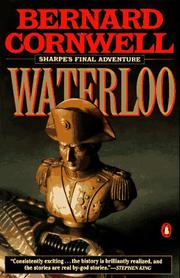
Cornwell's own non-fiction account of Waterloo — reading this after the Sharpe novels reveals exactly where fiction ends and history begins, and deepens appreciation of Sharpe's Waterloo enormously.
Discussion
Keep reading
Paths that share books, cover the same subject, or open a related topic.