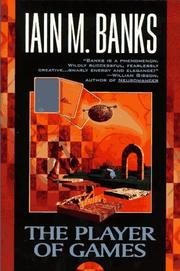
Start with The Player of Games. It is the second Culture novel rather than the first, and it is the near-universal recommendation of people who have read all of them, for a simple reason: it is the book that actually shows you what the Culture is. A bored games champion is manoeuvred into playing an empire's ruling game, and through him you get the Culture's abundance, its Minds, its casual amorality and its self-satisfaction, laid out clearly and entertainingly.
Consider Phlebas was published first and is the standard trap. It is a picaresque chase narrative told from the point of view of a mercenary who hates the Culture, and it deliberately withholds a sympathetic view of the civilisation the series is named after. It is also structurally baggy, with famously grim set pieces that go nowhere. Plenty of readers bounce off it and conclude the series is not for them, which is a shame, because it is not representative.
Does order matter at all?
Barely. The Culture novels are standalone. There is no continuing cast, no plot arc across the books, and only glancing chronological references between them. You can read them in almost any sequence. This is unusual and freeing, and it means the only real decision is which book to read first and which to read second.
A workable order: The Player of Games, then Use of Weapons, then Consider Phlebas if you want it, then Excession, Look to Windward, Surface Detail, and the story collection The State of the Art. Two later novels, Matter and The Hydrogen Sonata, are not currently in our catalogue; both fit anywhere. Banks published them as Iain M. Banks, with the middle initial reserved for his science fiction; his literary novels appeared under the plain name.
The one you should not read early
Inversions is a Culture novel in disguise — set in a medieval-level society, with the science fiction visible only if you know what to look for. It is a good book and it is an appalling introduction, because the entire pleasure depends on recognising things you have not yet learned. Read it fifth or later.
Excession is the other one to place carefully. It is the Minds novel, largely told through message traffic between hyperintelligent ship AIs, and it is the funniest and most conceptually dense of the series with the weakest human characters. Excellent fourth or fifth book, frustrating first.
Honest warnings
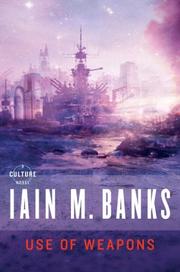
Use of Weapons is the best of them and the hardest. It runs two alternating timelines, one moving forward and one moving backward, converging on a revelation that recontextualises the whole novel. Some readers find the structure obtrusive and the ending a cheap shock. Most find it devastating. Either way, do not read it first, and do not read a summary.
Banks is drawn to atrocity. Torture, body horror and extended cruelty appear regularly and are described with more precision than most readers expect from space opera. Surface Detail is largely about virtual hells and means it.
The politics are not incidental. The Culture is an argument for a post-scarcity anarchist utopia, and the books spend real time on whether it has any right to interfere in less developed societies. If you want apolitical space adventure, this is not it.
Where to stop
Anywhere. Because the books are independent, there is no incomplete arc to be trapped in — read three and stop, or read all of them. Banks died in 2013, so the series is closed at nine novels plus the collection.
For a very different sort of long series afterwards, try the Sharpe novels.
Follow the full ordered path here: The Culture Reading Order: Where to Start.