Start with Master and Commander. There is no ambiguity here: Patrick O'Brian's twenty novels run in strict chronological sequence, publication order matches internal order, and the first book is the one where Jack Aubrey and Stephen Maturin meet — badly, at a concert in Port Mahon, nearly fighting a duel before they become friends. Everything after depends on that scene.
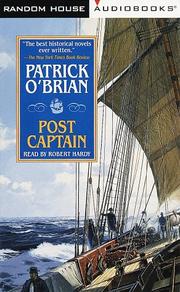
The one genuine warning worth giving up front is about the second book, not the first. If you love Master and Commander and then stall halfway through Post Captain, you are having the standard experience, and you should not conclude the series is not for you.
The sequence
The novels run: Master and Commander, Post Captain, H.M.S. Surprise, The Mauritius Command, Desolation Island, The Fortune of War, The Surgeon's Mate, The Ionian Mission, Treason's Harbour, The Far Side of the World, The Reverse of the Medal, The Letter of Marque, then The Thirteen-Gun Salute, The Nutmeg of Consolation, The Truelove (published in Britain as Clarissa Oakes), The Wine-Dark Sea, The Commodore and The Yellow Admiral, and finally The Hundred Days and Blue at the Mizzen. Those six middle titles are not currently in our catalogue, but they are not optional — they contain the long circumnavigation that is some of O'Brian's best writing.
There is also a fragment, published as 21 or The Final Unfinished Voyage of Jack Aubrey, printed with the author's manuscript pages. It is for completists only.
The Post Captain problem
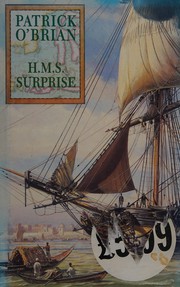
Book two takes the pair ashore into debt, courtship and a plot that behaves like a Jane Austen novel with cannon in it. Readers who came for ship handling find it slow and socially claustrophobic. Read it anyway: the relationships it establishes with Sophie and Diana Villiers drive fifteen subsequent books, and Maturin's intelligence work begins here. If you truly cannot, skip to H.M.S. Surprise — widely regarded as the point where O'Brian finds full command of the form — and come back to Post Captain later. That is the only skip anyone should endorse.
Is there an order controversy?
No, and be suspicious of anyone who invents one. Unlike Hornblower or Sharpe, these were written and published in the order they occur. The only real structural oddity is that O'Brian eventually ran out of Napoleonic calendar and quietly used what he called an imaginary 1812a, so a few late books occupy a year that historically has no room for them. It changes nothing about how you read.
Honest warnings
The naval vocabulary is genuinely dense and O'Brian refuses to explain it. Do not look up every term. Most readers report that after two or three books the rigging language becomes atmosphere you can read past, and comprehension arrives by immersion. A good annotated companion helps if you want one, but it is not required.
The pacing is also not modern. Whole chapters are dinners, arguments about beetles, and the slow decay of a marriage. That is the substance of the series rather than filler around the battles.
Where to stop
There is no natural early exit — the books are one long novel and the quality holds remarkably well to the end. The Hundred Days is weaker and shows signs of a tiring author. Blue at the Mizzen is a graceful close. Stop there.
If you want the same period from the infantry's side afterwards, the obvious next stop is the Sharpe novels, which are faster, cruder and enormously entertaining.
Follow the full ordered path here: Aubrey-Maturin Reading Order: Where to Start.