Best Books on the Cuban Missile Crisis, in Order
This curriculum takes a beginner from the essential narrative of the Cuban Missile Crisis through the declassified ExComm transcripts, the Soviet and Cuban perspectives, and finally the cutting-edge scholarship on just how close the world came to nuclear war. Each stage builds the factual and conceptual scaffolding needed to absorb the deeper, more technical works that follow — so by the end the reader can engage with primary sources and historiographical debates like a seasoned scholar.
Foundations: The Essential Narrative
BeginnerUnderstand the basic chronology, key players, and dramatic arc of the thirteen days — building the vocabulary and mental map needed for everything that follows.
▸ Study plan for this stage
Pace: 4–5 weeks, ~40–50 pages/day. Week 1–2: "One Minute to Midnight" (approx. 400 pages); Week 3–4: "Thirteen Days" (approx. 150 pages); Week 5: Review and synthesis.
- The thirteen-day timeline: October 16–28, 1962, and the sequence of escalation from discovery to resolution
- Key players and their roles: Kennedy, Khrushchev, Castro, ExComm members, and how their personalities shaped decisions
- The strategic context: U.S. missile superiority, Soviet insecurity, and the logic of nuclear brinkmanship
- The blockade (quarantine) as the chosen middle path between invasion and inaction
- The role of intelligence: U-2 spy flights, photo evidence, and how information shaped perception and choice
- Kennedy's decision-making process: how ExComm deliberated, disagreed, and reached consensus under pressure
- The Cuban perspective: Castro's motivations and the limits of Soviet-Cuban alignment
- The resolution: the public deal (missiles out, no invasion) and the secret deal (Turkey missiles)
- What was the sequence of major events from October 16 to October 28, 1962, and what triggered each escalation?
- Who were the main figures in Kennedy's ExComm, and what were their key positions on how to respond to the missiles?
- How did the U.S. discover Soviet missiles in Cuba, and why was photographic evidence so crucial to the decision-making process?
- What was the blockade (quarantine), and why did Kennedy choose it over the alternatives of invasion or air strikes?
- How did Kennedy and Khrushchev communicate during the crisis, and what role did their personal understanding play in de-escalation?
- What was the final settlement, and what did each side gain or concede—publicly and privately?
- Create a detailed timeline: Plot every major event from October 16–28 on a single page, noting the time of day, the decision made, and who made it. Use both Dobbs and Kennedy as sources.
- Character map: Write one-paragraph profiles of Kennedy, Khrushchev, Castro, and three ExComm members (e.g., McNamara, Rusk, Curtis LeMay). Note their background, their stance during the crisis, and one key decision they influenced.
- Decision tree: Diagram the three main options Kennedy faced (invasion, air strikes, blockade) with the pros and cons of each, as presented in the books. Annotate with which advisors favored which option.
- Photo analysis: Find the actual U-2 reconnaissance photos referenced in Dobbs and Kennedy. Write a short analysis of what they show and why they were so persuasive to the ExComm.
- Comparative perspective: Write a 2–3 page reflection comparing Kennedy's account in 'Thirteen Days' with Dobbs's historical narrative in 'One Minute to Midnight.' Where do they agree? Where do they differ in emphasis or interpretation?
- Simulation prep: Prepare a one-page brief for a mock ExComm meeting (to be conducted in the next stage): summarize the intelligence, the stakes, and the three options, as if you were briefing the president on October 16.
Next up: This stage equips you with the factual skeleton and cast of characters; the next stage will deepen your analysis of decision-making under uncertainty, the role of miscalculation and communication, and the broader Cold War context that made this crisis possible.

A gripping, deeply reported day-by-day account that reads like a thriller — the perfect entry point for a beginner because it humanizes all sides (American, Soviet, Cuban) without requiring prior Cold War knowledge.
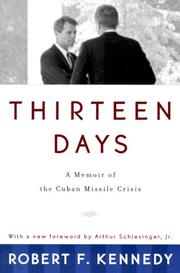
The classic insider memoir by a key ExComm participant; short and vivid, it gives the reader an immediate feel for the pressure inside the White House and introduces the ExComm dynamic before tackling the actual transcripts.
Inside the Room: The ExComm Tapes and Decision-Making
IntermediateEngage with the actual deliberations of Kennedy's Executive Committee — understanding how decisions were really made, what options were debated, and how close the U.S. came to choosing air strikes or invasion.
▸ Study plan for this stage
Pace: 4–5 weeks, ~40–50 pages/day. Start with "The Kennedy Tapes" (approximately 400 pages over 2 weeks), then move to "The Armageddon Letters" (approximately 300 pages over 2–3 weeks) to allow time for reflection on the recorded deliberations before engaging with the post-crisis correspondence.
- The ExComm structure and key players: roles, personalities, and how institutional position shaped each advisor's stance on military action versus diplomacy
- The tape-recorded deliberations as primary evidence: how to interpret pauses, tone, and informal remarks to understand real decision-making versus public rhetoric
- The escalation ladder of options debated: blockade, air strikes, invasion, and the reasoning behind rejecting or advancing each option
- Kennedy's decision-making process: how he synthesized conflicting advice, managed strong personalities (especially the Joint Chiefs and hawks like Curtis LeMay), and narrowed options over thirteen days
- The role of uncertainty and intelligence: how incomplete or contested information about Soviet intentions and Cuban missile capabilities shaped deliberations
- The Armageddon Letters as a window into post-crisis reflection: how key figures (Kennedy, Khrushchev, and intermediaries) understood what nearly happened and what they learned about nuclear brinkmanship
- The gap between private deliberation and public justification: how ExComm's real reasoning differed from official statements and how this shaped Cold War narratives
- What were the main options debated in ExComm, and what were the strongest arguments made for and against air strikes or invasion?
- How did Kennedy's personality, political position, and prior decisions (Bay of Pigs) influence his approach to the crisis, as revealed in the tapes?
- Who were the key 'hawks' and 'doves' in ExComm, and how did their institutional roles (military, State Department, CIA) shape their recommendations?
- What does the tone and informal language in the Kennedy Tapes reveal about the real stakes, fears, and uncertainties that ExComm members felt during the crisis?
- How did Kennedy ultimately decide on the blockade, and what role did the Armageddon Letters play in later understanding of why this choice avoided catastrophe?
- What did Kennedy and Khrushchev learn about each other and about nuclear risk from the crisis, as reflected in their post-crisis correspondence?
- Listen to or read excerpts from the actual Kennedy Tapes (available in the May edition) and annotate 2–3 key passages, noting: (a) who speaks, (b) what option they advocate, (c) what evidence or reasoning they cite, and (d) how their tone suggests confidence or doubt.
- Create a timeline of the thirteen days of the crisis using both books, marking when each major option (blockade, air strikes, invasion) was seriously considered, who championed it, and what new information or argument shifted the discussion.
- Compare ExComm's private deliberations (from the Tapes) with Kennedy's public statements during the crisis (e.g., his October 22 address). Write a 500-word analysis of what was hidden from the public and why.
- Role-play an ExComm meeting: assign yourself and peers the roles of Kennedy, McNamara, Bundy, LeMay, and Rusk. Debate the blockade versus air strikes using only the arguments and information available on Day 3 of the crisis (before the blockade was chosen). Reflect on how uncertainty and personality shaped the outcome.
- Read and annotate the Armageddon Letters, identifying 3–4 moments where Kennedy or Khrushchev explicitly reflect on how close they came to war or what they misunderstood about the other side. Write a brief note on how each letter reveals a shift in thinking.
- Create a 'decision matrix' showing the key variables ExComm weighed: military risk, political cost, Soviet response, Cuban sovereignty, and nuclear escalation risk. For each option (blockade, air strikes, invasion), estimate how ExComm members ranked these variables and explain why the blockade won.
Next up: This stage grounds you in the intimate, real-time decision-making of the crisis, preparing you to examine how the crisis was interpreted, justified, and mythologized in the decades that followed—and how different actors' memories and narratives diverged from what the tapes and letters actually reveal.
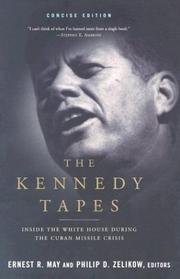
May and Zelikow's edited transcription of the actual ExComm recordings is the essential primary source; reading it after the narrative foundations means the reader can follow the debates without getting lost in the jargon.

Reconstructs the crisis through the letters and voices of Kennedy, Khrushchev, and Castro, bridging the gap between the American ExComm record and the perspectives of the other two principals.
The Other Side: Soviet and Cuban Perspectives
IntermediateUnderstand Khrushchev's motivations, the Soviet military's actions during the crisis (including the submarine incident), and Castro's role — correcting the America-centric view built in earlier stages.
▸ Study plan for this stage
Pace: 6–7 weeks, ~25–30 pages/day (approximately 180–210 pages/week across both books)
- Khrushchev's strategic gamble: why he deployed missiles to Cuba as a response to U.S. missile superiority and the Berlin crisis
- Soviet military doctrine and operational planning during the crisis, including the role of Soviet submarines and the B-59 incident
- Castro's revolutionary agenda and his divergence from Soviet interests—his willingness to escalate vs. Khrushchev's preference for negotiation
- The back-channel diplomacy between Kennedy and Khrushchev (particularly through Dobrynin) that bypassed official channels and enabled resolution
- The role of miscommunication and misperception: how each side misread the other's intentions and red lines
- Soviet military presence in Cuba beyond missiles: troops, tactical nuclear weapons, and the submarine force
- The aftermath: how the crisis shaped Soviet-American relations and Soviet-Cuban relations differently
- What were Khrushchev's primary strategic objectives in deploying missiles to Cuba, and how did his perception of American military superiority drive this decision?
- Describe the role of the Soviet submarine B-59 during the crisis. What happened, and why was this incident significant for understanding Soviet military operations?
- How did Castro's goals and expectations during the crisis differ from Khrushchev's, and what does this reveal about Soviet-Cuban tensions?
- What was the significance of back-channel communications (particularly through Dobrynin) in resolving the crisis, and how did they differ from official diplomatic channels?
- What miscalculations or misperceptions did the Soviets have about American intentions, and vice versa?
- Beyond the missiles themselves, what other Soviet military assets were present in Cuba, and what was their strategic purpose?
- Create a timeline comparing Khrushchev's decision-making process (from Fursenko) with the actual military deployment and back-channel negotiations (from LeoGrande). Identify key decision points where escalation or de-escalation occurred.
- Write a 2–3 page memo from Khrushchev's perspective explaining his rationale for the missile deployment to the Soviet Politburo, using evidence from Fursenko's account of his strategic thinking.
- Map out the back-channel communication network described in LeoGrande: who spoke to whom, when, and what messages were conveyed? Compare this to the official diplomatic record.
- Analyze the B-59 submarine incident: research the event using Fursenko's military details, then write a brief account of what happened and why it mattered for the crisis outcome.
- Create a comparative chart of Soviet, Cuban, and American objectives during the crisis. Use both books to identify where interests aligned and where they conflicted, especially between Moscow and Havana.
- Conduct a 'perspective debate': prepare arguments for why the Soviets believed their actions were justified (using Fursenko) and counter-arguments from the American view, then synthesize what LeoGrande's back-channel account reveals about mutual misunderstanding.
Next up: This stage establishes the Soviet and Cuban agency in the crisis, preparing you to synthesize all three perspectives (American, Soviet, Cuban) in a final stage that examines the crisis as a truly multipolar event and its long-term consequences for Cold War strategy.
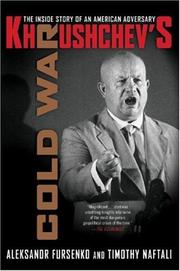
Based on Soviet archives, this is the most authoritative account of Khrushchev's strategic thinking; it reveals why he placed the missiles and how Moscow experienced the crisis — essential for a truly bilateral understanding.
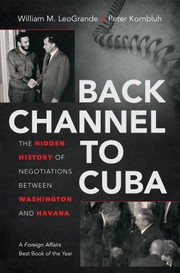
Traces the secret U.S.–Cuba communications that ran alongside and after the crisis, adding the Cuban agency that is almost entirely absent from American-focused accounts.
How Close? The Nuclear Dimension and Legacy
ExpertGrapple with the full nuclear danger — the B-59 submarine, the U-2 shootdown, the Jupiter missiles, and the accidental-war scenarios — and assess what the crisis means for nuclear risk today.
▸ Study plan for this stage
Pace: 4–5 weeks, ~40–50 pages/day. Start with "The Fog of War" (approximately 120 pages) over 2–3 weeks, then move to "Command and Control" (approximately 650 pages) over 2–3 weeks, allowing time for reflection and cross-referencing between the two works.
- The B-59 submarine incident: how miscommunication, depth charges, and the absence of direct communication nearly triggered nuclear war without either side intending it
- Robert McNamara's doctrine of rational control and its limits: how systems designed to prevent accidental war can themselves become sources of danger
- The U-2 shootdown over Cuba and the chain of command breakdown: how a single incident nearly escalated the crisis beyond Kennedy's control
- Nuclear weapons safety paradox: the tension between keeping weapons secure and keeping them ready to launch, and how this created systemic vulnerabilities
- Accidental war scenarios: the multiple near-misses during the Cuban Missile Crisis and the Cold War more broadly (false alarms, unauthorized launches, miscalculation)
- The Jupiter missiles in Turkey: the forgotten nuclear dimension that made the crisis genuinely reciprocal and raised the stakes of escalation
- Fog of war in the nuclear age: how incomplete information, fear, and time pressure compound the risks of nuclear confrontation
- Legacy and ongoing risk: what the crisis reveals about the fragility of nuclear deterrence and the persistent danger of accidental or unauthorized nuclear war
- What happened aboard the B-59 submarine during the Cuban Missile Crisis, and why did it represent a genuine risk of nuclear war that neither Kennedy nor Khrushchev fully controlled?
- How did the U-2 shootdown over Cuba on October 27 threaten to spiral the crisis beyond the Kennedy administration's ability to manage it, and what does this reveal about the limits of command and control?
- What is the nuclear weapons safety paradox, and how does Schlosser illustrate this tension through specific incidents in 'Command and Control'?
- Why were the Jupiter missiles in Turkey significant to the Cuban Missile Crisis, and how did their presence complicate the nuclear dimension of the standoff?
- What does McNamara's account in 'The Fog of War' suggest about the role of chance, miscommunication, and human fallibility in nuclear crises?
- What accidental war scenarios does Schlosser describe, and what do they suggest about the ongoing risks of nuclear weapons in the present day?
- Timeline reconstruction: Create a detailed chronology of October 27, 1962 (the most dangerous day), marking the U-2 shootdown, the B-59 depth-charge incident, and Kennedy's decision-making. Identify the moments where escalation could have become irreversible.
- Submarine simulation: Read the B-59 account carefully and write a 2–3 page narrative from the perspective of the submarine captain, explaining the pressures, fears, and information gaps that nearly led to a nuclear launch. Reflect on how different information might have changed the outcome.
- Safety system audit: Select one major nuclear weapons accident or near-miss from 'Command and Control' (e.g., the Damascus Titan II incident, a false alarm, or an unauthorized launch attempt). Map out the safety systems that existed and identify which ones failed and why.
- Jupiter missile analysis: Research and write a 2–3 page explanation of why the Jupiter missiles in Turkey were so significant to Soviet calculations during the crisis. How did their presence change the nuclear calculus compared to a scenario where they didn't exist?
- Fog of war debate: Organize a structured debate or written dialogue between two positions: (1) McNamara's view that rational actors can manage nuclear crises through clear communication and control, and (2) Schlosser's evidence that systemic vulnerabilities and human error make accidents inevitable. Use specific examples from both books.
- Legacy assessment: Write a 3–4 page reflection on what the Cuban Missile Crisis and the incidents in 'Command and Control' suggest about nuclear risk today. What vulnerabilities persist? What has changed? What should policymakers prioritize?
Next up: This stage equips readers with a granular understanding of how nuclear weapons create dangers that transcend rational calculation and political intent, preparing them to examine how different nations, doctrines, and technologies have attempted to manage (or failed to manage) these risks in subsequent eras.

While a documentary film, the companion book of Robert McNamara's reflections is a canonical text on the lessons of the crisis from its last surviving ExComm member — essential reading on miscalculation and luck.
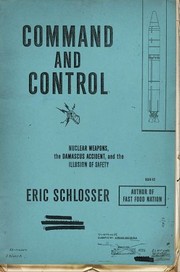
Schlosser's investigation of nuclear weapons accidents and near-misses provides the systemic, technical context for understanding exactly how close accidental nuclear war came in October 1962 and why the danger persists — the ideal capstone for a reader who now knows the full story.
Discussion
Keep reading
Paths that share books, cover the same subject, or open a related topic.