Best Books on the Chernobyl Disaster, in Reading Order
Chernobyl is two stories layered on top of each other — a specific reactor failing on a specific night, and a state deciding what its citizens were allowed to know — and the books split along that seam. This path starts with the two definitive modern accounts, moves to the testimony and the earlier reporting they are built on, then follows the contamination and the cover-up decades past 1986, and closes by placing the accident in the wider record of nuclear near-misses. Read in order, the technical detail arrives before you need it rather than after.
What actually happened
BeginnerUnderstand the RBMK reactor's design flaw, the test that triggered the explosion, and the first hours of the response — in enough detail that later accounts make sense.
▸ Study plan for this stage
Pace: Six to seven weeks. Midnight in Chernobyl is 560 pages and is worth about three weeks at 30 pages a day — the reactor physics chapters in the first third should be read slowly, because everything afterwards assumes them. Chernobyl: The History of a Nuclear Catastrophe is 432 pages and takes two to t
- The RBMK design and why it is unusual: graphite-moderated, water-cooled, no full containment building, fuelled while running, and built large and cheap for a state that wanted both power and plutonium capability
- The positive void coefficient, which is the physical heart of the disaster: in an RBMK at low power, steam voids in the coolant increase reactivity rather than reducing it, so the reaction accelerates itself. Nearly every Western design has the opposite sign and that difference is the whole story
- The control rod tip flaw — graphite followers on the ends of the boron rods meant that inserting the rods briefly increased reactivity in the lower core before reducing it. The emergency shutdown button was the final trigger
- Xenon poisoning and the low-power trap: after the power dip, xenon-135 accumulated and suppressed the reaction, so the operators withdrew rods far past the permitted margin to sustain power. The reactor was then in a configuration where the void coefficient dominated
- The turbine coastdown test itself, what it was intended to prove about station blackout, why it had been postponed repeatedly, and how a safety test became the mechanism of the accident
- Plokhy's system-level argument: the design compromises, the falsified reporting culture, the divided authority between plant management and the ministries, and the secrecy that meant operators did not know about a similar 1975 incident at Leningrad
- The evacuation of Pripyat, delayed by about 36 hours, and the decision-making chain that produced that delay — the point at which the technical story becomes a political one
- Plokhy's larger claim, which you should hold as a strong argument rather than a settled fact: the disaster and its handling accelerated the Soviet Union's collapse by discrediting the state's competence and its truthfulness, particularly in Ukraine
- Explain the positive void coefficient in your own words. Why does the sign of that coefficient determine whether a reactor is self-limiting or self-accelerating?
- What was the control rod tip flaw, and why did pressing the emergency shutdown make the situation worse?
- What is xenon poisoning, and how did it lead the operators into a configuration the reactor was not safe in?
- Reconstruct the timeline from the power dip to the explosion. How many minutes elapsed, and what decision was taken at each step?
- Plokhy argues the failure was systemic rather than operator error. What are his three strongest pieces of evidence?
- Why was the Pripyat evacuation delayed, and who had the authority to order it sooner?
- Draw the RBMK core in cross-section from Higginbotham's descriptions — fuel channels, graphite blocks, control rods, coolant circuit — and label where each of the three design flaws sits. One diagram makes the rest of the path readable.
- Write the minute-by-minute timeline from 01:00 to 01:24 on 26 April on a single page, marking each operator action and each reactor response. Higginbotham gives you everything you need and building it yourself is the only way it sticks.
- Write 200 words explaining the accident to someone with no physics, using only the void coefficient and the rod tips. If you need a third mechanism you have not got it yet.
- After Plokhy, list every point in the chain — design, construction, operation, reporting, response — where a different institutional decision would have changed the outcome. The list is long and it is his argument stated as a table.
- Note which specific claims Higginbotham and Plokhy disagree about. There are a few, mostly about individual culpability, and finding them is good practice for stage three.
Next up: Knowing the machine and the system, you can now read the testimony and the earlier accounts without needing them to explain anything.
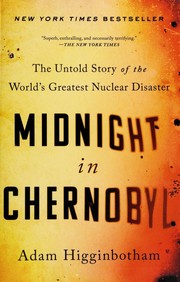
The most complete narrative reconstruction, built on years of interviews and declassified files, and the best at making the reactor physics comprehensible without simplifying it away. Start here.

Plokhy is a historian of Ukraine rather than a science writer, so he reads the disaster as a symptom of the Soviet system and connects it directly to the union's collapse. The essential companion argument to Higginbotham.
The voices and the first accounts
BeginnerMeet the disaster as the people caught in it experienced it, and see how much of the story was known — and disputed — before the archives opened.
▸ Study plan for this stage
Pace: Five to six weeks. Read Chernobyl 01:23:40 first despite its position in the list if you want the technical sequence consolidated quickly — it is 247 pages and takes three or four evenings. Ablaze is 400 pages and takes two to three weeks. Voices from Chernobyl is 304 pages and should be read last a
- Ablaze as a historical document in its own right: Read had access no Western writer previously had, and reading it after Higginbotham shows you exactly what was knowable in 1993 and where the archives later corrected it
- The initial official narrative that blamed operator error, which was the position presented internationally in 1986 and which held for years. Knowing that this was the accepted account makes the later revisions legible
- Leatherbarrow's dual structure — the accident retold plainly, interleaved with his own visit to the zone — and its value as consolidation: a second clear pass over the technical sequence at a fraction of Higginbotham's length
- Alexievich's method, which is the thing to understand about her book: she interviews at length and then composes the results into monologues, arranged for effect. It is a constructed work of literature built from real testimony, not a transcript, and she does not pretend otherwise
- The liquidators — roughly six hundred thousand people involved in the cleanup over several years, from reservists to miners to the men who cleared the roof by hand because the robots failed in the radiation field
- The specific testimonies that define the book: Lyudmila Ignatenko's account of her husband's death from acute radiation syndrome, which opens it, and the evacuees describing the loss of a place rather than of a person
- What the testimony captures that no history can: the texture of not being told, of measuring nothing, of a threat with no smell and no colour, and of a bureaucracy that continued issuing normal instructions
- How to hold these three books together: Read for what was known then, Leatherbarrow for the sequence, Alexievich for what the sequence leaves out. None of them replaces the histories in stage one and none of them is redundant
- What does Ablaze get right, and where has archival access since corrected it? Name two specific points
- What was the official 1986 explanation offered internationally, and how long did it stand?
- Alexievich composes monologues rather than transcribing interviews. Does that make the book less reliable, differently reliable, or neither? Defend your answer
- Who were the liquidators, how many were there, and what work did they actually do? Be specific about the roof clearance
- What does the testimony convey about the experience of radiation as a hazard that cannot be sensed?
- Which single account in Alexievich's book stayed with you, and what does it show that a history could not?
- Read Ablaze with Higginbotham's account in mind and mark every place where the later archival record changed the story. The marked pages are a small lesson in how history gets revised.
- After Leatherbarrow, write the technical sequence from memory in 300 words without consulting anything. If you cannot, go back to your stage-one diagram before continuing.
- Read Alexievich's opening testimony and then stop for a day. Then write 200 words on what it tells you about the medical response that the histories state as fact but do not convey.
- List the categories of people whose testimony appears in Voices from Chernobyl — liquidators, evacuees, widows, those who returned to the zone, children. Then check which of those categories the histories in stage one actually cover. The gaps are why this book exists.
- Note every claim in the testimony that could in principle be checked against a record, and every one that could not. The proportion of the second kind is the point of the form.
Next up: The testimony raises the question the histories close too quickly — how many people were actually harmed — which is exactly where the next stage begins.
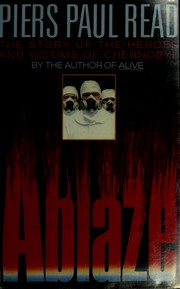
Written in the early 1990s with access no Western journalist had previously had, this is the account the later histories correct and build on. Read it to see what was knowable then.

A short, clear retelling interleaved with the author's own visit to the zone. The most efficient way to consolidate the technical sequence before the harder reading.
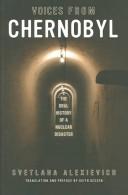
Oral testimony from liquidators, widows and evacuees, assembled by a Nobel laureate into something closer to a chorus than a history. It only lands with full force once you know the facts it refuses to explain.
The long aftermath
IntermediateFollow the contamination, the health controversies and the exclusion zone across the decades since, and understand why the official death toll is contested.
▸ Study plan for this stage
Pace: Twelve to fourteen weeks across roughly 1,360 pages, and the most argumentative stage in the path. Manual for Survival is 432 pages and demands careful reading — four weeks, with attention to what each claim rests on. Wormwood Forest is 276 pages and reads quickly, about ten days, and is a deliberat
- The contested death toll, which is the core of this stage: the internationally agreed figure for directly attributable deaths is small — dozens of acute radiation deaths plus a well-documented excess of thyroid cancers — while projected long-term excess deaths from low-dose exposure range across ord
- Why the range is so wide: it turns on the linear no-threshold model, which assumes risk is proportional to dose all the way down. Applied to a very large population receiving very small doses, it generates large numbers of statistically invisible deaths, and whether that is a legitimate calculation
- Brown's archival argument in Manual for Survival: Soviet regional medical records document far more illness among exposed populations than the international assessments credited, and the international bodies had institutional reasons for a conservative reading. She is making a serious, evidenced cas
- The honest framing you must hold: Brown's thesis is contested by radiation epidemiologists, who argue that the health records she uses cannot distinguish radiation effects from surveillance bias, from the collapse of Soviet healthcare, and from the well-documented psychological and social effects of
- What is not in dispute: the thyroid cancer excess in children, caused by iodine-131 in milk, which was preventable by distributing potassium iodide and by stopping milk distribution — and which was not prevented because the contamination was concealed
- Mycio's exclusion zone as an ecological experiment: with humans removed, wildlife populations expanded, which produced the widely repeated claim that the zone is a nature reserve. The scientific literature on whether individual organisms are harmed while populations flourish is more contested than t
- Plutopia's comparison of Richland, Washington and Ozersk, Russia — two closed plutonium cities on opposite sides of the Cold War, with parallel patterns of secrecy, privilege and routine release. Brown's argument is that the accumulated releases of normal operation may exceed the accident's
- Plokhy's Chernobyl Roulette on the 2022 Russian occupation of the plant and the Zaporizhzhia situation: the site is an active geopolitical object, nuclear facilities in a war zone are a category the safety regime was not designed for, and the story did not end in 1986
- What is the linear no-threshold model, and why does applying it to a large population at low doses produce such large and such contested numbers?
- State Brown's central archival claim and the strongest objection to it. What would resolve the disagreement?
- Which health effect of the accident is undisputed, what caused it, and what simple intervention would have prevented most of it?
- What does Plutopia's comparison of Richland and Ozersk establish, and how strong is the evidence that routine releases exceeded the accident's?
- Why does Plokhy consider the plant a live geopolitical problem rather than a historical site?
- After this stage: how many people did Chernobyl harm? Give the honest answer, which includes stating why the question is hard
- Look up the official assessments — the international agency figures and the range of published estimates — and write them in a single table with the assumptions each rests on. Doing this once is the only way to hold the disagreement clearly.
- Take one of Brown's specific archival findings and write out what it would take to establish it as a radiation effect rather than a surveillance artefact. This is not an attack on her; it is the argument her critics make and you should be able to state it.
- Write 500 words on the thyroid cancer story specifically — cause, mechanism, prevention, failure. It is the cleanest case in the whole subject where secrecy directly produced illness, and it needs no contested modelling.
- After Wormwood Forest, find one recent scientific paper on wildlife in the zone and see whether it supports the popular nature-reserve framing. The literature is more mixed than the framing.
- Write a paragraph on the claim that routine operation released more than the accident. Then write the strongest objection. Plutopia is the most provocative book on the path and it deserves resistance as well as attention.
- Return to your list from stage one of institutional decisions that changed the outcome, and add every decision from the aftermath. The list now spans forty years.
Next up: Having followed one accident to the present, the last stage asks how exceptional it was by setting it against everything else that has gone wrong with nuclear technology.

Brown's archival work on the health consequences directly challenges the international consensus on how many people the accident harmed. The most argumentative book on this path, and the one that most changes what you think you know.

The exclusion zone as an accidental ecological experiment, reported on the ground. A necessary counter to reading the zone purely as a human tragedy.
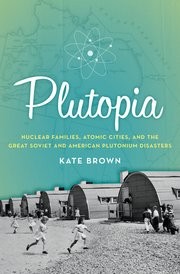
Brown compares the closed nuclear cities of Richland and Ozersk, showing that routine plutonium production may have released more contamination than the accident did. Read after Manual for Survival, whose framework it extends.
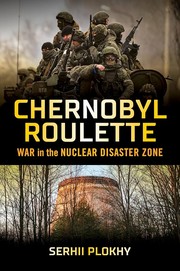
The 2022 Russian occupation of the plant, by the historian who wrote the standard account of 1986. It makes the case that the site is still a live geopolitical problem, not a museum.
Nuclear risk beyond Chernobyl
IntermediateJudge how exceptional Chernobyl was by setting it against the wider record of reactor accidents and weapons mishaps.
▸ Study plan for this stage
Pace: Eight to ten weeks. Atomic Accidents is 442 pages and is episodic — read a case at a time, about three weeks. Command and Control is 644 pages structured around a single 1980 incident interleaved with the wider history; four to five weeks, and it is a genuine page-turner despite the length. Read Mah
- The reactivity accidents — SL-1 in Idaho in 1961, the Soviet submarine incidents, the criticality accidents at Los Alamos and Tokaimura — which share the mechanism of an uncontrolled power excursion and differ enormously in scale
- Three Mile Island and Fukushima as the comparison cases: a loss-of-coolant accident with intact containment and negligible off-site health effects, and a station blackout accident where the evacuation itself caused documented deaths while radiation exposure did not. Both are essential for calibratio
- The containment building as the single most important design difference between the RBMK and Western reactors, and what Three Mile Island demonstrated about its value
- Schlosser's subject is not reactors but the American nuclear weapons complex, and his running case is the 1980 Damascus, Arkansas incident — a dropped socket puncturing a Titan II missile's fuel tank, and the hours that followed
- The always-safe versus always-available tension, which is the design problem at the centre of Command and Control: a weapon that can never detonate accidentally and a weapon that will always detonate when ordered are opposing requirements, and every safety mechanism trades between them
- The broken arrow record Schlosser assembles from declassified documents: the number of serious US nuclear weapons accidents is far larger than was publicly acknowledged, including weapons dropped, burned and lost
- The institutional pattern that closes the path: normalisation of deviance, production pressure overriding stated safety policy, and organisations concealing incidents to protect programmes. Schlosser's point, made without stating it crudely, is that none of this was uniquely Soviet
- The conclusion to reach for yourself: Chernobyl's specific causes were specific — a design nobody would build now, in a state that could not admit failure — and the institutional causes were entirely ordinary. Which of those two facts you weight more heavily determines what you think about nuclear r
- Compare Chernobyl, Three Mile Island and Fukushima on containment, release, evacuation and documented health effects. Which caused the most harm, and by what measure?
- At Fukushima, what caused the documented deaths? What does that imply about how evacuation decisions should be made?
- State the always-safe versus always-available tension. Give an example of a safety mechanism that trades one against the other
- What happened at Damascus, Arkansas in 1980, and what does Schlosser use it to demonstrate about the wider system?
- What is normalisation of deviance, and where does it appear in both Schlosser's account and the Chernobyl story?
- Having read the whole path: was Chernobyl a Soviet failure, a nuclear failure, or an organisational failure? Defend your answer with evidence from at least three books
- Build a comparison table of the major reactor accidents — mechanism, containment, release, evacuation, attributable deaths. It is the single most useful artefact you can produce from this stage and it puts every future news story in context.
- Take the Damascus incident and write out its timeline the way you wrote the 26 April timeline in stage one. The structural similarity between the two — small deviation, procedural gap, escalating commitment — is the argument of the whole stage.
- Write 500 words on whether Chernobyl's causes were transferable to other nuclear programmes or specific to the Soviet one. Use Mahaffey for the technical half and Schlosser for the institutional half.
- Return to your table of death toll estimates from stage three and add Three Mile Island and Fukushima. Then write a paragraph on what an honest risk comparison between nuclear and other energy sources would require. This is where the path has been heading.
- Write a final page: what you now believe about Chernobyl, what you believe about nuclear risk generally, and which of your beliefs rests on contested evidence. Marking the third category explicitly is the discipline this subject most requires.
Next up: This is the end of the path — the accident, the testimony, the contested aftermath and the wider record — and you can now read any nuclear safety story and tell which of those four conversations it belongs to.
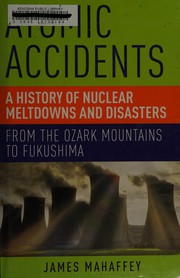
A working nuclear engineer's survey of everything that has gone wrong with fission since the 1940s, which puts the RBMK failure in its technical family.
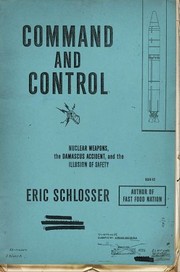
The American nuclear weapons complex and its long history of near-catastrophes, showing that institutional denial was never a uniquely Soviet trait. The right book to close on.
Discussion
Keep reading
Paths that share books, cover the same subject, or open a related topic.