The standard version of October 1962 is a story about a room: thirteen days of Kennedy and his advisers reasoning their way to a quarantine and a deal. That story is true and radically incomplete. The most dangerous moments of the crisis happened outside anyone's control — a Soviet submarine losing contact and considering a nuclear torpedo, a U-2 straying into Soviet airspace, tactical warheads already on Cuba that Washington did not know were there.
Reading order matters because the post-Soviet archival books overturn parts of the memoir literature. Read the memoirs first and you learn what the participants believed; read them afterwards and you can see exactly where they were wrong.
Start with the best narrative
One minute to midnight is the right opener. Michael Dobbs reconstructs the crisis hour by hour using American, Soviet, and Cuban sources, and his argument is that the escalation risk lay in the field rather than in the Cabinet Room. The submarine B-59 episode, the wandering U-2, and the tactical nuclear weapons on the island are all here, and none of them appear in the classic accounts because nobody involved in writing those accounts knew about them.
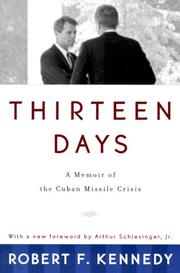
Then read Thirteen days, Robert Kennedy's memoir. It is short, it is the source of the crisis's popular shape, and it is a document with an agenda: published after his brother's death and during his own political career, it burnishes certain roles and omits the Jupiter missile trade in Turkey that made the settlement possible. Read as testimony rather than history, it is invaluable.
Go to the record
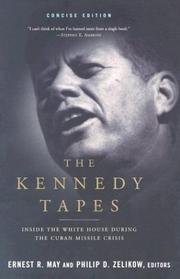
The Kennedy tapes is the primary source. Kennedy secretly recorded the ExComm deliberations, and the transcripts let you hear the arguments as they actually ran — hesitations, bad information, the Joint Chiefs pressing for strikes, the President repeatedly slowing the room down. It is long and worth dipping into rather than reading straight through, but nothing else conveys how contingent the decisions were.
The armageddon letters takes the correspondence between Kennedy, Khrushchev, and Castro and reconstructs the crisis as a communications failure between three men with incompatible pictures of what was happening. It is the most useful book here for understanding Castro's position, which is usually flattened into a footnote.
The other side of the table
Khrushchev's Cold War draws on Soviet archives to explain why the missiles were deployed at all — the strategic imbalance, Berlin, Khrushchev's own political position, and his tendency toward high-risk improvisation. It corrects the American-centric assumption that Soviet behaviour was simply reactive.
Back channel to Cuba extends the story past 1962 into the long history of secret US-Cuban contacts, which is the necessary context for why the crisis played out between Washington and Moscow with Havana largely excluded. The fog of war is the Errol Morris material centred on Robert McNamara, and it is the most reflective account of what the Secretary of Defense concluded decades later about how near the thing came to going wrong.
Close with Command and Control, Eric Schlosser's history of American nuclear weapons safety. It is not a book about the crisis, and it belongs at the end because it demonstrates that the near-misses of October 1962 were not exceptional — the arsenal produced accidents, false alarms, and failures of custody for decades. It changes what you think the crisis was an instance of.
Read in that order and the reassuring version of 1962 does not survive. Follow the full path for the full sequence.
Follow the full ordered path here: The Best Cuban Missile Crisis Books to Read First.