Best Books to Learn Political Science, in Order
This curriculum builds a rigorous, research-grade understanding of political science across four thematic pillars — institutions & comparative politics, voting & parties, political economy, and methods — starting from accessible conceptual foundations and climbing to graduate-level analytical depth. Each stage introduces the vocabulary and frameworks needed to make the next stage fully intelligible, so reading in order matters.
Foundations: How Politics Works
BeginnerGrasp the core concepts of the discipline — states, power, institutions, democracy, and political behavior — and develop a shared vocabulary for everything that follows.
▸ Study plan for this stage
Pace: 8–10 weeks, ~25–30 pages/day (alternating between Aristotle and Hamilton; Aristotle's Politics ~260 pages, Federalist Papers ~500 pages)
- The state as a natural community: Aristotle's view that humans are political animals and the polis is the highest form of association
- Forms of government: classification by number of rulers (monarchy, aristocracy, democracy) and by whose interest is served (rule for common good vs. rule for private gain)
- Power and virtue in governance: the role of practical wisdom (phronesis) and moral virtue in effective political leadership
- Institutions and constitutions: how written and unwritten rules structure political authority and distribute power among citizens
- Separation of powers and checks and balances: Hamilton's argument for dividing executive, legislative, and judicial authority to prevent tyranny
- Federalism: the balance between central government and state governments as a safeguard against concentrated power
- Representation and popular sovereignty: how elected representatives can embody the will of the people while maintaining stability
- Political behavior and factions: understanding how self-interest, ambition, and competing groups shape political outcomes
- According to Aristotle, why is the polis a natural community, and what does it mean to say humans are political animals?
- What are the six forms of government Aristotle identifies, and how does he distinguish between correct and deviant forms?
- How does Hamilton argue that the separation of powers in the U.S. Constitution prevents tyranny and protects liberty?
- What is federalism as described in the Federalist Papers, and why does Hamilton believe it is superior to a purely unitary government?
- How do Aristotle's ideas about virtue in rulers relate to Hamilton's concerns about human nature and the need for institutional checks?
- What role do factions and competing interests play in both Aristotle's and Hamilton's understanding of political stability?
- Create a comparative chart of Aristotle's six forms of government, noting which serve the common good and which serve private interests; then identify modern examples of each
- Read and annotate 3–4 key Federalist Papers (e.g., No. 10 on factions, No. 51 on checks and balances) and write a 2-page summary of Hamilton's core argument in each
- Write a dialogue between Aristotle and Hamilton discussing whether institutions or virtue matters more in preventing bad governance—ground it in specific passages from both texts
- Analyze a contemporary political institution (e.g., your country's parliament, a state legislature, a city council) and map its structure against Aristotle's criteria for good governance and Hamilton's separation of powers
- Create a visual diagram showing how federalism distributes power between central and state/local governments, then explain how this design addresses the problem of faction that Hamilton identifies
- Select one historical or current political crisis and explain it using both Aristotelian concepts (e.g., which form of government was in place, was virtue present?) and Hamiltonian concepts (e.g., were checks and balances effective?)
Next up: This stage establishes the foundational vocabulary and conceptual frameworks—states, power, institutions, democracy, and political behavior—that the next stage will build upon by exploring how these ideas evolved, were challenged, and were applied across different political systems and historical contexts.
The original framework for classifying regimes and asking what political institutions are for; reading it first anchors every later comparative argument in the discipline's oldest questions.

The most influential applied argument for institutional design — separation of powers, checks and balances, federalism — written in plain prose and essential background for institutional theory.
Institutions and Comparative Politics
IntermediateUnderstand how formal and informal institutions shape political outcomes, how democracies and authoritarian regimes differ, and how to compare political systems rigorously.
▸ Study plan for this stage
Pace: 12–14 weeks, ~40–50 pages/day. Allocate 4–5 weeks to Lijphart (350 pp), 3–4 weeks to Levitsky (560 pp), and 4–5 weeks to De Mesquita et al. (500 pp). Build in 1–2 weeks for review and synthesis.
- Institutional variation in democracies: majoritarian vs. consensus systems, and how electoral rules, party systems, and executive-legislative relations shape policy outcomes
- Democratic erosion and backsliding: the mechanisms by which elected leaders undermine democratic institutions from within, and the role of informal rules and norm-breaking
- Formal vs. informal institutions: how both written rules and unwritten norms constrain political behavior, and why informal institutions often matter more than formal ones
- Selectorate theory and the logic of political survival: how leaders maintain power by managing coalitions of supporters, and how regime type (democratic vs. authoritarian) affects coalition size and policy priorities
- Comparative institutional analysis: frameworks for systematically comparing political systems across democracies and non-democracies to explain variation in outcomes
- The relationship between institutions and policy: how institutional design influences redistribution, public goods provision, and economic performance
- Authoritarian durability and democratic vulnerability: why some democracies collapse while others persist, and how institutional design affects regime stability
- What are the key differences between majoritarian and consensus democracies in Lijphart's framework, and what institutional features define each type?
- How do Levitsky and Way explain democratic backsliding, and what role do informal institutions and norm erosion play in the process?
- According to selectorate theory, how does the size of the winning coalition differ between democracies and authoritarian regimes, and what are the consequences for public goods provision?
- How can you use Lijphart's framework to predict which democracies are more vulnerable to the erosion mechanisms Levitsky describes?
- What does De Mesquita's theory suggest about the relationship between institutional constraints on leaders and the likelihood of democratic survival?
- How do the three books together explain why formal institutions sometimes fail to prevent democratic collapse or authoritarian entrenchment?
- Create a comparative matrix for 5–6 democracies (e.g., UK, US, Netherlands, India, Brazil) using Lijphart's dimensions (electoral system, party system, executive-legislative relations, federalism, etc.). Classify each as majoritarian or consensus and explain the institutional logic.
- Analyze a recent case of democratic backsliding (e.g., Hungary, Turkey, Philippines) using Levitsky's framework: identify the informal rules that were broken, the role of elected leaders in norm erosion, and which institutional vulnerabilities were exploited.
- Apply selectorate theory to explain policy differences between a democracy and an authoritarian regime (e.g., US vs. China, or Sweden vs. Singapore): predict differences in spending on public goods, redistribution, and patronage based on coalition size.
- Write a 2–3 page institutional diagnosis of a political system: use all three frameworks to explain a specific political outcome (e.g., why a particular democracy is stable or why an authoritarian regime persists).
- Debate exercise: given a hypothetical institutional reform (e.g., moving from proportional to majoritarian elections), use Lijphart and De Mesquita to predict how it would affect coalition formation, policy outcomes, and regime stability.
- Design a comparative case study protocol: select two democracies with different institutional designs and use Lijphart's framework plus Levitsky's warning signs to assess which is more vulnerable to backsliding and why.
Next up: This stage equips you with rigorous frameworks for analyzing how institutions shape political behavior and outcomes; the next stage will likely apply these tools to explain specific policy domains (e.g., economic policy, social policy, foreign policy) or to examine how institutions interact with other variables like culture, geography, or international pressure.

The definitive empirical comparison of majoritarian vs. consensus democracies across 36 countries; introduces key institutional variables (electoral systems, cabinets, federalism) that recur throughout the literature.
Bridges institutional theory and contemporary comparative politics by showing how democratic backsliding happens through legal, incremental erosion — a perfect complement to Lijphart's structural analysis.

Introduces the selectorate theory of political institutions, offering a unified rational-choice framework for why leaders in different regime types behave so differently — raises the analytical bar for the next stages.
Voting, Parties, and Political Behavior
IntermediateExplain why citizens vote the way they do, how party systems form and change, and what drives electoral competition — connecting individual behavior to systemic outcomes.
▸ Study plan for this stage
Pace: 8–10 weeks, ~40–50 pages/day. Start with *The American Voter* (4 weeks), move to *An Economic Theory of Democracy* (2–3 weeks), then *Parties and Party Systems* (2–3 weeks). Build in 1–2 weeks for synthesis and review.
- The social-psychological model of voting behavior: how party identification, group membership, and attitudes shape electoral choices
- Rational choice theory in politics: voters and parties as strategic actors maximizing utility within constraints
- The spatial model of party competition: how parties position themselves on ideological dimensions to attract voters
- Party systems as structural arrangements: how the number and nature of parties reflect underlying social cleavages and electoral rules
- The relationship between individual voting decisions and aggregate electoral outcomes
- How party identification forms, persists, and changes across generations and electoral cycles
- The mechanisms of party system change: realignment, dealignment, and the role of critical elections
- The tension between party responsiveness to voters and party organizational interests
- According to Campbell et al., what is party identification and how does it function as a perceptual screen in voter decision-making?
- How does Downs' rational choice model explain why voters have incentives to remain uninformed, and what are the implications for democratic theory?
- What is the spatial model of party competition, and how do parties use it to position themselves relative to voters and competitors?
- How do Sartori's concepts of party system types (two-party, moderate multiparty, polarized multiparty) explain differences in democratic stability and competition?
- What mechanisms explain party system change, and how do critical elections differ from normal elections in their impact on voter alignments?
- How do the three books together explain the relationship between individual voting behavior and the structure of party systems?
- Map a recent election using Campbell's framework: identify the party identification distribution, key group alignments, and attitude dimensions that structured voter choice.
- Apply Downs' spatial model to a contemporary party system: plot parties and voter preferences on a left-right dimension, predict equilibrium positions, and explain deviations from the median voter theorem.
- Conduct a generational analysis of party identification: compare party loyalty across age cohorts in election data to test Campbell's socialization hypothesis against dealignment theories.
- Classify a party system using Sartori's typology: identify the number of relevant parties, ideological distance, and polarization level; predict stability or instability based on his framework.
- Analyze a critical election or realignment period: trace how voter coalitions shifted, which groups switched parties, and how the party system structure changed using all three frameworks.
- Design a thought experiment: given voter preferences and party strategies, use Downs' model to predict equilibrium party positions, then compare to actual party behavior and explain gaps.
Next up: This stage establishes how individual voting behavior and party competition interact to produce electoral outcomes; the next stage will examine how institutions (electoral systems, constitutional rules) shape and constrain these behaviors and party systems, and how voters and parties respond to institutional incentives.

The foundational empirical study of electoral behavior and party identification; its funnel-of-causality model is the benchmark against which every subsequent voting theory is measured.
Introduces the spatial (median-voter) model of party competition — the single most cited formal framework in electoral studies — and should be read immediately after the behavioral baseline of Campbell.

The canonical comparative typology of party systems (two-party, multiparty, polarized pluralism, etc.), essential for understanding how electoral rules and social cleavages produce different competitive dynamics.
Political Economy
IntermediateAnalyze how economic interests, inequality, and global markets shape political institutions, redistribution, and policy — and how politics in turn shapes economic outcomes.
▸ Study plan for this stage
Pace: 8–10 weeks, ~40–50 pages/day. "Why Nations Fail" (first 4–5 weeks, ~550 pages); "The Globalization Paradox" (following 4–5 weeks, ~500 pages). Allocate 1 week for synthesis and review.
- Extractive vs. inclusive institutions: how political and economic institutions determine long-term prosperity and stagnation
- The critical juncture concept: pivotal historical moments where institutional paths diverge with lasting consequences
- Vicious and virtuous cycles: how extractive institutions perpetuate inequality and power concentration, while inclusive institutions enable broad-based growth
- The role of political power in shaping economic outcomes: how elites use institutions to maintain control and extract resources
- The globalization trilemma: the impossibility of simultaneously achieving deep economic integration, national sovereignty, and democratic legitimacy
- Policy space and institutional diversity: why one-size-fits-all global rules undermine countries' ability to tailor institutions to local contexts
- The relationship between inequality, political capture, and policy distortion: how concentrated wealth translates into political influence
- Market fundamentalism vs. pragmatic state intervention: evidence for why markets require institutional scaffolding and strategic government action
- What distinguishes extractive institutions from inclusive institutions, and why do extractive institutions tend to persist despite their economic inefficiency?
- How do critical junctures create institutional divergence? Provide examples from 'Why Nations Fail' (e.g., the Industrial Revolution's differential impact on nations).
- According to Acemoglu and Robinson, why do poor nations remain poor? What role do political elites play in maintaining extractive systems?
- What is the globalization trilemma, and why is it impossible to achieve all three goals (integration, sovereignty, democracy) simultaneously?
- How does Rodrik argue that policy space and institutional diversity are necessary for development, and what does he mean by 'one-size-fits-all' global rules?
- How do the frameworks in 'Why Nations Fail' and 'The Globalization Paradox' complement each other in explaining why some nations prosper while others stagnate in the global economy?
- Institutional audit: Select two countries (one wealthy, one poor). Map their political and economic institutions against Acemoglu and Robinson's framework. Identify which are extractive vs. inclusive, and hypothesize how this shapes their economic trajectories.
- Critical juncture analysis: Choose a historical moment from 'Why Nations Fail' (e.g., the Glorious Revolution, colonial institutions in the Americas). Write a 2–3 page analysis of how that juncture created path dependence and shaped long-term outcomes.
- Globalization trade-off mapping: For a specific policy domain (e.g., labor standards, environmental regulation, or financial oversight), map out the trilemma as it applies. Show how prioritizing two goals necessarily constrains the third.
- Policy space case study: Select a developing country's recent economic policy (e.g., industrial policy, capital controls, or trade protection). Analyze it through Rodrik's lens: Did the country have adequate policy space? What global pressures constrained it? What were the outcomes?
- Vicious/virtuous cycle diagram: Create detailed flowcharts for two countries showing how extractive or inclusive institutions create self-reinforcing cycles. Include feedback loops involving inequality, political power, and policy capture.
- Debate preparation: Prepare arguments for and against the proposition: 'Global economic integration is compatible with democratic sovereignty and reduced inequality.' Ground your arguments in both books.
Next up: This stage establishes how institutions and global constraints shape political-economic outcomes; the next stage will likely deepen into specific policy domains (taxation, trade, labor, or financial regulation) where these institutional tensions play out in concrete detail.
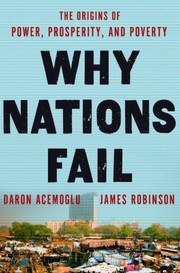
Argues that inclusive vs. extractive institutions explain the wealth of nations; synthesizes comparative politics and economics in an accessible narrative before the reader tackles more formal treatments.
Presents the trilemma of globalization, democracy, and national sovereignty — a crucial framework for understanding the political constraints on economic policy in open economies.
Research Methods and Advanced Analysis
ExpertUnderstand how political scientists actually produce knowledge — causal inference, research design, quantitative and qualitative strategies — so you can read and evaluate the primary literature critically.
▸ Study plan for this stage
Pace: 8–10 weeks, ~40–50 pages/day (with 2–3 days per week for exercises and reflection)
- The fundamental problem of causal inference: why we cannot directly observe counterfactuals and how this shapes research design
- Research design as the foundation of valid inference: internal validity, external validity, construct validity, and statistical conclusion validity
- Qualitative and quantitative methods as complementary approaches to causal inference, each with distinct strengths and limitations
- Causal identification strategies: randomization, matching, regression discontinuity, difference-in-differences, and instrumental variables
- Threats to validity in observational studies and how to diagnose and mitigate them through design choices
- The logic of counterfactual reasoning: how to frame causal questions and evaluate whether evidence supports causal claims
- Transparency and replicability in research: documenting assumptions, data, and analytical choices to enable critical evaluation
- Why is the counterfactual—the unobserved outcome under an alternative condition—central to all causal inference, and what does this imply for research design?
- What are the four types of validity that King et al. identify, and how do trade-offs between them shape methodological choices?
- How do randomized experiments achieve causal identification, and why are observational studies more vulnerable to confounding?
- What is the difference between a causal effect and a causal mechanism, and why does Morgan emphasize the importance of counterfactual thinking for both?
- How would you evaluate a published political science study for internal validity threats, and what design features would strengthen its causal claims?
- When is a qualitative case study more appropriate than a quantitative analysis for answering a causal question, and vice versa?
- Read a published empirical political science article (e.g., from *American Political Science Review*) and map its causal question, identification strategy, and validity threats using King et al.'s framework.
- Design a hypothetical study to answer a causal question in politics (e.g., 'Does campaign spending increase vote share?'). Write out your causal model, specify the counterfactual, and justify your choice of method (experiment, matching, IV, etc.).
- Work through the worked examples in *Designing Social Inquiry* (Chapters 3–4) and *Counterfactuals and Causal Inference* (Chapters 2–3), reproducing the logic of each identification strategy.
- Identify a confounding variable in a real political phenomenon and sketch three different research designs that could isolate the causal effect despite the confounder.
- Critique a published study's causal claims by identifying construct validity, internal validity, and external validity threats; propose design changes to address them.
- Write a pre-analysis plan for a hypothetical study: specify your causal hypothesis, data sources, identification strategy, and key assumptions before 'seeing' results.
Next up: This stage equips you with the conceptual and methodological toolkit to critically read and evaluate empirical political science research, preparing you to engage with substantive literatures (e.g., on institutions, behavior, or policy) that rest on these causal inference principles.

The landmark methodological text unifying qualitative and quantitative research under a single logic of inference; reading it last lets you apply its lessons to everything encountered in earlier stages.
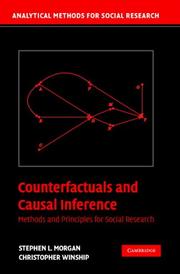
The clearest graduate-level treatment of the potential-outcomes framework and causal identification strategies (matching, IV, regression discontinuity) now standard in top political science research.
Discussion
Keep reading
Paths that share books, cover the same subject, or open a related topic.