The Cold War: spies, missiles & proxy wars
This curriculum takes a beginner from the basic narrative arc of the Cold War through its ideological, strategic, and human dimensions, before arriving at specialist-level analysis of nuclear strategy, espionage, and the war's long shadow. Each stage builds the vocabulary and mental models needed for the next, so that by the end the reader can engage with primary-source arguments and contemporary echoes with genuine depth.
Foundations: The Big Picture
BeginnerGrasp the full chronological sweep of the Cold War — its origins, key crises, and conclusion — and build the core vocabulary (containment, détente, MAD, proxy war) needed for every later stage.
▸ Study plan for this stage
Pace: 6–8 weeks total. Week 1–3: McMahon's "The Cold War" (~20–25 pages/day, ~150 pages); read slowly and annotate key turning points and vocabulary. Week 4–8: Gaddis's "The Cold War: A New History" (~15–20 pages/day, ~266 pages); pause at the end of each chapter to review notes from McMahon and compare i
- Containment: the U.S. strategic doctrine, introduced via the Truman Doctrine and elaborated throughout McMahon, of preventing Soviet expansion beyond its post-WWII sphere
- Détente: the period of reduced superpower tension in the 1970s, examined by both McMahon and Gaddis as a pragmatic but ultimately fragile accommodation
- Mutually Assured Destruction (MAD): the nuclear logic that made direct superpower war irrational, a thread Gaddis traces from the arms race through to Reagan's SDI challenge
- Proxy War: how both superpowers fought ideological battles through client states and movements (Korea, Vietnam, Angola, Afghanistan) — a recurring structural pattern in both books
- Bipolarity: McMahon's framing of the international system as organized around two competing poles, shaping every regional conflict of the era
- The Long Peace: Gaddis's central interpretive argument that, paradoxically, the nuclear standoff produced the longest great-power peace in modern history
- Ideological Dimension: both authors' insistence that the Cold War was not merely a geopolitical rivalry but a clash of incompatible visions of modernity — liberal capitalism vs. Soviet communism
- Periodization: the shared chronological scaffolding across both books — origins (1945–47), early crises (1948–53), escalation (1950s–60s), détente (1970s), Second Cold War and collapse (1980–91)
- According to McMahon, what structural conditions emerging from World War II made superpower rivalry virtually inevitable, and how does Gaddis's account agree or differ?
- How do both authors define and evaluate the policy of containment — where do McMahon and Gaddis converge, and where does Gaddis's 'Long Peace' thesis add a layer McMahon does not emphasize?
- What role do proxy wars play in the overall Cold War narrative as presented in these two books, and which specific cases do each author use as their primary illustrations?
- How does Gaddis explain the suddenness of the Cold War's end in 1989–91, and does McMahon's earlier account foreshadow or contradict that explanation?
- Trace the concept of détente through both books: what caused it, what were its achievements, and why did it break down before the Cold War's final phase?
- After reading both books, how would you explain MAD to someone with no background — and which author's framing do you find more persuasive, and why?
- Vocabulary flashcards: After the first week of McMahon, create a physical or digital flashcard deck for every bolded or recurring term (containment, détente, MAD, proxy war, bipolarity, rollback, brinkmanship). Add a book-specific example sentence for each card drawn directly from the text.
- Annotated timeline: Build a single master timeline as you read both books. For each major event (Berlin Blockade, Korean War, Cuban Missile Crisis, Détente, Soviet invasion of Afghanistan, Fall of the Berlin Wall), note the page reference in each book and one-sentence interpretations from McMahon and Gaddis side by side.
- Comparative margin notes: Each time Gaddis covers a topic already addressed by McMahon, write a brief marginal note (or sticky note) flagging agreement, contradiction, or added nuance — aim for at least 10 such comparison notes by the end of Gaddis.
- One-page chapter summaries: After finishing each chapter of Gaddis's book, write a one-page summary in your own words that (a) states the chapter's main argument, (b) connects it to one specific passage from McMahon, and (c) identifies one question the chapter leaves unanswered.
- Concept map: Upon finishing both books, draw a concept map linking the four core vocabulary terms (containment, détente, MAD, proxy war) to at least three historical events and two authors' arguments each — this visual will serve as a reference tool for every later stage.
- Reflective essay (500 words): Write a short essay answering: 'Did the Cold War have to end the way it did?' Use at least one argument from McMahon and one from Gaddis, citing specific pages, to support your answer.
Next up: McMahon and Gaddis together provide the chronological skeleton and core vocabulary that every deeper, thematic stage will assume — mastering their competing interpretations of origins, crises, and conclusion means the reader can now engage specialized topics (nuclear strategy, the Third World, domestic politics) with a confident sense of where each fits in the larger story.

A compact, authoritative overview that maps the entire conflict from 1945 to 1991 in plain language — the perfect first map before any deeper dive.
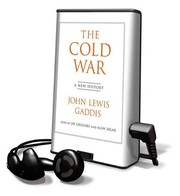
The single most widely assigned narrative history of the Cold War, written by its foremost scholar for a general audience; it fleshes out the skeleton built by McMahon and introduces the ideological contest at the heart of the rivalry.
Human Stories: Living Inside the Cold War
BeginnerMove from abstract geopolitics to the lived experience of ordinary people and decision-makers caught inside the superpower standoff, building emotional and moral intuition for the stakes involved.
▸ Study plan for this stage
Pace: 3–4 weeks, ~25–30 pages/day — One Minute to Midnight is ~300 pages of narrative-driven history, so a relaxed daily pace allows the reader to absorb the human drama without rushing past key scenes. Reserve the final 2–3 days for review and reflection exercises.
- The Cuban Missile Crisis as a human event: Dobbs deliberately shifts focus from grand strategy to the minute-by-minute decisions of individuals — Kennedy, Khrushchev, Castro, and the military commanders on all sides — showing how personality, fear, and miscommunication shaped history.
- The fog of war and information failure: Throughout the book, leaders on both sides are shown acting on incomplete, wrong, or dangerously delayed intelligence, illustrating how crises can spiral beyond anyone's control.
- The role of chance and accident: Dobbs documents multiple near-miss incidents — the U-2 shootdown over Cuba, the Soviet submarine B-59 nearly launching a nuclear torpedo, the accidental overflight of Soviet airspace — revealing how close the world came to nuclear war through sheer accident rather th
- Escalation dynamics and the loss of control: The book shows how military machines, once set in motion, develop their own momentum that political leaders struggle to stop, a core structural danger of the Cold War standoff.
- The ordinary soldier and sailor in extraordinary circumstances: Dobbs gives sustained attention to figures like Soviet submarine officer Vasili Arkhipov and U.S. U-2 pilot Rudolf Anderson, humanizing the Cold War at the level of individuals who had no say in the decisions that put their lives at ris
- The asymmetry of perception: American and Soviet leaders were simultaneously experiencing the same crisis through completely different cultural, political, and ideological lenses, making mutual misunderstanding almost inevitable.
- Moral weight of nuclear decision-making: The book forces the reader to sit with the ethical enormity of decisions that could kill millions, made under extreme time pressure by exhausted, frightened human beings.
- The thirteen days as a microcosm of the entire Cold War: The crisis compresses the defining tensions of the superpower rivalry — ideology, nuclear deterrence, prestige, domestic politics, and military pressure — into a single, gripping narrative window.
- According to Dobbs, which specific accidental or unplanned events during the thirteen days came closest to triggering a nuclear exchange, and what stopped each one?
- How does Dobbs portray the decision-making of Kennedy and Khrushchev differently — what human pressures (domestic, military, personal) were each man navigating, and how did those pressures shape their choices?
- What is the significance of Vasili Arkhipov's role aboard submarine B-59, and what does his story reveal about how the Cold War was experienced by people far below the level of heads of state?
- Dobbs argues that the crisis was resolved less by brilliant diplomacy than by luck and the restraint of a few individuals. Do you agree with this interpretation based on the evidence he presents? What are its implications for how we think about nuclear deterrence?
- How does the fate of U-2 pilot Rudolf Anderson illustrate the gap between the abstract language of geopolitics and the concrete human cost of the Cold War?
- By the end of the book, how has your understanding of 'decision-making under pressure' changed? What does One Minute to Midnight suggest about the reliability of human judgment in a nuclear crisis?
- **The Perspective Journal:** As you read, keep a running journal with three columns — one each for an American figure, a Soviet figure, and a Cuban figure Dobbs follows. After each reading session, jot 2–3 sentences on what each person knew, feared, and decided that day. By the end, compare the columns: where did their realities diverge most dangerously?
- **The Accident Map:** Create a simple timeline (on paper or a digital tool) that marks every near-miss or accidental escalation Dobbs describes. For each event, note: What caused it? Who had the power to stop it? What actually stopped it? Review the completed map and write a one-paragraph reflection on what it tells you about the role of luck in the Cold War.
- **The 'One Decision' Exercise:** Choose one moment in the book where a single individual made a decision that could have changed everything (e.g., Arkhipov on B-59, the Soviet officer who chose not to fire on the U-2). Write a one-page counterfactual: what might have happened if that person had decided differently? What does this exercise reveal about the 'great man' vs. 'structural forces' debate
- **Emotional Vocabulary Check:** Dobbs is a narrative historian who uses novelistic techniques. After finishing the book, go back and find three passages where you felt a strong emotional reaction (fear, relief, anger, sadness). Write down what specifically triggered that reaction and why. Then ask: Is emotional engagement a strength or a risk when studying history? How do you balance empathy with
- **The Moral Ledger:** Draw a simple two-column table labeled 'Decisions that reduced danger' and 'Decisions that increased danger.' Populate it with at least 8–10 specific decisions from the book. Then write a short paragraph answering: Does the ledger suggest the crisis was managed well, or did the world simply get lucky?
Next up: By grounding the Cold War in the terror, confusion, and moral weight felt by real individuals during its most dangerous moment, One Minute to Midnight builds the emotional and ethical foundation needed to engage critically with the broader ideological, political, and structural histories that explain how the world arrived at — and eventually moved beyond — that knife's edge.

A minute-by-minute reconstruction of the Cuban Missile Crisis that reads like a thriller, showing how close nuclear war actually came and how individual decisions mattered enormously.
Ideology & Strategy: Why Each Side Did What It Did
IntermediateUnderstand the ideological engines driving both superpowers, the doctrine of containment, and the strategic logic — and miscalculations — behind their global competition.
▸ Study plan for this stage
Pace: 8–10 weeks total: Weeks 1–4 for "The Wise Men" (~30–35 pages/day, ~500 pages), and Weeks 5–10 for "Strategies of Containment" (~20–25 pages/day, ~400 pages) — the denser policy analysis warrants a slower, more deliberate pace with note-taking pauses.
- Containment as a living doctrine: Gaddis shows containment was never a single fixed policy but evolved across administrations — from Kennan's political/economic vision to NSC-68's militarized version to Eisenhower's 'New Look' and beyond
- George Kennan's 'X Article' and the distinction between his original asymmetric, selective containment and the symmetric, globalized version that replaced it — a tension Gaddis places at the heart of Cold War strategy
- The six 'Wise Men' (Acheson, Bohlen, Harriman, Kennan, Lovett, McCloy) as the architect class of the postwar order: how their shared Establishment backgrounds, transatlantic worldview, and personal relationships shaped the institutional choices that defined containment in practice
- Ideological asymmetry: the Soviet Marxist-Leninist imperative for eventual world revolution vs. the American liberal-capitalist belief in universal democratic self-determination — and how each side's ideology made the other's intentions appear inherently threatening
- The role of strategic miscalculation: from Truman's universalizing of the Truman Doctrine to the Korean War's expansion toward the Yalu River, Gaddis and Isaacson together illustrate how ideological assumptions produced catastrophic misreads of adversary intent
- NSC-68 and the militarization of containment: Paul Nitze's 1950 document as a turning point that reframed the Soviet threat in military rather than political terms, multiplying defense budgets and locking in a symmetric competition
- Credibility vs. capability: the recurring strategic tension between maintaining global commitments to signal resolve and the finite economic and military resources available — a dilemma Gaddis traces across every administration from Truman to Reagan
- The Wise Men's 'present at the creation' moment: how the Marshall Plan, NATO, the World Bank, and the National Security Act were not inevitable outcomes but contingent decisions made by a small, identifiable group of individuals under genuine uncertainty
- According to Gaddis, what was Kennan's original conception of containment, and in what specific ways did NSC-68 and the Truman administration's response to Korea distort or betray that vision?
- Isaacson profiles six men who largely shared class, education, and institutional backgrounds. How did that shared worldview enable coherent policymaking, and what blind spots or biases did it introduce into Cold War strategy?
- Gaddis identifies several distinct 'strategies of containment' across different presidencies. Choose any two administrations he analyzes and compare their underlying assumptions about Soviet power, the role of military force, and the acceptable costs of competition.
- Both books grapple with the gap between stated ideology and actual strategic behavior. Where do Isaacson's portraits of the Wise Men reveal moments where pragmatic interests overrode ideological principle — and does Gaddis's framework help explain why?
- What does Gaddis mean by the 'perimeter defense' vs. 'strongpoint defense' debate, and why did it matter so much for how the U.S. allocated resources and chose where to intervene?
- Using evidence from both books, construct an argument for why the Cold War was primarily driven by ideological incompatibility rather than geopolitical rivalry — then steelman the opposite case.
- Doctrine timeline: Build a one-page annotated timeline mapping each major containment strategy Gaddis identifies (Truman/NSC-68, Eisenhower's New Look, Kennedy's Flexible Response, Nixon's détente, Reagan's rollback) against the key Wise Men still active in each era — note where their influence persisted or faded.
- Kennan vs. Nitze debate: Write a 500-word internal policy memo from Kennan's perspective arguing against NSC-68, then a 500-word rebuttal from Nitze's perspective. Use specific arguments and evidence drawn from Gaddis's analysis.
- Character ideology map: For each of the six Wise Men in Isaacson's book, write 2–3 sentences summarizing their core ideological assumptions about the Soviet Union. Then use Gaddis to identify which 'strategy of containment' each man's worldview most closely aligns with.
- Miscalculation case study: Select one strategic miscalculation covered across the two books (e.g., the decision to cross the 38th parallel in Korea, or the universalizing of the Truman Doctrine). Write a structured post-mortem: What was the assumption? What was the actual outcome? What ideological or cognitive bias drove the error?
- Comparative ideology matrix: Draw a two-column table contrasting Soviet and American ideological imperatives as presented in both books across five dimensions: view of history, role of the state, attitude toward capitalism/communism, theory of how the other side would eventually lose, and tolerance for negotiated compromise.
- Synthesis essay (600–800 words): Using both books as your only sources, answer the question: 'Was containment a coherent grand strategy or a series of improvised reactions dressed up in ideological language?' Cite specific decisions, individuals, and doctrinal shifts from both Isaacson and Gaddis.
Next up: By internalizing the ideological engines and strategic doctrines that structured superpower behavior, the reader is now equipped to move from the 'why' of the Cold War to the 'where' — examining the specific regional theaters, proxy conflicts, and crises where these abstract strategies collided with messy on-the-ground realities.

Profiles the six architects of U.S. Cold War strategy (Kennan, Acheson, Harriman, et al.), showing how containment was invented and institutionalized — essential for understanding American decision-making.

A rigorous policy-by-policy analysis of every U.S. administration's Cold War strategy; now that the narrative is solid, this book reveals the strategic reasoning and internal contradictions behind American choices.
The Secret War: Espionage, Proxy Conflicts & Nuclear Brinkmanship
IntermediateExplore the covert and shadow dimensions of the Cold War — intelligence operations, proxy wars in the developing world, and the terrifying logic of nuclear deterrence.
▸ Study plan for this stage
Pace: 10–12 weeks total, roughly 25–35 pages per day. Suggested breakdown: Weeks 1–3 for "The Spy and the Traitor" (~380 pages); Weeks 4–7 for "Ghost Wars" (~700 pages, the longest and most detail-dense book); Weeks 8–11 for "Command and Control" (~640 pages); Week 12 reserved for review, cross-book synth
- Human intelligence (HUMINT) vs. signals intelligence (SIGINT): Macintyre's account of Oleg Gordievsky illustrates how a single well-placed human source can outweigh mountains of intercepted data, and the tradecraft required to protect that source.
- Double agents, loyalty, and ideological defection: Gordievsky's motivations — disgust at Soviet brutality, admiration for Western liberalism — challenge simplistic 'money vs. ideology' frameworks for why spies spy.
- Proxy warfare and Cold War geopolitics in the developing world: Coll's 'Ghost Wars' shows how Afghanistan became the ultimate proxy battlefield, with the CIA, ISI, Saudi intelligence, and the KGB all manipulating local actors for superpower ends.
- Blowback and unintended consequences: The arming of the mujahideen, chronicled in 'Ghost Wars', demonstrates how covert operations can produce strategic outcomes (Soviet withdrawal) while simultaneously sowing the seeds of future catastrophe (the rise of al-Qaeda).
- Nuclear deterrence theory — MAD, first-strike vs. second-strike capability, and the stability paradox: 'Command and Control' grounds abstract deterrence theory in the lived reality of weapons systems, command structures, and human fallibility.
- Systemic risk and organizational failure: Schlosser's detailed accident narratives reveal how tightly coupled, complex systems (nuclear arsenals) are inherently prone to catastrophic near-misses, regardless of individual competence.
- The gap between policy and reality: Across all three books, official narratives (Soviet invincibility, clean covert operations, safe nuclear weapons) are repeatedly contradicted by the messy, dangerous truth on the ground.
- Secrecy, accountability, and democratic oversight: All three books raise the question of how democratic societies can govern intelligence agencies and weapons programs that, by their nature, must operate in the dark.
- After reading 'The Spy and the Traitor', can you explain why Gordievsky chose to spy for MI6, what specific intelligence he provided that altered Western policy (e.g., during the Able Archer 83 war scare), and how his eventual exfiltration was executed?
- Based on 'Ghost Wars', trace the evolution of CIA involvement in Afghanistan from the Soviet invasion in 1979 through the late 1990s — who were the key institutional actors, what were their competing agendas, and at what point did the CIA lose situational awareness of what it had helped create?
- How does Schlosser use the 1980 Damascus Titan missile accident as a case study in 'Command and Control'? What does it reveal about the relationship between human error, bureaucratic culture, and systemic nuclear risk?
- Across all three books, what recurring tension exists between the operational demands of secrecy and the institutional/democratic need for accountability? Use at least one specific example from each book.
- How did the logic of nuclear deterrence — as described by Schlosser — shape the covert and proxy conflicts depicted by Macintyre and Coll? In other words, did the nuclear stalemate make the 'secret war' more or less likely?
- What does the concept of 'blowback' mean in the context of 'Ghost Wars', and can you identify an analogous (if smaller-scale) unintended consequence in Macintyre's account of the Gordievsky operation?
- Gordievsky Intelligence Audit: After finishing 'The Spy and the Traitor', make a two-column list of the specific intelligence Gordievsky passed to MI6 and the documented Western policy changes that resulted. Then write a one-paragraph assessment: was his contribution decisive, or would the West have reached the same conclusions through other means?
- Afghan Actor Mapping: While reading 'Ghost Wars', build a living relationship map (on paper or a tool like Miro/Coggle) of all major actors — CIA, ISI, Saudi GID, mujahideen factions, Soviet GRU/KGB, and key individuals like Bill Casey, Zia ul-Haq, and Osama bin Laden. Draw arrows showing alliances, funding flows, and conflicts. Update it chapter by chapter to track how the network evolves.
- Accident Timeline: As you read 'Command and Control', keep a running log of every nuclear accident or near-miss Schlosser describes, noting the date, location, cause category (human error, mechanical failure, design flaw, command confusion), and how close to detonation or launch the incident came. At the end, categorize and count by cause — what does the distribution tell you?
- Deterrence Debate: Write two short position papers (300–400 words each) — one arguing that nuclear deterrence (MAD) successfully prevented World War III during the Cold War, and one arguing that the world survived by luck rather than design. Use specific evidence from 'Command and Control' for both sides, then write a one-paragraph verdict on which argument you find more persuasive and why.
- Cross-Book Synthesis Essay: Write a 600–800 word essay answering the question: 'The Cold War is often remembered as a stable, bipolar standoff. Do the three books in this stage support or undermine that narrative?' Draw on at least one specific episode from each of the three books.
- Primary Source Pairing: For each book, find and read one declassified primary source document related to its central events — for example, a declassified CIA cable on the Afghan operation (available via the National Security Archive), a post-Cold War MI6/CIA assessment of the Gordievsky case, or a declassified Pentagon report on nuclear safety (e.g., the 'Broken Arrow' files). Write a paragraph on
Next up: By exposing the hidden machinery of the Cold War — its spies, proxy armies, and nuclear hair-triggers — this stage reveals that the conflict's outcome was far less inevitable than it appears in hindsight, setting up the next stage to examine how the superpower standoff finally unraveled and what kind of world it left behind.
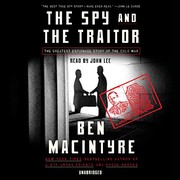
The gripping true story of KGB colonel Oleg Gordievsky, a British double agent — the best single book for understanding Cold War espionage tradecraft and its real strategic consequences.

A Pulitzer Prize-winning account of the CIA's covert war in Afghanistan, the paradigmatic proxy conflict; it bridges Cold War strategy directly to the post-Cold War world and today's headlines.
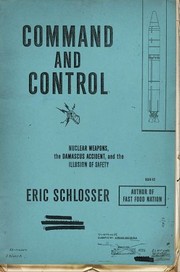
A deeply researched investigation into nuclear weapons accidents and the terrifying fragility of the command-and-control system — makes the abstract doctrine of MAD alarmingly concrete.
The Endgame & the Echo: How It Ended and Why It Still Matters
ExpertAnalyze how and why the Cold War ended, contest competing explanations, and develop a sophisticated framework for reading today's great-power rivalries as inheritors of Cold War logic.
▸ Study plan for this stage
Pace: 8–10 weeks total: Weeks 1–5 on "The Dead Hand" (~30–35 pages/day, including time to annotate the nuclear command-and-control passages and Soviet bureaucratic detail); Weeks 6–10 on "Not One Inch" (~25–30 pages/day, with slower reading around the archival diplomatic exchanges and NATO expansion negot
- The 'Dead Hand' (Perimeter system) as a symbol of late-Soviet strategic paranoia and automated deterrence logic — and what it reveals about how ideological exhaustion interacted with military-technological momentum
- Soviet biological and nuclear weapons programs (Biopreparat, SS-18s) as evidence that the Cold War's endgame was far more dangerous than Western triumphalist narratives admit
- Gorbachev's dual role: reformer who accelerated systemic collapse and leader who nonetheless kept the nuclear peace — the tension between agency and structural forces in ending the Cold War
- The 'not one inch eastward' promise debate: Sarotte's archival reconstruction of what was said, to whom, and why it was never codified — distinguishing oral assurances from binding commitments
- NATO enlargement as a contested inheritance: how decisions made in 1990–1999 (Two Plus Four Treaty, Partnership for Peace, formal accessions) created the fault lines of 21st-century great-power rivalry
- Competing explanations for Cold War's end — Reagan pressure thesis, Gorbachev agency thesis, structural/economic collapse thesis — and how Hoffman's and Sarotte's evidence weighs on each
- The 'echo' problem: how unresolved Cold War institutional legacies (nuclear arsenals, alliance architectures, mutual suspicion) persist as active variables in contemporary US-Russia-China relations
- Archival diplomacy as methodology: how both authors use declassified documents, oral histories, and freedom-of-information releases to contest received wisdom — and the limits of that evidence base
- According to Hoffman, what was the Dead Hand system designed to do, and what does its very existence reveal about the psychological and institutional state of the late Soviet military? Could a rational-actor model of deterrence have predicted it?
- Sarotte reconstructs multiple moments in 1990 when Western officials made statements about NATO's eastward reach. What exactly was promised, to whom, in what forum, and why does the distinction between political assurance and legal commitment matter so acutely today?
- Both books deal with the problem of institutional momentum — weapons programs, alliance commitments, bureaucratic interests — outlasting the political will that created them. Identify two specific examples from each book and explain how they complicate the idea that leaders 'ended' the Cold War by choice.
- How do Hoffman's account of Soviet weapons scientists and Sarotte's account of Eastern European leaders each illustrate the role of non-superpower actors in shaping the Cold War's conclusion? Does either book adequately center these perspectives?
- Construct and then critique the strongest version of the 'Reagan won the Cold War' thesis using evidence from 'The Dead Hand.' Then do the same for the 'Gorbachev ended it' thesis using 'Not One Inch.'
- Using both books together, what would you identify as the three most consequential unresolved decisions of the 1989–1999 period, and how do you see each one reverberating in a specific current geopolitical tension?
- **Competing Explanations Matrix:** Build a three-column table (Reagan Pressure / Gorbachev Agency / Structural Collapse). As you read each book, log specific pieces of evidence — a quote, an event, a document — under the column it best supports. At the end, write a 400-word verdict on which explanation the combined evidence most supports, and where it is genuinely ambiguous.
- **The Promise Audit (Sarotte-focused):** Identify every instance in 'Not One Inch' where a Western official makes a statement about NATO expansion. For each, record: who spoke, who heard it, what format (phone call, memo, meeting), whether it was written down, and whether it was ever formally ratified. Present your findings as an annotated timeline and write a one-paragraph legal/diplomatic assess
- **Dead Hand Scenario Analysis (Hoffman-focused):** Choose any three moments in 'The Dead Hand' where a miscalculation or accident nearly triggered escalation (e.g., Able Archer 83, the 1983 Soviet satellite false alarm). For each, write a 200-word counterfactual: what would have had to be different — technically, politically, or personally — for the outcome to have been catastrophic? What does thi
- **Echo Mapping:** Draw a visual diagram connecting at least five specific Cold War-era decisions or structures documented in these two books to a current (post-2014) geopolitical event or tension. Each connection should be labeled with the mechanism of continuity (e.g., institutional inheritance, unresolved grievance, precedent invoked by a leader). Write a 150-word annotation for your two stronge
- **Contested Narrative Op-Ed:** Write two short op-eds (300 words each) from opposing perspectives — one from a Russian foreign-policy official using Sarotte's archival record to argue Western betrayal, one from a NATO diplomat using the same record to argue no binding promise was broken. The goal is not to pick a side but to demonstrate that you can steelman both positions using the actual textual
- **Synthesis Seminar Prep:** Draft five discussion questions that could only be asked by someone who has read *both* books — questions that require putting Hoffman's nuclear/military lens alongside Sarotte's diplomatic/archival lens. Then write a 500-word integrative essay arguing for a single overarching thesis about why the Cold War ended the way it did and what that ending made inevitable.
Next up: By having contested the triumphalist narrative of the Cold War's end and mapped its unresolved institutional and diplomatic legacies, the reader is now equipped to engage with contemporary great-power rivalry not as a new phenomenon but as a direct, traceable inheritance — making the next stage's focus on present-day US-China-Russia dynamics immediately legible through the analytical frameworks bu

A Pulitzer-winning account of the secret Soviet biological and nuclear weapons programs and the terrifying near-misses of the 1980s — reveals the hidden endgame that Gorbachev's reforms had to navigate.

A meticulously sourced history of NATO expansion and broken promises after 1989 that directly explains the origins of today's Russia-West confrontation — the essential bridge from Cold War history to current events.
Discussion
Keep reading
Paths that share books, cover the same subject, or open a related topic.