Best Books on Nuclear Weapons and Deterrence, in Reading Order
This path moves from the physics and the first use of nuclear weapons through the thermonuclear arms race, into the strange intellectual discipline that grew up to think about using them, and then into the accident and near-miss record that deterrence theory tends to leave out. It ends with the two insider accounts of American nuclear war planning that changed what the public knew. Deterrence is a subject where serious scholars disagree fundamentally about whether the weapons have made the world safer, and the path includes both cases rather than settling it.
The bomb, and what it did
BeginnerUnderstand how fission weapons were built and what one actually does to a city, so that every later abstraction stays anchored to a physical event.
▸ Study plan for this stage
Pace: Six to seven weeks, almost all of it Rhodes. The Making of the Atomic Bomb runs 886 pages and its first third is a history of twentieth-century physics before the Manhattan Project appears — at 25 pages a day that is about five weeks, and it is worth the full time because every later book on this pa
- Fission, critical mass and the chain reaction as physical facts — Rhodes spends real pages on the science and you should be able to explain it afterwards, because deterrence theory abstracts away from it entirely
- The two bomb designs and why there were two: gun-type uranium and implosion plutonium, with Trinity testing only the second because the first was considered certain enough to use untested
- The emigre physicists — Szilard, Fermi, Bohr, Teller, Peierls, Frisch — and the fact that the bomb was a Central European idea built with American industry, which shapes everything about how the project was governed
- Compartmentalisation under Groves against open scientific practice under Oppenheimer, and the permanent institutional argument that starts there
- Bohr's campaign to have the bomb's existence disclosed to the Soviets before it was used, and why it failed — the first arms control proposal, made before there were any arms
- Hersey's method: six survivors, plain reportage, no argument stated. The New Yorker gave an entire issue to it, and the absence of commentary is the technique
- Blast, thermal flash and radiation as three separate kill mechanisms with three different time courses — radiation sickness surprised the people who built the weapon
- Explain the difference between the gun-type and implosion designs, and why the Trinity test was necessary for one and not the other
- The project's original rationale was a German bomb. When the Alsos mission established there was no serious German programme, what replaced that rationale, and does Rhodes think the substitution was examined?
- What was Bohr actually proposing to Roosevelt and Churchill, and what does his failure suggest about how nuclear decisions get made?
- Hersey states no thesis. What is his argument, and what does refusing to state it accomplish that an argued case would not?
- What did the radiation casualties reveal that blast and fire did not, and how does that change what 'one bomb' means?
- Build a dated one-line-per-step chain from Hahn and Strassmann's 1938 fission experiment to Trinity, using only Rhodes. Roughly twenty steps is right; the exercise is deciding which twenty
- Write 200 words explaining critical mass to someone who has not read the book and has no physics. If you cannot, reread that section — everything downstream assumes it
- Pick one of Hersey's six survivors and write out their movements hour by hour for the twelve hours after the flash. Hersey scatters the timeline deliberately and reassembling it is the fastest way to see what he did
- Read Rhodes's account of the Hiroshima bombing and Hersey's back to back, and list what each includes that the other omits. This is the gap the rest of the path lives in
- Name the point in Rhodes at which you think the project became unstoppable, and defend the choice in a paragraph. Keep the answer — you will want to revise it after Dark Sun
Next up: You now have the physics and the human consequence of a fission weapon fixed in place, which is exactly what you need before watching the yield increase by three orders of magnitude in the next stage.
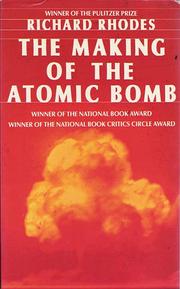
The definitive history of the Manhattan Project, and one of the great works of American nonfiction — physics, politics and personality across four decades. It is long, and everything else on this path assumes what it contains.

Six survivors, a hundred and fifty pages, no argument at all. Read it immediately after Rhodes as the corrective: the technical achievement and the human consequence belong in the same head before you go any further.
The thermonuclear age and the men who thought about it
IntermediateFollow the leap from fission to fusion weapons, the Soviet programme and espionage, and the rise of civilian defence intellectuals as the people who decided nuclear strategy.
▸ Study plan for this stage
Pace: Six weeks. Dark Sun is 736 pages and reads faster than its predecessor because you already have the cast and the physics — about four weeks at 25 pages a day. The Wizards of Armageddon is 452 pages of intellectual history and takes two more; it is a much lighter read than its subject matter suggests
- Fission versus fusion, and the crucial asymmetry — a fission weapon has a practical yield ceiling, a thermonuclear weapon in principle does not, which is what turns a weapon into an arsenal question
- The Soviet programme as an actual programme: Kurchatov, Beria's supervision, and the domestic scientific effort that espionage accelerated rather than replaced
- The espionage record — Fuchs above all — and Rhodes's care in estimating how much time it actually saved, which is a model of handling a contested quantitative claim
- The Super debate and the Oppenheimer security hearing as the moment scientific advice and political loyalty were forced apart, and the precedent that set
- RAND as an institutional invention: civilians with no military experience, funded by the Air Force, handed the strategic problem because nobody else had a method
- Wohlstetter's basing study and the discovery that a retaliatory force can itself be destroyed — the origin of second-strike thinking and of almost every procurement argument that followed
- The cast Kaplan assembles — Brodie, Wohlstetter, Kahn, Schelling — and the fact that you are about to read two of them directly
- How institutional funding shapes conclusions: Kaplan is careful about which RAND findings happened to serve the Air Force's interests, and you should carry that scepticism into the next stage
- What did the Teller–Ulam configuration solve that the earlier 'classical Super' could not, and why did that make an arms race with no natural ceiling?
- On Rhodes's evidence, how much did espionage accelerate the Soviet bomb? Give the estimate and the evidence behind it rather than the headline
- Rhodes is harder on American decisions in Dark Sun than in the first volume. Identify three and state his objection to each
- What did Wohlstetter's basing study find, and what policy consequences followed? Why is it repeatedly called the most consequential analysis of the Cold War?
- What did RAND's position — civilian analysts on Air Force money — do to the ideas it produced? Give an example where you think it shows
- Draw a two-column timeline, 1945 to 1955: American programme on the left, Soviet on the right, with the espionage transfers as arrows between them. Dark Sun gives you everything needed
- Write 250 words on the Oppenheimer security hearing as Rhodes presents it: what the formal charge was, and what was actually being decided
- Make a one-page dossier from Kaplan for each of Brodie, Wohlstetter, Kahn and Schelling — training, institutional home, central idea, and who they were arguing against. You will read two of them next
- State the second-strike argument in five sentences of your own. Write it down and keep it; the point of writing it now is to check it against Schelling in the next stage
- Pick one RAND conclusion Kaplan describes and write the strongest case that it was correct on the merits, then the strongest case that it was institutionally convenient
Next up: Kaplan has shown you where deterrence theory came from and under what pressures — now you read the founding texts themselves, which is far easier to do critically with the institutional history already in hand.
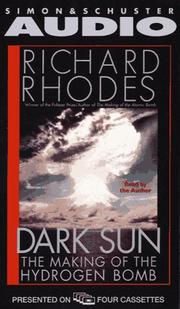
The sequel: the hydrogen bomb, the Soviet effort and the espionage that accelerated it, and the beginning of an arms race with no obvious stopping point. Rhodes is harder on the American decisions here than in the first volume.
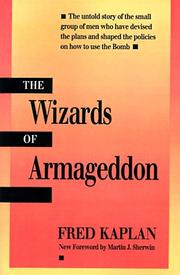
The history of RAND and the civilian strategists who invented nuclear strategy from scratch, largely without military experience. It explains where the concepts in the next stage came from and under what institutional pressures — which is the best possible preparation for reading them straight.
Deterrence theory in the original
IntermediateRead the foundational strategic texts directly, and be able to state the case both for and against the proposition that nuclear weapons keep the peace.
▸ Study plan for this stage
Pace: Six weeks, and this is the stage to read slowly with a pen. Arms and Influence is 303 pages but is an argument rather than a narrative — 15 pages a sitting, rereading the chapters on commitment and on the threat that leaves something to chance. On Thermonuclear War is long and deliberately clinical;
- Deterrence versus compellence — Schelling's own distinction — and his argument that making someone stop is far harder than making them not start
- The threat that leaves something to chance: when a threat is not credible because carrying it out would be irrational, you make the outcome partly uncontrollable rather than more emphatic
- Commitment as a strategy of deliberately removing your own options — burning bridges, tripwires, automated responses — which is the intellectual root of hair-trigger postures
- The reciprocal fear of surprise attack, where each side's rational precaution makes the other's attack more attractive, and why that is a structural problem rather than a failure of goodwill
- Kahn's escalation ladder and his insistence that postwar outcomes are 'tragic but distinguishable' — the claim that made him notorious, and which he intended as an argument for civil defence and against all-or-nothing planning
- Waltz's proliferation optimism: nuclear weapons make states cautious, deterrence is easy to achieve, so spread is stabilising
- Sagan's organisational pessimism: states are not unitary rational actors, militaries have parochial interests, and complex systems fail in ways no theory of rational deterrence models
- The shape of a genuine scholarly disagreement — Sagan and Waltz share nearly all the facts and differ on an assumption, and being able to locate that assumption is the transferable skill here
- Define deterrence and compellence as Schelling does, and explain why he thinks compellence is the harder problem
- What is 'a threat that leaves something to chance' solving? Give a non-nuclear example of your own that has the same structure
- State the strongest defence of Kahn against the charge that thinking about fighting a nuclear war makes one more likely, and then say where you think that defence fails
- Waltz and Sagan agree on most of the historical record. Name the assumption they actually differ on and show how the rest follows from it
- Write the case that nuclear weapons have kept the great powers from war, and the case that they have not, each in a paragraph, without indicating which you hold
- Take three of Schelling's non-nuclear examples — he draws heavily on ordinary bargaining and on limited war — and write out the structure of each as a two-player game with payoffs. The abstraction is the point of the book
- Reproduce Kahn's escalation ladder from memory after finishing him, then check it against the text and note what you dropped. What you forgot is usually what you found unbearable
- Score the Sagan–Waltz exchange point by point: claim, counter, reply, and who you think has the better of it on each. Six or seven rows is enough
- Write a 300-word memo advising a non-nuclear head of state whether to acquire nuclear weapons, citing both Waltz and Sagan by name and reaching an actual recommendation
- Retrieve the second-strike statement you wrote in the previous stage and correct it against Schelling. Note every place Kaplan's summary differed from the original
Next up: You now hold the theory in its strongest form, which is the only honest way to read the accident record — the next stage is the empirical test of assumptions you have just seen stated as clearly as they have ever been stated.
Schelling's account of coercion, commitment, threats that leave something to chance, and the manipulation of risk is the intellectual foundation of deterrence. He won a Nobel for this work, and it is far more readable than its reputation suggests.

The book that made Kahn notorious for asking, in detail, how a nuclear war might be fought and survived. It is uncomfortable and was widely condemned as such, and reading it is the only way to understand what the strategists were actually arguing about rather than the caricature.
A single book containing both sides of the field's central dispute: Waltz argues proliferation stabilises international politics, Sagan argues organisational failure makes it dangerous, and each replies to the other. There is no more efficient way to see a genuine scholarly disagreement worked out at length.
How close it came
IntermediateConfront the empirical record of accidents, false alarms and crises, and judge how much weight the theoretical arguments can bear against it.
▸ Study plan for this stage
Pace: Seven weeks. Command and Control is 644 pages and alternates a minute-by-minute account of a single 1980 accident with a broad history of nuclear safety, so it reads like a thriller and can take three weeks comfortably. The Limits of Safety is 302 pages of organisational theory and needs two weeks o
- The Damascus Titan II accident of 1980 as Schlosser's spine — a dropped socket, a fuel leak, and a thermonuclear warhead thrown clear of the silo, reconstructed from the people who were there
- The always/never dilemma: a weapon must always work when properly ordered and never detonate otherwise, and every engineering choice trades one against the other
- The safety devices that resulted — one-point safety, sealed-pit designs, permissive action links — and the decades-long resistance to fitting them
- Sagan's methodological move in The Limits of Safety: taking high reliability organisation theory and normal accidents theory as two rival predictions and testing them against the command system's actual record
- Systematic underreporting of near-misses, and the reason it is structural rather than conspiratorial — the organisation that judges whether an incident was serious is the one it reflects on
- Plokhy's Soviet archival material on October 1962, showing Khrushchev improvising and both leaderships acting on bad information about the other
- The specific October 1962 incidents that no theory of crisis management anticipated — the U-2 that strayed over Siberia, the routine test launch that was not cancelled, the submarine out of contact with Moscow
- The general problem this stage poses to the previous one: deterrence theory assumes a controllable arsenal and informed decision-makers, and the record supplies neither
- State the always/never dilemma and explain why it admits no full solution rather than merely an expensive one
- Which single incident in Schlosser most damages the claim that the arsenal is under control, and why that one rather than the most spectacular?
- Sagan sets two theories of organisational safety against each other. What is each, what evidence would favour each, and what does he conclude?
- What does Plokhy's Soviet material change about the standard account of the Cuban Missile Crisis? Be specific about which received claims it revises
- Which assumption of Schelling's or Kahn's does the accident record contradict most directly? Quote the assumption before answering
- Build one table across all three books: date, incident, how it was stopped, and whether the stop was a designed safeguard or luck. The last column is the finding
- Write 200 words on the Damascus accident as an engineering failure, then 200 more on the same accident as an organisational failure. The two accounts should barely overlap
- Draw the Cuban Missile Crisis as two parallel decision timelines — what Washington believed and what Moscow was actually doing — using Plokhy. Mark every point where they diverge
- Take one incident Schlosser describes that Sagan does not, and analyse it using Sagan's normal-accidents framework. This is the test of whether you have the framework or only the anecdotes
- Return to your memo from the previous stage advising a head of state, and revise it in light of this stage. Note what changed and why
Next up: The accident record shows the system misbehaving at the edges — the final stage goes to the centre and reads what the system was actually planning to do on purpose.
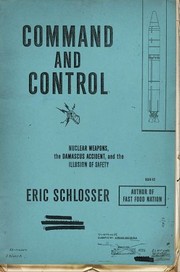
Built around a 1980 Titan II accident in Arkansas and interleaved with a history of nuclear safety failures, this is the most thorough public account of how nearly the American arsenal has gone wrong. It is the factual case that Sagan's half of the previous book argues theoretically.
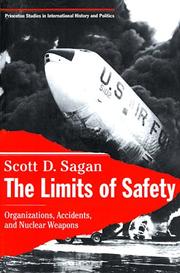
The scholarly version: Sagan applies organisational theory to nuclear command systems and shows near-misses were more frequent than the official record admits. Read it after Schlosser, when the incidents are already familiar and the analytical framework is what you need.

The Cuban Missile Crisis reconstructed from Soviet as well as American archives, showing decision-makers on both sides badly informed and improvising. It is the sharpest available demonstration that crisis management is not what the theory assumes it to be.
The war plans, from the inside
IntermediateSee what American nuclear strategy actually consisted of as an operational plan, and understand why insiders who read those plans came away alarmed.
▸ Study plan for this stage
Pace: Four to five weeks. The Doomsday Machine is 426 pages by a participant with an argument, and reads quickly; give it two to three weeks and read it with the previous stage's scepticism intact, because Ellsberg is advocating as well as reporting. Kaplan's The Bomb is the natural closer and takes two m
- Delegation of launch authority below the President — Ellsberg's central discovery, and the reason the title is a description rather than a metaphor
- The Single Integrated Operational Plan as an object: a plan with almost no options, whose own casualty estimates ran into the hundreds of millions, and which could not strike the Soviet Union without also striking China
- The gap between declared policy and operational plan, which is the single most useful idea on this path — public doctrine and the target list are produced by different institutions for different audiences
- Ellsberg as participant and advocate at once: he was inside the planning system before the Pentagon Papers, and the book is written to change policy, which affects emphasis without necessarily affecting accuracy
- Kaplan's recurring pattern across presidencies: a new president is briefed on the war plan, is appalled, orders more options, and the arsenal and the targeting bureaucracy absorb the order
- Counterforce versus countervalue targeting, and why the choice between them keeps being remade and keeps producing more weapons rather than fewer
- Why the institutional story and the theoretical story do not match — Kaplan spent forty years following both, and this book is the closing argument of the one that began with The Wizards of Armageddon
- What did Ellsberg find in the war planning documents, and why did it alarm him more than the existence of the weapons?
- Ellsberg is writing to persuade. Identify two places where the advocacy shapes the presentation, and say whether it undermines the factual claims
- Kaplan shows president after president trying to change nuclear strategy. What is the recurring obstacle, and is it the same obstacle each time?
- What would it take to verify a claim about delegated launch authority today? Use what both books say about how the earlier facts came out
- After all five stages: is deterrence a theory that describes the system, or a story told about a system that actually runs on institutional momentum? Argue it either way, with evidence
- Write a one-page summary of the SIOP as Ellsberg describes it, then mark every fact in it that was classified at the time he learned it. The second list is the argument about secrecy
- Argue against your source: 250 words on where Ellsberg's account should be treated with caution, using only internal evidence and what you know from Schlosser and Sagan
- From Kaplan, build a table of president, the change to nuclear strategy they attempted, and what measurably changed. The empty cells are the finding
- Write the closing essay — 800 words on whether nuclear weapons have made great-power war less likely — citing at least one book from every stage of this path, and stating clearly where the evidence runs against your own conclusion
- Reread your one-paragraph case for and against deterrence from the third stage. Rewrite both paragraphs now, and note what the last two stages changed
Next up: This closes the path; from here the natural continuations are the arms control negotiating histories, the Cold War crisis literature beyond 1962, and current work on proliferation in South Asia and the Korean peninsula.

Ellsberg worked on nuclear war planning before he leaked the Pentagon Papers, and describes delegated launch authority and casualty estimates that were kept from the public for decades. A participant's account, argued with a purpose, and unmatched for what it reveals about the gap between declared policy and actual plans.

Kaplan returns forty years after his RAND history to trace presidential nuclear decision-making from Truman to the present, using recently declassified material. It is the natural closing book: the institutional story brought up to date, by someone who has followed it the whole way.
Discussion
Keep reading
Paths that share books, cover the same subject, or open a related topic.