Cormac McCarthy Reading Order: Where to Start
This curriculum moves through Cormac McCarthy's work in roughly the order that rewards the reader most: starting with his most accessible and celebrated novel, building through the lyrical Border Trilogy, ascending to the brutal philosophical summit of Blood Meridian, and closing with his late masterworks. Each stage prepares the reader's ear for McCarthy's prose rhythms, his moral vision, and his escalating formal ambition.
The Accessible Entry Point
IntermediateGet acclimated to McCarthy's stripped punctuation, biblical cadences, and moral seriousness through his most widely read and emotionally immediate novel.
▸ Study plan for this stage
Pace: 2–3 weeks, ~20–25 pages/day (The Road is ~287 pages); read in long, uninterrupted sittings when possible to honor the novel's relentless forward momentum
- Stripped punctuation and its effect: McCarthy omits quotation marks, most commas, and apostrophes in contractions — notice how this collapses the distance between narration and dialogue, creating a seamless, suffocating intimacy
- Biblical cadence and the King James inheritance: long paratactic sentences chained by 'and' mirror Genesis and Ecclesiastes; identify passages where this rhythm amplifies dread or tenderness
- The man and the boy as moral poles: the man's pragmatic survivalism versus the boy's insistence on ethical purity ('carrying the fire') dramatizes McCarthy's central tension between endurance and goodness
- Post-apocalyptic landscape as theological void: the ashen, colorless world is not merely setting but a sustained meditation on what remains — of meaning, of God, of humanity — when civilization is stripped away
- Sparse dialogue as characterization: without dialogue tags or punctuation, the reader must infer tone, power, and love entirely from word choice and context
- The 'carrying the fire' motif: track this phrase across the novel as McCarthy's ambiguous answer to the question of whether moral life is possible in a world without future or community
- Violence and tenderness in tension: McCarthy never lets brutality exist without a counterweight of fierce parental love — study how scenes of horror and scenes of intimacy are structurally paired
- Minimalism as style and philosophy: the prose enacts its themes — what is stripped away on the page mirrors what is stripped away in the world
- How does McCarthy's removal of quotation marks and standard punctuation change your experience as a reader — emotionally, rhythmically, and in terms of trust in the narrator?
- What does 'carrying the fire' mean to the man, and what does it mean to the boy? Do they mean the same thing, and does the meaning shift by the novel's end?
- How does McCarthy use the landscape of The Road as a moral and theological argument? What is the ash-covered world 'saying' about God, history, or human nature?
- Identify three passages where the sentence rhythm is unmistakably biblical. What specific syntactic choices create that effect, and what emotional work does the rhythm do in context?
- The boy consistently extends compassion to strangers while the man resists it. How does McCarthy adjudicate between them — does the novel endorse one position, or hold them in irresolvable tension?
- How does McCarthy handle time in The Road? Why are there no chapter numbers, dates, or named locations, and what is the cumulative effect of that erasure on the reader's sense of hope or despair?
- Punctuation autopsy: Select any dialogue-heavy page and rewrite it with standard punctuation and dialogue tags. Read both versions aloud. Write a one-paragraph reflection on what is gained and lost — this makes McCarthy's stylistic choices viscerally concrete.
- Sentence imitation: Choose a passage of 5–8 sentences that feels distinctly McCarthyesque (paratactic, spare, elemental). Write your own 5–8 sentence passage about a mundane survival task (making coffee, finding shelter) in strict imitation of his syntax and diction.
- Motif map: Keep a running log of every appearance of 'fire,' 'light,' 'dark,' and 'gray/grey' as you read. At the end, chart how these images cluster — do they shift in frequency or context as the novel progresses? What does the pattern reveal?
- Moral ledger: After finishing, create a two-column list — every act of mercy or connection the man performs, and every act of hardness or refusal. Do the same for the boy. Use this ledger to write a 300-word argument for which character McCarthy most endorses.
- Read aloud sessions: At least twice during your reading, read a full page aloud at a slow, deliberate pace. Record yourself if possible. Notice where you naturally pause, where the lack of punctuation forces you to make interpretive decisions, and where the rhythm feels like prayer or elegy.
- Comparative theology: Find and read two short passages — one from Genesis (e.g., the flood narrative, Gen. 6–9) and one from Ecclesiastes (e.g., Ch. 1 or 3). Place them side by side with a passage of your choosing from The Road. Annotate the syntactic and thematic echoes in writing.
Next up: Mastering McCarthy's prose surface and moral seriousness in The Road's intimate two-character frame prepares the reader to encounter those same techniques operating at far greater scale, complexity, and darkness in his longer, more structurally demanding works.
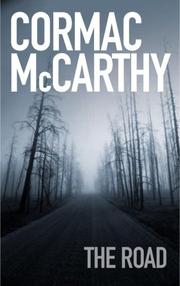
McCarthy's most accessible novel — spare, linear, and emotionally direct — it introduces his signature style (no quotation marks, minimal punctuation, incantatory prose) without the dense historical or mythological layering of his harder works. It is the ideal on-ramp.
The Border Trilogy
IntermediateRead the trilogy in sequence to experience McCarthy's full novelistic range: coming-of-age tragedy, epic quest, and the collision of two lives across the U.S.–Mexico border.
▸ Study plan for this stage
Pace: 10–12 weeks total: ~3–4 weeks per novel. All the Pretty Horses (~302 pp): 15–20 pages/day; The Crossing (~426 pp): 20–25 pages/day; Cities of the Plain (~292 pp): 15–20 pages/day. Reserve the final 3–4 days after each book for reflection, journaling, and discussion before moving on.
- The Bildungsroman in a harsh landscape: John Grady Cole's coming-of-age in All the Pretty Horses as a collision between romantic idealism and brutal reality
- The solitary quest and ritual of passage: Billy Parham's three journeys in The Crossing as a meditation on futility, grief, and the sacred
- Convergence and tragedy: how Cities of the Plain braids the fates of John Grady and Billy, showing how two distinct worldviews meet and ultimately fail to save each other
- The U.S.–Mexico border as symbolic and literal threshold: the border is not merely geography but a moral and existential boundary separating innocence from experience, order from chaos
- McCarthy's prose style: long unpunctuated dialogue, biblical cadence, Spanish-language passages without translation, and lyrical landscape description as a form of meaning-making
- Horses as moral and spiritual currency: what characters' relationships with horses reveal about their values, their capacity for love, and their fate
- The embedded parable and the storytelling stranger: recurring figures in The Crossing and Cities of the Plain who deliver philosophical monologues that reframe the main narrative
- Fate, will, and the indifferent universe: how all three novels interrogate whether human agency matters against the forces of history, violence, and chance
- In All the Pretty Horses, how does John Grady Cole's idealized vision of Mexico and the vaquero life collide with the reality he encounters, and what does he lose — and keep — by the novel's end?
- What is the significance of Billy Parham returning the wolf to Mexico in The Crossing, and how do his subsequent journeys repeat and deepen the themes established in that first quest?
- How do the philosophical parables told by strangers throughout The Crossing (the blind man, the ex-priest, the old man in the mountains) function structurally and thematically within the novel?
- In Cities of the Plain, how does McCarthy use the contrasting personalities of John Grady and Billy to dramatize different responses to loss, love, and mortality?
- How does McCarthy's use of the Spanish language — untranslated and unglossed — shape the reader's experience of the border world, and what does it demand of the reader?
- Tracing all three novels together: in what ways does the trilogy form a unified moral argument, and what vision of American (and human) experience does it ultimately offer?
- Prose imitation journal: After finishing each novel, write one page of original prose in McCarthy's style — no quotation marks in dialogue, at least one extended landscape description, and one sentence that runs more than five lines. Compare your three attempts to track how your ear for his style develops.
- Border-crossing map: Draw or annotate a physical map tracing every crossing of the U.S.–Mexico border made by John Grady, Rawlins, and Billy across all three books. Note the emotional stakes of each crossing — what the character carries over and what they leave behind.
- Parable log for The Crossing: Each time a stranger delivers a philosophical speech or embedded story, write a one-paragraph summary of its argument and a one-sentence note on how it reframes the chapter you just read. Aim to collect at least five entries.
- Character comparison essay (500–700 words): After finishing Cities of the Plain, write a structured comparison of John Grady Cole and Billy Parham — their attitudes toward love, their relationships with animals, and their capacity to accept loss. Use at least one specific scene from each of the three novels as evidence.
- Spanish-language close reading: Select three passages where McCarthy uses extended Spanish dialogue. Using a translation tool, render them into English, then write a short reflection on what is gained and what is lost by a reader who does not speak Spanish — and what McCarthy may have intended by that gap.
- Trilogy arc reflection: Write a one-page personal response to the trilogy as a whole. What single image, sentence, or scene from across the three books stays with you most, and what does your choice reveal about the trilogy's cumulative emotional effect on you as a reader?
Next up: Mastering the Border Trilogy's expansive, myth-saturated landscapes and McCarthy's meditation on fate and human will directly prepares the reader for his later, more compressed and apocalyptic works — where those same themes are stripped of beauty and pushed to their darkest, most existential extreme.
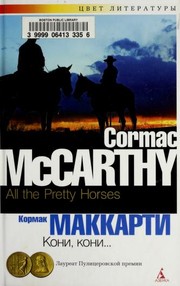
The most romantically accessible of the three, it eases the reader into the Border world with a clear protagonist and a propulsive plot, establishing the trilogy's central themes of lost innocence and the vanishing West.
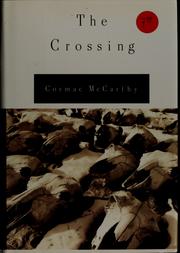
Darker and more digressive than its predecessor, this novel introduces the long embedded monologues and parable-like episodes that demand more patience — skills you'll need for Blood Meridian.
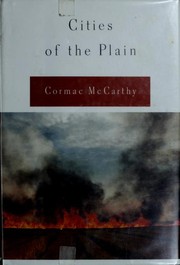
Brings both protagonists together for a tragic conclusion; reading it third gives it full emotional weight and closes the trilogy's meditation on fate, love, and the end of an era.
The Summit: Blood Meridian
ExpertConfront McCarthy's most demanding and philosophically radical novel, now equipped with the prose fluency and thematic grounding built in earlier stages.
▸ Study plan for this stage
Pace: 4–5 weeks, ~20–25 pages/day (Blood Meridian rewards slow, deliberate reading; plan for re-reading dense passages and the Judge's monologues in full)
- The Judge as philosophical archetype: war as the ultimate human expression, the Judge's claim that 'whatever in creation exists without my knowledge exists without my consent'
- Gnostic and anti-redemptive theology: McCarthy's inversion of the Western genre's moral universe and the absence of providential order
- Historical grounding vs. mythic amplification: the novel's basis in the Glanton Gang's real atrocities and how McCarthy transforms documented history into apocalyptic myth
- The prose as violence: McCarthy's use of Latinate diction, biblical cadence, and paratactic syntax to aestheticize and implicate the reader in brutality
- The Kid vs. the Judge: the novel's central tension between a mute, instinctual resistance to evil and a totalizing, articulate will-to-power
- Landscape as ontology: the Sonoran Desert and its function not as backdrop but as a moral and metaphysical statement about the indifference of the universe
- The scalp-hunting economy: violence as commerce, manifest destiny as genocide, and the novel's unflinching critique of American expansionism
- Fate, agency, and the dance: the closing image and the Judge's final declaration as a summation of the novel's deterministic philosophy
- What is the Judge's philosophical argument about war and existence, and how does McCarthy dramatize it through the Judge's actions rather than merely his speeches?
- How does Blood Meridian subvert or destroy the conventions of the American Western genre, and what moral or ideological point does that subversion make?
- What role does the Kid play as a moral counterweight to the Judge, and why does McCarthy keep his interiority so opaque?
- How does McCarthy's prose style — its rhythms, vocabulary, and punctuation choices — function as a thematic instrument rather than mere stylistic ornamentation?
- In what ways does the novel engage with real history, and what is the effect of grounding extreme mythic violence in documented events?
- What does the novel's ending — the epilogue's 'man who moves in the列 列 dark' and the Judge's final dance — suggest about McCarthy's ultimate vision of human fate?
- Close-reading log: Select five of the Judge's speeches and write a one-paragraph philosophical paraphrase of each, then a second paragraph arguing where McCarthy seems to endorse, complicate, or undercut the Judge's position.
- Prose imitation: Write one page of original prose in McCarthy's Blood Meridian style — no quotation marks, biblical diction, paratactic violence — then annotate every deliberate stylistic choice you made and why.
- Historical comparison: Read the primary source passages from Samuel Chamberlain's 'My Confession' (the memoir McCarthy drew from) available in scholarly editions or online, and write a 500-word analysis of what McCarthy added, removed, or mythologized.
- Thematic mapping: Create a visual or written map tracing every instance of fire, sun, and light imagery through the novel, then write a thesis-driven paragraph arguing what this pattern reveals about the novel's cosmology.
- Debate exercise: Write two 200-word position statements — one arguing the Kid represents a genuine moral alternative to the Judge, one arguing he does not — then write a 100-word synthesis of where you actually stand and why.
- Re-read the epilogue (the final two pages) three times on separate days and write a new one-paragraph interpretation each time, tracking how your reading evolves with distance and reflection.
Next up: Mastering Blood Meridian's philosophical extremity and stylistic density equips the reader to approach McCarthy's later work — particularly the Border Trilogy and The Road — with the ability to recognize how he refines, softens, or answers the nihilistic vision of the Judge across the full arc of his career.
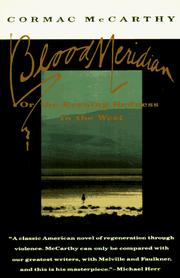
Often called the greatest American novel of the 20th century, it is also McCarthy's most violent and philosophically dense work. Reading it after the Border Trilogy means you already carry the landscape, the history, and the prose rhythms needed to endure — and appreciate — its full force.
The Late Novels
ExpertExperience McCarthy's final creative period: a Pulitzer-winning morality play, a noir thriller, and his long-awaited return after a 16-year silence — each showing a master refining his vision.
▸ Study plan for this stage
Pace: 8–10 weeks total: ~3 weeks for No Country for Old Men (~30 pages/day), ~3 weeks for The Passenger (~25 pages/day), and ~2–3 weeks for Stella Maris (~20 pages/day, given its dense philosophical dialogue format). Plan for 1–2 slower re-reading days per week to sit with McCarthy's prose and thematic la
- Anton Chigurh as a philosophical force — fate, determinism, and the 'coin-flip' as moral framework in No Country for Old Men
- Sheriff Bell's elegiac voice: the use of first-person monologue chapters as a Greek chorus of moral lament, framing the novel as a meditation on generational decline
- The limits of genre: how No Country for Old Men subverts the crime thriller by denying resolution, refusing the hero's triumph, and letting evil simply continue
- Bobby Western as a post-Bomb existential figure — survivor's guilt, quantum physics, and the weight of a father's complicity in mass destruction in The Passenger
- McCarthy's treatment of mathematics and science as spiritual language: how The Passenger and Stella Maris use physics, Gödel's incompleteness theorems, and number theory as metaphors for the unknowable
- Alicia Western and the nature of genius, madness, and alienation: Stella Maris as a chamber drama of a mind that cannot reconcile its gifts with the world's indifference
- The dialogue-only structure of Stella Maris — McCarthy's most formally radical choice — and what the absence of prose narration forces the reader to confront
- The 16-year silence and late-career synthesis: how The Passenger and Stella Maris together form a diptych that revisits McCarthy's lifelong obsessions (death, language, God, nothingness) in their most distilled form
- In No Country for Old Men, what does Sheriff Bell's failure to confront Chigurh ultimately argue about the nature of evil — is it supernatural, systemic, or simply indifferent? Use specific scenes to support your reading.
- How does McCarthy use the coin-toss motif in No Country for Old Men to dramatize the tension between free will and determinism, and how does Chigurh's philosophy compare to the nihilism found in McCarthy's earlier work?
- The Passenger opens in 1980 but is haunted by the 1945 Trinity test and Hiroshima — how does McCarthy construct Bobby Western's identity as literally born of destruction, and what does this say about American innocence and guilt?
- The 'Kid' and his hallucinated troupe in The Passenger are never fully explained. What interpretive function do these visions serve — are they symptoms of grief, externalized guilt, or something more metaphysically charged?
- Stella Maris is written entirely in dialogue between Alicia and her psychiatrist. What is gained and what is lost by stripping away McCarthy's signature prose? How does the form mirror Alicia's own condition?
- Taken together as a diptych, how do The Passenger and Stella Maris reframe each other — does reading Alicia's story change your understanding of Bobby, and vice versa? What does McCarthy suggest about the relationship between genius, love, and self-destruction?
- CLOSE READING — Bell's Monologues: Transcribe one of Sheriff Bell's prefatory monologue chapters from No Country for Old Men and annotate it line by line. Identify every instance of nostalgia, moral uncertainty, and Biblical or mythic allusion. Then write a one-page response: what is Bell mourning, and is McCarthy endorsing or interrogating his worldview?
- CHARACTER PHILOSOPHY MAP: Create a two-column document for No Country for Old Men contrasting Chigurh's stated philosophy (pull direct quotes) with Bell's stated philosophy (pull direct quotes). Write a 500-word analysis of where they agree, where they diverge, and what that tension reveals about the novel's moral architecture.
- SCIENCE AS METAPHOR JOURNAL: While reading The Passenger and Stella Maris, keep a running log of every reference to physics, mathematics, or formal logic (e.g., Gödel, black holes, set theory). After finishing both books, write a 600-word essay arguing what McCarthy is using science to say about human consciousness, grief, or God.
- DIALOGUE REWRITE EXERCISE: Take a 2–3 page scene from The Passenger that includes prose narration alongside dialogue, then rewrite it in the pure dialogue-only style of Stella Maris. Reflect in a short paragraph: what information disappears? What is forced into the open? How does this illuminate McCarthy's formal choice in Stella Maris?
- DIPTYCH COMPARISON ESSAY: After finishing both The Passenger and Stella Maris, write a 750–1,000 word comparative essay treating them as two panels of a single work. Focus on one shared theme (e.g., the impossibility of belonging, the inheritance of catastrophe, or the silence beyond language) and trace how each book approaches it differently through its protagonist.
- LATE MCCARTHY SYNTHESIS: Write a personal critical reflection (500–750 words) answering: How does this final creative period revise or complete your understanding of McCarthy as a whole? Reference specific moments from No Country for Old Men, The Passenger, and Stella Maris to ground your argument.
Next up: Mastering McCarthy's late novels — with their philosophical density, formal experimentation, and unflinching confrontation with mortality and meaning — equips the reader to engage critically with the full arc of his career and with the broader tradition of American literary modernism and existentialism from which he draws and to which he contributes.
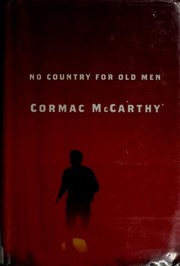
Written in a tighter, almost cinematic style, it serves as a palate-cleanser after Blood Meridian while deepening the trilogy's themes of encroaching evil and the failure of old moral codes.

McCarthy's penultimate novel, published in 2022 after a 16-year gap, is a brooding meditation on grief, physics, and guilt — rewarding readers who have already internalized his world.

The companion novel to The Passenger, told entirely in dialogue, it is the most formally experimental of his late works and the natural final destination for a reader who has traveled the full arc of his career.
Discussion
Keep reading
Paths that share books, cover the same subject, or open a related topic.