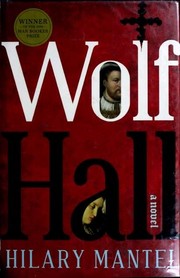
Start with Wolf Hall, and start with it directly — no background reading first. The trilogy runs Wolf Hall, then Bring Up the Bodies, then The Mirror and the Light, in that order, with no chronological alternative to argue about. Mantel wrote it as one continuous life and it works that way.
The tempting mistake is to read a Tudor history first so you will know who everyone is. Do not. Mantel introduces her people in the way Cromwell meets them, and a history book read in advance will only make you impatient with a novel that is deliberately withholding. Save the background for between volumes, where it is genuinely useful.
The famous first-hundred-pages problem
You need to know about the pronoun before you start. Mantel writes Cromwell in a close third person that often begins a sentence with a bare he, even when another man was named last, so that a line reading he, Cromwell can arrive on page thirty and feel like a printing error. It is a deliberate device — you are locked inside one skull, and that skull does not need to name itself — and Mantel added the clarifying he, Cromwell tag partly in response to complaints about the first book.
The practical advice: when you hit an ambiguous he, assume it is Cromwell and keep going. The novel opens with a boy being beaten in a Putney yard and then jumps years and countries within a few pages; the disorientation eases once Cromwell enters Cardinal Wolsey's service and the cast settles.
Which volume is which
Wolf Hall is the largest and loosest — Cromwell rising from nothing, the fall of Wolsey, the campaign to marry Anne Boleyn. It has the most texture and the least momentum.
Bring Up the Bodies is the best-made of the three and the one most readers finish fastest. It is shorter, ferociously tight, and covers a few months: the destruction of Anne Boleyn, engineered by a man settling old scores. If Wolf Hall nearly lost you, know that the sequel is easier and better paced.
The Mirror and the Light is the honest warning. It runs to some eight hundred and seventy pages covering Cromwell's last four years, it is far more interior and elegiac than the first two, and a large number of readers stall somewhere in its middle third where the political manoeuvring thickens and nothing much moves. It is also, for those who finish it, the richest of the three. Go in expecting a slower book rather than another Bring Up the Bodies.
What to read around the trilogy
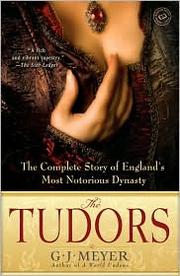
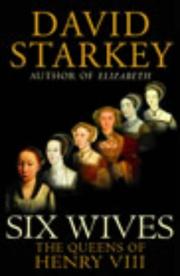
Between volumes, The Tudors by G. J. Meyer gives the whole dynasty as narrative history and is the fastest way to get your bearings. Six wives : the queens of Henry VIII by David Starkey covers the marriages in detail and is particularly good on the politics behind each one.
After you finish, read Thomas Cromwell by Diarmaid MacCulloch. It is the major modern biography, published between the second and third novels, and it is the right corrective: MacCulloch admires Mantel and still shows where the novels invent, compress and take Cromwell's side. Pair it with The Anne Boleyn Papers by Elizabeth Norton, which prints the surviving contemporary documents and lets you see how thin the evidence is that everyone has been building on.
The rival versions
Two books in our catalogue exist as deliberate counterweights. A Man for All Seasons by Robert Bolt is the play that made Thomas More a secular saint of conscience — precisely the portrait Mantel set out to demolish. Reading it after the trilogy is the sharpest possible demonstration that historical fiction is argument. The Other Boleyn Girl by Philippa Gregory tells the same court from Mary Boleyn's side in a much more melodramatic register; Mantel readers often dislike it, but it shows how differently the same facts can be arranged.
Where to stop
Stopping after Bring Up the Bodies is entirely legitimate — the two together form a complete arc and the second ends at a natural summit. Attempt The Mirror and the Light when you have the appetite for a long, slow, inward book.
Follow the full ordered path here: Wolf Hall Reading Order and Reading Guide.