Pulitzer Prize-Winning Novels: The Best Ones to Read, in Order
The Pulitzer for Fiction has been awarded since 1918 to an American author, and Joseph Pulitzer's own wording asked for a novel dealing with American life — a clause the board has honoured loosely but never abandoned, which is why the winners read like an argument about what America is. Two things make it unlike the Booker: a jury proposes three finalists but a separate board makes the decision and can overrule them, and the board can decline to award the prize at all, which it has done eleven times, most explosively in 2012. Read in order of difficulty rather than by year, the list moves from short contemporary novels to the American canon to the deliberately uncomfortable winners the board argued over.
Short, Clear, Contemporary
BeginnerStart with three recent winners that are short, plainly written and emotionally direct — they establish what the prize currently rewards without demanding any background.
▸ Study plan for this stage
Pace: Four to five weeks for roughly 800 pages across three short books. Gilead is about 255 pages and should be read slowly — a chapter or two a sitting, because it has no plot to pull you forward. The Road is a similar length and will take three or four days. Olive Kitteridge is about 290 pages in thirt
- The Pulitzer for Fiction goes to an American author, and Joseph Pulitzer's own wording asked for a novel dealing with American life. The board has honoured that clause loosely and never dropped it, which is why the winners read as a running argument about what America is.
- The prize's structure is unlike the Booker's in two ways that matter: a jury proposes three finalists but a separate board decides and can overrule them, and the board may decline to award at all — which it has done eleven times, most controversially in 2012.
- Gilead is a dying Iowa preacher's letter to the young son he will not see grow up. Almost nothing happens; the sentences are the reason to read it, and it is the best possible calibration for a prize that frequently rewards a quiet book over a big one.
- Gilead's theology is not decoration — Robinson's Calvinism is the engine of the narrator's judgements, particularly about the godson he cannot forgive, and the novel's central conflict is a doctrinal one played out as family feeling.
- The Road is Gilead's opposite in surface and the same book underneath: a father addressing a son about how to be good. McCarthy's stripped punctuation is far easier to absorb at this length than in his longer novels.
- McCarthy withholds the catastrophe's cause entirely. The novel is not about what happened; the refusal to explain is what forces the reader onto the moral question.
- Olive Kitteridge is thirteen linked stories about a retired Maine schoolteacher who is often unkind and is never dismissed by her author. Some stories barely feature her, and the accumulated portrait is built partly from other people's peripheral vision.
- That it won at all is instructive: the Fiction Pulitzer accepts story collections and linked-story books, which the Booker does not. The prize's definition of 'novel' is looser than its name suggests.
- Gilead and The Road are both a father addressing a son. What does each think a father can actually transmit, and where do they disagree?
- What does McCarthy gain by never naming the catastrophe? What would the novel lose if he did?
- Robinson's narrator is a Calvinist minister. Which of his judgements follow from his theology rather than from his temperament, and can you separate the two?
- Olive Kitteridge is unkind in most of her appearances. What technique keeps her from becoming merely unpleasant, and where does it come closest to failing?
- Several Olive Kitteridge stories barely include Olive. What does the book get from those, and would a conventional novel have kept them?
- On the evidence of these three, what does the Pulitzer currently reward? Write it as one sentence you could test against the next stage.
- Read the first ten pages of Gilead and the first ten of The Road on the same evening, and write 200 words on what the two prose styles have in common beneath the obvious difference.
- Take one page of The Road and restore conventional punctuation to it. Read both aloud and note what is lost.
- List the thirteen Olive Kitteridge stories and mark how central Olive is in each. The distribution is the book's design.
- Write a one-sentence definition of what Pulitzer's 'American life' clause seems to mean for these three books, and keep it to test against later stages.
- Pick the passage of Gilead you found most beautiful and one you found inert, and work out what technically separates them.
Next up: Having seen what the prize rewards now, you can go back to the winners that became required reading and watch the American-life clause being fought over across a century.
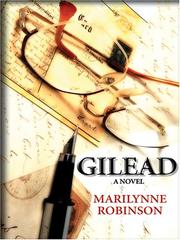
An old Iowa preacher writes a letter to the young son he will not live to see grow up. Almost nothing happens and the sentences are the reason to read it — the best possible calibration for a prize that often rewards quiet books over big ones.
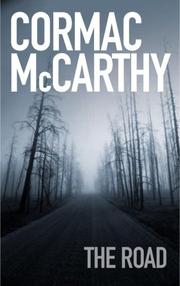
A man and his son walk south through a burnt America. Read it second because it is the exact opposite of Gilead in surface and the same book underneath — a father addressing a son about how to be good — and because McCarthy's stripped punctuation is much easier to absorb here than in his longer novels.
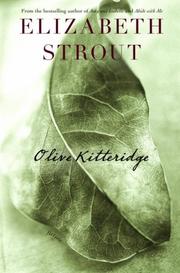
Thirteen linked stories about a retired Maine schoolteacher who is often unkind and never dismissed by her author. A useful reminder that the Fiction Pulitzer accepts story collections, which the Booker does not.
The American Canon
IntermediateRead the three winners that have become required school and university reading, and see what 'a novel dealing with American life' has meant across a century.
▸ Study plan for this stage
Pace: Seven to eight weeks for about 1,220 pages. The Age of Innocence is around 350 pages and reads faster than its period suggests — two weeks. The Grapes of Wrath is about 545 and needs three, partly because of the interchapters. Beloved is about 330 pages and needs at least two to three weeks: it is b
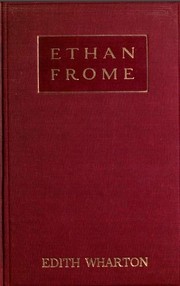
- The Age of Innocence is old New York society closing ranks on a man who wants out of his engagement, and its cruelty is entirely procedural — nobody threatens anyone; the machinery simply operates.
- Wharton was the first woman to win the Fiction Pulitzer, and the jury had chosen Sinclair Lewis's Main Street before the board substituted her book. It is the earliest famous case of the board overruling its own jury, and both novels are about the same subject — American provincial conformity — appr
- The Grapes of Wrath alternates the Joads' story with short interchapters that widen to the general condition. That structure is the book's argument: the particular family is a case, and the interchapters say so.
- It was banned and burned on publication and awarded the Pulitzer within the year, which tells you how contested the American-life clause has been from early on.
- Steinbeck's social realism — the collective as protagonist, the documentary detail, the anger held in the prose rhythm — is the tradition Beloved is written against, which is why the order matters.
- Beloved concerns a formerly enslaved woman in Ohio haunted, literally, by the daughter she killed rather than let be returned to slavery. The supernatural is not a device layered on realism; it is the book's argument that realism cannot hold this material.
- Beloved's chronology is deliberately fractured and its central event is withheld and circled. The difficulty is not ornament — the structure enacts a mind that cannot approach the memory directly.
- Morrison won after forty-eight writers published a public letter protesting that she had never received a major American award. It is the rare case where public pressure on the prize is part of the documented record, and it is worth deciding what you think that means for the award.
- In The Age of Innocence, who actually enforces the social verdict? Name the scene where you first see the mechanism working.
- The board replaced Main Street with The Age of Innocence. What does that substitution suggest about what the board wanted the prize to say about America?
- What do the interchapters in The Grapes of Wrath do that the Joad chapters cannot? Try removing one mentally and see what collapses.
- Beloved refuses straightforward realism. What specifically can the ghost do that a memory or a flashback could not?
- Steinbeck and Morrison both write about American dispossession. What does each think a novel is for, and how do their forms follow from that?
- Given the public letter that preceded Beloved's award, how should a reader weigh a prize decision made under visible pressure?
- Read the final chapter of The Age of Innocence and write 250 words on what Newland Archer's last choice means, then compare it with what you expected fifty pages earlier.
- Take three consecutive interchapters from The Grapes of Wrath and write one line each on how they change the meaning of the Joad chapter that follows.
- Reconstruct Beloved's events in chronological order on a single page. Then write 200 words on what the novel gains by refusing that order.
- Read a summary of Main Street's premise and write a paragraph on what the Pulitzer would have looked like had the jury's choice stood.
- Find the passage in Beloved that most directly answers a passage in The Grapes of Wrath about collective suffering, and set them side by side.
Next up: Beloved is the pivot of the path: everything after it is a modern novel working out how to write American history after that book existed.

Old New York society closing ranks on a man who wants out of his engagement. The first Pulitzer awarded to a woman, and worth knowing that the jury had chosen Sinclair Lewis's Main Street before the board substituted Wharton — the earliest famous example of the board overruling its own jury.
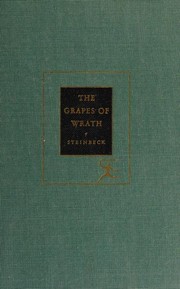
The Joads leave Oklahoma for California. Banned and burned on publication and awarded the Pulitzer within the year, which tells you most of what you need to know about how contested the prize's American-life clause has been. Read it before Beloved: it establishes the social-realist tradition Morrison writes against.

A formerly enslaved woman in Ohio is haunted, literally, by the daughter she killed. It won after forty-eight writers published a public letter protesting that Morrison had never received a major American award — the rare case where the pressure on the prize is part of the record. Harder than anything before it here, and the pivot of the whole path.
The Big Contemporary Winners
IntermediateTake on four long, ambitious modern winners and learn to tell the prize's two current modes apart: the historical reckoning and the maximalist novel of ideas.
▸ Study plan for this stage
Pace: Four to five months for roughly 2,270 pages — this is the longest stage by far. The Underground Railroad at about 380 pages takes two to three weeks and should follow directly from Beloved. Kavalier & Clay is about 640 pages but reads fast, five to six weeks. The Goldfinch is around 860 and is the e
- The Underground Railroad literalises its metaphor: Cora escapes a Georgia plantation on a railroad that is, in this book, an actual train under the ground. Each state she reaches is a different fully-realised system of racial violence, which makes the book a sequence of alternate Americas rather tha
- Whitehead and Morrison both refuse realism for the same material and refuse it differently — Morrison through haunting and fractured time, Whitehead through open counterfactual and a satirical clarity. Reading them consecutively is the sharpest comparison available on this path.
- Kavalier and Clay is two cousins inventing a comic-book superhero in wartime New York, and it is the gentlest introduction to the prize's maximalist mode: 600 pages of research, digression and set pieces that never feel like work.
- The prize now runs in two dominant modes, and this stage is designed to let you tell them apart: the historical reckoning, which asks what America did, and the maximalist novel of ideas, which asks what an American life can contain.
- The Goldfinch is a boy surviving a museum bombing and taking a painting with him, and it is the most divisive winner of the last two decades — several major critics called it a children's book for adults while it sold enormously.
- The Goldfinch is the best test on the path of whether you trust juries or readers, and both positions are defensible. Read it and form your own view rather than adopting either camp's.
- The Sympathizer is a communist double agent in the South Vietnamese army writing his confession, and it is the funniest and most formally controlled of the four. Its confession frame means every sentence is addressed to an interrogator, which changes what you can trust.
- The Sympathizer pushes hardest at the American-life clause by writing American history from outside it — the Vietnam War as experienced by someone the American version of the story has no room for. Whether that stretches the clause or fulfils it is a real question.
- Whitehead makes the railroad real. What does the literalised metaphor let him do that Morrison's haunting cannot, and vice versa?
- Each state in The Underground Railroad is a different regime. What is the effect of stacking them, rather than dramatising one deeply?
- Kavalier and Clay is enormously enjoyable. Is enjoyment doing argumentative work in the novel, or is the novel's substance elsewhere?
- State the strongest case that The Goldfinch is a major novel and the strongest case that it is not, using specific passages rather than reputations.
- The Sympathizer is written as a confession to an interrogator. Which parts of the narrative would you distrust because of that frame?
- Of these four, which best satisfies Pulitzer's 'American life' clause, and does your answer widen or narrow the clause?
- Read The Underground Railroad immediately after Beloved and write 400 words comparing how each handles the same refusal of realism.
- For The Goldfinch, mark every point where you considered stopping. Afterwards, write 300 words on whether the length is structural or indulgent, citing those points.
- Take one of Kavalier and Clay's long digressions and argue in a page that it is essential; then argue that it is not. Decide which is true.
- In The Sympathizer, list every place the narrator addresses his interrogator directly and note what he is doing at each — pleading, performing, or telling the truth.
- Write a one-page classification of all four books into the two modes described above, and note where a book resists the classification.
- Return to the one-sentence definition of the prize you wrote in stage one and revise it. Note what had to change.
Next up: With both modern modes in hand, the last stage shows the prize at its least predictable — three winners that fit no mode at all.

Cora escapes a Georgia plantation on a railroad that is, in this book, an actual train. The literalised metaphor is the whole device — read it after Beloved, which is the novel it is in conversation with, and notice how differently the two handle the same refusal to write realism.
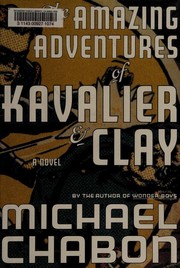
Two cousins invent a comic-book superhero in wartime New York. The most purely enjoyable long winner on this list and the gentlest introduction to the maximalist mode — 600 pages that never feel like work.
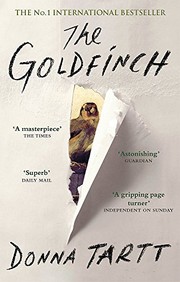
A boy survives a museum bombing and takes a painting with him. The most divisive winner of the last two decades — several major critics called it a children's book for adults while it sold enormously. Read it and decide; it is the best test on this path of whether you trust prize juries or the reading public.
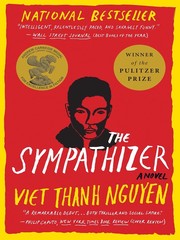
A communist double agent in the South Vietnamese army writes his confession. The funniest and most formally controlled of the four, and the one that pushes hardest at the American-life clause by writing American history from outside it. Save it for last in this stage — the final section is genuinely punishing.
The Deep Cuts and the Arguments
IntermediateFinish with three winners that show the prize at its strangest — a posthumous comic novel, a work of journalism awarded as fiction, and a Western nobody expected to win.
▸ Study plan for this stage
Pace: Three to four months for about 2,390 pages. A Confederacy of Dunces is around 390 pages and reads quickly, two to three weeks. The Executioner's Song is over 1,000 pages and is the one to spread out — six to eight weeks at 25 pages a day, and it accelerates sharply in its second half. Lonesome Dove
- A Confederacy of Dunces has the strangest citation in the prize's history: Toole killed himself after failing to place the manuscript, his mother spent years pressing it on Walker Percy, and it won eleven years after his death. The prize can honour a book its author never saw published.
- Ignatius J. Reilly is a genuinely monstrous protagonist — greedy, cruel, self-deceiving — and the comedy depends on the novel never softening him. It is also a New Orleans novel of astonishing local precision, built from the city's speech.
- The Executioner's Song is a thousand pages on the killer Gary Gilmore, assembled from interviews and documents, submitted as fiction and awarded as fiction. It is the outer edge of what the Fiction Pulitzer will accept.
- Mailer's method is the opposite of his reputation: the prose is flattened, the authorial voice almost entirely withdrawn, and the book's power comes from the accumulation of plain sentences from many mouths. The first half is deliberately slow.
- The Executioner's Song is the direct ancestor of most modern true-crime narrative, and reading it raises a question the prize never answered: what distinguishes a novel from documentary once the author stops inventing?
- Lonesome Dove is two ageing Texas Rangers driving cattle to Montana. McMurtry intended an anti-Western that would dismantle the myth; readers took it as the greatest Western ever written, and the prize sided with the readers.
- That gap between authorial intention and reception is the clearest case on the path of a book being re-judged by its own audience — and it is worth deciding, from the text, whether the readers or McMurtry were right about what he wrote.
- Taken together the three show a prize that is not a genre, a school or a formula: a posthumous comic novel, a work of reported nonfiction, and a Western nobody expected to win.
- Ignatius is contemptible throughout. What keeps A Confederacy of Dunces from becoming unbearable, and does it ever fail?
- Does the circumstance of the book's publication affect how you read it? Should it?
- The Executioner's Song invents nothing and was awarded as fiction. What in the book's construction is novelistic, and is that enough?
- Mailer withdraws his voice almost completely. What does that restraint achieve that his usual style could not?
- Is Lonesome Dove an anti-Western or a Western? Argue it from Gus and Call's actual conduct, not from McMurtry's stated intention.
- After the full path: what does the Pulitzer for Fiction actually reward? Compare your answer with the sentence you wrote in stage one.
- Write 200 words describing Ignatius as he sees himself and 200 as the novel sees him. The distance between the two is the comic engine.
- Read the first hundred pages of The Executioner's Song and count how many distinct voices supply information. Write a paragraph on why Mailer needs that many.
- Take one chapter of The Executioner's Song and rewrite a page in a conventional literary style. Note precisely what the flattening was doing.
- For Lonesome Dove, list the deaths in order and note which are heroic and which are squalid. The proportion is McMurtry's argument.
- Write a page arguing that one of these three should not have won, using the American-life clause as your standard.
- Build your own five-book Pulitzer reading order for someone starting today, drawing only on this path, with one line of justification per slot.
Next up: This closes the path: you have read the prize at its quietest, its most canonical, its most maximalist and its most eccentric, and can judge any future winner against a hundred years of what the board has been willing to call a novel of American life.
Ignatius J. Reilly, a monstrous medievalist loose in New Orleans. Toole killed himself after failing to publish it; his mother spent years forcing the manuscript on Walker Percy, and it won the Pulitzer eleven years after his death. The prize's single strangest citation and one of its funniest books.
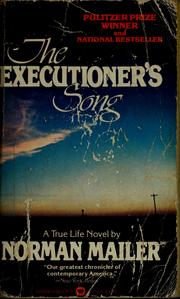
A thousand pages on the killer Gary Gilmore, built from interviews and documents, and submitted and awarded as fiction. Read it as the outer edge of what the Fiction Pulitzer will accept, and as a direct ancestor of every true-crime narrative since.
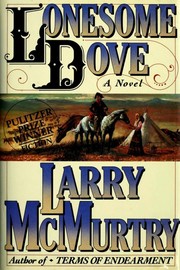
Two ageing Texas Rangers drive cattle to Montana. McMurtry intended it as an anti-Western that would dismantle the myth, readers took it as the greatest Western ever written, and the prize sided with the readers. The clearest case on this path of a book being re-judged by its own audience — and, at 900 pages, an earned last stop.
Discussion
Keep reading
Paths that share books, cover the same subject, or open a related topic.