Best Postcolonial Literature to Read, in Order
This curriculum moves from the foundational African novel that launched postcolonial literature in English, through the great South Asian voices of Rushdie and Roy, into the theoretical frameworks that explain what those novels are doing, and finally out to the broader global Anglophone novel. Because the learner starts at an intermediate level, the path skips introductory surveys and dives straight into primary texts before layering in theory, ensuring each stage builds the critical vocabulary and aesthetic intuition needed for the next.
Achebe and the African Response to Empire
IntermediateUnderstand how postcolonial literature began as a direct literary counter-argument to the colonial novel, and develop a feel for the narrative strategies — irony, oral tradition, dual perspective — that define the genre.
▸ Study plan for this stage
Pace: 6–7 weeks, ~40–50 pages/day (approximately 2–3 weeks per novel, with overlap for reflection and re-reading key passages)
- The colonial novel as literary target: how Achebe directly counters stereotypes and dehumanization in European representations of Africa
- Oral tradition as narrative strategy: the use of proverbs, storytelling rhythms, and communal voice to assert African epistemology
- Irony as postcolonial resistance: how Achebe uses dramatic irony and situational irony to expose the contradictions of colonialism and cultural collision
- Dual perspective and focalization: shifting between Igbo worldview and colonial gaze to reveal whose 'truth' dominates the narrative
- The tragedy of cultural disruption: how both novels dramatize the internal fracturing of Igbo society under colonial pressure, not as inevitable decline but as active destruction
- Agency and complicity: understanding how Achebe portrays Africans as active agents (not passive victims) whose own choices and conflicts contribute to colonialism's success
- Language as decolonization: Achebe's use of English inflected with Igbo syntax and idiom to reclaim the colonizer's language
- How does *Things Fall Apart* directly refute or complicate the image of Africa presented in colonial literature? What specific narrative choices does Achebe make to achieve this?
- Identify three moments where Achebe uses proverbs or oral storytelling techniques. What do these moments accomplish that standard third-person narration could not?
- How does the narrative perspective shift between Okonkwo's internal thoughts and the narrator's more distant observations? What effect does this dual perspective have on your understanding of the protagonist?
- Compare the role of the missionary/colonial presence in *Things Fall Apart* versus *Arrow of God*. How does Achebe's portrayal evolve, and what does this suggest about his argument?
- What is the significance of Okonkwo's suicide in *Things Fall Apart* versus Ezeulu's fate in *Arrow of God*? How do these endings differ in their commentary on cultural collision?
- How does Achebe use irony (dramatic, situational, or verbal) to critique both Igbo society and colonialism? Provide at least two specific examples from each novel.
- Close-read a passage heavy with proverbs (e.g., the opening of *Things Fall Apart*) and annotate: what does each proverb reveal about Igbo values? How would the passage differ without them?
- Write a 500-word scene from *Things Fall Apart* rewritten in the style of a colonial-era European novel (flat, exoticizing, condescending). Then reflect: what narrative choices does Achebe make that the colonial version lacks?
- Create a two-column chart tracking Okonkwo's perspective versus the narrator's perspective across three key scenes in *Things Fall Apart*. What contradictions or tensions emerge?
- Trace the character of Ezeulu across *Arrow of God*: map his decisions and their consequences. Write a brief analysis of whether he is a victim of colonialism, a tragic figure undone by his own pride, or both—and why Achebe's portrayal matters.
- Identify one moment of dramatic irony in each novel where the reader knows something the characters don't (or vice versa). Explain how this irony serves Achebe's postcolonial argument.
- Conduct a comparative stylistic analysis: select a passage from *Things Fall Apart* and one from *Arrow of God*. How does Achebe's use of English, syntax, and rhythm differ between the two? What might account for the evolution?
Next up: By mastering Achebe's foundational strategies—oral tradition, irony, and dual perspective—you are now equipped to recognize how later postcolonial writers adapt, challenge, or extend these techniques across different colonial contexts, genres, and continents.

The ur-text of postcolonial fiction in English: Achebe rewrites Conrad and the colonial archive from the inside, establishing the foundational move of reclaiming voice and history. Read first to anchor everything that follows.
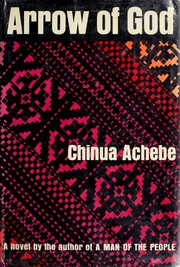
Achebe's most complex novel deepens the themes of Things Fall Apart by showing colonialism's corrosive effect on indigenous authority from within — essential before moving to other continents and registers.
Rushdie, Roy, and the South Asian Imagination
IntermediateGrasp how magical realism, linguistic hybridity, and the fractured nation-state become postcolonial literary tools in the South Asian context, and see how a woman's voice reshapes the tradition Rushdie established.
▸ Study plan for this stage
Pace: 8–10 weeks, ~40–50 pages/day (with close reading and annotation of key passages)
- Magical realism as a postcolonial narrative strategy: how the impossible becomes a lens for historical trauma and national fragmentation in Midnight's Children
- Linguistic hybridity and code-switching: Rushdie's English-Hindi-Urdu blend and Roy's Malayalam-inflected English as acts of literary decolonization
- The fractured nation-state: how partition, communal violence, and state power are rendered through narrative fragmentation and magical events
- Narrative unreliability and metafiction: Saleem's self-conscious storytelling and the instability of historical 'truth' in postcolonial contexts
- Gender and the postcolonial voice: how Roy's female protagonist Ammu and her daughter Rahel recenter desire, kinship, and bodily experience against patriarchal and nationalist narratives
- The politics of the everyday and the intimate: Roy's focus on small-scale family tragedy as a counterpoint to grand historical narratives
- Sensory and erotic language: how both authors use texture, taste, smell, and sexuality to resist colonial abstraction and assert embodied, local knowledge
- Intertextuality and literary tradition: how Rushdie and Roy engage with, revise, and exceed the conventions of the English novel from within a South Asian episteme
- How does Rushdie use magical realism in Midnight's Children to represent the trauma of partition and the birth of the Indian nation-state? Give specific examples.
- What is the relationship between Saleem's narrative unreliability and the novel's broader claim about the impossibility of objective historical truth in postcolonial contexts?
- How does Roy's use of Malayalam-inflected English and sensory language in The God of Small Things differ from Rushdie's approach to linguistic hybridity, and what does this difference suggest about gender and voice?
- In what ways does Roy's focus on the intimate family drama—Ammu's transgressive love, the children's sexuality—challenge or complicate the grand nationalist narratives that dominate Midnight's Children?
- How do both novels use fragmentation (narrative, temporal, linguistic) as a formal response to the fragmentation of the postcolonial nation-state?
- What role does the body—illness, desire, touch, taste—play in both novels as a site of resistance to colonial and nationalist abstraction?
- Create a timeline of key historical events in Midnight's Children (partition, independence, Emergency) and annotate how magical events correspond to or distort these moments. Reflect on what Rushdie gains by blending the fantastical with the historical.
- Collect 15–20 examples of linguistic hybridity from each novel (code-switching, neologisms, dialect-specific phrasing). Compare the frequency, tone, and function of these moments in Rushdie vs. Roy. What does each author's approach reveal about their relationship to English?
- Write a 2–3 page comparative character study of Saleem (Midnight's Children) and Rahel (The God of Small Things) as narrators. How does gender shape their narrative authority, reliability, and relationship to the past?
- Select one scene of magical realism from Midnight's Children and one scene of sensory intensity from The God of Small Things. Rewrite each in a strictly realist mode, then reflect on what is lost and what the original magical/sensory language accomplishes.
- Map the family structures in both novels (Saleem's extended family and the Ipe family). How do kinship bonds and family secrets function as microcosms of national fragmentation and state violence?
- Read two critical essays (e.g., on Rushdie's metafiction or Roy's politics of the everyday) and write a 1–2 page response that applies their arguments to specific passages from both novels.
Next up: This stage establishes how South Asian postcolonial literature weaponizes magical realism, linguistic innovation, and intimate storytelling to contest colonial and nationalist authority; the next stage will expand this toolkit by examining how other postcolonial regions and genres (African, Caribbean, diasporic, theoretical) adapt, challenge, or exceed these strategies.
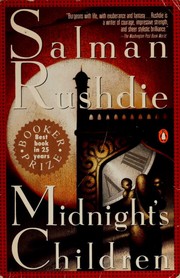
Rushdie's Booker-of-Bookers novel invents a new postcolonial idiom — exuberant, hybrid English fused with Bombay vernacular — and makes the nation's birth the novel's central metaphor. Read before Roy to see the tradition she is both inheriting and critiquing.
Roy answers Rushdie's grand nationalist allegory with an intimate, caste- and gender-conscious counter-narrative; her fractured chronology and lyrical prose show how postcolonial form can be turned inward as well as outward.
The Theory — Reading the Framework
ExpertAcquire the critical vocabulary — Orientalism, hybridity, mimicry, the subaltern, ambivalence — that postcolonial scholars use, so that subsequent novels can be read with full analytical depth.
▸ Study plan for this stage
Pace: 12–14 weeks, ~25–30 pages/day (with 2–3 days per week for review and note-taking). Allocate 5–6 weeks to Orientalism, 4–5 weeks to The Location of Culture, and 2–3 weeks to "Can the Subaltern Speak?" plus synthesis.
- Orientalism as a system of representation: how the West constructed the Orient as an imagined, inferior 'Other' through discourse, institutions, and cultural production
- The colonial archive and epistemic violence: how colonialism silenced non-Western knowledge systems and ways of knowing
- Hybridity and third space: the productive, ambivalent mixing of colonial and colonized cultures that creates new identities and meanings
- Mimicry as strategic ambivalence: the colonized subject's simultaneous imitation and subversion of colonial authority, creating slippage and instability
- The subaltern and the limits of representation: why subordinated groups (especially colonized women) cannot 'speak' within existing colonial discourse structures
- Ambivalence in colonial discourse: the inherent contradictions, anxieties, and instabilities in the colonizer's authority and the colonized's resistance
- Agency and resistance within constraint: how postcolonial subjects negotiate, rewrite, and reclaim identity despite structural domination
- The politics of location: how one's social position (gender, class, nation, education) shapes what can be known and said about colonialism
- How does Said define Orientalism as a discourse, and what role do institutions, texts, and cultural products play in constructing and maintaining it?
- What is the difference between hybridity as a descriptive term and hybridity as a site of resistance and creative recombination in Bhabha's work?
- How does Bhabha's concept of mimicry destabilize colonial authority, and why is the 'almost but not quite' quality of mimicry politically significant?
- Why does Spivak argue that the subaltern cannot speak, and what does she mean by epistemic violence in relation to the colonial archive?
- How do these three theorists understand agency and resistance differently—what are the possibilities and limitations each identifies?
- How can you apply Orientalism, hybridity, mimicry, and the subaltern to analyze a postcolonial novel's representation of identity, power, and knowledge?
- Create a glossary with definitions and page references for each key term (Orientalism, hybridity, mimicry, subaltern, ambivalence, third space, epistemic violence). Add one concrete example from each text.
- Map the argument of Orientalism: chart Said's progression from defining Orientalism as discourse → examining its historical roots → analyzing its manifestations in literature and scholarship. Identify where he introduces evidence and where he makes theoretical leaps.
- Annotate one chapter from The Location of Culture (e.g., 'Signs Taken for Wonders' or 'Of Mimicry and Man') marking: (1) where Bhabha defines a key concept, (2) where he provides an example, (3) where the argument becomes difficult, and (4) how it connects to Said.
- Write a 2–3 page comparative analysis: How do Said and Bhabha differ in their understanding of colonial power? (Said emphasizes representation and discourse; Bhabha emphasizes ambivalence and hybridity.) What does each framework reveal that the other obscures?
- Close-read Spivak's argument about the sati (widow-burning) in 'Can the Subaltern Speak?' Trace how she shows epistemic violence operating: what voices are heard, whose are silenced, and what does this tell us about representation and agency?
- Create a visual diagram or concept map showing how Orientalism → Hybridity/Mimicry → The Subaltern form a progression of theoretical sophistication. How does each text build on, complicate, or challenge the previous one?
Next up: This stage equips you with the critical vocabulary and theoretical frameworks to recognize how postcolonial novels represent identity, resistance, and knowledge—so that in the next stage, you can analyze specific literary texts (characters, narrative techniques, historical contexts) with analytical precision and depth.
Said's 1978 landmark is the indispensable theoretical foundation: it names the discursive machinery of empire that every postcolonial novelist is writing against. Read it first in this stage to frame the theory.

Bhabha's essays on hybridity, mimicry, and the 'third space' provide the vocabulary for reading Rushdie and Roy retrospectively and for understanding the global Anglophone novels ahead — dense but transformative.
Spivak's essay (collected in her Critique of Postcolonial Reason) poses the hardest question the field faces — who actually gets to speak? — and is essential before reading novels that claim to give voice to the marginalized.
The Global Anglophone Novel
ExpertSee how postcolonial aesthetics and concerns travel across the Caribbean, Africa, and the diaspora, and understand the contemporary novel as a genuinely world-literary form shaped by empire's long aftermath.
▸ Study plan for this stage
Pace: 8–10 weeks, ~40–50 pages/day. Allocate 2–3 weeks per novel to allow for close reading, rereading key passages, and contextual research. Begin with Rhys (shorter, foundational), move to Adichie (mid-length, historically grounded), and conclude with Rushdie (longest, most formally experimental).
- Narrative unreliability and fragmented perspective as postcolonial formal strategies—how Rhys, Adichie, and Rushdie use narrative structure to challenge colonial historiography
- The politics of naming, language, and voice: how characters reclaim or contest linguistic identity across Caribbean, African, and diasporic contexts
- Temporal layering and historical consciousness: how these novels embed colonial and postcolonial history within individual and collective memory
- Magical realism and myth as decolonial aesthetics: Rushdie's use of the fantastic to resist realist conventions inherited from European literary tradition
- Gender, sexuality, and the body as sites of colonial and postcolonial struggle—particularly in Rhys and Adichie's treatment of women's agency
- Diaspora, displacement, and belonging: how migration and exile reshape identity and allegiance across these three geographies
- Intertextuality and literary revision: how these novels rewrite, contest, or dialogue with canonical texts (e.g., Rhys's relationship to Jane Eyre; Rushdie's to Islamic and Western literary traditions)
- How does Rhys's narrative structure in Wide Sargasso Sea—particularly the shifting perspectives and the prequel relationship to Jane Eyre—function as a postcolonial intervention? What does it reveal about colonial power that a straightforward retelling could not?
- In Half of a Yellow Sun, how does Adichie's use of multiple narrators and the fragmented timeline reflect the novel's engagement with the Biafran War and postcolonial Nigerian history? What is gained or lost by this narrative approach?
- How do Rushdie's magical realist techniques in The Satanic Verses—the dream sequences, the metamorphoses, the layered timelines—challenge both realist literary conventions and singular historical narratives?
- Across all three novels, how do characters negotiate language and naming as acts of resistance or complicity? What do these linguistic choices reveal about power and identity in postcolonial contexts?
- How do Rhys, Adichie, and Rushdie each represent diaspora and displacement differently? What do their distinct geographical and historical contexts (Caribbean plantation legacy, Nigerian civil war, South Asian migration to Britain) reveal about postcolonial experience?
- What is the relationship between sexuality/embodiment and colonialism in Wide Sargasso Sea and Half of a Yellow Sun? How do these novels use the body to articulate postcolonial critique?
- Close-read a passage from each novel (e.g., Rhys's opening in the Rochester section, Adichie's Biafran bombing scene, Rushdie's Gibreel's dream sequences) and annotate how narrative voice, tense, and imagery work together to create meaning. Compare how each author uses language to signal historical rupture or disorientation.
- Create a timeline for each novel that maps narrative time against historical time (e.g., Wide Sargasso Sea's pre-emancipation Caribbean, Half of a Yellow Sun's 1960s Nigeria, The Satanic Verses's 1980s Britain and mythic pasts). Identify moments where the novels compress, fragment, or reverse chronology, and theorize why.
- Write a comparative essay (1500–2000 words) on how one character from each novel (e.g., Antoinette/Rochester, Olanna/Ugwu, Gibreel/Saladin) navigates identity formation in diaspora or displacement. Use specific textual evidence to argue how postcolonial aesthetics shape characterization.
- Trace the use of a recurring image or motif across all three novels (e.g., fire, water, names, dreams, food, migration). Write a short analysis (500–800 words) on how this motif carries different meanings in each postcolonial context.
- Conduct a source study: research the historical contexts behind each novel (the Caribbean plantation system and emancipation for Rhys; the Biafran War for Adichie; 1980s Rushdie's own fatwa and South Asian migration to Britain). Write brief notes on how historical knowledge enriches your reading of the novels' formal choices.
- Perform a comparative intertextual analysis: read a key passage from Jane Eyre alongside Rhys's Wide Sargasso Sea, or research Rushdie's literary allusions (to the Quran, to Dante, to Midnight's Children). Write a short essay on how literary revision functions as postcolonial critique in at least one of these novels.
Next up: This stage establishes how postcolonial aesthetics—narrative fragmentation, magical realism, linguistic reclamation, and historical consciousness—operate across distinct geographies and literary traditions, preparing you to examine how these formal and thematic strategies extend into contemporary global fiction, digital narratives, and transnational literary networks in the next stage.

Rhys's rewriting of Jane Eyre from the Creole Caribbean perspective is the classic example of postcolonial 'writing back' to the English canon — best appreciated now that you have both the primary texts and the theory.

Adichie extends the Achebean tradition into the Biafran War with a contemporary realist style, showing how the next generation of African writers inherits and transforms the postcolonial novel.
Read last: Rushdie's most ambitious and theoretically rich novel synthesizes diaspora, Islam, Britain, and hybridity into a single explosive form — it rewards everything learned in the preceding three stages.
Discussion
Keep reading
Paths that share books, cover the same subject, or open a related topic.