Best Books on the Airline Industry, in Reading Order
The airline business is famous for destroying capital while performing an operational miracle daily, and understanding it means holding both facts at once. This path opens with narrative history and a pilot's-eye view, then turns to the actual economics — yield management, hub-and-spoke networks, unit costs — through the standard textbooks. A separate stage is given to deregulation, because it is the industry's central political argument and the accounts of it disagree sharply. The last stage covers the manufacturers and safety culture, which is where the industry's engineering and its incentives collide.
Orientation
BeginnerGet a feel for what flying an airliner and running an airline are actually like, and know the broad arc of the American industry since deregulation
▸ Study plan for this stage
Pace: Five to six weeks for about 1,240 pages. Skyfaring (352pp) is a book to read slowly and in short sittings — it is essayistic and has no plot to pull you along. Hard Landing (525pp) is the long one and reads like narrative business journalism; 30 pages a session, and keep a list of carriers and execu
- The physical facts Vanhoenacker makes concrete — great-circle routing, the jet stream, fuel as the dominant consumable, the air as a mapped and named geography — which are the constraints every economic decision later in the path is made against
- The pre-1978 regulated world: the Civil Aeronautics Board setting routes and fares, competition displaced into service and schedule, and the resulting cost structure
- The Airline Deregulation Act and the immediate aftermath Petzinger narrates: new entrants, fare wars, and the discovery that route authority had been the asset all along
- The bankruptcy cycle as a permanent feature rather than an aberration — Petzinger's cast of carriers that went under, merged or reorganised is the industry's normal condition
- Labour as the industry's other permanent conflict: the PATCO strike, concessionary contracts, two-tier pay scales, and the fact that airline economics is largely a bargaining story
- Southwest's model as Freiberg presents it: a single aircraft type, point-to-point routes, fast turnarounds, no interlining, and high aircraft utilisation
- Culture as Southwest's own explanation of its success, and the reader's job to hold that claim loosely — Nuts! is an admiring insider account, not an analysis, and the next stage will test how much of the advantage was culture and how much was cost structure
- Petzinger's own standpoint, which is worth naming: he writes sceptically about what deregulation did to the industry, and stage three exists partly to put the opposing case
- How did the Civil Aeronautics Board regulate the industry, and where did competition go when fares and routes were fixed?
- What changed immediately after 1978, and which of Petzinger's carriers survived the first decade?
- What are the components of Southwest's operating model, and which of them are cost decisions rather than cultural ones?
- Why do airlines go bankrupt so often, based on what you have seen so far? Write your answer now and check it after the economics stage.
- Where is Petzinger's scepticism about deregulation visible in his selection and framing of material, as opposed to in his explicit argument?
- Build a timeline of American carriers from 1978 to the present: founded, merged, bankrupt, liquidated. It is a long list and having it on one page makes the industry's instability visible in a way prose does not.
- Take one long-haul route and work out its great-circle path on a globe or mapping tool, then compare it to the route the flight actually flies. Vanhoenacker's geography becomes real in about ten minutes.
- List every element of Southwest's model from Nuts!, then mark each as culture, cost structure or network design. The proportions are the beginning of an argument.
- Write 200 words on why route authority was valuable before 1978 and worthless after, using Petzinger's own examples.
- Note every claim in Nuts! that would need data to verify. It is an insider account and reading it critically is good preparation for the textbooks.
Next up: You know the story and the physical business; the next stage supplies the arithmetic underneath it — the cost structure, the network logic and the pricing machinery that decide which of those carriers survived.
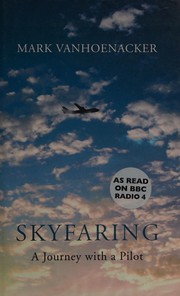
A working 747 pilot's lyrical account of what long-haul flight involves, from navigation to the geography of the air. Read it first: it is short, it makes the physical business vivid, and everything afterwards is about the money underneath it.
The great narrative history of American airline deregulation and the carriers, fare wars and executives it produced. The single most useful book here for turning airline names into a story, though it is written from a clearly sceptical view of what deregulation did to the industry.
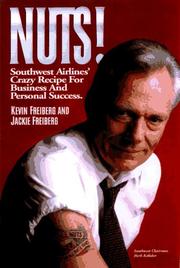
The Southwest Airlines story, and the clearest case study of the low-cost model that reshaped the industry worldwide. An admiring company book rather than analysis — read it as the insider's version of the strategy the textbooks will formalize next.
The economics
IntermediateUnderstand cost structure, network design, revenue management, alliances and why airline margins are structurally thin — the analytical core of the subject
▸ Study plan for this stage
Pace: Three to four months for about 1,160 pages, and the analytical core of the path. Flying Off Course (350pp) is a proper textbook and should be worked at 20 pages a session with a calculator — the cost breakdown chapters are the foundation of everything else. The Airline Business (307pp) is more discu
- The standard cost taxonomy: direct versus indirect operating costs, and fixed versus variable — with fuel, labour, ownership and maintenance as the big four, and the composition shifting with fuel price
- Available seat kilometres and revenue passenger kilometres, and the two ratios that run the industry: load factor, and yield per RPK
- Cost per available seat kilometre as the comparison metric, and the crucial correction that CASK falls with stage length, so comparing a short-haul and a long-haul carrier's raw CASK is meaningless
- Break-even load factor as the single number that determines whether a route works, and the arithmetic connecting it to yield and unit cost
- The perishability of a seat — an unsold seat at departure has zero value — which is the precondition for the entire revenue-management apparatus
- Revenue management proper: fare buckets, nested inventory, overbooking against no-show forecasts, and the deliberate use of restrictions to fence leisure demand off from business demand
- The hub-and-spoke network analysed rather than narrated: connecting traffic densities that make thin routes viable, the cost of banked schedules, and the congestion and delay penalty the bank imposes
- The structural explanation for thin margins: high fixed costs, perishable inventory, price-transparent commodity competition, low entry barriers on a route and enormous exit barriers on an asset — Doganis's answer to the question you predicted an answer to in stage one
- Define ASK, RPK, load factor and yield, and write the relationship between them and total revenue.
- Compute a break-even load factor given a unit cost and an average yield. Then say what a ten percent fuel price rise does to it.
- Why does CASK fall with stage length, and how would you correct for it when comparing two carriers?
- Explain how nested fare buckets and overbooking work together, and what happens operationally when the no-show forecast is wrong.
- What does a hub actually buy an airline, and what does it cost in aircraft utilisation and delay exposure?
- Give the full structural explanation for why airline margins are thin, and compare it with the answer you wrote in stage one.
- Take a real carrier's published annual report and rebuild its cost breakdown into Doganis's categories. This single exercise does more than any chapter to make the taxonomy stick.
- Compute CASK, RASK, load factor and yield for two carriers of different stage lengths, then apply the stage-length correction and see how the ranking changes.
- Model one route on a spreadsheet: aircraft type, seats, block hours, unit cost, fare mix, and find the break-even load factor. Then vary fuel price and see how fast the route dies.
- Search one city pair on a booking site every day for three weeks and record the fares by cabin and by advance purchase. You will observe the fare buckets moving in real time, which is revenue management visible from outside.
- Draw a hub bank as a timeline of arrivals and departures, and count how many connections a given bank size produces. The combinatorics explain the whole network form.
- Use Vasigh to work one aircraft lease-versus-buy calculation, then write a paragraph on what the choice commits the airline to.
Next up: You can now evaluate the industry's numbers, which is exactly what is required to judge its central political argument — whether deregulation made flying better or made the industry unmanageable.
The standard airline economics textbook: costs, pricing, yield management and route profitability, taught properly. This is the textbook rather than the story, and it is the book that makes the rest of the subject legible.

Doganis's companion volume on strategy and structure — liberalization, alliances, low-cost entry and consolidation. Read it after Flying Off Course, which supplies the cost concepts it applies.

A more quantitative treatment covering demand forecasting, airport and aircraft finance, and market structure. Use it as the reference you dip into when a specific number needs explaining rather than reading it straight through.
The deregulation argument
IntermediateJudge the industry's central policy question — did deregulation deliver cheaper flying, or an unstable, consolidated industry — from the economists on both sides of it
▸ Study plan for this stage
Pace: Two to three months for about 650 pages, and slower than the page count implies. The Economics of Regulation (480pp) is a general treatise on regulated industries rather than an airline book — read the framework volumes for the reasoning and treat the sector applications as reference; it is dense ec
- Kahn's central framework: regulation is justified by market failure, and the case for it rests on natural monopoly, scale economies and the difficulty of workable competition — so the argument turns on whether those conditions hold in a given industry
- The regulatory pathologies Kahn catalogues — cross-subsidy, gold-plating, cost-plus incentives and the tendency of protected firms to compete on cost-raising dimensions
- The intellectual move that made airline deregulation possible: the claim that route markets are contestable because aircraft are mobile, so entry threat disciplines fares even with few incumbents
- The contestability claim's subsequent troubles, which is where the empirical literature earns its keep — hubs, slots, gates and frequent-flyer lock-in all raise real entry costs
- Morrison and Winston's measured findings on fares, adjusted for distance, quality and fuel, and their method for constructing a counterfactual regulated fare
- The service-quality accounting: more frequencies and more connections against more connections needed, fuller aircraft and more delay — a real trade-off rather than a clean gain
- The safety record after deregulation, which is the empirical claim most often asserted without evidence in popular argument and which Morrison and Winston actually measure
- Distributional effects: who gained and who lost, by route type, by city size and by employee group — since the aggregate consumer-welfare figure conceals real losers
- What conditions, in Kahn's framework, justify economic regulation of an industry? Do they hold for airline route markets?
- What is contestability, and what specifically about hubs, slots and frequent-flyer programmes undermines it?
- How do Morrison and Winston construct their counterfactual regulated fare, and what would you attack in that construction if you wanted to dispute the finding?
- What happened to service quality after deregulation, on their own accounting — and is 'quality' being measured in a way you accept?
- Which groups lost from deregulation, and how large were those losses relative to the consumer gains?
- Where do Petzinger and Morrison actually disagree about facts, and where are they disagreeing about what to value? Answer this precisely; it is the stage's central exercise.
- Build a three-column comparison — Kahn's theory, Morrison and Winston's measurements, Petzinger's narrative — on fares, service, stability, safety and labour. The pattern of agreement and disagreement is the finding.
- Reconstruct one of Morrison and Winston's fare comparisons from their own tables, writing out exactly what is being compared to what and what is held constant.
- Write 200 words making the strongest case for deregulation and 200 for the case against, each using evidence from the opposing author. Being able to argue the other side from its own sources is the test.
- Take one small city that lost jet service after 1978 and one large hub that gained frequencies, and write a page on how each experienced the same policy.
- Apply Kahn's regulatory-pathology list to a currently regulated industry you know, and note which pathologies you can actually observe.
- Write your own verdict in one page, stating which outcomes you weight most heavily and why. A verdict that does not name its value weightings has not understood the argument.
Next up: The economics and the policy both assume the aircraft simply exist and are safe; the last stage examines who builds them, what happens when a manufacturer's incentives shift, and why safety turns out to be an organisational property.
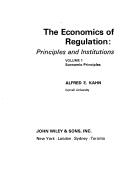
The theoretical foundation, by the economist who then went on to deregulate the airlines himself. Dense and general rather than airline-specific, but reading the architect's own reasoning is the honest way to evaluate the outcome.
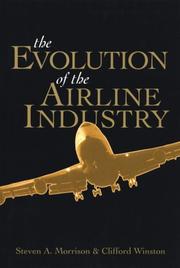
The careful empirical assessment of what deregulation actually did to fares, service and safety — broadly favourable, and the direct counterweight to Petzinger's narrative. Read them against each other; the disagreement is real and not fully settled.
Aircraft and safety culture
IntermediateUnderstand the manufacturer duopoly, how accidents are investigated, and why safety is a property of organizations rather than of individual pilots
▸ Study plan for this stage
Pace: Three months for about 1,120 pages, and the most varied stage in the path. Boeing versus Airbus (272pp) is readable commercial history — a fortnight. Flying Blind (333pp) is investigative journalism with a clear thesis and reads fast, but read it with the critical habits the previous stage built. Th
- The duopoly's structure as Newhouse describes it: two manufacturers, twenty-year development cycles, enormous fixed costs and launch-customer economics that make each new programme a bet on the whole company
- Certification as a shared industry-regulator process, including delegated authority, which is the mechanism at the centre of Robison's account
- Robison's thesis: that a shift in Boeing's internal culture toward financial performance and schedule, following the merger and the move of headquarters, degraded engineering authority — presented as investigative journalism with an argument, and the company disputes elements of it
- MCAS as a systems and requirements problem rather than a coding one: a control augmentation with single-sensor input, authority the crews were not trained on, and a certification framing that kept it out of differences training
- The accident investigation system Negroni describes: independent investigators, recorders, mandatory reporting and the closed loop from finding to airworthiness directive, which is the machinery behind the industry's safety record
- Confidential and non-punitive reporting programmes as the industry's most transferable invention — the willingness to hear about incidents depends on people not being punished for reporting them
- Dekker's old view and new view: error as a cause and unreliable people threatening a safe system, against error as a symptom of deeper systemic trouble and a starting point for investigation
- Hindsight bias and local rationality as the two tools Dekker gives you, and the reason the same industry can produce both the MAX and the safest form of travel in history — the systems are different, not the people
- What are the economics of launching a new aircraft programme, and why does it constitute a bet on the whole company?
- How does delegated certification authority work, and what does Robison argue went wrong with it in this case?
- Describe MCAS in terms of its inputs, its authority and what the crews were told about it. Where in that description is the requirements failure?
- What does the accident investigation system do that ordinary regulatory inspection does not, and why does the non-punitive reporting element matter so much?
- Apply Dekker's new view to the MAX accidents. What does the investigation look like if the crews' actions are treated as a starting point rather than a conclusion?
- How can the same industry produce both an exceptional safety record and this failure? Answer in terms of systems rather than of individuals or eras.
- Read one full official accident report — the NTSB, AAIB and equivalent agencies publish them openly — and map its recommendations onto Dekker's categories. It takes an afternoon and it is the most concrete thing in this stage.
- Mark every sentence in a news account of an aviation accident that is written with hindsight: 'should have noticed', 'failed to', 'ignored'. Most accounts are dense with them, and the exercise trains the reflex.
- Rewrite one paragraph of that account from the crew's point of view at the time, using only information available in the cockpit at that moment.
- Draw the MCAS control loop — sensor, controller, actuator, feedback to the crew — and mark where the loop lacked redundancy and where the crew's mental model diverged from the system's behaviour.
- List every claim in Flying Blind that rests on a named source, a document, or an anonymous account, in three columns. It is a good book and a thesis-driven one, and this is how to weigh it.
- Write a final two pages on what the airline industry actually is — an operational triumph on thin margins, a contested policy experiment, and a safety system built out of accidents — naming which book each claim comes from and where the authors disagree.
Next up: This is the end of the path — the physical business, the economics, the deregulation argument and the manufacturers and their safety systems — and the natural next step is to reread Hard Landing, whose executives and fare wars read very differently once you can compute what their decisions did to unit cost.
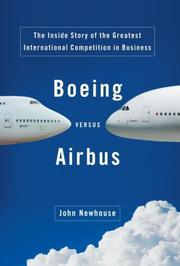
The commercial and political history of the aircraft duopoly, including subsidy fights and the bet on large versus efficient jets. Airlines cannot be understood without their suppliers, and this is the readable account of them.
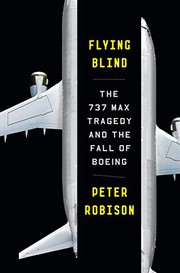
The 737 MAX disaster as a story about a manufacturer's culture shifting from engineering toward shareholder returns. It is investigative journalism with a thesis, and it directly tests the safety arguments in the previous stage.

How air accidents are actually investigated, and how the resulting fixes made flying extraordinarily safe. Read it after Robison as the systemic counterpoint: the same industry that produced the MAX also produced the world's best safety record.
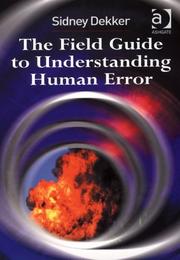
The theoretical capstone: why blaming the operator is almost always the wrong analysis, and what a just culture looks like instead. Aviation is where these ideas were developed, and this is the book that generalizes everything the accident narratives show.
Discussion
Keep reading
Paths that share books, cover the same subject, or open a related topic.