Best Books on the Pharmaceutical Industry, in Reading Order
Almost everything written about the drug industry is written by someone with a position, so this path is arranged to let you read the prosecution and the defence rather than only the side you already agree with. You start with how medicines are actually discovered and developed, because the argument about pricing makes no sense without a grip on the cost and failure rate of research. Then come the classic critiques of pricing, marketing and evidence, the industry's own reply, and finally the opioid crisis — the case where the critics were most clearly right, and the best test of everything you have read.
How a drug comes to exist
BeginnerUnderstand discovery, clinical trials, regulatory approval and patents well enough to reason about what a new medicine costs and why most attempts fail
▸ Study plan for this stage
Pace: 3–4 weeks. Ten Drugs is 312 pages and reads like popular history; The Billion-Dollar Molecule is 445 pages of narrative reporting. Werth's book covers Vertex in the late 1980s and early 1990s, so its technology — structure-based design, the state of computational chemistry — is thirty years out of d
- The stages of development: target identification, hit finding and screening, lead optimisation, preclinical toxicology, Phase I, II and III, regulatory review, and post-marketing surveillance
- Attrition: roughly nine in ten compounds entering clinical trials fail, and failure concentrates in Phase II where efficacy is first properly tested
- What a phase actually tests — Phase I safety and dose in small numbers, Phase II efficacy signal, Phase III comparison against standard of care at scale
- Randomisation, blinding, control arm choice and endpoints, and why a surrogate endpoint is not the same as a clinical one
- Patent life versus effective market exclusivity: a twenty-year patent filed early leaves perhaps eight to twelve years of selling time, which is the arithmetic underlying every pricing argument
- Data exclusivity, orphan drug designation and regulatory exclusivities as protections separate from patents
- Hager's ten molecules as a tour of pharmacology — opium and morphine, the sulfa drugs, penicillin, chlorpromazine, the pill, statins, monoclonals — each teaching a mechanism painlessly
- Werth's picture of research reality: brilliant people, enormous capital, personality-driven decisions, and years of work that produce nothing
- Walk a compound from target to market, naming each stage and what fails at it. At which stage does most money get spent, and at which do most programmes die?
- Why is Phase II the graveyard? What is being tested there that preclinical work could not establish?
- Explain the difference between patent expiry and loss of exclusivity, and compute the effective selling window for a drug patented at discovery and approved twelve years later.
- Werth's protagonists spend years on a compound that does not become a product. What does that story establish that a cost figure cannot?
- Pick one of Hager's ten drugs and explain its mechanism in three sentences. Then say what it cost to develop and how that compares with a modern programme.
- Build a probability-weighted development model in a spreadsheet: ten preclinical candidates, published transition probabilities at each phase, cost per phase, and time per phase. Compute the expected cost per approved drug and the number of starts needed for one success. Keep this model — you will use it in every later stage.
- Read the label of a drug you or someone you know takes. Identify the approved indication, the pivotal trials cited, the endpoint used, and the comparator. Write 300 words on what the label does and does not tell you about how well it works.
- Find the ClinicalTrials.gov registration for one currently marketed drug and write out its Phase III design: population, randomisation, blinding, primary endpoint, duration, and sample size.
- Write a 400-word timeline of one of Hager's ten drugs from first synthesis to widespread use, with the years, and note how much of the elapsed time was science and how much was regulation, war, or commerce.
Next up: With the cost, timeline and failure rate of discovery in hand, the critiques of pricing and marketing can be assessed rather than merely believed or dismissed.

The history of medicine told through ten molecules, from opium and morphine to statins and monoclonal antibodies. Start here: it is the friendliest possible introduction and it quietly teaches the science you need for everything that follows.
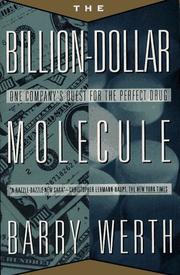
A fly-on-the-wall account of a biotech startup trying to design a drug from scratch, and the classic portrait of how brutal and uncertain the research really is. Read it second — it is the strongest antidote to assuming drugs are cheap to invent.
The case against the industry
BeginnerLearn the standard critiques — marketing budgets exceeding research, evergreened patents, ghostwritten papers, and unpublished negative trials — and what evidence supports each
▸ Study plan for this stage
Pace: 6–8 weeks. Angell's The Truth About the Drug Companies is 305 pages, Goldacre's Bad Pharma 437, Goozner's The $800 Million Pill 297. Read them in that order. ⚠ All three are dated — Angell and Goozner from 2004 and Goldacre's first edition from 2012 — and some of what they demanded has since happene
- Angell's marketing-versus-research argument: that large firms spend more on marketing and administration than on R&D, and what the accounting categories actually contain
- Me-too drugs — new entrants in an existing class with marginal differentiation — and the argument over whether class competition is wasteful or useful
- Evergreening: new formulations, enantiomers, combinations and delivery devices patented to extend a franchise past the original molecule's expiry
- Publication bias and selective outcome reporting, which is Goldacre's core claim and the most rigorously evidenced in this stage
- Ghostwriting, seeding trials, and key opinion leaders as mechanisms by which marketing enters the medical literature
- The AllTrials campaign and the specific reforms sought: registration of all trials before they start, and reporting of all results including negative ones
- Goozner's target — the DiMasi cost-per-approved-drug figure, its methodology, its inclusion of cost of capital, and its reliance on confidential industry-supplied data
- Publicly funded foundational research: NIH-funded discovery underlying marketed drugs, and the argument over how much credit and price that justifies
- What does the DiMasi figure include, and which components are contested? Recompute a cost per approved drug with and without cost of capital using your stage-one model.
- Explain publication bias and give the concrete mechanism by which it inflates apparent efficacy. What is the evidence that it occurs?
- Which of Goldacre's demands have since been implemented, and how well are they enforced? Check trial registration and results-reporting compliance rates.
- Is a me-too drug a waste? Give the strongest argument for each side, including what class competition does to price.
- Goozner argues public funding underlies much foundational research. Trace one marketed drug back and say who funded which step.
- Angell, Goldacre and Goozner make different kinds of claim. Sort them into empirical, economic and ethical, and say what evidence would settle each.
- Take a large pharmaceutical company's most recent annual report and calculate R&D, SG&A and net income as percentages of revenue. Compare with Angell's figures for the early 2000s and write 300 words on what changed and what did not.
- Pick one drug class with five or more entrants and build a table: molecule, approval year, mechanism, and the clinical evidence that it differs from the first entrant. Then judge how many are me-too.
- Choose one drug and find every registered trial for it on ClinicalTrials.gov, then check how many have posted results and how many appear in the published literature. The gap is Goldacre's argument, measured by you.
- Trace one drug's patent estate: find the original composition-of-matter patent expiry and every subsequent patent listed in the FDA Orange Book. Write 400 words on how much exclusivity was extended and by what means.
- Write a 500-word memo to a health system deciding whether to reimburse a new me-too entrant, using the framework of all three books and stating what you would need to know that you cannot find out.
Next up: You now have the prosecution case in full, which is the only fair position from which to hear the defence.
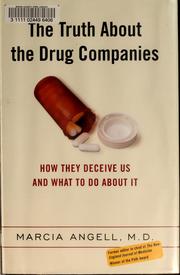
A former New England Journal of Medicine editor's indictment of pricing, me-too drugs and the marketing-to-research ratio. The foundational modern critique, and the one later authors are usually elaborating.

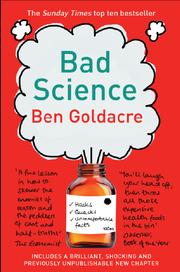
The most rigorous of the critiques, focused specifically on missing trial data and distorted evidence rather than on prices. Read it after Angell: it makes a narrower claim, argues it far more carefully, and is the hardest for the industry to answer.
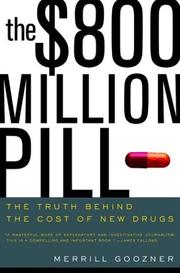
Attacks the headline cost-per-drug figure directly and traces how much foundational research is publicly funded. It is the specific empirical fight underlying the whole pricing debate, so read it before hearing the industry's defence.
The industry's reply
IntermediateHear the pharmaceutical case for high launch prices, patent terms and the risk-adjusted economics of drug development, argued by insiders on their own terms
▸ Study plan for this stage
Pace: 3–4 weeks. Drug Truths is a short 152 pages and The Great American Drug Deal is a normal trade length. Both are openly partisan and should be read as advocacy: LaMattina ran research at Pfizer and Kolchinsky is a biotech investor. That does not make them wrong — it makes their interests visible, whi
- LaMattina's account of why programmes fail: biology that does not translate from animal models, toxicity appearing late, and efficacy that vanishes in a properly powered trial
- The insider's response to the marketing-versus-research figure — what is counted as marketing, what sales forces actually do, and where the accounting is genuinely ambiguous
- The risk-adjusted return argument: a portfolio of mostly failures needs the successes to pay for all of it, and the required return reflects the risk investors bear
- Kolchinsky's central proposition: high launch prices are acceptable because patents expire and the drug becomes a cheap generic permanently, so society rents innovation and then owns it
- The 'generic biosimilar' complication for biologics, where the same argument is weaker because biosimilar entry is slower and discounts are smaller
- Kolchinsky's redirection of reform toward insurance design — out-of-pocket exposure, deductibles and benefit design — rather than toward list prices
- List price versus net price: rebates, pharmacy benefit managers, and the gap that makes headline prices a poor measure of what is actually paid in the US system
- The specific claims of Angell's that LaMattina answers directly, and the ones he passes over
- State the risk-adjusted return argument in your own terms, then test it against your stage-one model. What return would a portfolio need to justify the observed failure rate?
- Kolchinsky's argument depends on generics being cheap and arriving on time. Look up actual generic price erosion after loss of exclusivity, then repeat for a biologic. Does the argument survive both?
- What is the list-versus-net price gap for a drug you can find data on, and who captures the difference?
- Which of Angell's specific claims does LaMattina answer, which does he concede, and which does he ignore? Make the list.
- If Kolchinsky is right that the problem is insurance design rather than prices, what reform follows? Who bears the cost under his proposal?
- Having now read both sides, which single factual dispute would most change your view if it were settled? Why is it not settled?
- Update your stage-one development model with LaMattina's account of where failures actually occur, and compare the resulting cost per approval with Goozner's figure and DiMasi's. Write 400 words on which assumptions drive the difference.
- Write a 600-word rebuttal to Angell in LaMattina's voice using only his arguments, then a 400-word counter-rebuttal citing Goldacre. This is the fastest way to find where the argument actually turns.
- Pick one drug that went generic in the last decade. Chart its list price before expiry and the generic price two, five and ten years after. Then assess Kolchinsky's proposition against that chart.
- Draw the money flow in a US prescription from patient to manufacturer, including insurer, PBM and pharmacy, with rebates marked. Write 300 words on which parties benefit from a high list price.
Next up: Both cases are now on the table, and the opioid crisis is where you find out which of them better explains what actually happened.

A former Pfizer research head's defence of how discovery actually works and why so many programs fail. Deliberately partisan and worth reading as such: it answers several of Angell's claims directly, and you should hear it from a participant rather than paraphrased.

A biotech investor's proposal that high prices are acceptable precisely because patents expire and drugs become cheap generics forever after — with reform aimed at insurance rather than at prices. The most serious pro-industry policy argument in print, and the sharpest contrast with Angell.
The opioid crisis
IntermediateFollow one case from marketing decision to mass mortality, and judge which of the structural critiques you have read best explains how it happened
▸ Study plan for this stage
Pace: 8–10 weeks. Dopesick is 400 pages, Empire of Pain 720 and Pharma 816 — the longest stage on the path. Read them in the order given: Macy establishes the human consequence, Keefe the corporate history, and Posner the century-long context. Take Keefe at ~40 pages a day and Posner more slowly, since it
- OxyContin's 1996 launch and the specific marketing claim that the controlled-release formulation carried a lower addiction risk, and the evidentiary basis it actually rested on
- The role of the one-paragraph 1980 Porter and Jick letter, cited thousands of times as evidence that addiction was rare in treated patients, and what it actually said
- Sales force incentives, prescriber targeting by data purchased from pharmacies, and the geographic pattern of early saturation that Macy documents in Appalachia
- The 2007 Purdue guilty plea, its size relative to the revenue involved, and the individual accountability question
- The three waves — prescription opioids, then heroin, then illicit fentanyl — and the argument over how much each wave was caused by responses to the previous one
- Posner's longer frame: a century of American drug industry history in which the opioid disaster fits a pattern of marketing ahead of evidence and regulation following behind
- The test this stage sets: which of Angell's, Goldacre's and Goozner's structural critiques actually predicted this, and which did not
- The counter-question the honest reader has to hold: whether an industry that also produced antiretrovirals, statins and monoclonals is described adequately by its worst case
- What exactly did Purdue claim about OxyContin's addiction risk, in what materials, and what evidence was offered? Where did the claim come from?
- Trace the Porter and Jick letter from 1980 to its role in 1990s marketing. What does the case show about how evidence propagates through a literature?
- Which of the mechanisms Goldacre describes — selective reporting, key opinion leaders, ghostwriting, seeding trials — appear in Keefe's account? Cite each.
- Macy documents what happened in specific Appalachian counties. Why there first, and what does the geography tell you about the distribution strategy?
- Does Kolchinsky's or LaMattina's framework have anything to say about this case? Is the opioid crisis a failure of the system they defend or a phenomenon outside it?
- Was this an aberration or the system working as built? Give the strongest version of each answer before choosing.
- Build a timeline of the crisis from 1995 to the present in three rows: corporate decisions, regulatory actions, and mortality data. Take the mortality figures from CDC data rather than from any of the books.
- Look up the Porter and Jick letter yourself — it is a single paragraph and freely available — then find three papers that cite it as evidence of low addiction risk. Write 400 words on the gap.
- Take the 2007 Purdue plea agreement and the 2020 settlement, compute the penalties as a percentage of cumulative OxyContin revenue, and write 300 words on what that ratio implies about deterrence.
- Return to your table of Angell's, Goldacre's and Goozner's claims from stage two and mark each one as confirmed, contradicted or untested by the opioid case. The completed table is the deliverable of this path.
- Write a final 1,000-word position paper answering the question the path was built around: given both the discovery costs and the opioid record, what policy would you set on pricing, marketing and trial transparency? State explicitly what you are trading against what.
Next up: This is the end of the path; the natural continuations are health economics and technology assessment, the FDA's own regulatory history, or clinical epidemiology if you want to evaluate the trial evidence yourself rather than reading about it.
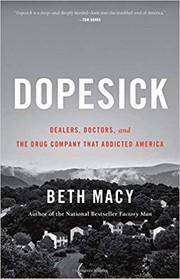
The crisis from the ground up — Appalachian communities, doctors, dealers and families — which keeps the human scale in view before you read the corporate history. Start the stage here so the later books have consequences attached.

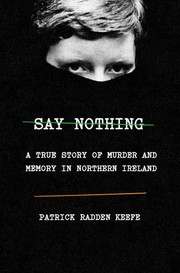
The definitive account of the Sackler family and Purdue Pharma, showing how OxyContin was marketed and how the consequences were deflected for two decades. The best-reported book on the path and a case study in every failure mode Angell and Goldacre describe.

Widens the frame to a full history of the American drug industry, placing the opioid disaster inside a longer pattern of regulatory capture and marketing. Read it last: it is the synthesis, and it lets you judge whether the crisis was an aberration or the system working as built.
Discussion
Keep reading
Paths that share books, cover the same subject, or open a related topic.