The airline business has an unusual problem for a reader: the two most interesting things about it point in opposite directions. It moves several billion people a year with a safety record no other transport mode approaches, and it has destroyed more investor capital than almost any industry of comparable size. Books that explain one tend to skip the other.
The order below is built to hold both. Narrative first, so the carriers and executives become people rather than ticker symbols; then the actual economics, because nothing about airline behaviour makes sense until you understand unit costs and yield management; then deregulation, which is the industry's central political argument and where the literature genuinely disagrees; then the manufacturers and safety culture, where engineering and incentives collide.
Orientation
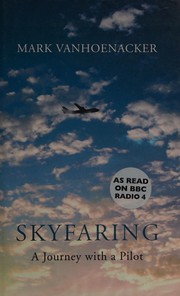
Skyfaring is a working long-haul pilot on what flight actually involves, from navigation to the geography of the air. It is short, it makes the physical business vivid, and everything after it is about the money underneath. Hard landing is the great narrative history of American deregulation and the carriers, fare wars and executives it produced — the single most useful book here for turning airline names into a story, though it is written from a clearly sceptical view of what deregulation did, and you should read it knowing that.
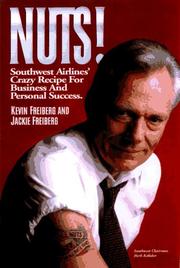
Nuts! is the Southwest Airlines story and the clearest case study of the low-cost model that reshaped the industry worldwide. It is an admiring company book rather than analysis, written with the company's cooperation. Read it as the insider's version of a strategy the textbooks are about to formalise.
The economics
Flying Off Course is the standard airline economics text: costs, pricing, yield management, route profitability, taught properly. It is the book that makes the rest of the subject legible, and the one place on this path where working through the material rather than reading it pays off. Its companion, The airline business, applies those cost concepts to strategy and structure — liberalisation, alliances, low-cost entry, consolidation. Introduction to Air Transport Economics is the more quantitative treatment, covering demand forecasting, airport and aircraft finance and market structure; use it as the reference you dip into when a specific number needs explaining. Fuel is the swing factor behind most of what these books describe, and the related path on the oil and gas industry is the natural companion if that is where your interest goes.
One practical note: all three are textbooks with multiple editions, and the industry data in them ages quickly. The frameworks hold; the figures do not.
The deregulation argument
This stage exists because the question is unsettled. The economics of regulation is the theoretical foundation, written by the economist who then went on to deregulate the airlines himself — dense and general rather than airline-specific, but reading the architect's own reasoning is the honest way to evaluate the outcome. The evolution of the airline industry is the careful empirical assessment of what deregulation did to fares, service and safety, and reaches broadly favourable conclusions. It is the direct counterweight to the narrative history in stage one. Read them against each other. The disagreement is real, it turns partly on what you count and over what period, and it has not been resolved.
Aircraft and safety culture
Boeing versus Airbus is the readable commercial and political history of the manufacturer duopoly, including the subsidy fights and the bet on large versus efficient jets. Flying Blind treats the 737 MAX disaster as a story about a manufacturer's culture shifting from engineering toward shareholder returns; it is investigative journalism with a thesis, some of whose characterisations the company has disputed, and it directly tests the safety arguments in the previous stage. The crash detectives is the systemic counterpoint, on how accidents are investigated and how the resulting fixes made flying extraordinarily safe. The Field Guide to Understanding Human Error is the capstone: why blaming the operator is almost always the wrong analysis, and what a just culture looks like instead. Aviation is where those ideas were developed, and this is the book that generalises everything the accident narratives show.
Follow the full path below to read the twelve in sequence.
Follow the full ordered path here: How to Learn the Airline Industry from Books, in Order.