The history of aviation: books to read, in order
Two brothers who made bicycles solved a control problem that better-funded rivals had missed, and within forty years their machine had flattened cities. This path follows powered flight from Kitty Hawk to the modern airline, and deliberately alternates between three kinds of book: the technical history of who did what, the cultural history of what flight did to how people imagined the world, and the pilots' own accounts, which are the only place the experience actually survives. It also takes the priority dispute seriously — who flew first is a genuinely contested question with a museum contract attached to it — rather than treating the Wrights as self-evident.
Kitty Hawk, and the question of who flew first
BeginnerUnderstand what the Wrights actually invented — three-axis control, not the aeroplane — know why Langley and the European experimenters failed, and be able to state the case for and against the rival claimants without waving it away.
▸ Study plan for this stage
Pace: This is by far the heaviest stage on the path — 1,777 pages across three big books — and it should take eight to ten weeks. McCullough's The Wright Brothers is 617 pages and the longest of the three, but it is also the fastest: warm popular narrative, fifty or sixty pages an evening, done in a fortn
- What the Wrights actually invented: three-axis control — wing warping for roll, rudder for yaw, elevator for pitch, coordinated — rather than the aeroplane. Powered heavier-than-air flight was a crowded field; controlled flight was the unsolved problem.
- Why control was the hard part, and why well-funded rivals missed it. Langley built for power and stability and treated the pilot as a passenger; the Wrights treated flying as a skill to be learned and built a machine that could be flown badly and recovered.
- The wind tunnel and the method. The Wrights found the published lift tables wrong, built their own tunnel, and generated their own data — which is the moment the project stops being tinkering and becomes engineering.
- The gliding years at Kitty Hawk as pilot training, and the deliberate progression from kite to glider to powered machine that made the powered flight almost anticlimactic.
- The priority claims, Gustave Whitehead's in particular, and what would be needed to settle one: contemporaneous documentation, credible witnesses, a reproducible machine. Hallion sets out what each claimant has.
- The Smithsonian's compromised position — its own secretary built the rival machine, and its later agreement with the Wright estate over the display of the Flyer is a contract with conditions attached, which is why institutional endorsement is not neutral evidence here.
- The patent wars, which Crouch treats at length: years of litigation over the control patent, Wilbur's death in the middle of it, and the argument that the fight retarded American aircraft development while Europe advanced.
- How differently a popular biographer and a curator-historian handle a thin, contested documentary record — worth noticing now, because the same problem recurs in the memoirs two stages on.
- Describe three-axis control and explain why the third axis is the one everyone else missed. What goes wrong in a machine with only two?
- What did the Wrights' wind-tunnel data change about their design? Be specific about the measurements and the modification.
- Set out the case for Whitehead as Hallion presents it, then the case against. What single piece of evidence would settle it, and does it exist?
- Why is the Smithsonian's endorsement of the Wrights not straightforward evidence? Give the institutional history rather than the insinuation.
- What does Crouch say about the effect of the patent litigation on American aviation? Is his claim causal, and how well supported is it?
- Name three things McCullough tells you that Crouch either qualifies or omits, and say what each omission is doing.
- Draw the Flyer's control system as a diagram, with each surface labelled by the axis it governs and by what the pilot did to actuate it. Do it from the text, not from a photograph.
- Build a table of the pre-Wright experimenters from Hallion: what each got right, what each got wrong, and whether they died doing it. The pattern of failures is the argument for why control mattered.
- Take five factual claims from McCullough and check each against Crouch. Record confirmed, qualified, or absent. You are practising the check that the memoir stage will demand of you.
- Write a one-page verdict on the priority question that a reasonable person on either side would accept as fair. Note where you had to say the evidence does not decide.
Next up: Having established what was invented and by whom, the next stage asks what the invention meant to people who had no idea how it worked.
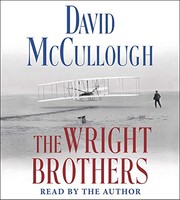
The popular narrative that most readers start with: the bicycle shop, the Outer Banks, Katharine Wright, the years of European acclaim before American recognition. Warm, extremely readable, and light on engineering — which is why the next book follows it rather than replacing it.
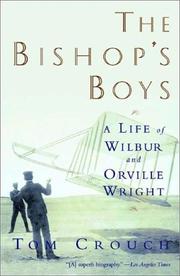
The definitive Wright biography, by the Smithsonian's aeronautics curator. Crouch is much better than McCullough on the wind-tunnel work and the control problem, and honest about the patent wars that consumed Wilbur's last years and arguably held American aviation back a decade. The book to read if you read only one here.
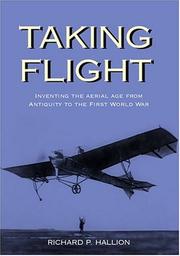
The wider invention story: Cayley, Lilienthal, Chanute, Langley and the Europeans, ending around 1914. It puts the Wrights inside a community of experimenters rather than outside it, which is the necessary context for judging the priority claims — including Gustave Whitehead's, and the Smithsonian's long, compromised role in the argument.
What flight did to the imagination
BeginnerGrasp that aviation's first three decades were as much a cultural phenomenon as a technical one — air shows, record attempts, aviator-heroes — and be able to describe the near-religious expectations that were attached to flight and then quietly abandoned.
▸ Study plan for this stage
Pace: Two to three weeks and only 501 pages, the shortest stage on the path and a deliberate change of gear after three long books of invention history. Wohl's A Passion for Wings is 324 pages, heavily illustrated, and covers aviation and the Western imagination through the First World War — read it with
- That the first decades of flight were a mass spectacle before they were a transport system — exhibition circuits, record attempts, prize competitions — and that the crowds were enormous.
- The aviator as a new kind of hero, and the specific virtues attributed to him: nerve, modernity, aristocratic individualism in an industrial age. Wohl shows poets and painters constructing the figure, not merely admiring it.
- Futurism and the aesthetic response — flight as the emblem of a new relationship to speed, height and the machine, and the political uses that imagery was later put to.
- Corn's winged gospel: the sincere American conviction between the wars that aviation would abolish war, flatten hierarchy, revive democracy and put a personal aeroplane in every garage.
- That these expectations were policy-relevant. They shaped airport building, aviation education in schools, and public investment, and they were abandoned without ever being refuted.
- The difference between the European and American versions — Wohl's aviator is an aesthetic and often aristocratic figure, Corn's is a democratic and domestic one — and what that says about each culture rather than about aeroplanes.
- Technological expectation as a historical object in its own right: what people believed a machine would do is evidence about them, and it is recoverable from magazines, advertising and school curricula.
- Why did a hundred thousand people travel to watch a man fly a circuit? Answer with Wohl's evidence rather than with the obvious.
- Name four specific claims made for aviation that Corn documents, and say what each would have required to come true.
- The winged gospel died quietly. When, and why did nobody mark it? What replaced it as the public meaning of flight?
- Compare Wohl's European aviator-hero with Corn's American one. Which national self-image is each carrying?
- How would you research technological expectation for a present-day technology, using the methods these two books use?
- List ten predictions from Corn's material and score each: happened, partly happened, did not happen. Then group the failures by type — was the technology wrong, the economics, or the social assumption?
- Take three images from Wohl and write, for each, what the picture claims about flight that a photograph of an aeroplane would not.
- Find a present-day technology attracting the same register of claims and write half a page mapping Corn's gospel onto it, item by item. Note where the mapping is exact.
- Return to your Kitty Hawk material and write a paragraph on the gap between what the Wrights were doing and what the public two decades later believed flight was for.
Next up: You have the public meaning of flight; the next stage supplies the private experience of it, from three people who were themselves managing that public meaning.
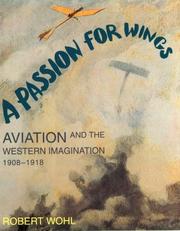
Wohl's cultural history of aviation and the Western imagination from 1908 to 1918: the poets, painters and futurists who saw in the aeroplane the arrival of a new kind of human being. Beautifully illustrated and genuinely original — this is the book that shows why crowds of a hundred thousand turned out to watch a man fly a circuit. His sequel, The Spectacle of Flight, carries the story to 1950.
The American version, and sharper: Corn documents the sincere belief between the wars that aviation would abolish war, remake democracy and put a plane in every garage. Read it directly after Wohl. Between them they explain a set of expectations that shaped policy for decades and then evaporated without anyone noticing.
The pilots' own books
BeginnerGet the experience of early flight from the people who did it — and read the memoirs critically, since two of the three are shaped by their authors' careful management of their own fame.
▸ Study plan for this stage
Pace: Five to six weeks for 1,208 pages, and all three are pleasurable reading. Lindbergh's The Spirit of St. Louis is 562 pages, much the longest, and is a strange, immersive book — the New York to Paris flight told hour by hour with the whole of his earlier life folded into it as recollection during the
- What long-distance flying actually involved before radio navigation: dead reckoning over open ocean, compass drift, ice, and the physiological problem of staying awake for more than a day at the controls.
- Lindbergh's account of hallucination and dissociation over the Atlantic, which is the most valuable passage in the book precisely because it is the least heroic.
- The aircraft as a designed compromise — fuel against range against weight, the forward tank blocking the pilot's view — and how much of the flight's difficulty was engineered in deliberately.
- Markham's Africa: mail and charter flying, spotting elephant from the air for hunting parties, and a first solo east-to-west Atlantic crossing against the prevailing wind, which is materially harder than the eastbound flight.
- That two of these three books are careful self-presentations by people with public reputations to manage, and that reading a memoir as evidence means asking what it is arguing for.
- The racing circuit of the interwar years as an engineering driver: prize money paid for speed, and the aircraft that resulted fed into military and commercial designs.
- The rules written specifically to exclude women from air racing, the women who competed anyway, and the mortality of the circuit for all its competitors.
- How thoroughly the standard aviation canon is built from two or three famous memoirs, and what O'Brien's cast does to the picture the first two books leave.
- Reconstruct Lindbergh's navigation method. What information did he have, what did he not, and where could the error have accumulated fatally?
- Lindbergh wrote this long after the event. Name three places where you can see the later man shaping the account of the younger one.
- Why is an east-to-west Atlantic crossing harder than west-to-east? What does Markham's account tell you about how she managed it?
- The authorship of West with the Night is disputed. What would count as evidence either way, and does the dispute change how you read the book?
- What did the air races contribute technically? Give two specific developments from O'Brien.
- Set the three books' casts side by side. What kind of person does the aviation canon select for, and what does O'Brien's evidence do to that selection?
- Plot Lindbergh's route and mark each of his position fixes and corrections. The exercise turns a famous flight into a navigation problem, which is what it was.
- Take one chapter of Markham and one of Lindbergh describing flight itself and compare the prose. Both are excellent; say what each is trying to make the reader feel, and how.
- From Fly Girls, list the exclusionary rules as they were actually written, and next to each the justification offered at the time. Then write a line on what the justification concedes.
- Write half a page on how you would use a memoir as historical evidence — what you would trust it for and what you would not — using a specific passage from Lindbergh as your worked example.
- Return to your priority-question verdict from stage one and ask whether reading three self-presenting aviators changed how you weigh contemporaneous testimony.
Next up: The individual flier disappears from here on: the next stage is about the period in which military demand, not personal daring, drove almost every advance.
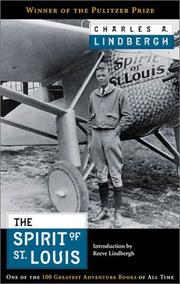
Lindbergh's Pulitzer-winning account of the 1927 New York-Paris flight, written twenty-five years later: the fatigue, the hallucinations, the navigation done by dead reckoning over open ocean. A superb piece of writing and a controlled self-portrait by a man whose later politics were toxic. A. Scott Berg's biography, Lindbergh, is the corrective if you want one.
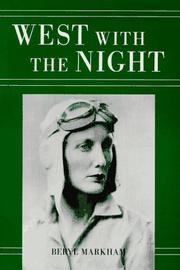
Markham flew mail and scouted elephant in colonial Kenya before making the first solo east-to-west Atlantic crossing. The prose is extraordinary, the authorship has been disputed for decades, and the colonial setting is presented without much reflection — read it for the flying and with your eyes open on the rest.

The women who forced their way into American air racing in the 1920s and 1930s — Florence Klingensmith, Ruth Elder, Louise Thaden, Amelia Earhart among others — against rules explicitly written to keep them out. It corrects the previous two books' cast and is the best account of the racing circuit that drove aircraft development between the wars.
War, the airship, and the jet
IntermediateFollow the technology through the period when military demand drove almost all of it, and be able to assess the strategic claims made for air power against what bombing campaigns actually achieved.
▸ Study plan for this stage
Pace: Six weeks for 1,397 pages, and the three books are very different in temperature. Rose's Empires of the Sky is 624 pages, the longest here, and is narrative history built around two rival businessmen; it reads fast for its length — a fortnight at fifty pages a session. Van Creveld's Age of Airpower
- The airship as a genuine alternative rather than a curiosity: Zeppelins offered range and comfort the aeroplane could not match, and the technical contest was live long enough to have gone the other way.
- Eckener and Trippe as the two poles of Rose's story — a dirigible pioneer and Pan Am's builder — and how much of the outcome was commercial and political rather than aerodynamic.
- The danger of reading history backwards: the Hindenburg makes the airship look absurd in retrospect, but the fire is the end of the story rather than the reason it ended.
- Douhet-style air power doctrine — that bombing would break civilian morale and win wars without ground campaigns — and its intellectual attractions before there was any evidence about it.
- Van Creveld's deflationary thesis: strategic bombing has almost never delivered what its advocates promised, and the aeroplane's decisive military era was shorter and narrower than the doctrine assumes. Treat it as a strong argument to be tested, not as settled consensus.
- What the postwar bombing surveys actually established about production, morale and the diversion of enemy resources, and how contested the interpretation of that evidence remains.
- The jet transition as an engineering and commercial event: the Comet's lead, the metal-fatigue failures around the fuselage cutouts, the investigation, and the transfer of the market to Boeing.
- Why the Comet crashes matter beyond aviation: pressurisation cycles, fatigue and the water-tank testing that followed are one of the cleanest cases of engineering knowledge being bought at a very high price.
- State the case for the airship as it stood before the Hindenburg. What were its real advantages, and what would have had to change for it to have won?
- Summarise van Creveld's thesis in four sentences. What is the strongest counter-example, and how does he handle it?
- What did strategic bombing achieve in the Second World War, on the evidence van Creveld cites? Distinguish what is established from what is inferred.
- Explain the Comet failures in mechanical terms — what fatigued, why there, and why it was not anticipated.
- Rose warns against reading backwards from the winner. Apply the same warning to the jet transition: what alternatives were live, and why did they lose?
- Van Creveld is deliberately contrarian. Where do you think he overreaches, and what evidence would you want to check?
- Build a comparison table of airship and aeroplane on range, payload, speed, cost, comfort and safety, filled in from Rose. Then say which cells actually decided the outcome.
- Take one bombing campaign van Creveld discusses and write down the objective claimed, the effort expended and the effect achieved. Do it as three columns. Then repeat for a second campaign and compare the shape.
- Diagram the Comet fuselage failure and the fix, from Verhovek. Then write a paragraph on what the investigation method — testing a whole airframe to destruction in a water tank — assumed about how engineering knowledge is obtained.
- Return to Corn's winged gospel from stage two and set it against van Creveld's account of what air power actually did. Write half a page on the distance between the two.
Next up: With the jets in service, the story stops being about what aeroplanes can do and becomes about what the business of flying them is like.

The forgotten contest between the Zeppelin and the aeroplane for long-distance travel, told through Hugo Eckener and Juan Trippe of Pan Am. It restores a genuine technological alternative that the Hindenburg made retrospectively look absurd — a useful antidote to reading the history backwards from what won.
A sceptical military historian's survey of a century of air power, and deliberately deflationary: van Creveld argues that strategic bombing has almost never delivered what its advocates promised, and that the aeroplane's decisive era was shorter than the doctrine assumes. Read it as a strong argument to be tested, not as consensus.

The Comet and the 707 — the transition to jet travel, told through the metal-fatigue crashes that destroyed de Havilland's lead and handed the market to Boeing. The clearest short account of the engineering and commercial turn that produced modern air travel.
The airline business, and what flying is now
IntermediateExplain how a heavily regulated, glamorous industry became a low-margin commodity business, and close with what the experience of flight actually feels like once it has become ordinary.
▸ Study plan for this stage
Pace: Five weeks for 1,149 pages, closing with the lightest book on the path. Petzinger's Hard Landing is 525 pages, the longest here, and is business narrative — deregulation, the bankruptcies, the hub wars and the executives who fought them; a fortnight at fifty pages a session, and it reads like a thri
- What deregulation actually removed — route and fare control by a federal board — and what it did not, which is why the outcome was neither a free market nor the old system.
- The hub-and-spoke system as the structural response to deregulation, and the pricing consequences that follow from it: yield management, fare dispersion on a single flight, and the economics of the connecting passenger.
- Why so many famous carriers no longer exist. Petzinger's answer is a combination of cost structure, labour contracts, capital intensity and a handful of specific personalities making specific bets.
- The manufacturing duopoly and the subsidy fight — launch aid against defence contracts — and why aircraft development is close to a bet-the-company decision each time.
- The A380 and the 787 as opposite bets about the future of air travel: very large aircraft feeding hubs, against efficient twin-aisles flying point to point. One of the two bets was wrong and the evidence for which is now in.
- Newhouse's account of the culture change at Boeing after the McDonnell Douglas merger — the shift in whose judgement prevailed over engineering decisions — and why later commentary traces the 737 MAX back to it.
- What the job of flying a long-haul aircraft actually consists of now: route planning, fuel and weather decisions, automation management, and long stretches of monitoring.
- The dislocation Vanhoenacker writes about — arriving somewhere your body has not travelled to — as the ordinary form of an experience that stage two showed people expecting to be transcendent.
- Explain why a seat costs what it costs, using Petzinger. Name the four or five factors and say which are structural and which are competitive.
- What is the hub-and-spoke system for, and what does it cost the passenger who is not connecting?
- State the reasoning behind the A380 and the 787. Both were defensible when made; what did each assume about the future of demand?
- What exactly changed at Boeing after the merger, on Newhouse's account? Is his evidence about structure, personnel or incentives?
- Vanhoenacker makes no argument. What does his book nevertheless establish that the other two cannot?
- Looking back over five stages: at which point did flying stop being remarkable, and what made it so — the technology, the business model, or the frequency?
- Take a route you have flown and reconstruct it as a business: aircraft type, likely load factor, the connecting traffic it depends on, and the competitor that constrains its fare. Petzinger gives you the vocabulary for all of it.
- Chart the airlines Petzinger follows from deregulation to the present, marking mergers, bankruptcies and disappearances. The chart is a better argument than any summary of it.
- Set the A380 and 787 bets out as two forecasts with their assumptions listed, then mark each assumption against what happened. Note how many were about geography rather than engineering.
- Read one Skyfaring chapter immediately after finishing Newhouse and write half a page on how differently the same aircraft appears in the two books.
- Write a final page tracing one thread — control, or the meaning of flight, or who is allowed to fly — from Kitty Hawk to the present, citing a specific book from each stage.
Next up: The path ends in the cockpit of an ordinary scheduled flight, which is the least remarkable and most improbable place it could have finished.
The classic account of US airline deregulation and the two decades of bankruptcies, hub wars and personality clashes that followed. It explains, better than anything else, why a seat costs what it costs and why so many famous carriers no longer exist.
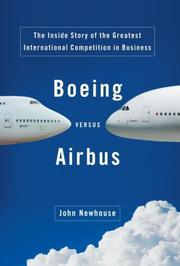
The manufacturing duopoly: subsidy fights, the bet on the A380 against the bet on the 787, and the culture change at Boeing after the McDonnell Douglas merger that later commentary on the 737 MAX traces back to. Written before that crisis, which makes its diagnosis look prescient rather than retrospective.
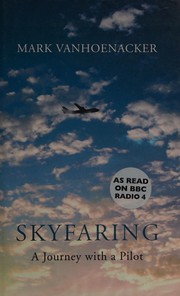
A serving 747 pilot on what the job and the view are actually like — navigation, weather, the strangeness of arriving somewhere your body has not travelled to. The right ending: after five stages of invention, war and commerce, a reminder that the thing itself is still remarkable.
Discussion
Keep reading
Paths that share books, cover the same subject, or open a related topic.