The Best Books on Stroke Recovery, in Order
This curriculum moves from personal survival stories and plain-language guides, through practical rehabilitation workbooks, and finally into deeper neuroscience and long-term recovery strategy. Each stage builds the vocabulary, emotional grounding, and clinical understanding needed for the next, so that survivors and caregivers can work as informed, empowered partners with their care team.
Foundations: Understanding What Just Happened
BeginnerUnderstand what a stroke is, how the brain is affected, and what the early recovery journey looks like — told in plain language and through lived experience.
▸ Study plan for this stage
Pace: 4–5 weeks, ~40–50 pages/day (approximately 2–3 hours of reading). The book is ~288 pages, so this allows for re-reading key passages and reflection time.
- The anatomy of a stroke: what happens in the brain during a stroke event (right hemisphere hemorrhage in Taylor's case) and how it differs from other neurological events
- The two brain hemispheres and their distinct functions: the logical, sequential left brain versus the intuitive, holistic right brain, and how losing one changes perception and consciousness
- The acute stroke experience: what Taylor felt and observed during her stroke, including loss of motor control, language, and spatial awareness, and the sensory/emotional dimensions of acute brain injury
- The role of neuroplasticity in early recovery: how the brain can rewire itself and compensate for damaged areas, and why early intervention and repetition matter
- The emotional and psychological journey of stroke recovery: grief, identity loss, confusion, and the slow process of reclaiming selfhood
- The critical importance of support systems: family, medical professionals, and community in the early recovery phase
- Recovery is not linear: understanding setbacks, plateaus, and the long timeline of neurological healing (Taylor's 8-year recovery arc)
- The lived experience perspective: how a stroke survivor's firsthand account differs from clinical descriptions and why both matter
- What was happening in Jill Bolte Taylor's brain during her stroke, and what specific functions did she lose immediately?
- How does Taylor describe the difference between her left-brain and right-brain consciousness, and what did she experience when her left brain 'went offline'?
- What were the first signs that something was wrong, and how did Taylor's perception of time, space, and her own body change during the acute event?
- What role did neuroplasticity play in Taylor's recovery, and what does she say about the importance of repetition and practice in rewiring the brain?
- How did Taylor's emotional and psychological state evolve throughout her recovery journey, and what does she identify as key turning points?
- What support systems were most critical to Taylor's recovery, and what did she need from family, medical staff, and her community at different stages?
- Create a timeline of Taylor's stroke event: map out the sequence of what happened minute-by-minute during her hemorrhage and the hours immediately after, noting which brain functions were affected at each stage.
- Draw or diagram the two hemispheres of the brain and label the functions Taylor describes for each (left: language, logic, time; right: intuition, wholeness, present moment). Annotate with specific examples from her experience.
- Write a first-person narrative from the perspective of a stroke survivor in the acute phase (inspired by Taylor's account but in your own words) that captures the sensory confusion, fear, and disorientation she describes.
- Identify 3–5 moments in the book where Taylor describes neuroplasticity in action (e.g., relearning to walk, regaining speech). For each, note what she had to repeat, how long it took, and what she learned about the brain's ability to heal.
- Create a 'support system map' for Taylor's recovery: list the people and professionals who helped her, what each person provided (emotional support, physical therapy, advocacy, etc.), and reflect on what would have been missing without them.
- Reflect in writing: How does Taylor's account change your understanding of what a stroke is? What surprised you most about her experience, and what challenged any assumptions you had?
Next up: This stage establishes the biological and emotional foundations of stroke—what happens in the brain and what the survivor experiences—preparing you to move into the next stage, which will likely focus on the medical, therapeutic, and practical aspects of structured rehabilitation and recovery strategies.
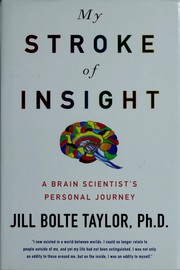
A brain scientist's first-person account of her own stroke and eight-year recovery; it builds intuitive understanding of what the brain experiences and what recovery actually feels like from the inside.
Rebuilding Movement: Physical Rehabilitation in Practice
BeginnerLearn the principles and practical exercises behind regaining motor function — walking, arm and hand use, balance, and daily physical independence.
▸ Study plan for this stage
Pace: 4–5 weeks, ~25–30 pages/day, with 2–3 days per week dedicated to practicing the exercises described
- The neuroplasticity principle: how the brain can rewire itself and form new neural pathways after stroke damage through repetition and targeted practice
- Task-specific training: practicing movements in functional, real-world contexts (e.g., walking on varied surfaces, reaching for objects) rather than isolated repetitions
- Progressive overload and intensity: gradually increasing difficulty, resistance, or duration of exercises to continue challenging the recovering motor system
- The role of repetition and massed practice: high-frequency, consistent practice as the primary driver of motor recovery and skill relearning
- Compensatory strategies vs. recovery: understanding when to use adaptive techniques versus when to push for true motor recovery of the affected side
- Spasticity management and muscle tone regulation: recognizing and addressing abnormal muscle tightness that can limit movement quality and range of motion
- Balance and proprioception training: rebuilding the body's sense of position and stability to prevent falls and restore confidence in movement
- Functional independence in daily activities: translating improved motor control into real-world independence in walking, self-care, and household tasks
- What is neuroplasticity and how does it enable motor recovery after a stroke?
- Why is task-specific, functional practice more effective than isolated repetitive movements for stroke rehabilitation?
- How should exercise intensity and difficulty be progressed over time to maximize motor recovery?
- What is the difference between using compensatory strategies and pursuing true motor recovery, and when is each approach appropriate?
- What causes spasticity after stroke and what practical techniques can reduce abnormal muscle tone?
- How can balance and proprioceptive training reduce fall risk and restore movement confidence?
- What are the key principles for translating improved motor control into functional independence in daily activities like walking and self-care?
- Perform the basic walking exercises from Levine's book (e.g., walking on flat surfaces, then progressing to varied terrain) 5–6 days per week, tracking distance and confidence level
- Practice task-specific arm and hand exercises described in the book (reaching, grasping, fine motor tasks) in functional contexts—e.g., reaching for household objects, eating, dressing—3–4 times daily
- Conduct daily balance exercises (standing on one leg, tandem stance, reaching while standing) as outlined in the text, starting with support and progressing to unsupported positions
- Perform spasticity management techniques (gentle stretching, active-assisted range-of-motion exercises) 2–3 times daily on affected limbs, noting changes in muscle tone and ease of movement
- Complete a functional independence checklist based on Levine's framework, assessing your ability to perform 5–8 daily activities (walking stairs, dressing, grooming, cooking) and identifying which need more targeted practice
- Keep a movement journal: record which exercises you performed, duration, difficulty level, and perceived improvement or barriers; review weekly to adjust your program
Next up: This stage establishes the foundational motor recovery principles and practical exercises needed to regain basic movement; the next stage will likely build on this by introducing more advanced functional activities, community reintegration strategies, and psychological resilience to sustain long-term recovery.

The most widely recommended practical guide for physical recovery; it explains neuroplasticity in plain terms and provides a structured, evidence-based exercise program survivors can use at home alongside therapy.
Rebuilding Communication and Cognition
IntermediateUnderstand aphasia, speech and language recovery, memory, and cognitive rehabilitation — and learn how to work effectively with speech-language pathologists.
▸ Study plan for this stage
Pace: 6–8 weeks, ~40–50 pages/day. Start with Papathanasiou's clinical foundations (weeks 1–4), then transition to Berger's narrative and practical insights (weeks 5–6), with 1–2 weeks for integration and reflection exercises.
- Aphasia classification systems (Broca's, Wernicke's, global, conduction, anomic) and how lesion location determines symptom profiles
- The distinction between language impairment and cognitive deficits; how aphasia affects comprehension, expression, repetition, and naming differently across types
- Neuroplasticity and recovery mechanisms: spontaneous recovery windows, reorganization of neural networks, and the role of intensive practice in language retraining
- Speech-language pathology assessment and treatment approaches: standardized testing, functional communication goals, and evidence-based therapy techniques
- Psychosocial and cognitive dimensions of stroke recovery: identity shifts, emotional adjustment, memory and executive function deficits, and the role of attitude and resilience
- Practical strategies for communication partners and caregivers: how to facilitate conversation, reduce frustration, and support independence in daily activities
- The integration of clinical knowledge with lived experience: how patient narratives (like Berger's) inform realistic expectations and person-centered rehabilitation goals
- What are the main types of aphasia, and how do their symptom profiles differ in terms of comprehension, expression, and repetition abilities?
- How does the location and extent of brain lesion determine the type and severity of aphasia and other cognitive deficits?
- What is neuroplasticity, and how do speech-language pathologists leverage it to promote language recovery after stroke?
- How would you differentiate between language impairment (aphasia) and cognitive impairment (memory, executive function) in a stroke survivor, and why does this distinction matter for rehabilitation?
- What are evidence-based assessment and treatment approaches used by speech-language pathologists, and how do you set functional communication goals with patients?
- How does a stroke survivor's psychological adjustment, attitude, and social support network influence cognitive and communication recovery outcomes?
- What practical communication strategies should family members and caregivers use to support someone with aphasia in daily interactions?
- Complete a case study analysis: Given a patient profile (lesion location, symptom description), identify the likely aphasia type using Papathanasiou's classification system and predict which language modalities (comprehension, expression, repetition, naming) would be affected.
- Conduct a mock aphasia assessment: Practice administering and interpreting results from a standardized screening tool (e.g., Boston Naming Test concepts from Papathanasiou) with a peer, then document findings and recommend therapy goals.
- Develop a personalized communication strategy guide: Based on a specific aphasia type, create a one-page reference sheet for family members with concrete do's and don'ts for supporting conversation and reducing communication breakdowns.
- Reflective writing exercise: After reading Berger's narrative, write a 2–3 page reflection on how his account of attitude, resilience, and identity shifts informs your understanding of the psychological dimensions of recovery mentioned in Papathanasiou.
- Design a 4-week therapy plan: Outline a functional communication treatment protocol for a hypothetical patient (e.g., anomic aphasia), specifying therapy techniques, frequency, and measurable outcomes aligned with evidence-based practice.
- Interview or observe a speech-language pathologist: Conduct a 30–45 minute conversation with an SLP about their assessment and treatment approaches, then summarize how their practice aligns with concepts from Papathanasiou and insights from Berger's lived experience.
Next up: This stage equips you with both the clinical framework (aphasia types, assessment, neuroplasticity) and the human perspective (resilience, identity, psychosocial adjustment) needed to understand how communication and cognitive recovery intersect with broader rehabilitation goals—preparing you to explore physical rehabilitation, return-to-work strategies, and long-term community reintegration in th
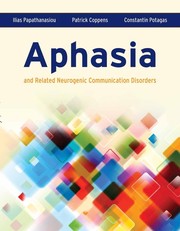
A thorough yet readable overview of aphasia and related conditions; reading it after the foundation stage gives survivors and caregivers the vocabulary to participate meaningfully in speech therapy planning.
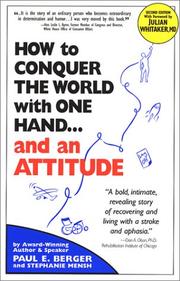
A survivor's practical and motivational guide to adapting daily life after stroke-related physical and cognitive changes, reinforcing the communication stage with real adaptive strategies.
Deep Recovery: Neuroplasticity, Long-Term Gains, and Life Redesign
ExpertUnderstand the neuroscience of brain recovery at a deeper level, discover cutting-edge rehabilitation approaches, and develop a long-term vision for rebuilding a meaningful life after stroke.
▸ Study plan for this stage
Pace: 8–10 weeks, ~25–30 pages/day (approximately 1.5–2 hours of focused reading daily)
- Neuroplasticity as the biological foundation for recovery: how the brain rewires itself through repeated experience and intentional practice
- The role of attention, motivation, and focused mental effort in driving neurological change and forming new neural pathways
- Specific rehabilitation techniques that leverage neuroplasticity (constraint-induced therapy, mental practice, sensory retraining) and why they work at the cellular level
- The distinction between spontaneous recovery, learned non-use, and active neuroplastic retraining in post-stroke rehabilitation
- How lifestyle factors (sleep, exercise, nutrition, stress management) directly influence brain healing and long-term functional gains
- Designing a personalized, long-term recovery strategy that integrates physical, cognitive, and emotional rehabilitation
- The timeline of neuroplastic change: why early intervention matters and how recovery can continue for years with the right approach
- Rebuilding identity and meaning after stroke through purposeful goal-setting and life redesign
- What is neuroplasticity, and how does it fundamentally change our understanding of brain recovery after stroke compared to older models of fixed brain function?
- Describe the mechanisms by which focused attention and repetitive practice drive neurological change. Why is passive therapy often insufficient for optimal recovery?
- What is constraint-induced therapy, and what does the neuroscience tell us about why forcing the use of an affected limb can rewire the brain?
- How do lifestyle factors such as sleep, aerobic exercise, and nutrition directly support neuroplastic change and long-term stroke recovery?
- What is 'learned non-use' and how can stroke survivors overcome this pattern to unlock further recovery gains?
- How would you design a personalized, long-term recovery plan that integrates neuroplasticity principles with practical daily life goals and identity reconstruction?
- Create a detailed personal recovery timeline: map out your current functional status, identify 3–5 specific neuroplasticity-based goals (e.g., regaining fine motor control, improving speech clarity), and project realistic milestones over 12–24 months based on principles from both books
- Design a constraint-induced therapy protocol for yourself: identify one area of learned non-use, create a structured daily practice schedule (15–30 minutes), document baseline performance, and track weekly progress over 4 weeks
- Conduct a lifestyle audit: assess your current sleep, exercise, nutrition, and stress management. Using Dow's framework, identify 2–3 lifestyle changes that directly support brain healing and commit to implementing them for 6 weeks with weekly check-ins
- Practice mental rehearsal: select one functional goal (e.g., walking without assistance, returning to work), spend 10 minutes daily visualizing successful performance in vivid sensory detail, and document how this mental practice correlates with physical improvements
- Write a 'life redesign' narrative: reflect on your identity before and after stroke, identify core values and meaningful activities, and articulate a vision for a rebuilt life that incorporates both realistic functional gains and new sources of purpose
- Create a 'neuroplasticity journal': over 4 weeks, record daily observations of small improvements, setbacks, and patterns. Analyze entries through the lens of neuroplasticity principles—what conditions seem to accelerate learning and change?
Next up: This stage equips you with the neuroscientific foundation and practical tools for long-term recovery, positioning you to move into the next stage where you'll integrate these principles into a comprehensive, sustainable lifestyle and community reintegration plan.
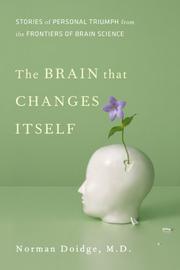
The landmark popular science book on neuroplasticity; at this stage readers have the experiential and clinical grounding to fully appreciate why the brain can keep recovering — and how to encourage it.

Synthesizes the latest rehabilitation science — including diet, sleep, technology, and emerging therapies — into an actionable long-term recovery plan, making it the ideal capstone for the entire curriculum.
Discussion
Keep reading
Paths that share books, cover the same subject, or open a related topic.