How to learn Neuroscience
This curriculum takes you from zero neuroscience background to a rigorous, research-level understanding of the brain. Each stage builds the conceptual vocabulary and biological intuition needed to tackle the next, moving from accessible narrative science through cellular and systems neuroscience and finally into cutting-edge cognitive and computational frameworks.
Foundations: The Brain in Plain Language
BeginnerBuild an intuitive mental model of brain structure, function, and major systems without requiring any prior biology background.
▸ Study plan for this stage
Pace: 10–12 weeks total (~25–30 pages/day, 5 days/week): Weeks 1–4 for "The Tell-Tale Brain," Weeks 5–8 for "Livewired," and Weeks 9–12 for "The Brain That Changes Itself." Allow one buffer day per week for reflection and note review.
- Neurological case studies as windows into normal brain function — Ramachandran's patients (phantom limbs, Capgras syndrome, synesthesia) reveal how the brain constructs reality by showing what happens when specific circuits break down
- Modularity vs. integration: the brain is organized into specialized regions (visual cortex, limbic system, mirror neurons) that must work together, and damage to one module produces surprisingly specific deficits
- Neural plasticity as the brain's defining feature — Eagleman's 'livewired' framework argues the brain is never truly 'hardwired'; it continuously rewires itself in response to experience, competition between inputs, and sensory deprivation
- Competitive plasticity and the 'use it or lose it' principle: cortical real estate is constantly contested, and underused regions are colonized by neighboring ones (Eagleman's sensory substitution and cross-modal plasticity examples)
- The brain's predictive and constructive nature: perception is not passive recording but active hypothesis-testing, as illustrated throughout Ramachandran's cases (e.g., the mirror box, anosognosia)
- Neuroplasticity across the lifespan — Doidge's cases show that the adult brain can rewire after stroke, trauma, and sensory loss, challenging the 20th-century dogma of a fixed, immutable adult brain
- Hebbian learning ('neurons that fire together, wire together') as the cellular mechanism underlying memory, skill acquisition, and recovery from injury, threading through all three books
- The role of attention, repetition, and emotion in driving lasting plastic change — a theme Doidge develops through clinical rehabilitation stories and that Eagleman grounds in neuroscientific mechanism
- How do Ramachandran's neurological case studies (e.g., phantom limb pain, Capgras delusion) demonstrate that the brain actively constructs — rather than passively records — our experience of reality?
- What does Eagleman mean by 'livewired,' and how does this concept differ from the older metaphor of the brain as 'hardwired'? Give two concrete examples from the book (e.g., sensory substitution, the Tetris effect).
- What is competitive plasticity, and why does it mean that sensory or motor deprivation can cause harm as well as recovery? How do Eagleman and Doidge each illustrate this principle?
- According to Doidge, what conditions are necessary for neuroplasticity to produce lasting functional recovery? How do attention, novelty, and emotional engagement factor in?
- How does the concept of cortical maps — their formation, maintenance, and reorganization — connect the arguments of all three books into a single coherent picture of brain function?
- What are mirror neurons, and why does Ramachandran consider them potentially transformative for understanding empathy, imitation, and the evolution of human culture?
- Phantom-limb mirror box thought experiment: After reading Ramachandran's mirror box chapters, sketch a diagram of what you think is happening in the somatosensory cortex during the illusion. Label the relevant brain regions and draw arrows showing the conflicting signals. Revisit and revise the diagram after finishing Eagleman and Doidge.
- Sensory substitution journal (Eagleman): For one week, pick a non-dominant sense to deliberately enrich — e.g., navigate one familiar route using only sound cues, or eat a meal focusing exclusively on texture. Write a short daily log (3–5 sentences) noting what changes in your perception and attention. Connect your observations to Eagleman's chapters on sensory substitution and cortical takeover.
- Case-study mapping table: Create a three-column table. Column 1: a patient or experiment from each book (aim for at least 8 total). Column 2: the brain region or system implicated. Column 3: the broader principle illustrated (plasticity, modularity, prediction, etc.). This forces active synthesis across all three authors.
- Concept-connection mind map: After finishing all three books, draw a central node labeled 'Neuroplasticity' and branch out to every major idea, person, brain region, and clinical application mentioned across the three books. Use color-coding to show which book introduced each branch. Identify at least three nodes that appear in all three books.
- Teach-it-back exercise: Choose one case study from each book and explain it out loud — as if to a curious friend with no science background — in under two minutes per case. Record yourself on your phone, then listen back and note any gaps or jargon you couldn't define. Repeat until you can do all three without hesitation.
- Critical reflection essay (500 words): All three authors write for a general audience and are known for bold, sometimes speculative claims. Choose one claim from any of the three books that you find either under-supported or especially compelling, and write a short essay explaining your reasoning. This builds the habit of reading science writing critically rather than accepting it wholesale.
Next up: By internalizing the brain's plastic, constructive, and modular nature through vivid case studies, the reader has built the intuitive mental scaffolding needed to engage with more mechanistic and technical accounts of how neurons, circuits, and systems actually implement these phenomena at the cellular and molecular level.
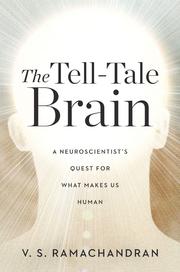
Uses fascinating neurological case studies to introduce core concepts like brain regions, plasticity, and perception in a gripping, story-driven way — perfect for building curiosity and basic vocabulary.

Focuses on neuroplasticity and how the brain constantly rewires itself, deepening the beginner's intuition about dynamic brain function before moving into harder biology.
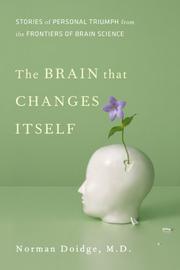
Reinforces plasticity concepts through compelling patient stories and introduces the idea of cortical maps, preparing the reader for the more mechanistic explanations ahead.
The Cellular Level: Neurons and Signals
BeginnerUnderstand how individual neurons work — action potentials, synapses, neurotransmitters — and how they wire together into circuits.
▸ Study plan for this stage
Pace: 8–10 weeks total. Weeks 1–6: "Neuroscience: Exploring the Brain" — focus on Parts I–III (Chapters 1–15), reading ~25–30 pages/day, 5 days/week. Weeks 7–10: "The Synaptic Self" — read ~20–25 pages/day, 5 days/week, pausing after each chapter to reflect on how LeDoux's narrative connects to the cellul
- Neuron anatomy and the functional roles of dendrites, axons, soma, and myelin sheaths (Bear, Ch. 2–3)
- The resting membrane potential: ion gradients, selective permeability, and the sodium-potassium pump (Bear, Ch. 3–4)
- Action potential generation, propagation, and the all-or-none principle — including voltage-gated Na⁺ and K⁺ channels (Bear, Ch. 4)
- Synaptic transmission: electrical vs. chemical synapses, the synaptic vesicle cycle, and neurotransmitter release (Bear, Ch. 5–6)
- Major neurotransmitter systems (glutamate, GABA, dopamine, serotonin, acetylcholine) and their receptor types — ionotropic vs. metabotropic (Bear, Ch. 6–7)
- Synaptic plasticity — long-term potentiation (LTP) and long-term depression (LTD) as cellular bases of learning and memory (Bear, Ch. 25; LeDoux, Ch. 2–4)
- The concept of the 'synaptic self': how the sum of synaptic connections shapes personality, memory, and identity (LeDoux, throughout)
- Neural circuit logic: how individual neurons wire into functional networks and how experience modifies those connections (Bear, Ch. 1 & 25; LeDoux, Ch. 5–8)
- Can you trace the full sequence of events — from a stimulus to a postsynaptic potential — including every ion channel, vesicle step, and receptor interaction involved? (Bear, Ch. 4–6)
- What makes an action potential 'all-or-none,' and how does myelination affect its speed? How would demyelination change signal transmission? (Bear, Ch. 4)
- What is the difference between an ionotropic and a metabotropic receptor, and why does that distinction matter for the speed and duration of a synaptic signal? (Bear, Ch. 6–7)
- How does LTP at the synapse serve as a plausible cellular mechanism for memory formation, and what role do AMPA and NMDA receptors play? (Bear, Ch. 25; LeDoux, Ch. 3–4)
- According to LeDoux, in what sense is the 'self' a product of synaptic organization, and how does this view challenge or complement traditional psychological notions of identity? (LeDoux, Ch. 1–2 & Epilogue)
- How do excitatory (glutamatergic) and inhibitory (GABAergic) neurons cooperate to regulate circuit activity, and what happens when this balance is disrupted? (Bear, Ch. 6–7; LeDoux, Ch. 5)
- Diagram from memory: Draw a complete neuron, label all structures, then draw a synapse in detail (pre- and post-synaptic membranes, vesicles, receptors, reuptake transporters). Check against Bear's figures in Ch. 2 and Ch. 5.
- Action potential graph exercise: Sketch the voltage-vs.-time curve of an action potential, annotate each phase (depolarization, overshoot, repolarization, undershoot/refractory period) with the specific ion channel events occurring. Narrate it aloud as if teaching a peer.
- Neurotransmitter system map: Create a one-page reference table listing each major neurotransmitter covered in Bear (Ch. 6–7), its primary receptor types, brain regions involved, and one real-world consequence of its dysregulation (e.g., dopamine → Parkinson's).
- LTP concept journal: After reading the LTP/LTD sections in Bear (Ch. 25) and the relevant chapters in LeDoux, write a 300–500 word explanation in plain language of how a single synaptic experience can become a lasting memory — connecting the molecular events to LeDoux's broader argument about the synaptic self.
- Circuit logic thought experiment: Pick one behavior described in LeDoux (e.g., a conditioned fear response) and reverse-engineer it — sketch the minimal neural circuit that could produce it, labeling neuron types, neurotransmitters, and synapse types (excitatory/inhibitory) using vocabulary from Bear.
- Feynman self-quiz: At the end of each major Bear chapter (Ch. 3, 4, 5, 6, 7, 25), close the book and write down everything you just learned in bullet points without notes. Identify gaps, re-read only those sections, then repeat.
Next up: By mastering how single neurons fire, communicate, and plastically rewire — and by seeing through LeDoux how those synapses aggregate into a 'self' — the reader is primed to zoom out to the systems level, where ensembles of circuits give rise to perception, emotion, cognition, and behavior.

The most widely used undergraduate neuroscience textbook; introduces neuroanatomy, electrophysiology, and synaptic transmission with clear diagrams — the essential bridge from popular science to real neuroscience.

Explains how synaptic connections form identity, memory, and emotion, giving human meaning to the cellular mechanisms just learned in Bear and making the material stick.
Systems Neuroscience: Senses, Movement, and the Body
IntermediateUnderstand how the brain's major systems — sensory, motor, limbic, and autonomic — are organized and interact to produce coherent behavior.
▸ Study plan for this stage
Pace: 10–12 weeks total. Weeks 1–8: Principles of Neural Science — focus on the sensory, motor, limbic, and autonomic chapters (~40–50 pages/day, 4–5 days/week; skip or skim molecular/cellular chapters already covered in earlier stages). Weeks 9–12: The Emotional Brain — a more narrative read at ~25–30 pa
- Sensory transduction and coding: how peripheral receptors convert physical stimuli (light, sound, pressure, chemicals) into neural signals, and how those signals are topographically mapped in cortex (retinotopy, tonotopy, somatotopy)
- Hierarchical and parallel processing in sensory systems: the 'what' vs. 'where/how' pathways in vision and audition as described in Kandel, and how cortical areas build increasingly abstract representations
- Somatosensory and pain pathways: dorsal column–medial lemniscal vs. spinothalamic tracts, gate-control theory, and the role of the thalamus as a sensory relay and filter
- Motor system organization: spinal motor circuits and reflexes, the corticospinal tract, the roles of the cerebellum (error correction, timing) and basal ganglia (action selection, habit) as detailed in Kandel's motor sections
- The limbic system and emotion circuits: Papez circuit, hippocampal–amygdala–prefrontal connectivity, and LeDoux's critique of the classical 'limbic system' concept as an oversimplification
- LeDoux's fear circuitry: the low road (thalamus → amygdala) vs. high road (thalamus → cortex → amygdala), fear conditioning as a model system, and the amygdala's role in emotional memory consolidation
- Autonomic nervous system organization: sympathetic vs. parasympathetic divisions, hypothalamic control, and how visceral feedback (interoception) shapes emotional experience — bridging Kandel's anatomy with LeDoux's theory
- Sensory–motor–emotional integration: how the brain's systems are not isolated modules but interact continuously, e.g., how threat detection (amygdala) rapidly modulates both sensory attention and motor readiness
- After reading Kandel's sensory chapters, can you trace the complete pathway of a touch stimulus from a Meissner corpuscle in the fingertip to primary somatosensory cortex (S1), naming each synapse and tract?
- How does Kandel distinguish the dorsal ('what') and ventral ('where/how') visual streams, and what clinical syndromes (e.g., agnosia, neglect) illustrate a breakdown in each?
- What are the distinct contributions of the cerebellum and basal ganglia to voluntary movement, and how does damage to each produce different motor disorders (ataxia vs. Parkinson's-like symptoms)?
- How does LeDoux argue against the classical limbic system concept, and what evidence from fear-conditioning experiments does he use to support the amygdala-centric view of emotional learning?
- What is the 'low road' vs. 'high road' to the amygdala, and why does LeDoux argue the low road is evolutionarily significant for survival even though it bypasses conscious perception?
- How do the autonomic nervous system and the hypothalamus connect the emotional appraisal circuits described by LeDoux to the bodily (visceral) responses that accompany emotion?
- Pathway mapping: Draw, from memory, the full ascending pathways for at least two senses (e.g., vision and touch) using Kandel as your reference. Label every relay nucleus, decussation point, and cortical destination. Then do the same for the descending corticospinal motor pathway.
- Comparative lesion analysis: For each major system covered (visual cortex, S1, cerebellum, basal ganglia, amygdala), write a one-paragraph 'lesion profile' — what specific deficits would a patient show, and why? Use Kandel's clinical boxes as your primary source.
- LeDoux debate journal: After finishing The Emotional Brain, write a 1–2 page critical response to LeDoux's argument against the limbic system concept. What does Kandel's anatomical account add, contradict, or leave unresolved? This forces active synthesis of both books.
- Fear-conditioning diagram: Draw the neural circuit for Pavlovian fear conditioning as described by LeDoux (CS pathway, US pathway, convergence in the lateral amygdala, output via central amygdala to hypothalamus/PAG). Annotate each arrow with the type of plasticity or neurotransmitter involved where possible.
- Sensory–motor integration scenario: Choose a real-world action (e.g., catching a ball, recoiling from a hot stove) and write a step-by-step neural narrative — which sensory receptors fire, which pathways carry the signal, where motor commands originate, and how emotional/autonomic systems modulate the response. Draw on both Kandel and LeDoux.
- Concept comparison table: Create a two-column table contrasting Kandel's systems-level anatomical perspective with LeDoux's functional/evolutionary perspective on the same structures (amygdala, hypothalamus, thalamus, prefrontal cortex). Note where they agree, where they diverge, and what questions remain open.
Next up: By mastering how individual sensory, motor, and emotional systems are organized and interact, the reader is now equipped to tackle higher-order questions about how these systems are coordinated across time — setting the stage for studying cognition, consciousness, memory, and executive function, where the focus shifts from individual circuits to whole-brain integration and behavior.
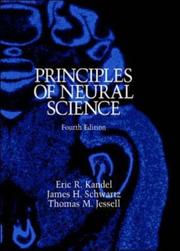
The definitive reference text of the field, written by a Nobel laureate; covers every major system in rigorous detail and is the canonical source serious students return to throughout their careers.
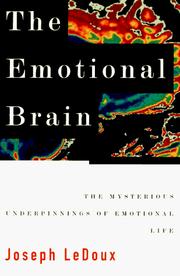
Provides a deep, systems-level account of fear and emotion circuitry — especially the amygdala — showing how to think about a specific system with experimental precision.
Cognitive Neuroscience: Mind Meets Brain
IntermediateConnect neural mechanisms to higher-order functions: attention, memory, language, decision-making, and consciousness.
▸ Study plan for this stage
Pace: 4–5 weeks, ~20–25 pages/day; Chalmers is dense philosophical-neuroscience prose, so budget extra time for re-reading argument-heavy sections and taking structured notes
- The Hard Problem of Consciousness: why physical brain processes give rise to subjective experience (qualia) at all — Chalmers' central distinction from the 'easy problems' of cognitive function
- Phenomenal vs. Access Consciousness: the difference between what it feels like to have an experience (phenomenal) and the brain's functional availability of information for reasoning and report (access)
- Qualia and Subjective Experience: the intrinsic, first-person 'what-it-is-like' character of sensory and mental states, and why they resist purely functional explanation
- Dualism Revisited — Property Dualism and Naturalistic Dualism: Chalmers' argument that consciousness is a fundamental feature of the world not reducible to physical processes, without invoking substance dualism
- The Zombie Argument and Conceivability: the thought experiment that a being physically identical to a human but lacking inner experience is conceivable, used to argue consciousness is not logically entailed by physical facts
- The Knowledge Argument (Mary's Room): Frank Jackson's scenario as discussed by Chalmers — what a colorblind neuroscientist learns upon first seeing red, challenging physicalist accounts of mind
- Explanatory Gap and the Limits of Reductive Explanation: why even a complete neuroscientific account of attention, memory, and perception leaves the subjective dimension unexplained
- Toward a Theory of Consciousness — Psychophysical Laws and Information: Chalmers' constructive proposal that consciousness may be systematically linked to information processing, anticipating frameworks like Integrated Information Theory
- What precisely is the 'Hard Problem' of consciousness, and how does Chalmers distinguish it from the 'easy problems' such as attention, memory consolidation, and perceptual integration?
- How does Chalmers define phenomenal consciousness, and why does he argue it cannot be fully explained by functional or neural accounts alone?
- What is the philosophical zombie thought experiment, what does it purport to show about the relationship between physical processes and experience, and what are the strongest objections to it?
- How does Chalmers use the conceivability-to-possibility inference, and why is this logical move controversial among both philosophers and neuroscientists?
- What is naturalistic dualism, and how does Chalmers attempt to reconcile taking consciousness seriously as non-physical while still engaging with empirical neuroscience?
- How does Chalmers' discussion of information and psychophysical laws gesture toward a positive scientific research program, and what are its limitations?
- Argument Mapping: After each major chapter, draw a structured argument map (premise → inference → conclusion) of Chalmers' core claims. Identify where he relies on logical conceivability vs. empirical evidence — this sharpens the skill of separating philosophical from neuroscientific claims.
- Qualia Journal: Keep a daily 5-minute phenomenological diary. Describe a sensory experience (a taste, a sound, a visual scene) in purely first-person terms, then attempt to re-describe it in third-person functional/neural language. Note what gets lost — this makes the explanatory gap viscerally concrete.
- Steel-Man Debate: Write two one-page position papers — one defending Chalmers' property dualism and one defending a physicalist rebuttal (e.g., higher-order theories or illusionism). Arguing both sides forces genuine comprehension of the dialectic.
- Concept Crosswalk: Create a two-column table mapping each 'easy problem' Chalmers lists (attention, memory, learning, reportability, etc.) to a specific neural mechanism you have encountered in earlier stage readings. Then write one sentence per row explaining why Chalmers thinks solving it still leaves the hard problem open.
- Thought Experiment Stress-Test: Take the Zombie Argument and the Knowledge Argument and write out the strongest single objection to each (e.g., the 'phenomenal concepts strategy' against Mary's Room). Evaluate whether Chalmers' replies in the text are satisfying — annotate your copy with your verdict.
- Integrative Essay: Write a 600–800 word essay answering: 'What would a complete neuroscientific account of decision-making or language still fail to explain, according to Chalmers, and do you find that convincing?' This synthesizes the stage goal of connecting neural mechanisms to higher-order functions with the book's philosophical challenge.
Next up: By wrestling with why neural mechanisms alone may not fully explain subjective experience, the reader is primed to engage more critically and deeply with empirical cognitive neuroscience — approaching topics like attention, memory, and language not just as computational problems but as phenomena that must ultimately account for the experiencing subject.
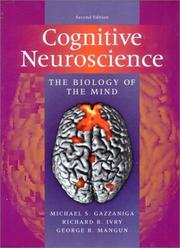
The standard cognitive neuroscience textbook, bridging systems biology and psychological constructs like working memory, executive function, and language with strong empirical grounding.
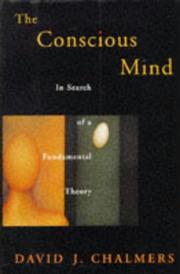
Introduces the hard problem of consciousness with philosophical rigor, pushing the reader to think critically about what neuroscience can and cannot yet explain — essential intellectual humility at this stage.
Advanced Frontiers: Computation, Theory, and the Future
ExpertThink like a neuroscientist and theorist — understand computational models of the brain, neural coding, and the open questions driving modern research.
▸ Study plan for this stage
Pace: 10–13 weeks total. "Theoretical Neuroscience" (Dayan): 8–9 weeks at ~20–25 pages/day — this is a dense, math-heavy text; budget extra time for working through equations and problem sets. "The Neuroscience of Intelligence" (Haier): 2–3 weeks at ~25–30 pages/day — more accessible prose, but read criti
- Neural coding and decoding: how information is represented in spike trains, firing rates, and population codes (Dayan Ch. 1–3)
- Bayesian inference and probabilistic models of perception and cognition — the brain as an optimal estimator (Dayan Ch. 10)
- Synaptic plasticity rules: Hebbian learning, spike-timing-dependent plasticity (STDP), and their mathematical formulations (Dayan Ch. 8)
- Network models: attractor networks, winner-take-all circuits, and recurrent network dynamics (Dayan Ch. 7)
- Reinforcement learning in the brain: temporal-difference learning, dopamine as a reward-prediction-error signal (Dayan Ch. 9)
- The Parieto-Frontal Integration Theory (P-FIT) and neuroimaging correlates of intelligence (Haier)
- Neural efficiency hypothesis: the idea that higher intelligence correlates with less, not more, brain activation (Haier)
- Open questions and future directions: the g-factor debate, gene–brain–intelligence links, and the ethics of cognitive enhancement (Haier)
- How does a maximum-likelihood decoder extract a stimulus estimate from a population of noisy neurons, and what role does the tuning curve play? (Dayan)
- Derive or explain the delta learning rule and show how it relates to gradient descent on a loss function — how does this connect to biological synaptic plasticity? (Dayan)
- What is the temporal-difference (TD) error, and why is the phasic firing of dopamine neurons considered its neural correlate? (Dayan)
- How does the P-FIT model synthesize structural and functional neuroimaging findings into a unified account of intelligence, and what are its main empirical weaknesses? (Haier)
- What does 'neural efficiency' mean quantitatively, and what experimental paradigms (e.g., PET, fMRI) have been used to test it? (Haier)
- Where do the computational/theoretical framework of Dayan and the empirical intelligence research of Haier converge — and where do they leave unresolved gaps?
- Work every end-of-chapter problem in Dayan (at least one per chapter) — especially the Fisher information and signal detection theory problems in Ch. 3; check your algebra step by step.
- Implement a leaky integrate-and-fire (LIF) neuron model in Python/MATLAB: simulate its response to varying input currents, plot F–I curves, and compare to the rate-code models described in Dayan Ch. 1.
- Code a simple TD-learning agent (e.g., a grid-world task) from scratch using the equations in Dayan Ch. 9, then map the agent's prediction-error signal onto what you know about dopamine neuron recordings.
- After finishing Haier, write a 2-page critical essay: identify one claim about intelligence and the brain that Haier makes, find one primary research paper that supports it and one that challenges it, and evaluate the evidence.
- Build a concept-map linking terms across both books (e.g., 'population code' → 'g-factor' → 'neural efficiency' → 'Bayesian brain') to surface unexpected connections and remaining confusions.
- Design a hypothetical experiment: choose one open question from Haier's final chapters, then sketch how a computational model from Dayan (e.g., a network model or Bayesian framework) could be used to formalize and test it.
Next up: Mastering computational models and the empirical neuroscience of intelligence equips the reader with both the mathematical language and the critical scientific lens needed to engage with cutting-edge primary literature and specialized research domains — the natural next frontier beyond structured textbooks.
The gold-standard text for computational and mathematical neuroscience; covers neural coding, network models, and reinforcement learning — requires the biological foundation built in all prior stages.
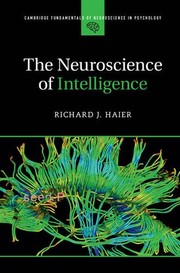
Synthesizes modern neuroimaging and genetics research on intelligence, modeling how to evaluate evidence and form theory — a capstone example of rigorous, data-driven neuroscience thinking.
Discussion
Keep reading
Paths that share books, cover the same subject, or open a related topic.