Best South African Literature to Read, in Order
This curriculum moves through South African literature in four tightly sequenced stages, beginning with the moral and political foundations of the apartheid novel, deepening through the major voices of Gordimer and Coetzee, turning to testimony and truth-commission writing, and finally arriving at the complex, pluralist energies of post-apartheid fiction. Because the learner starts at an intermediate level, the path opens with accessible but serious novels before escalating in formal and philosophical difficulty.
The Apartheid Novel: Moral Landscape
IntermediateUnderstand the social, racial, and political architecture of apartheid South Africa as rendered in realist fiction, and build the historical and emotional vocabulary needed for everything that follows.
▸ Study plan for this stage
Pace: 8–10 weeks, ~40–50 pages/day with 2–3 days per week for reflection and exercises. Allocate roughly 3 weeks per novel to allow for close reading and historical contextualization.
- The pass system and spatial segregation: how apartheid law physically separated and controlled Black South African bodies and movement (central to all three novels)
- Moral complexity and individual conscience under systemic oppression: characters who resist, comply, or navigate apartheid's contradictions
- The township and urban landscape as a site of both community resilience and state violence
- Intergenerational trauma and family fracture caused by migrant labor, forced removals, and racial classification
- Realism as a tool for documenting apartheid's everyday brutality and its impact on consciousness and dignity
- The relationship between economic exploitation and racial ideology in apartheid capitalism
- Language, voice, and narrative perspective as acts of witnessing and resistance in fiction
- How does each novel use the pass system and spatial segregation to structure both plot and character experience? What does this reveal about apartheid's logic?
- Compare the moral positions of Stephen Kumalo (Cry, the Beloved Country), Xuma (Mine Boy), and Michael Adonis (A Walk in the Night). How do they each respond to systemic injustice, and what does their variation suggest about individual agency under apartheid?
- What role does the township play in each novel—as a space of community, survival, danger, and/or resistance?
- How do these three novels represent the family and kinship under apartheid? What patterns of separation, loss, or endurance emerge across them?
- How does the narrative voice and perspective in each novel shape the reader's understanding of apartheid? What does it mean that we see apartheid through these particular characters' eyes?
- What connections exist between economic exploitation (mining, labor, poverty wages) and racial oppression in these texts? How are they inseparable?
- Timeline exercise: Create a detailed chronology of each protagonist's movements through space (neighborhoods, workplaces, prisons, churches). Annotate with apartheid laws that govern or restrict each movement. Reflect on how the pass system structures narrative itself.
- Character moral inventory: For Kumalo, Xuma, and Michael Adonis, list their choices at key moments and categorize them as resistance, accommodation, or survival. Write a short paragraph on each explaining the constraints they face.
- Close reading: Select one passage from each novel that best captures apartheid's impact on human consciousness or dignity. Analyze the language, imagery, and narrative technique. What does the author want us to feel?
- Comparative scene analysis: Find scenes in each novel depicting township life, police violence, or workplace exploitation. Compare how the three authors render the same social reality differently. What does style reveal about perspective?
- Historical research integration: For each novel, research one specific apartheid law or historical event referenced or implied in the text (e.g., the pass system, migrant labor contracts, forced removals). Write a 1–2 page reflection on how the novel illuminates that historical reality.
- Dialogue with the text: Write a letter to one of the three protagonists reflecting on their choices and moral position. What would you ask them? What do you understand about their situation that they may not?
Next up: This stage establishes the foundational moral and historical vocabulary—the lived reality of apartheid's architecture—that will allow you to engage with more formally experimental, psychologically complex, or politically radical representations of South African literature in subsequent stages.
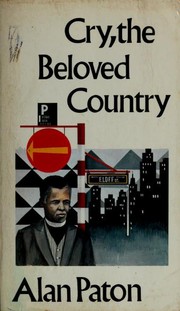
The foundational text of South African literature in English — its portrait of racial injustice, dispossession, and Christian grief sets the moral stakes that every later writer responds to or pushes against. Read first to establish the emotional and political baseline.
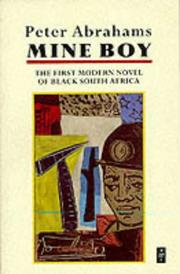
One of the earliest novels to depict Black urban life and migrant labour on the Witwatersrand gold mines; reading it after Paton shifts the perspective from liberal white sympathy to Black experience from the inside.
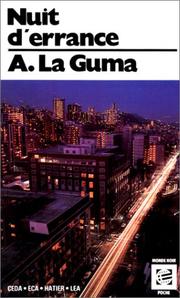
La Guma's taut novella of Cape Town's District Six under apartheid introduces the Coloured community's experience and a harder, more politically radical realism — a necessary counterweight before entering Gordimer's world.
Gordimer and Coetzee: The Two Giants
IntermediateEngage deeply with the two Nobel laureates who defined South African literary ambition internationally — Gordimer's social realism and Coetzee's allegorical, postmodern critique — and understand how they differ in method and politics.
▸ Study plan for this stage
Pace: 8–10 weeks, ~40–50 pages/day (with 2–3 days per week for reflection and exercises). Week 1–2: *Burger's Daughter*; Week 3–4: *July's People*; Week 5–6: *Waiting for the Barbarians*; Week 7–8: *Disgrace*; Week 9–10: comparative synthesis and revision.
- Social realism vs. allegory: Gordimer's direct engagement with apartheid politics versus Coetzee's oblique, philosophical critique through parable and metafiction
- The intellectual protagonist: how both authors use educated, conflicted characters (Rosa Burger, Maureen Smales, the Magistrate, David Lurie) to explore complicity and moral responsibility
- Narrative perspective and reliability: Gordimer's third-person omniscience and interior monologue versus Coetzee's first-person unreliable narrators and fragmented form
- The politics of silence and speech: how Gordimer's characters struggle to articulate political commitment while Coetzee's narrators retreat into language games and evasion
- Domesticity under siege: the home (family, marriage, private space) as a microcosm of political collapse in both authors, especially in *July's People* and *Disgrace*
- Postcolonial shame and humiliation: how Coetzee stages the white subject's degradation and loss of authority, contrasting with Gordimer's more ambivalent portraits of white liberal guilt
- The role of the Other (Black characters, servants, victims): how Gordimer grants interiority and political agency while Coetzee often renders them as silent, inscrutable, or absent
- Intertextuality and literary allusion: Coetzee's dense engagement with canonical literature versus Gordimer's grounding in social documentation and journalism
- How does Gordimer's portrayal of Rosa Burger's political inheritance in *Burger's Daughter* differ from Coetzee's treatment of the Magistrate's complicity in *Waiting for the Barbarians*? What does each author suggest about the possibility of moral redemption?
- Compare the role of the Black servant/Other in *July's People* and *Disgrace*. How do Gordimer and Coetzee differently represent the interiority, agency, or silence of these characters, and what does this reveal about their political aesthetics?
- What is the function of narrative unreliability in Coetzee's two novels? How does his use of first-person limitation differ from Gordimer's omniscient narration, and what does each technique suggest about truth and knowledge under apartheid?
- Analyze the collapse of domestic space in *July's People* and *Disgrace*. How do both authors use the home as a site where political and social hierarchies unravel, and what do their endings suggest about the future?
- How do Gordimer and Coetzee differ in their use of allegory and realism? Which author's method do you find more effective in representing apartheid-era South Africa, and why?
- What is the significance of silence, refusal to speak, or linguistic evasion in these four novels? How does each author use language (or its failure) to explore political and ethical crises?
- Close-read a key scene from *Burger's Daughter* (e.g., Rosa's visit to her father in prison, or her time in France) and a parallel scene from *Waiting for the Barbarians* (e.g., the Magistrate's torture or interrogation). Write a 2–3 page comparative analysis of how each author renders consciousness under political pressure.
- Create a character map for *July's People* and *Disgrace* tracking the power dynamics between white protagonists and Black characters (July, Melanie, Lucy, the intruders). Annotate moments where these dynamics shift, and write a short reflection on what Gordimer and Coetzee are suggesting about post-apartheid social relations.
- Perform a narrative technique analysis: select 5–6 passages (2–3 from Gordimer, 2–3 from Coetzee) and identify the narrative mode (free indirect discourse, interior monologue, dialogue, etc.). Write brief notes on how each technique shapes the reader's access to truth and judgment.
- Write a dialogue or letter exchange between Rosa Burger and David Lurie, or between the Magistrate and Maureen Smales, in which they discuss their respective moral failures. This exercise should reveal what you've learned about each author's ethical vision.
- Research one historical event referenced in these novels (e.g., the Soweto uprising in *Burger's Daughter*, the 1994 transition in *Disgrace*) and write a 1–2 page reflection on how Gordimer's realism versus Coetzee's allegory engages with or evades historical specificity.
- Compile a list of literary and philosophical allusions in Coetzee's novels (e.g., references to Kafka, Dostoevsky, Defoe). For each, note what Coetzee seems to be suggesting through the allusion, and contrast this intertextual method with Gordimer's more direct social documentation.
Next up: This stage establishes the two dominant modes of South African literary response to apartheid and its aftermath—social realism and postmodern allegory—providing the critical vocabulary and comparative framework needed to engage with subsequent authors (such as Zakes Mda, Zoë Wicomb, or Ivan Vladislavić) who synthesize, challenge, or move beyond these paradigms.

Gordimer's most politically and formally ambitious novel — the story of an Afrikaner communist's daughter under apartheid — is the ideal entry point into her work, showing how private identity and political commitment are inseparable.
This short, searing dystopian novel imagines the collapse of white South Africa; reading it after Burger's Daughter reveals how Gordimer's style sharpened into something more compressed and visionary.
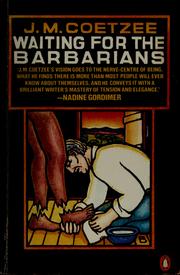
Coetzee's allegorical masterpiece of empire, torture, and complicity is the perfect bridge between Gordimer's realism and his own more philosophical mode — accessible enough to enter his world without prior Coetzee experience.
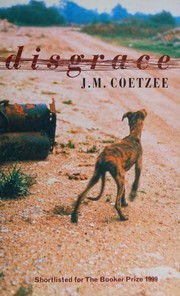
Coetzee's Booker Prize-winning novel set in post-apartheid South Africa is his most debated and essential work; it must follow Waiting for the Barbarians so the reader can feel how his allegory has become uncomfortably concrete and local.
Testimony and Truth: Witness Literature
IntermediateEncounter the literature of testimony, memoir, and the Truth and Reconciliation Commission — understanding how South Africans narrated atrocity, survival, and the attempt at national healing in non-fiction and hybrid forms.
▸ Study plan for this stage
Pace: 6–7 weeks, ~40–50 pages/day (approximately 3 weeks for "Long Walk to Freedom," 2–3 weeks for "Country of My Skull," with overlap for reflection and note-taking)
- Testimony as a form of truth-telling: how personal narrative becomes historical evidence and national record
- The politics of memoir: how Mandela's selective self-presentation differs from Krog's journalistic immersion in TRC proceedings
- Survival and resilience narratives: the psychological and spiritual dimensions of enduring imprisonment and witnessing atrocity
- The Truth and Reconciliation Commission as a narrative framework: how testimony functions as both legal proceeding and collective healing ritual
- Hybrid forms of witness literature: blending memoir, journalism, poetry, and philosophical reflection to capture what conventional narrative cannot
- The relationship between individual and national trauma: how personal stories become emblems of collective suffering and recovery
- Language and representation: the challenge of narrating the unspeakable—torture, loss, and reconciliation—across different registers and genres
- How does Mandela's 'Long Walk to Freedom' construct his public identity through selective memory and narrative framing, and what does he choose to emphasize or omit?
- What is the role of the Truth and Reconciliation Commission in 'Country of My Skull,' and how does Krog position herself as a witness to witnessing?
- How do the two texts differ in their approach to testimony: what does Mandela's retrospective memoir offer that Krog's real-time journalistic account does not, and vice versa?
- How do both authors use language—including silence, repetition, and fragmentation—to convey experiences that resist straightforward narration?
- What is the relationship between personal survival and national reconciliation in these texts? How do individual testimonies contribute to a larger narrative of healing?
- How do 'Long Walk to Freedom' and 'Country of My Skull' challenge or complicate the idea that truth-telling alone can lead to justice or forgiveness?
- Create a timeline of Mandela's life as presented in 'Long Walk to Freedom,' then identify 3–4 moments he emphasizes and 3–4 he passes over quickly. Write a brief reflection on what these choices reveal about his narrative strategy.
- Read a selection of TRC testimonies (available online) while reading 'Country of My Skull,' and annotate how Krog's framing and commentary shape your understanding of the raw testimony.
- Write two contrasting first-person accounts of the same fictional traumatic event: one in Mandela's reflective, measured style and one in Krog's fragmented, poetic style. Discuss what each form allows you to express.
- Identify 5–6 passages in each text where the author struggles with language or uses silence/gaps. Analyze what these moments suggest about the limits of testimony.
- Conduct a comparative close reading: select one passage from 'Long Walk to Freedom' about imprisonment and one from 'Country of My Skull' about witnessing trauma. How do syntax, tone, and imagery differ?
- Research and write a 2–3 page reflection on the historical context of the TRC (1995–1998) and how Krog's account illuminates or complicates the official narrative of reconciliation.
Next up: This stage establishes how South African writers have used testimony and memoir to process trauma and imagine national healing; the next stage will explore how contemporary South African fiction builds on, critiques, or reimagines these testimonial frameworks through the lens of post-apartheid identity, memory, and social transformation.
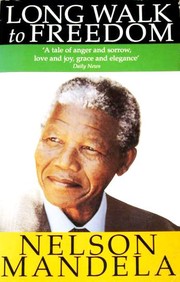
Mandela's autobiography is the indispensable first-person political testimony of the anti-apartheid struggle; reading it here grounds the truth-and-reconciliation context before moving to more literary and critical accounts.
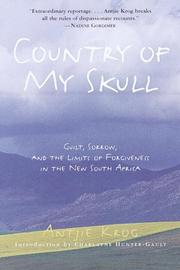
Krog's hybrid memoir-reportage of covering the Truth and Reconciliation Commission hearings is the defining literary document of that process — morally complex, formally innovative, and emotionally devastating.
Post-Apartheid Writing: New Voices, New South Africa
ExpertRead the generation of writers who came of age after 1994 and grapple with the unfinished business of liberation — inequality, identity, memory, and belonging — in a formally diverse and globally connected South African literature.
▸ Study plan for this stage
Pace: 8–10 weeks, ~40–50 pages/day (with close reading sessions and reflection time). Allocate 3 weeks for "Triomf" (350 pages), 2–3 weeks for "The Quiet Violence of Dreams" (200 pages), and 2–3 weeks for "Coconut" (220 pages), with 1–2 weeks for synthesis and comparative analysis.
- Post-apartheid trauma and the persistence of racial hierarchies: how Van Niekerk, Duiker, and Matlwa depict the unfinished work of liberation through intimate domestic and psychological spaces
- Afrikaner identity in crisis: 'Triomf' as a reckoning with white working-class complicity and dispossession in the new South Africa
- Urban alienation and mental fragmentation: Duiker's protagonist as emblematic of post-apartheid psychological dislocation and the search for belonging in Johannesburg
- Colorism, class, and internalized racism: Matlwa's exploration of how Black middle-class aspiration reproduces colonial hierarchies of skin tone and cultural authenticity
- Formal innovation as political statement: how narrative fragmentation, stream-of-consciousness, and non-linear time reflect the fractured consciousness of post-apartheid subjects
- Memory, silence, and the limits of reconciliation: the role of unspoken family histories and collective amnesia in shaping individual identity
- Global connection and local rootedness: how these writers position South African literature within transnational circuits while interrogating what 'belonging' means
- Gender, sexuality, and vulnerability: the representation of bodies and desire as sites of both liberation and continued subjection in the new nation
- How does Van Niekerk use the Afrikaner family unit in 'Triomf' to expose the contradictions and vulnerabilities of white working-class identity in post-apartheid South Africa?
- What role does Johannesburg play as a character in 'The Quiet Violence of Dreams,' and how does Duiker's protagonist's mental breakdown reflect broader post-apartheid urban anxieties?
- In 'Coconut,' how does Matlwa critique the Black middle class's relationship to skin tone, language, and cultural authenticity, and what does this reveal about the persistence of colonial hierarchies?
- Compare the narrative techniques used across the three novels: how do fragmentation, non-linearity, and stream-of-consciousness serve as formal responses to post-apartheid disorientation?
- What does each novel suggest about the possibility of healing, reconciliation, or belonging in the post-apartheid era? Where do they diverge in their answers?
- How do these three writers position South African literature within a global context while remaining rooted in local, specific struggles?
- Close-read a key passage from each novel (e.g., the opening of 'Triomf,' Duiker's stream-of-consciousness sequences, Matlwa's dialogue about skin tone) and annotate for narrative technique, tone, and thematic resonance. Write a 500-word analysis of how form embodies content in one passage.
- Create a comparative character map: track how the protagonists/families in each novel respond to post-apartheid displacement, inequality, and identity questions. What patterns emerge? Where do they diverge?
- Write a 1,000-word essay on one of the following: (a) How does 'Triomf' reframe the Afrikaner narrative in post-apartheid literature? (b) What does Duiker's portrayal of urban mental illness tell us about post-apartheid belonging? (c) How does Matlwa's critique of colorism complicate narratives of Black liberation?
- Conduct a textual comparison: select a theme (memory, family, urban space, identity) and trace how it appears across all three novels. Write a 1,500-word comparative analysis.
- Research and write a 750-word contextualization essay on the historical moment of each novel's publication (1994, 2001, 2007) and how contemporary events (Truth and Reconciliation Commission, xenophobia, BEE, student movements) inflect the texts.
- Develop a reading journal with weekly reflections: after each novel, write 300–400 words on how your understanding of 'post-apartheid literature' has shifted. What questions remain unanswered?
Next up: This stage establishes the formal and thematic vocabulary of contemporary South African writing—fragmentation, trauma, inequality, and the critique of liberation's incomplete promises—preparing you to engage with even more formally experimental and globally connected voices, or to deepen your study of specific movements (e.g., the Johannesburg literary scene, feminist interventions, or speculative
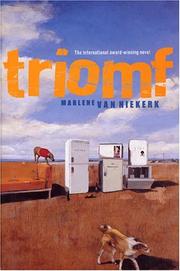
Van Niekerk's monumental, darkly comic novel of a poor white Afrikaner family in the final days of apartheid is a radical stylistic achievement; it opens this stage by showing how the old order looked from its most degraded margins.
Duiker's novel of queer Black life in Cape Town's post-apartheid underworld broke new ground in subject matter and voice — essential for understanding the generation that inherited freedom and found it incomplete.
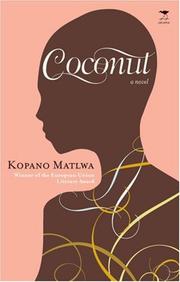
Matlwa's debut novel about Black middle-class identity and the psychological aftermath of apartheid closes the curriculum by asking what liberation actually means for young Black South Africans — a fitting, unresolved final question.
Discussion
Keep reading
Paths that share books, cover the same subject, or open a related topic.