South African literature is unusually tied to a datable political sequence: the 1948 election that formalised apartheid, the 1976 Soweto uprising, the 1994 transition, and the Truth and Reconciliation Commission hearings that followed. Novels written on either side of those hinges are answering different questions, and reading them out of order makes the arguments look like moods.
The second trap is reading only the Nobel laureates. Coetzee and Gordimer are indispensable, but the Drum-era writers and the Black authors banned or exiled under apartheid wrote the books those two are partly in conversation with. Start there and the canonical novels read as replies rather than as statements.
The apartheid-era openers
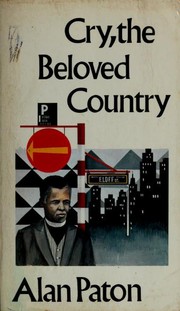
Begin with Cry, the Beloved Country, Alan Paton's 1948 novel, published the year the National Party took power. It is a liberal, Christian, deliberately lyrical book about a rural priest searching Johannesburg for his son, and its assumptions about paternal white sympathy are exactly what later writers push against. Read it first so you can hear the pushback.
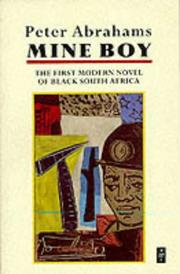
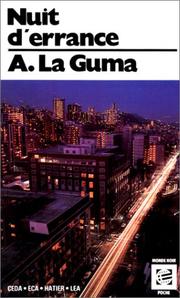
Then read Mine boy, Peter Abrahams's account of a man arriving from the countryside into the mining compounds — the same migration Paton describes, told from inside it. Follow with A walk in the night, Alex La Guma's novella of Cape Town's District Six, which compresses poverty, police violence, and forced removal into a single night and a few streets. La Guma wrote under a banning order; the claustrophobia is not a stylistic choice.
Gordimer, Coetzee, and the late-apartheid novel
Nadine Gordimer's Burger's daughter follows the child of a white Communist martyr trying to work out what she owes a struggle she inherited rather than chose. Her July's people then imagines the transition as violent collapse, with a white family dependent on their former servant — a thought experiment that history did not confirm, which is part of why it is still argued about.
J. M. Coetzee works at a different angle. Waiting for the Barbarians is a parable of an unnamed empire and its torture rooms, abstract enough to travel; Disgrace, published five years after the transition, is brutally specific about land, sexual violence, and what a white academic in the new South Africa can and cannot claim. Read the parable first and the specificity of Disgrace hits harder.
The transition and after
Long Walk to Freedom gives you Mandela's own narrative of the movement and the negotiated settlement — a shaped, strategic memoir, not a neutral one, and worth reading as such. Country of my skull, Antjie Krog's account of covering the Truth and Reconciliation Commission, is the essential companion: a poet-journalist reporting testimony that broke her, and openly uncertain about whether the process delivered justice or only a record.
Then read Triomf, Marlene van Niekerk's savage novel of poor white Afrikaners living on the rubble of the demolished Sophiatown — a rebuke to any idea that apartheid's beneficiaries were uniformly comfortable. The Quiet Violence of Dreams, K. Sello Duiker's Cape Town novel of sexuality, mental illness, and money, and Coconut, Kopano Matlwa's short, sharp book about two young Black women and the class lines of the suburbs, take the story into a generation with no adult memory of apartheid.
If you want more context on how other national literatures processed a similar political rupture, the neighbouring hubs on this site cover comparable ground. Follow the full path to keep the sequence intact.
Follow the full ordered path here: How to Read South African Literature, in Order.