Best Books on Nelson Mandela, in Reading Order
This curriculum moves from Mandela's own voice outward — first grounding the reader in his autobiography, then contextualizing the prison years and the anti-apartheid struggle, then examining the high-stakes negotiated transition, and finally turning to critical biographies that interrogate the legend and reveal the man's contradictions. Each stage builds the historical vocabulary and emotional familiarity needed to read the next one with sharper eyes.
Mandela in His Own Words
BeginnerEstablish the foundational narrative of Mandela's life — his childhood, activism, imprisonment, and release — directly through his own memoir, which sets the vocabulary, key figures, and emotional arc for everything that follows.
▸ Study plan for this stage
Pace: 8–10 weeks, ~40–50 pages/day (approximately 900 pages total across both memoirs)
- Mandela's early life in the Transkei and the formative influence of Xhosa culture, his mother, and his guardian the Regent
- The transition from law student to activist: how personal experiences of racial discrimination catalyzed political awakening
- The founding and evolution of the ANC Youth League and Mandela's role in shaping militant resistance strategy
- The Rivonia Trial, conviction, and the 27-year imprisonment on Robben Island as the crucible of his moral and political development
- The internal dialogue documented in 'Conversations with Myself': Mandela's private reflections, doubts, and philosophical evolution during captivity
- Key relationships that shaped him: Walter Sisulu, Oliver Tambo, Winnie Mandela, and fellow prisoners as mirrors of his own growth
- The vocabulary of the anti-apartheid struggle: concepts like non-violence, civil disobedience, armed resistance, and reconciliation as they evolved in his thinking
- The emotional and psychological arc from youthful idealism through disillusionment, endurance, and ultimately to forgiveness and nation-building
- What were the key events and relationships in Mandela's childhood and early adulthood that shaped his political consciousness?
- How did Mandela's understanding of resistance strategy evolve from the 1940s through the 1960s, and what role did the Rivonia Trial play in that evolution?
- What does 'Conversations with Myself' reveal about Mandela's inner life during imprisonment that 'Long Walk to Freedom' does not explicitly state?
- How did Mandela's 27 years on Robben Island transform his views on violence, forgiveness, and the possibility of reconciliation with his oppressors?
- Who were the most influential figures in Mandela's life (Walter Sisulu, Oliver Tambo, etc.), and how did each relationship contribute to his development as a leader?
- What is the relationship between Mandela's personal suffering and his later commitment to nation-building and reconciliation rather than retribution?
- Create a detailed timeline of Mandela's life from birth to release (1918–1990), marking major political events, personal relationships, and shifts in his thinking alongside historical context
- Write character sketches of five key figures mentioned across both books (e.g., Walter Sisulu, Oliver Tambo, Winnie Mandela, Ahmed Kathrada, Govan Mbeki), noting how each influenced Mandela's journey
- Annotate 3–4 pivotal passages from 'Long Walk to Freedom' (e.g., his decision to go underground, the Rivonia Trial speech, his release) and cross-reference them with related reflections in 'Conversations with Myself'
- Compile a glossary of key terms and organizations as they appear in the books: ANC, PAC, Umkhonto we Sizwe, Rivonia, Robben Island, apartheid, etc., with definitions grounded in Mandela's own usage
- Write a reflective essay (1,500–2,000 words) on how Mandela's understanding of 'freedom' changed across the two memoirs—from his youthful conception to his mature philosophy
- Create a visual map or diagram showing the network of relationships in Mandela's life (family, comrades, mentors, adversaries) and annotate how each relationship tested or refined his principles
Next up: This stage establishes Mandela's own voice, lived experience, and philosophical evolution as the authoritative foundation, allowing the next stage to examine how his legacy was interpreted, contested, and applied by others in post-apartheid South Africa and the world.
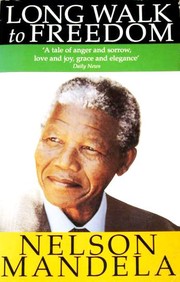
The essential starting point: Mandela's own account of his life from rural Transkei to the presidency. Reading this first means every subsequent book can be measured against his self-presentation and chosen silences.

A curated collection of Mandela's private letters, prison diaries, and notebooks that fills in the raw, unpolished voice behind the polished autobiography — read immediately after to hear what he edited out.
The Prison Years and the Struggle
BeginnerUnderstand the 27 years of imprisonment, the internal culture of Robben Island, and the broader ANC liberation movement that gave Mandela's sacrifice its meaning.
▸ Study plan for this stage
Pace: 4–5 weeks, ~25–30 pages/day. Start with "Robben Island Prison Dossier" (2 weeks), then move to "Higher Than Hope" (2–3 weeks). Allow time for reflection between books.
- The daily realities of Robben Island: labor, conditions, isolation, and the psychological toll on political prisoners
- Mandela's role as a unifying figure and moral leader within the prison community
- The internal culture and resistance strategies prisoners developed to maintain dignity and political consciousness
- The broader ANC liberation movement and how imprisoned leaders stayed connected to the struggle outside
- The intersection of personal sacrifice and political meaning: how Mandela's imprisonment served the anti-apartheid cause
- Fatima Meer's biographical perspective on Mandela's character, relationships, and evolution during the prison years
- The role of education, study groups, and intellectual life as forms of resistance on Robben Island
- What were the specific conditions and daily routines prisoners faced on Robben Island, and how did Mandela respond to them?
- How did Mandela and other political prisoners maintain their connection to the ANC struggle while imprisoned?
- What internal structures and cultural practices did prisoners create to preserve their dignity and political consciousness?
- According to Fatima Meer's account, how did Mandela's character and relationships evolve over his 27 years in prison?
- How did Mandela's imprisonment become a symbol and rallying point for the broader anti-apartheid movement?
- What role did intellectual and educational activities play in the prisoners' resistance on Robben Island?
- Create a detailed timeline of Mandela's 27-year imprisonment using both texts, marking key events, transfers, and shifts in prison policy
- Write a 500-word reflection comparing the 'official' prison record (from Alexander's dossier) with Meer's personal biographical account—what does each reveal that the other doesn't?
- Map out the internal leadership structure and resistance networks on Robben Island based on Alexander's account; identify Mandela's specific role
- Compile a list of Mandela's study topics and intellectual pursuits during imprisonment (from both texts) and write brief notes on why each mattered politically
- Create a visual diagram showing how Robben Island prisoners stayed connected to the external ANC movement—what channels existed?
- Interview or write a dialogue between yourself and a character from the texts (Mandela, another prisoner, or a family member) about the meaning of sacrifice during the prison years
Next up: This stage grounds you in the lived experience and political meaning of Mandela's imprisonment, preparing you to understand his release, negotiation role, and the final transition to democracy in the next stage.

Alexander was a fellow political prisoner on Robben Island and offers an insider's ground-level account of life there, providing crucial texture that Mandela's own memoir compresses.
Written with the cooperation of Winnie Mandela and the family while Nelson was still imprisoned, this biography captures the struggle years from those left outside — a necessary counterpoint to his inward-looking memoir.
The Negotiated Transition
IntermediateGrasp the complex, secret, and often brutal politics of the 1990–1994 transition from apartheid to democracy — the negotiations, the violence, and the compromises Mandela made.
▸ Study plan for this stage
Pace: 4–5 weeks, ~40–50 pages/day. Start with "The Mind of South Africa" (2–3 weeks), then move to "Tomorrow Is Another Country" (2 weeks). Allow 2–3 days for reflection and synthesis at the end.
- The psychological and ideological roots of apartheid: how white South African identity, fear, and historical narratives shaped the system Mandela had to dismantle
- The secret negotiations (CODESA and beyond): how Mandela and de Klerk conducted parallel talks—public and private—to navigate the transition while managing their respective constituencies
- The role of violence and state repression during the transition: the Inkatha-ANC conflict, security force destabilization, and the 'third force' that threatened negotiations
- Mandela's strategic compromises: constitutional concessions, power-sharing arrangements, and the Truth and Reconciliation Commission as alternatives to retribution
- The tension between revolutionary ideals and pragmatic governance: how Mandela shifted from liberation struggle rhetoric to nation-building diplomacy
- The international context: how global pressure, sanctions, and foreign mediation influenced the pace and terms of transition
- The fragility of the negotiated settlement: why the transition succeeded despite deep structural inequalities and ongoing violence
- What psychological and historical factors made white South Africans resistant to majority rule, and how did Mandela's approach address these fears?
- How did Mandela navigate the contradiction between his revolutionary past and the need to reassure white business and security elites during negotiations?
- What role did violence—both state-orchestrated and factional—play in shaping the negotiation timeline and outcomes?
- What were Mandela's key strategic compromises during the transition, and what did the ANC gain and lose through them?
- How did the international context (sanctions, foreign governments, global opinion) influence the transition's trajectory?
- Why did the negotiated transition succeed despite the persistence of structural inequality and ongoing conflict?
- Create a timeline of key negotiation milestones (CODESA sessions, violence escalations, breakthroughs) from both books, noting which actors (Mandela, de Klerk, Inkatha, security forces) drove each event.
- Write a 2–3 page analysis comparing Mandela's public statements during the transition (from speeches in the books) with his private strategic thinking—identify where he compromised and why.
- Map the 'third force' actors mentioned in the books (security forces, Inkatha, right-wing groups): who they were, their goals, and how they tried to derail negotiations.
- Debate exercise: Argue both sides—was Mandela's acceptance of a power-sharing government and amnesty (rather than prosecution) a pragmatic necessity or a betrayal of revolutionary principles? Use specific evidence from the books.
- Create a 'fear inventory' for each major group (white elites, black township residents, Inkatha supporters, security forces) based on the books, then trace how the negotiated settlement addressed (or failed to address) each fear.
- Write a reflective essay: If Mandela had pursued a more radical transition (majority rule without compromise), what does the books suggest would have happened?
Next up: This stage equips you with the political and psychological architecture of South Africa's negotiated transition, preparing you to examine how Mandela's presidency attempted to implement these compromises and what consequences—intended and unintended—followed from the choices made between 1990–1994.

Sparks provides the deep historical and political context of South Africa's racial order, making the transition intelligible; read before the negotiation-focused books so the stakes are clear.
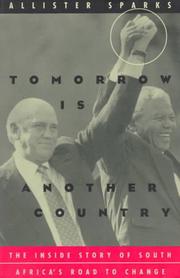
A gripping insider account of the secret talks that ended apartheid, drawing on interviews with all key players — this is the definitive narrative of how the negotiated miracle actually happened.
Biographies That Complicate the Myth
IntermediateEncounter scholarly and critical biographies that probe Mandela's political choices, his relationship with the ANC, his presidency's economic compromises, and the gap between icon and human being.
▸ Study plan for this stage
Pace: 8–10 weeks, ~40–50 pages/day. Start with Lodge (most analytical framework), move to Sampson (comprehensive biography with critical depth), finish with Smith (formative years context). Allow 1–2 weeks per book with overlap for note-taking and reflection.
- Mandela's strategic political choices within the ANC and their moral/pragmatic trade-offs, as detailed in Lodge's structural analysis
- The evolution of Mandela's ideology from nationalist to pragmatist, traced through Sampson's chronological narrative and Smith's portrait of his youth
- The gap between Mandela's public icon status and his documented personal ambitions, relationships, and vulnerabilities
- Mandela's presidency as a period of economic compromise and negotiated settlement rather than revolutionary transformation
- The ANC's internal politics, factionalism, and Mandela's role in navigating competing interests
- Mandela's formative experiences in Transkei, Johannesburg, and early activism (Smith) as foundations for later choices
- The role of imprisonment in reshaping Mandela's thinking and his strategic calculations upon release
- Scholarly vs. mythological readings of Mandela: how biographers interrogate rather than celebrate
- How does Tom Lodge characterize Mandela's political decision-making, and what does he identify as the key tensions between Mandela's ideals and his pragmatic choices?
- According to Sampson, what were the major economic compromises Mandela made during his presidency, and how did they reflect broader ANC strategy?
- What does David James Smith reveal about Mandela's early life and ambitions that complicate the later mythologized version of him?
- How do these three biographies differ in their assessment of Mandela's relationship with the ANC, and what do their differences suggest about biographical interpretation?
- What evidence do Lodge, Sampson, and Smith present for the gap between Mandela as icon and Mandela as a flawed political actor making calculated decisions?
- How did Mandela's imprisonment shape his political thinking, and how do the biographers assess whether it made him more or less ideologically rigid?
- Create a timeline comparing Mandela's stated ideological positions across his life (from Smith's account of his youth through Lodge's analysis of his political strategy) with his actual policy decisions during presidency (Sampson). Identify 3–4 major shifts and hypothesize the causes.
- Read Lodge's analysis of a specific ANC decision (e.g., armed struggle, negotiations strategy) and cross-reference it with Sampson's account of the same event. Write a 2–3 page comparative analysis of how each biographer interprets Mandela's role and motivations.
- Compile a 'myth vs. reality' document using Sampson and Smith: list 5 popular myths about Mandela and cite specific textual evidence from these biographies that complicates or contradicts each myth.
- Select one major economic policy from Mandela's presidency (e.g., GEAR, privatization, labor relations). Trace Sampson's explanation of the policy back to Lodge's framework of Mandela's political constraints and ANC factionalism. Write a 3–4 page analysis of how structural pressures shaped the choice.
- Interview or discuss with a peer: present one major revelation from Smith about young Mandela's ambitions or relationships, then explain how it reframes your understanding of his later political choices (using Lodge and Sampson). Record or summarize the conversation.
- Create an annotated bibliography of the three books with 2–3 key quotes from each that best exemplify each biographer's critical stance toward Mandela. Write a brief reflection on which biographer's approach you find most persuasive and why.
Next up: By interrogating Mandela's actual choices, compromises, and human limitations through these scholarly biographies, you are now equipped to evaluate how his legacy has been selectively constructed and contested—preparing you to examine how different communities, movements, and nations have claimed or critiqued Mandela's meaning in the next stage.

Lodge is the leading academic scholar of the ANC; his concise political biography is rigorously evidence-based and refuses hagiography, making it the ideal critical corrective after the autobiographical stage.

Sampson knew Mandela for decades and had full access; while authorized, his journalistic instincts surface real tensions — the presidency's failures, the Winnie years, the economic deals — that the myth obscures.

Focuses on the pre-prison Mandela — the womanizing, the violence debates within the ANC, the founding of MK — restoring the sharp edges that Long Walk to Freedom diplomatically softens.
Legacy, Criticism, and the Longer View
ExpertSituate Mandela within the broader arc of post-apartheid South Africa, assess the limits of the 'rainbow nation' settlement, and read the most searching critiques of what his leadership did and did not achieve.
▸ Study plan for this stage
Pace: 5–6 weeks, ~40–50 pages/day. "Anatomy of a Miracle" (weeks 1–2, ~280 pages); "Country of My Skull" (weeks 3–6, ~370 pages). Allow 1 week for synthesis and reflection.
- The 'miracle' narrative and its limitations: Waldmeir's analysis of how the transition was framed versus what actually occurred on the ground
- The Truth and Reconciliation Commission as a contested mechanism: Krog's intimate documentation of its proceedings, emotional toll, and philosophical tensions between justice and healing
- The gap between Mandela's symbolic leadership and material transformation: what structural inequalities persisted despite political change
- Testimony as a form of knowledge: how Krog's methodology of listening and witnessing differs from conventional historical analysis
- The 'rainbow nation' as both aspiration and myth: examining what the metaphor obscured about ongoing racial and economic divisions
- Perpetrator and victim narratives: how the TRC process complicated simple categories of guilt and innocence
- The limits of forgiveness and reconciliation: what was gained and what was foreclosed by the TRC model
- What does Waldmeir mean by the 'anatomy' of the miracle, and what structural factors does she identify as enabling or constraining the transition?
- How does Krog's account of the TRC proceedings challenge or complicate the official narrative of reconciliation that emerged from South Africa's transition?
- What evidence do Waldmeir and Krog present about the persistence of economic and social inequality after apartheid's formal end?
- How do the two books differ in their assessment of Mandela's leadership—what does each author emphasize or critique?
- What is the relationship between truth-telling and justice in the TRC model as Krog describes it, and what are the costs of prioritizing one over the other?
- How do Waldmeir and Krog each address the question of whether the transition was truly a 'miracle' or a managed settlement that left fundamental power structures intact?
- Create a two-column chart: 'Waldmeir's Structural Analysis' vs. 'Krog's Emotional/Testimonial Evidence.' For each major claim about the transition, note which author supports it and with what type of evidence.
- Select 3–4 testimony excerpts from 'Country of My Skull' and analyze them using Krog's own reflective framework: What does each testimony reveal about the limits of reconciliation? What questions does it leave unanswered?
- Write a 2–3 page comparative essay: 'The Rainbow Nation in Theory and Practice.' Use Waldmeir's analysis of structural continuities and Krog's documentation of unhealed wounds to argue whether the metaphor was helpful or misleading.
- Map the economic and racial inequalities that both authors identify as persisting post-1994. Create a visual (chart, diagram, or annotated timeline) showing which inequalities Waldmeir traces to apartheid structures and which Krog shows were deepened by TRC-era policies.
- Conduct a 'close reading' of one key passage from each book where the author most directly critiques Mandela or the transition. Annotate for tone, evidence, and implicit assumptions about what 'success' would have looked like.
- Interview or survey 2–3 people (if possible) about their understanding of the TRC and reconciliation in South Africa. Compare their responses to Krog's portrayal of how the TRC was experienced and understood by participants and observers.
Next up: This stage equips you to move beyond hagiography and assess Mandela's historical significance through the lens of what was and was not transformed, preparing you to engage with more specialized scholarship on post-apartheid governance, economic justice, and the unfinished project of decolonization in South Africa.

A Financial Times correspondent's forensic account of the transition and early presidency; it asks hard questions about what was traded away in the negotiated settlement and why inequality persisted.
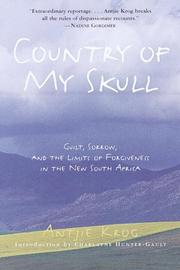
Krog's poetic, morally anguished account of the Truth and Reconciliation Commission forces the reader to confront whether Mandela's reconciliation project healed or deferred South Africa's deepest wounds — the perfect final reckoning.
Discussion
Keep reading
Paths that share books, cover the same subject, or open a related topic.