Nadine Gordimer Reading Order: Where to Start
Nadine Gordimer wrote fifteen novels across sixty years and the whole body of work is a single running record of South Africa under apartheid and after it, so chronology matters more here than with most novelists. The trap is starting with the long, dense masterpieces; this path opens with the short late-apartheid novel that is her most readable book, moves into the two that won her the reputation, then follows her forward across 1994 into the very different country she kept writing about.
The Way In
BeginnerGet Gordimer's method — political situation observed through one family's private life — in her two shortest, sharpest novels.
▸ Study plan for this stage
Pace: 2 weeks for 259 pages, which sounds slow and is not. July's People is 163 pages and The Late Bourgeois World only 96, but Gordimer writes long, clause-heavy sentences with the pronouns deliberately ambiguous, and a page can need rereading. Twenty pages a sitting is a sensible ceiling. Read July's Pe
- Gordimer wrote against apartheid from inside South Africa, where she lived her whole life, and several of her books were banned there by the state censors. She joined the African National Congress while it was still an illegal organisation. This is the context for every novel in this path and is a m
- July's People imagines a revolution that had not happened: a white liberal Johannesburg family flees the fighting and is sheltered in the village of July, their servant of fifteen years, where every assumption underneath the relationship inverts
- The inversion is worked out through objects rather than argument — the truck keys, the gun, the hut they are lent, who now decides what — and the novel's power is in how physical and small the shifts are
- Its subject is what liberal decency is worth when it stops being backed by power. The Smales family are genuinely kind people, and the book refuses to let that be enough
- The famous epigraph from Gramsci about the interregnum, when the old is dying and the new cannot be born, is the whole design of the book stated in advance
- The Late Bourgeois World compresses one day: a woman is told her ex-husband, a failed saboteur, has killed himself, and by evening is asked to launder money for the underground. It ends on her undecided
- It was banned in South Africa for years after publication, which is a useful early demonstration of the risk attached to writing these books where she wrote them
- Read together, the two novels establish her method: a political situation examined entirely through what it does inside one household, with the public events kept offstage
- In July's People, what actually changes between Maureen and July, and at what moment can you first see it? Point to the object rather than the sentiment.
- The Smales are decent liberals who employed July for fifteen years on ordinary South African terms. What does the novel say those two facts have to do with each other?
- What happens at the end of July's People? Readers disagree, and Gordimer withholds on purpose — say what you think and what in the text supports it.
- The Late Bourgeois World ends before the decision is made. Why does Gordimer stop there, and does the novel indicate what Elizabeth will do?
- Both books put a white protagonist at the centre while the political stakes belong mostly to black South Africans. Is that a limitation Gordimer is aware of, and where can you see her acknowledging it?
- Read the first ten pages of July's People twice before continuing. Gordimer does not orient a reader and the second pass is where the domestic arrangement becomes legible.
- Keep a list of possessions in July's People and who controls each — the bakkie, the keys, the gun, the hut, the radio. The plot is that list changing hands.
- Read the Gramsci epigraph, then reread it after finishing. It is the only place Gordimer states her theme outright and she does it before the novel starts.
- Write one sentence on what each book thinks a private life is worth under this system. You will be asked the same question by every remaining book in this path.
Next up: With her method in place at short length, the two big novels can do it across four hundred pages and a whole political inheritance.
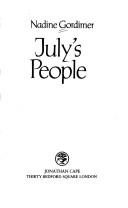
A white liberal family sheltered by their servant during an imagined revolution. Under 200 pages, and the cleanest statement of her subject: what liberal decency is actually worth when power inverts. Start here.

One day in the life of a woman told her ex-husband has killed himself, and asked to launder money for the underground. Read second — same compression, and it shows how early she had the form.
The Two Major Novels
IntermediateRead the books that won the Booker and, later, the Nobel case — long, difficult, and the centre of the work.
▸ Study plan for this stage
Pace: 7 weeks, and do not compress it. The Conservationist is 267 pages and reads more slowly than anything else here — it is elliptical, the point of view slides without warning, and three weeks at 15 pages a day is honest. Burger's Daughter is 361 pages and easier to follow but emotionally heavier; give
- The Conservationist won the Booker Prize and is the book that made her international reputation; Burger's Daughter is the one most often named when the Nobel case is made. Between them they are the centre of the work
- The Conservationist follows a rich white industrialist who owns a farm as a weekend possession, and an unidentified black body that surfaces on his land, is buried carelessly, and comes up again
- The body is the argument: the land cannot be owned by him in any sense that holds, and the novel says so through recurrence and image rather than through statement
- Its prose slips between third person, free indirect narration and Mehring's interior monologue with no signals, which is the single hardest thing about reading Gordimer and the reason this book defeats people. Slowing down fixes it; skimming does not
- Zulu praise-song passages are interleaved through the novel and belong to a claim on the land older than Mehring's title deed. They are not decoration
- Burger's Daughter follows Rosa Burger, daughter of a dead Afrikaner communist hero, trying to work out whether she is permitted a private life or whether her inheritance has spent it for her
- It was banned in South Africa on publication and the ban was later lifted — Gordimer published the censors' report alongside her own response, which is worth knowing as a document of exactly what the state objected to
- Large sections address her dead father in the second person, and the novel is structured as her argument with him. If you read only one Gordimer novel it should be this one
- Trace the body through The Conservationist: how it appears, how it is dealt with, and how it returns. What is the novel claiming about ownership by the end?
- Mehring is intelligent, competent and not a caricature. What is Gordimer's actual charge against him, and does the novel ever let him answer it?
- In Burger's Daughter, what does Rosa owe her father? Give the strongest version of the obligation and the strongest version of her right to refuse it.
- Rosa leaves South Africa and then returns. What does the time in Europe show her that being at home could not, and what makes her come back?
- The novel contains a scene of a man beating a donkey that Rosa cannot intervene in. Why is that the moment she decides to leave?
- Both novels are about white South Africans in relation to black South Africans who are largely kept at the edge of the narration. Is that a failure of the books or their subject?
- For the first fifty pages of The Conservationist, mark in the margin every time the point of view shifts. After fifty pages you will hear the shifts and can stop marking.
- Read the Zulu passages in The Conservationist consecutively, out of sequence, in one sitting. They form a second text running under the first.
- In Burger's Daughter, note every passage addressed to the dead father in the second person. Read them together at the end; they are the spine of the book.
- Look up what was banned in South Africa and when. Knowing that a novel about a communist's daughter was suppressed by the state it describes changes how the book's caution reads.
- Write a page arguing that Rosa should have stayed in Europe. Making that case honestly is the fastest way to see how carefully Gordimer weighted the choice.
Next up: The two masterpieces establish what she can do at full stretch; the middle-period novels show her testing the same method on a whole continent and on an imagined future.

A rich industrialist farms land he cannot own in any real sense, while an unidentified black body surfaces on it. Booker winner, elliptical and hard; read it once July's People has taught you her angle of attack.

The daughter of a dead communist hero trying to work out whether she is allowed a private life. Banned on publication, and the fullest thing she wrote about inherited political obligation. This is the novel to read if you read only one.
The Long Apartheid Years
BeginnerFill in the middle period, where the novels get broader and take in the rest of the continent.
▸ Study plan for this stage
Pace: 9 weeks. A Guest of Honour is 523 pages and the longest thing in the path — four weeks at 20 pages a day, and it is conventionally plotted so it moves more easily than its length suggests. A Sport of Nature (353 pages) three weeks; My Son's Story (277) two. Read in that order, which is chronological
- This is the middle of the career and the place where readers usually stop, which is a mistake: A Guest of Honour is the only novel where she looks properly beyond South Africa's borders
- A Guest of Honour puts a former colonial administrator, expelled years earlier for taking the nationalists' side, back into a newly independent African state at the invitation of the man who now runs it — and then splits that government in two
- Its subject is what happens after liberation: the leader and the union man who fought together and now want different countries. Gordimer refuses to make either of them wrong
- It is her most conventionally plotted big novel, so it is a good place to be if the ellipsis of The Conservationist has worn you down
- A Sport of Nature is picaresque and divisive — Hillela drifts through the liberation movement by way of the men in it, and the novel ends at the inauguration of a free South Africa that had not yet happened when it was published
- It is the only place Gordimer wrote a future rather than a present, and the imagined ending is why some readers find it her most hopeful book and others find it unserious. Both readings are defensible
- My Son's Story is narrated by the son of a coloured schoolteacher turned activist, who discovers his father's affair with a white woman and cannot forgive it. Under apartheid's racial classification, 'coloured' was a distinct legal category and the novel is precise about what that meant
- It is the last of the apartheid novels and the most intimate: the political betrayal and the domestic one are the same event seen from two angles, and the boy narrating cannot separate them either
- In A Guest of Honour, what do Mweta and Shinza each want for the new country? State both cases at full strength — the novel does.
- Bray is a decent outsider trying to help. What does the novel conclude about the usefulness of that position, and how does his ending deliver the verdict?
- Is Hillela in A Sport of Nature an opportunist or a survivor? Find the passages that support each reading and decide whether Gordimer is withholding judgement or has made one you missed.
- A Sport of Nature ends in an imagined free South Africa written years before 1994. What did Gordimer get right, and what did she assume that turned out otherwise?
- In My Son's Story, why does Will narrate? What can a resentful son see about his father that no other point of view could reach?
- Across these three books, what happens to Gordimer's confidence in political commitment? Compare the tone of the last with Burger's Daughter.
- For A Guest of Honour, write down the two political positions on one sheet as they emerge and update it as the novel goes. It is a book about an argument and losing the thread of the argument loses the book.
- Note where A Sport of Nature is deliberately comic. Gordimer is almost never funny elsewhere and the change of register is a clue to what she is doing with Hillela.
- In My Son's Story, mark the passages Will could not possibly have witnessed. He narrates them anyway, and working out what that means is the novel's real puzzle.
- After all three, place them on a timeline against real South African events — Sharpeville, Soweto, the states of emergency of the 1980s. The novels track the pressure and the correspondence is exact.
Next up: The last apartheid novel closes on a country about to change entirely, and the next three are what she wrote when the enemy stopped being a government.
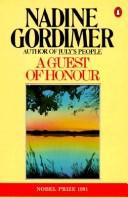
A former colonial administrator invited back to a newly independent African state, and caught in its first split. Her most conventionally plotted big novel and the one that looks beyond South Africa's borders.

A picaresque about a woman who sleeps her way through the liberation movement, ending in an imagined free South Africa. Divisive, and the only place Gordimer wrote a future rather than a present.
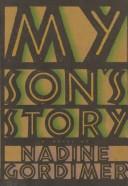
A coloured schoolteacher turned activist, his affair, and his son's disgust — narrated by the son. The last of the apartheid novels and the most intimate.
After 1994
BeginnerFollow her into the democratic era, where the enemy is no longer a government and the novels change shape.
▸ Study plan for this stage
Pace: 7 weeks. None to Accompany Me (324 pages) three weeks, The House Gun (304) two, The Pickup (270) two. Read None to Accompany Me directly after My Son's Story with no gap at all — the two together are the country changing, and the hinge is lost if you break between them.
- This is the difficult second half of the career, and it is where most reading orders stop. The novels change shape because the situation did: there is no longer a single unjust government to write against
- None to Accompany Me is set in the transition itself — negotiations, returning exiles, land claims by communities dispossessed decades earlier — and follows a lawyer stripping her own life back to almost nothing as the country rebuilds
- It is the hinge book of the whole path. The public plot is a nation acquiring a future; the private plot is a woman deciding she wants less rather than more, and Gordimer sets them deliberately against each other
- The House Gun takes a liberal white couple whose son has committed murder, and who must hire a black advocate to defend him — a reversal of every power relation the earlier novels ran on, and the parents notice
- Its subject is post-apartheid violence experienced as a private catastrophe, and the household gun of the title is the ordinary object that makes it possible. Gordimer is writing about a society where the killing has not stopped, only changed hands
- The Pickup follows a privileged Johannesburg woman who marries an undocumented Arab mechanic facing deportation, then follows him back to his village and stays. The second half, in his country, is the best writing of her late career
- Migration and who is permitted to belong is her final subject, and it moves her out of South Africa for the last time — the questions of insider and outsider that apartheid answered by law are now answered by passports
- Read across all three, the arc is a novelist who spent forty years with a clear antagonist learning to write about a country where the moral situation no longer arranges itself
- What is Vera Stark giving up in None to Accompany Me, and why does Gordimer set one woman's subtraction against a country's construction?
- The land claims in None to Accompany Me are the practical form of the whole apartheid injustice. What does the novel show about how hard restitution actually is?
- In The House Gun, what changes for Harald and Claudia when their son's life depends on a black advocate? Be specific about what they notice in themselves.
- Does The House Gun think the parents are culpable for the world in which the gun was in the house? Where does it say so?
- In The Pickup, why does Julie stay in the village when Ibrahim wants to leave? Is her choice a genuine belonging or a privileged tourism the novel is criticising?
- Set these three against July's People. What is the enemy now, and can Gordimer's method still find it inside one household?
- Read the last chapter of My Son's Story and the first of None to Accompany Me in one sitting. The change of national mood between them is the most dramatic thing in this path.
- In The Pickup, mark the point where the novel's sympathy transfers from Julie to Ibrahim, or fails to. Readers place it very differently and it is the crux of the book.
- List the ways the new South Africa disappoints the characters in each novel. Gordimer supported the ANC her whole life and was writing critically about the country it governed within two years of the election — the criticism is the point.
- Write one paragraph on whether the post-apartheid novels are weaker than the apartheid ones, and be honest about whether your answer is about the books or about the clarity of the situation they describe.
Next up: Nine novels in, the short stories will land as compressions of situations you already know completely.
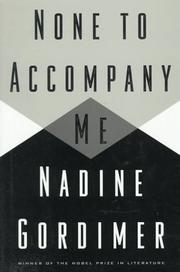
The transition itself: land claims, negotiations, a woman stripping her own life back. The hinge book — read it directly after My Son's Story to feel the country change.

Liberal parents discover their son has committed murder, and must hire a black advocate to defend him. Post-apartheid violence as a private catastrophe.
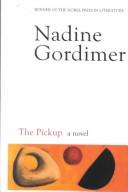
A privileged Johannesburg woman follows an undocumented Arab mechanic back to his village. Her late subject — migration and who gets to belong — and the best of the last novels.
The Stories
BeginnerEnd with the short fiction, which many readers rate above the novels.
▸ Study plan for this stage
Pace: 3 weeks for 256 pages, at one or two stories an evening. Jump and Other Stories should not be read as a book — Gordimer wrote these to be met one at a time, and a story that would knock you sideways alone will slide past in a run of five. If a story does not land, come back to it two days later rath
- Many readers rate Gordimer's short fiction above her novels, and this collection is the strongest single volume of the late-apartheid stories
- The compression is total: situations that take Burger's Daughter three hundred pages are set up and detonated here in twelve, and after the novels you will recognise every one of them
- The title story is told by a defector from a white paramilitary operation, kept in a room by the movement he betrayed his own side to, and it is as good as anything she wrote at any length
- The recurring structure is a small domestic decision that turns out to have been a political act, discovered too late by the person who made it
- The stories reach places the novels do not — servants, children, informers, the newly returned, people whose lives are too small to sustain a novel and are ruined just as completely
- Gordimer wrote short fiction continuously for sixty years, so this is not a sideline to the novels; it is the other half of the career and the form she started in
- Several stories here were written under the states of emergency of the late 1980s, when the violence was at its worst and the outcome was not visible from inside it. The uncertainty is in the prose
- Reading them last, with the whole arc behind you, is the design of this path: every compression opens back onto a novel you have already read
- In the title story, what has the defector actually done, and what is being done to him now? Gordimer withholds both and the withholding is the technique.
- Pick three stories and name the exact sentence where the domestic detail turns political. Is the turn always in the same place structurally?
- Which story reaches a kind of person the novels never centre? What could she do in twelve pages that four hundred could not?
- How does the tone of these late-1980s stories differ from July's People, written earlier about an imagined collapse? What does living inside the emergency do to the prose?
- Having read nine novels and a collection, state in one sentence what Gordimer's subject was. Then test it against the story that fits it worst.
- Read one story an evening for a fortnight rather than finishing the book in three sittings. This is the single instruction in this stage that actually matters.
- After each story, write one line on what the political situation is doing to the household. By the end you will have the collection's structure on one page.
- Take one story and identify which novel in this path it rhymes with. Nearly all of them do, and the pairing shows how differently she uses the two forms.
- Reread July's People after finishing the stories. It is under two hundred pages, you will read it in two evenings, and having the whole career behind you makes it a substantially different book.
Next up: That is Gordimer across sixty years and two countries, and it is enough to read any novelist writing under a regime and see immediately how much of the pressure they are letting onto the page.
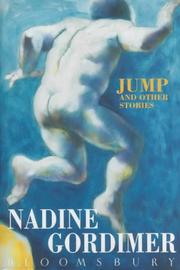
Late-apartheid stories, several as good as anything in the novels, at a fraction of the length. Read last: after the novels you will recognise every situation she compresses here.
Discussion
Keep reading
Paths that share books, cover the same subject, or open a related topic.