Apartheid and South Africa: a reading path through struggle and freedom
This curriculum traces the full arc of South African apartheid — from its colonial and segregationist roots, through the brutal machinery of the system and the resistance it spawned, to Mandela's leadership and the negotiated transition to democracy. Starting with accessible narrative histories and memoirs, the path moves progressively toward analytical and primary-source works that reward the deeper understanding built in earlier stages.
Foundations: Understanding the World Apartheid Built
BeginnerGrasp the human reality of apartheid — what it felt like to live under it — and acquire the essential vocabulary (pass laws, Bantustans, townships, the ANC) needed for everything that follows.
▸ Study plan for this stage
Pace: 8–10 weeks, ~40–50 pages/day (approximately 3–4 days per book, with 1–2 weeks for reflection and exercises)
- Pass laws and their role in controlling Black movement and labor under apartheid
- Bantustans (homelands) as a system of forced territorial segregation and artificial nation-states
- Townships as overcrowded, segregated urban settlements designed to contain Black populations
- The ANC (African National Congress) as the primary resistance movement and its evolution from legal to armed struggle
- The lived experience of apartheid: daily humiliation, poverty, family separation, and psychological trauma
- The role of education and literacy as tools of resistance and personal liberation
- Structural racism embedded in law, employment, housing, and social institutions
- The personal cost of resistance: imprisonment, exile, and sacrifice
- What were pass laws, and how did they function as a mechanism of control in apartheid South Africa?
- What is a Bantustan, and why did the apartheid government create them?
- How do the personal narratives in *Kaffir Boy* and *Long Walk to Freedom* illustrate the human impact of apartheid on families, education, and daily life?
- What role did the ANC play in resisting apartheid, and how did its strategy evolve from Mandela's early involvement to his imprisonment?
- How did Mark Mathabane and Nelson Mandela each use education and literacy as forms of resistance?
- What were the personal sacrifices made by those who actively resisted apartheid, as evidenced in these two memoirs?
- Create a timeline of apartheid laws and policies mentioned in both books (pass laws, Bantustan creation, Group Areas Act, etc.), noting their dates and immediate human consequences.
- Map the geography of apartheid: sketch or research the locations of major townships and Bantustans mentioned in the books, then write a 1-page reflection on how spatial segregation enforced economic and social control.
- Write a comparative character sketch of Mathabane and Mandela: How did their family backgrounds, education, and early experiences shape their paths to resistance?
- Conduct a 'pass law simulation' exercise: research the actual requirements and restrictions of pass laws, then write a short narrative from the perspective of a Black South African navigating these restrictions in daily life.
- Create an annotated glossary of key terms (pass laws, Bantustans, townships, ANC, Sharpeville, Robben Island, etc.) with definitions and page references from the books.
- Write a 2–3 page reflective essay: 'What surprised me most about the human reality of apartheid?' Ground your response in specific scenes or moments from the two memoirs.
Next up: This stage establishes the emotional and structural foundation of apartheid, preparing you to understand the organized resistance movements, political ideologies, and historical turning points that will be examined in depth in the next stage.

A visceral, first-person memoir of growing up Black in a Johannesburg township under apartheid. It is the most accessible entry point because it grounds abstract policy in lived, daily experience before any historical framework is introduced.
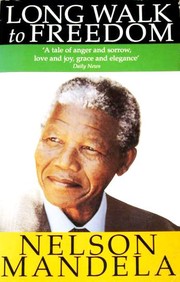
Mandela's autobiography doubles as a sweeping narrative history of the ANC and the anti-apartheid struggle. Reading it second gives the reader a personal guide who names and contextualises the institutions and events Mathabane only glimpsed from below.
The System: Origins and Mechanics of Racial Segregation
BeginnerUnderstand how apartheid was constructed — its colonial roots, the laws that enforced it, and the economic logic that sustained it — so the resistance movements make structural sense.
▸ Study plan for this stage
Pace: 4–5 weeks, approximately 40–50 pages/day. Start with Lapping's *Apartheid: A History* (weeks 1–2.5), then move to Sparks' *The Mind of South Africa* (weeks 2.5–5) to deepen conceptual understanding.
- Colonial foundations: how Dutch and British colonialism established racial hierarchy and land dispossession that apartheid systematized
- The legal architecture of apartheid: the Pass Laws, Group Areas Act, Bantu Education Act, and other statutes that enforced racial separation at every level of society
- Economic logic of apartheid: how racial segregation served white capital accumulation through cheap black labor, land theft, and market control
- The role of ideology and psychology: how apartheid was justified through pseudo-scientific racism and internalized by both oppressors and oppressed
- State machinery and enforcement: the police, military, and bureaucratic apparatus that made apartheid function day-to-day
- Racial classification and identity: how the apartheid state defined and policed racial categories (white, black, coloured, Indian) to control movement and rights
- Resistance preconditions: why apartheid's structural contradictions and brutality made organized resistance inevitable and comprehensible
- How did colonial-era land dispossession and racial hierarchies in South Africa create the conditions for apartheid to emerge in 1948?
- What were the major legal instruments of apartheid (name at least 3–4 key laws), and how did each one enforce racial separation in specific domains of life?
- How did apartheid's economic system depend on controlling black labor, and what role did pass laws and influx control play in that system?
- According to Sparks, how did apartheid ideology become embedded in the minds and institutions of South African society, and what psychological mechanisms sustained it?
- What were the key differences between how apartheid was implemented in urban areas versus rural/homeland areas, and why did the state create the 'Bantustan' system?
- Why was apartheid inherently unstable or contradictory, and how did those contradictions make resistance movements structurally necessary?
- Create a timeline of major apartheid laws (1948–1970s) using Lapping's chronology; for each law, write one sentence explaining its specific mechanism of control.
- Map the racial geography of a South African city (e.g., Johannesburg or Cape Town) as it was under apartheid, using details from both books to show how the Group Areas Act reshaped urban space.
- Write a 500-word analysis of how one apartheid law (e.g., Pass Laws or Bantu Education Act) served both ideological and economic purposes, citing specific examples from Lapping and Sparks.
- Create a diagram showing the interconnections between apartheid's legal, economic, and psychological systems—show how each reinforced the others.
- Conduct a close reading of Sparks' analysis of apartheid ideology: identify 3–4 key psychological or cultural mechanisms he identifies, and explain how each normalized racial hierarchy.
- Compare colonial-era racial policies (pre-1948) with apartheid-era policies using evidence from Lapping; write a short essay on what was new versus what was continuous.
Next up: This stage equips you with the structural and historical foundations of apartheid, so you can now understand how and why specific resistance movements—from the ANC to labor organizing to township uprisings—emerged as rational, necessary responses to an interlocking system of oppression.

A clear, chronological overview written for general readers that explains how the National Party built the apartheid state law by law. It provides the political and legislative skeleton the earlier memoirs flesh out emotionally.

Sparks traces South African identity and racial ideology from the first Dutch settlers to the late apartheid era, explaining why white supremacy took such deep root. This historical depth is essential before moving to the resistance literature.
Resistance: The ANC, Activism, and the Cost of Struggle
IntermediateExamine the organised resistance to apartheid in depth — the ANC's strategies, the role of women and youth, the Soweto uprising, and the personal cost borne by activists.
▸ Study plan for this stage
Pace: 4–5 weeks, ~40–50 pages/day (The Testimony of Steve Biko is approximately 200–250 pages; allow time for reflection and note-taking)
- Black Consciousness as a philosophical and political framework for resistance against apartheid
- The psychological and spiritual dimensions of oppression and the need for mental liberation before political liberation
- Biko's critique of white liberalism and the necessity of Black self-reliance and autonomous organisation
- The role of community mobilisation, student activism, and grassroots organising in challenging the apartheid state
- The personal cost of activism: imprisonment, torture, surveillance, and the sacrifice demanded of individual resisters
- Biko's vision of a non-racial, humanistic South Africa and his philosophy of human dignity under oppression
- What is Black Consciousness and how does Biko argue it differs from earlier resistance strategies in South Africa?
- How does Biko characterise the relationship between psychological oppression and political oppression under apartheid?
- What is Biko's critique of white liberalism, and why does he argue for Black autonomous organisation?
- What specific examples does Biko provide of grassroots activism and community mobilisation, and what were their outcomes?
- How does Biko's own experience of imprisonment and interrogation shape his understanding of resistance and the cost of struggle?
- What does Biko envision as the ultimate goal of the anti-apartheid struggle, and what role does humanism play in his philosophy?
- Create a detailed timeline of Biko's life and activism, marking key events (founding of SASO, banning orders, imprisonment, death) and connecting them to broader apartheid history
- Write a comparative analysis: identify 3–4 key passages where Biko discusses psychological oppression and explain how each one illustrates his theory of liberation
- Conduct a close reading of Biko's critique of white liberalism (likely in his essays on 'The Definition of Black Consciousness' or similar sections); annotate and summarise his main arguments in your own words
- Create a visual map of Biko's network: identify the organisations he was involved with (SASO, BPC, etc.), the people he worked with, and the geographic centres of Black Consciousness activism
- Write a reflective essay (1,500–2,000 words) on the personal cost of Biko's activism—what sacrifices did he make, and how did he justify them philosophically?
- Develop a debate outline: prepare arguments for and against Biko's position that Black people must organise autonomously without white allies, using evidence from the text
Next up: This stage establishes the intellectual and philosophical foundations of anti-apartheid resistance through Biko's Black Consciousness movement, preparing you to examine how these ideas were mobilised in mass uprisings (like Soweto) and how women and youth became central to the struggle in subsequent stages.
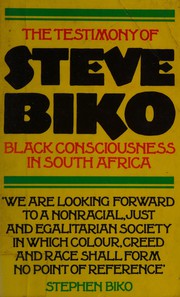
Biko's collected writings introduce Black Consciousness as a distinct and vital strand of resistance, philosophically separate from the ANC. Reading this here prevents the curriculum from treating the liberation movement as monolithic.
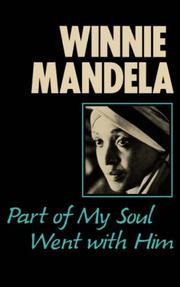
Winnie Mandela's testimony illuminates the gendered dimension of the struggle and the state's use of banishment and torture against activists' families — a perspective absent from Nelson Mandela's autobiography.
Endgame: Negotiation, Truth, and the Transition to Democracy
ExpertAnalyse how apartheid ended — the secret negotiations, the violence of the transition years, the Truth and Reconciliation Commission, and the unresolved legacies that post-apartheid South Africa inherited.
▸ Study plan for this stage
Pace: 8–10 weeks, ~40–50 pages/day, with 2–3 days per week for reflection and note-taking. Suggested pacing: Sparks (3 weeks), Tutu (2–3 weeks), Krog (2–3 weeks), plus 1 week for synthesis and comparative analysis.
- The mechanics of secret negotiations: Sparks' account of back-channel talks, key players (de Klerk, Mandela, Botha), and the strategic decisions that made transition possible
- The paradox of violence during transition: how apartheid's end coincided with intensified conflict, township violence, and the role of security forces in destabilizing negotiations
- The Truth and Reconciliation Commission as a novel transitional justice mechanism: Tutu's theological and philosophical framework for forgiveness, amnesty, and accountability without prosecution
- Reconciliation vs. justice: the tension between Tutu's emphasis on ubuntu and forgiveness versus the demands for prosecution and reparations
- Testimony as truth-telling: Krog's exploration of how personal narratives and victim testimonies became the primary vehicle for establishing 'truth' in post-apartheid society
- Unresolved legacies: structural inequality, economic dispossession, psychological trauma, and the limits of institutional processes in healing a fractured society
- The role of narrative and language: how different accounts (political, legal, personal) competed to define the 'truth' of apartheid and transition
- What were the key turning points in the secret negotiations between the apartheid government and the ANC, and how did figures like Mandela, de Klerk, and Botha shape the transition process according to Sparks?
- How does Desmond Tutu justify the TRC's emphasis on forgiveness and amnesty over prosecution, and what theological and philosophical principles underpin his vision of reconciliation?
- What is the relationship between truth-telling and healing in Krog's account? How do victim testimonies function as both historical record and emotional catharsis?
- What were the major sources of violence during South Africa's transition years, and how did they complicate the narrative of a 'negotiated settlement'?
- What does Krog reveal about the limitations of the TRC process, and what unresolved legacies does she identify as persisting in post-apartheid South Africa?
- How do Sparks, Tutu, and Krog differ in their assessment of whether South Africa's transition was successful, and what criteria does each author use to evaluate success?
- Timeline construction: Create a detailed chronology of key negotiation milestones from Sparks, cross-referenced with dates of major violence events. Annotate with the actors involved and their stated motivations.
- Comparative theology: Extract Tutu's core arguments for forgiveness (ubuntu, Christian redemption, social healing) and debate them against a counterargument for justice-based accountability. Write a 2–3 page response.
- Testimony analysis: Select 3–4 victim testimonies referenced or quoted in Krog's work. Analyze how each testimony constructs 'truth' differently—emotional, factual, moral—and what is gained or lost in each framing.
- Negotiation role-play: Assign roles (Mandela, de Klerk, Botha, ANC negotiators, security forces) and stage a mock negotiation session based on Sparks' account. Debrief on what compromises were necessary and what was sacrificed.
- Unresolved legacies mapping: Create a visual map (chart, diagram, or written inventory) of the structural, psychological, economic, and political legacies Krog identifies as unresolved. For each, note whether Tutu's TRC framework addressed it.
- Synthesis essay: Write a 5–7 page essay answering: 'Was South Africa's transition a success or failure?' Use evidence from all three books to construct a nuanced argument that acknowledges both achievements and limitations.
Next up: This stage equips readers with a deep understanding of how one nation attempted to move beyond systematic oppression through negotiation, truth-telling, and reconciliation—providing a critical foundation for examining post-apartheid South Africa's ongoing struggles with inequality, identity, and nation-building in subsequent stages.
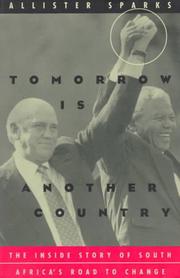
Sparks reconstructs the secret talks between the ANC and the apartheid government that made a negotiated settlement possible. It is the essential insider account of how the transition actually happened, and reads as a direct sequel to his earlier overview.
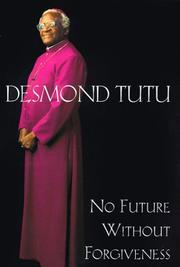
Archbishop Tutu's account of chairing the Truth and Reconciliation Commission grapples with the hardest question of the transition: how a society heals without full justice. It is best read last because it presupposes knowledge of all the atrocities documented in earlier stages.
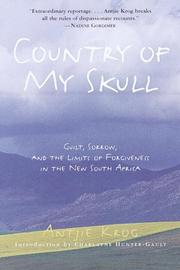
A poet and journalist's profound, literary reckoning with the TRC hearings. Krog's Afrikaner perspective adds moral complexity and closes the curriculum by asking what truth-telling costs the listener as much as the survivor.
Discussion
Keep reading
Paths that share books, cover the same subject, or open a related topic.